

French Kingwood Cabinet
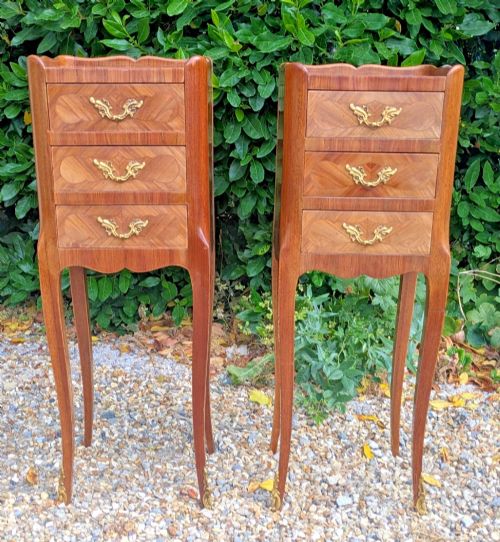
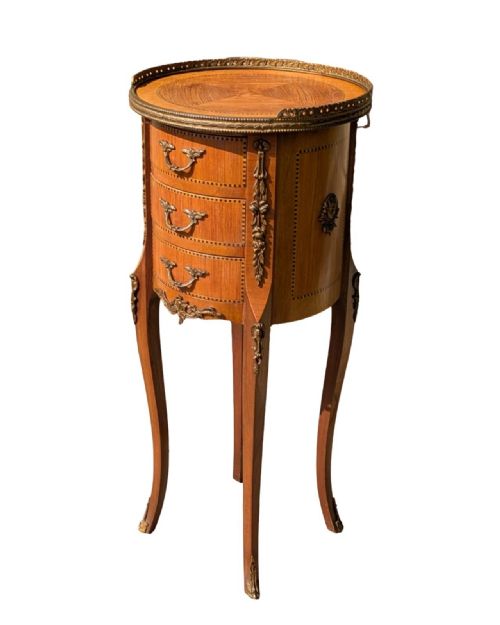
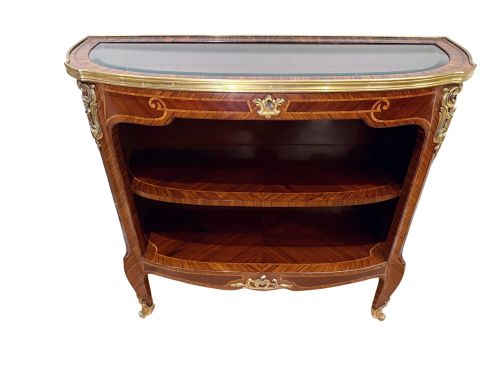
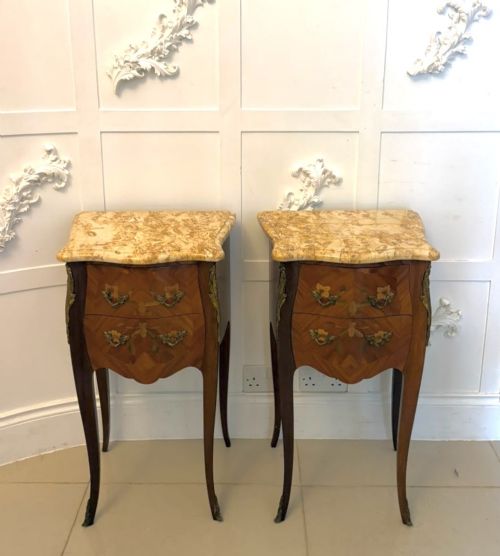
When choosing a french kingwood cabinet, you select from 19th-century and early 20th-century display pieces, commodes, and bedside tables shaped by Louis XV revival aesthetics.
French Kingwood Cabinet
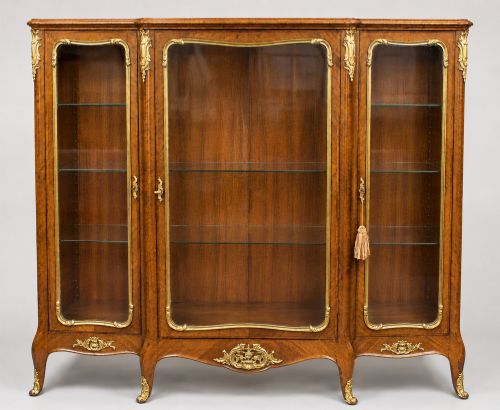
A french kingwood cabinet encompasses various forms designed for storage and display, including vitrines, commodes, bedside tables, and writing desks. These pieces originate predominantly from the nineteenth century alongside early twentieth-century examples.
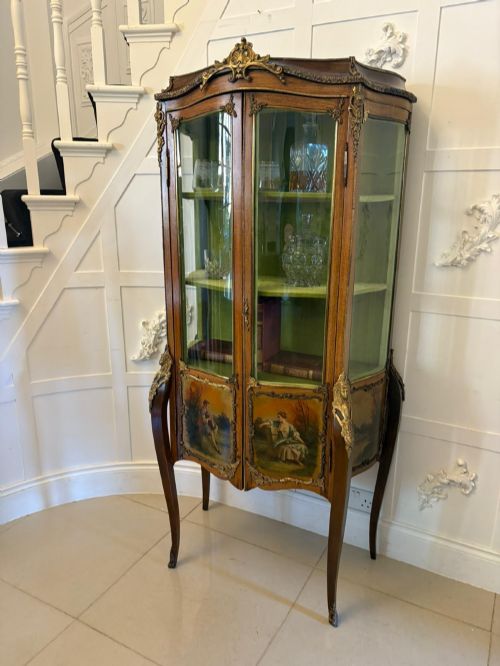
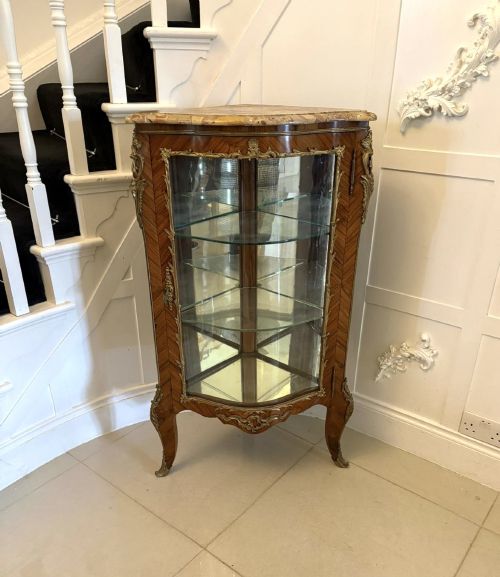
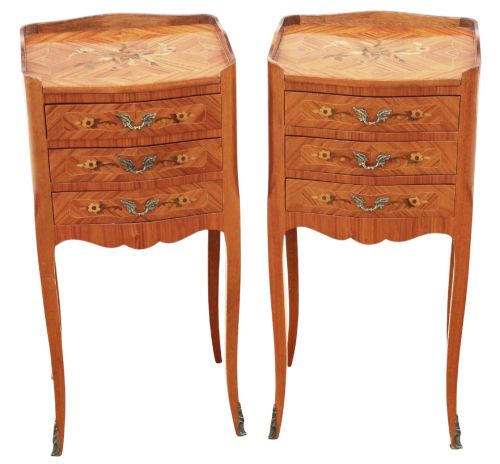
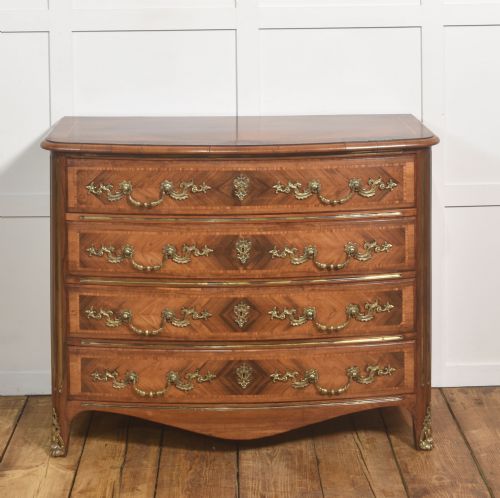
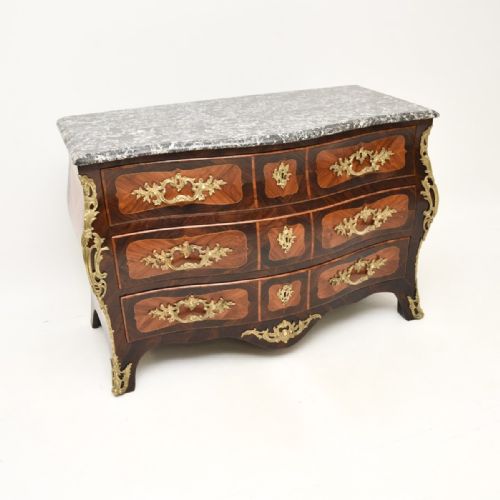
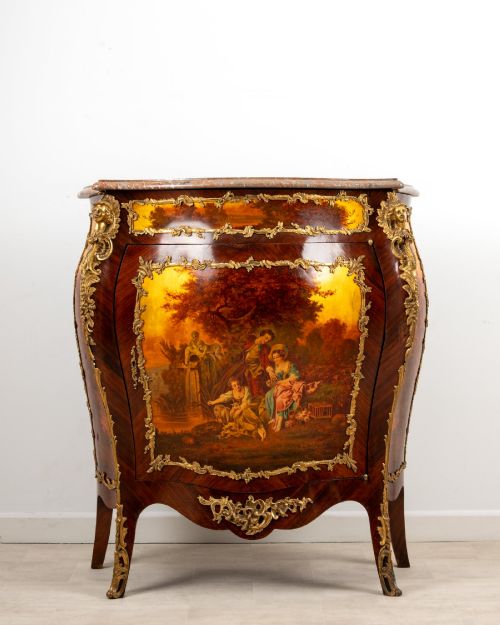
The objects frequently display serpentine or bombe contours, reflecting the enduring influence of Louis XV and Rococo styles. Buyers encounter everything from tall display cabinets with glass panels to compact bedside cabinets and chests of drawers.
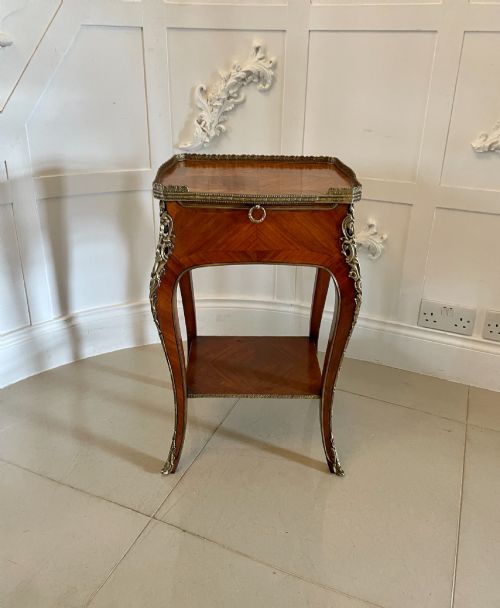
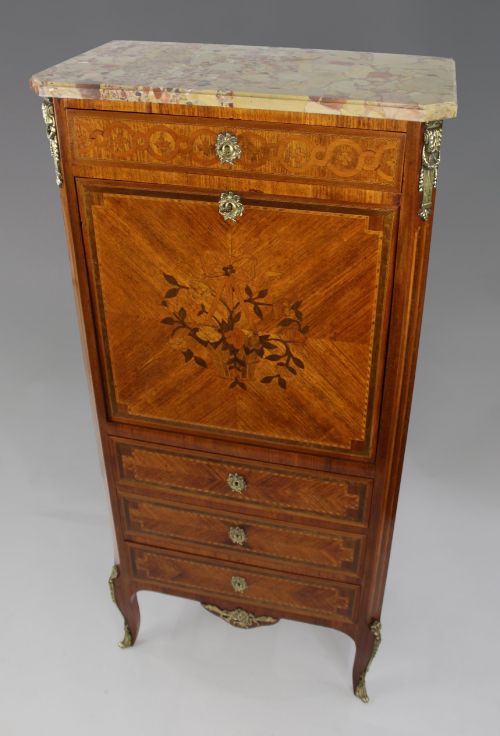
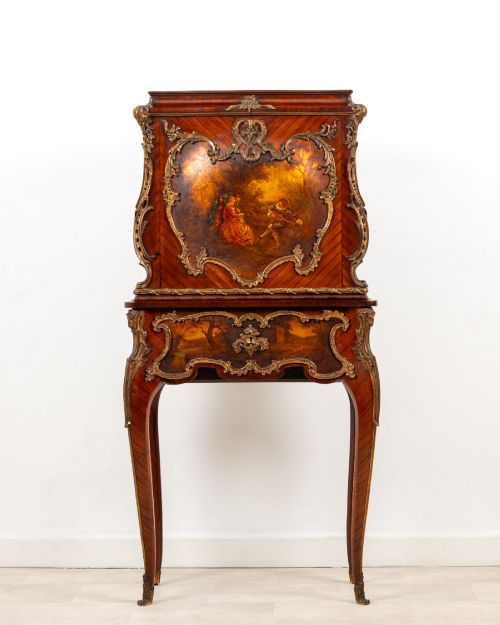
Many items incorporate specialised functions such as the secrétaire à abattant or bonheur du jour, combining writing surfaces with compartmentalized storage. Such forms suited formal domestic interiors where decorative utility was paramount.
How They Were Made
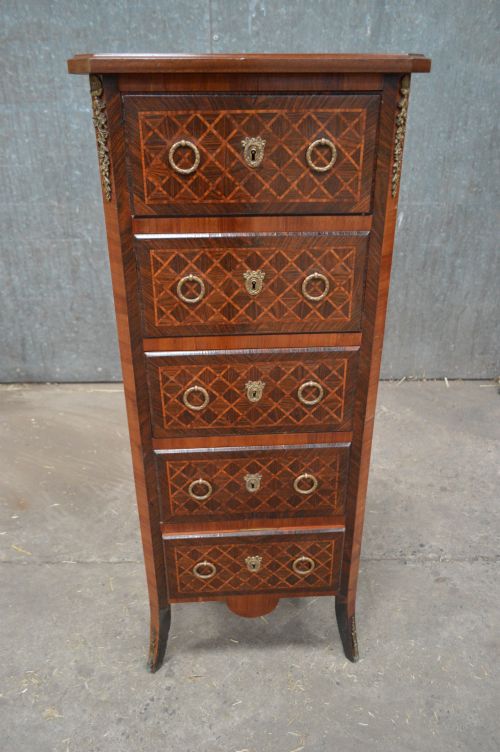
Cabinetmakers utilised dense tropical kingwood veneers, often arranged in intricate marquetry or parquetry patterns across serpentine and flat surfaces alike. Secondary timbers such as walnut or mahogany form the robust internal carcases supporting these decorative veneers.
Gilt bronze and ormolu mounts punctuate the exterior, cast and chased to accentuate the sweeping contours of the cabinetry. Fitted marble slabs, frequently in shades of white or variegated tones, provide durable and decorative surfaces to the tops of commodes and display cabinets.
Painted Vernis Martin panels appear on select pieces, depicting pastoral scenes or figures within glazed or enclosed doors. Glass panes, sometimes curved for corner or bombe cabinets, protect the contents of vitrines while maintaining visual transparency.
Some diminutive vitrines were made small enough to sit upon a table, proving that French cabinetmakers loved a scaled-down spectacle just as much as a grand commode.
What Varies In Quality
The precision and complexity of the marquetry inlay dictate much of the visual distinction, alongside the crispness of the cast ormolu mounts. Finer examples exhibit meticulous matching of wood grain and securely seated bronze enrichment that follows the architectural lines without gaps.
Structural integrity depends on the selection of seasoned carcase timbers and the preservation of original marble tops and curved glass panels. Cabinets bearing the signatures or stamps of established makers demonstrate superior workshop standards that elevate their standing.
Jacques Bircklé·E. Kahn·François Linke·Sormani·G. Durand
The French Kingwood Cabinet Glossary
- Kingwood
- A dense, richly grained timber native to Brazil, prized for its deep brown colouring and contrasting pale streaks when used in cabinet veneers.
- Ormolu
- Gilt bronze mounts applied to furniture edges and corners, cast in ornamental scrollwork or floral motifs.
- Vernis Martin
- A type of decorative lacquer finish developed in France, used to produce glossy painted panels featuring pastoral or figurative scenes.
- Marquetry
- The art of applying small pieces of veneer to a structure to form decorative patterns or pictorial designs.
- Vitrine
- A glass-fronted display cabinet intended for the presentation of porcelain, glass, or small decorative objects.
French Kingwood Cabinet: Frequently Asked Questions
What rooms suit a french kingwood cabinet?
These cabinets suit drawing rooms, studies, and bedrooms where their decorative veneers and polished mounts complement traditional interiors.
Compact variations like bedside tables and small commodes function well in tighter spaces, while large vitrines require prominent wall placement for display purposes.
How do I care for marble tops?
Marble surfaces require regular dusting with a soft cloth and immediate wiping of liquid spills to prevent staining on porous stone.
Avoid acidic cleaning agents or abrasive pads that can dull the polished finish over time.
Are these pieces functional for storage?
Many items offer practical storage through drawers, cupboards, and shelving concealed behind veneered or glazed doors.
Writing cabinets feature drop-down desks with internal pigeonholes, while commodes provide deep drawer capacity for household linens or personal items.
How do I identify Louis XV revival style?
The style is characterised by asymmetrical scrollwork, serpentine outlines, and cabriole legs terminating in sabots.
Ormolu mounts emphasise these curved silhouettes, distinguishing them from later, more rectilinear neoclassical revivals.