

French Glass Centerpiece
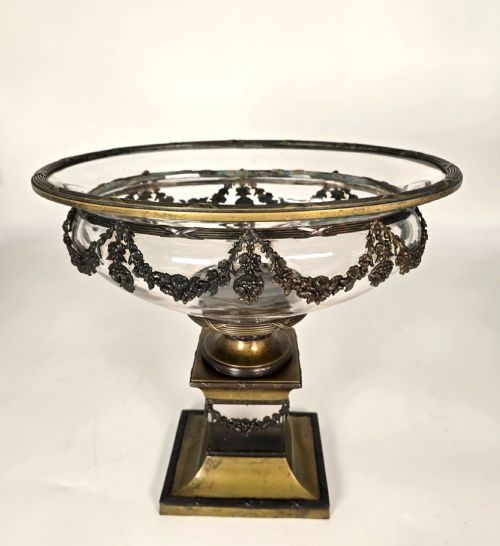
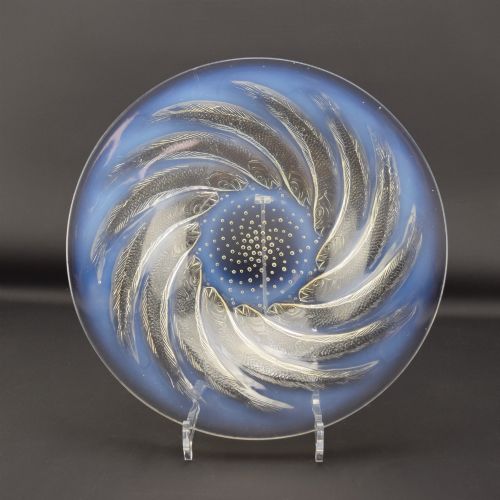
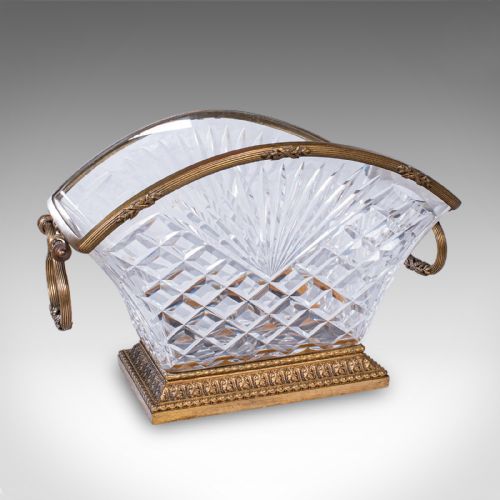
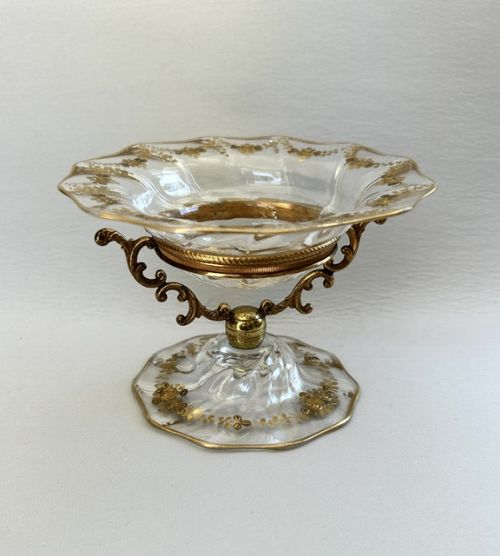
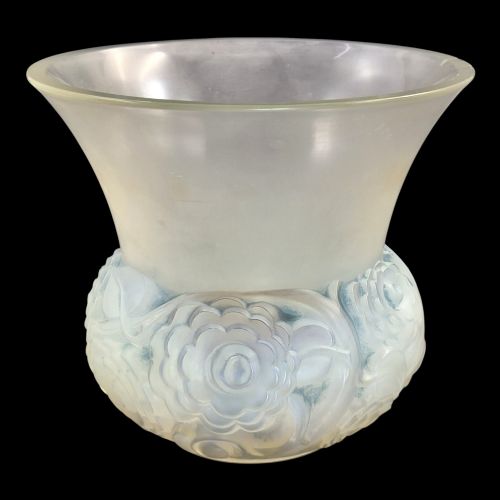
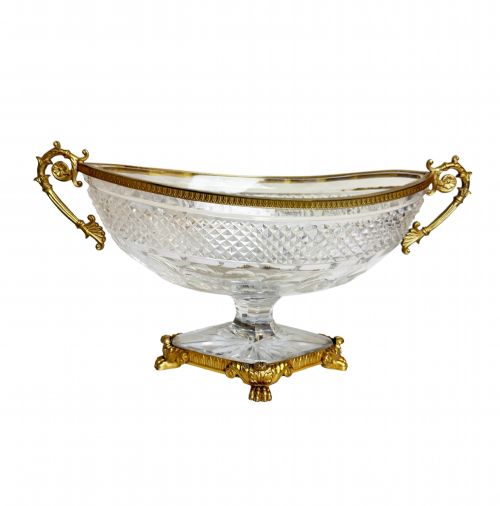
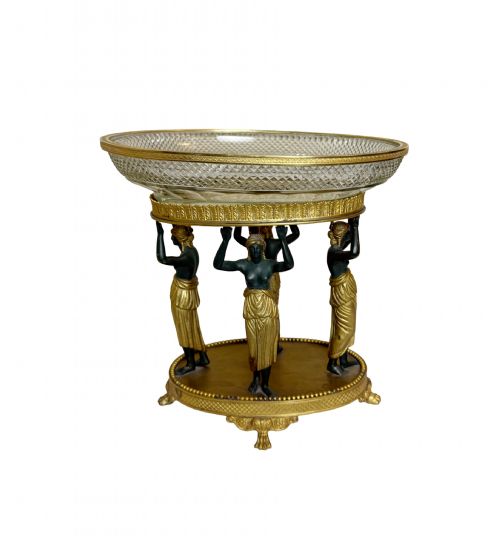
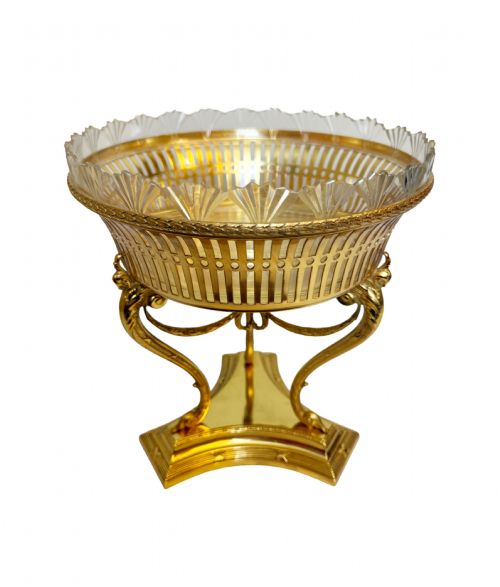
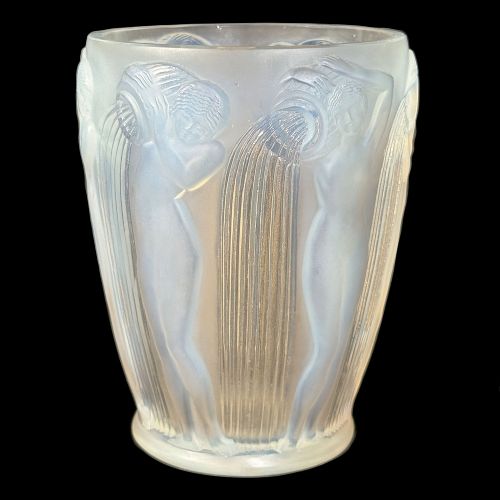
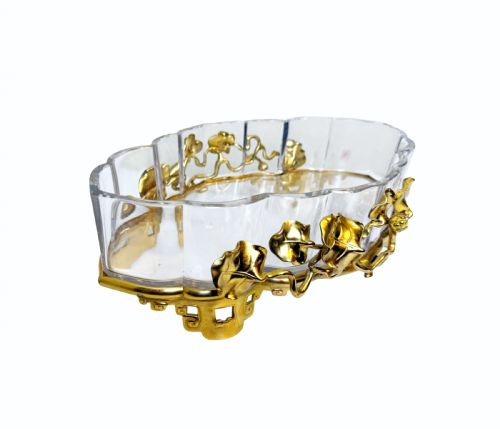
A french glass centerpiece brings sculptural presence to a dining table, combining heavy cut crystal or moulded opalescence with fine bronze mounts.
French Glass Centerpiece
When you search for a french glass centerpiece, you encounter elaborate table ornaments designed to anchor formal dining arrangements. These objects take the form of large bowls, shallow chargers, footed vessels, and multi-trumpet epergnes.
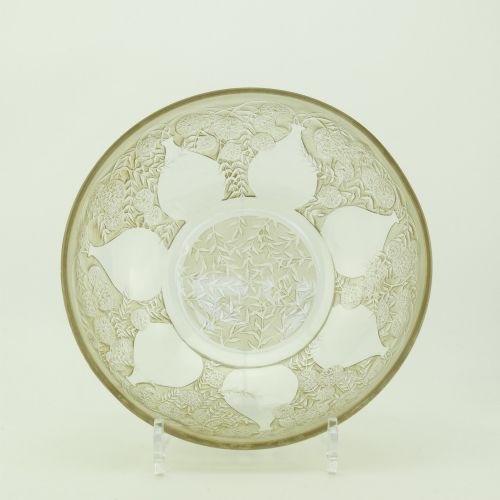
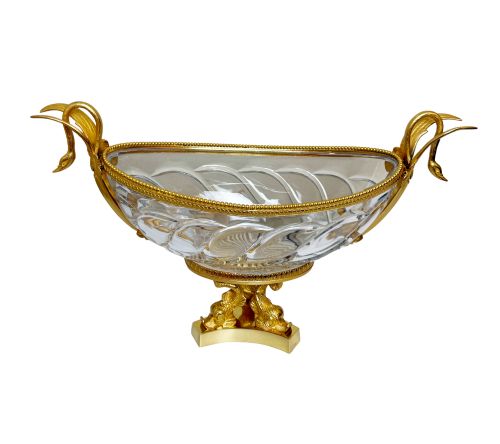
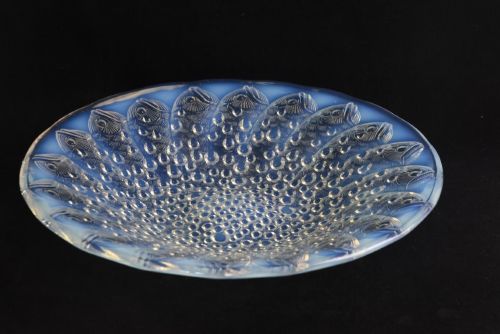
The selections range from Victorian and Empire crystal mounted in gilt bronze to Art Nouveau organic designs and Art Deco moulded opalescent glass. Pieces originating from this tradition balance practical serving functions with ornamental display.
You meet heavy nineteenth-century cut glass alongside twentieth-century creations by master glassmakers. The common thread is French craftsmanship applied to glass and metal work for interior decoration.
How they were made
Maker workshops utilised techniques such as hand blowing, mould pressing, and deep wheel cutting to shape the crystal and glass bodies. Molten material was worked into heavy bowls or delicate trumpets, then cooled and polished.
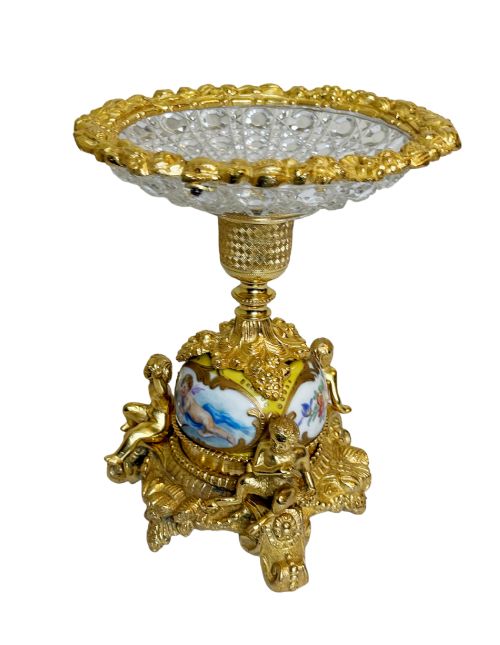
Metal mounts in gilt bronze, ormolu, and silvered metal were cast separately and fitted to support or encircle the glass vessels. Enamel decoration, staining, and frosting were applied to surfaces to create contrast and texture.
The listings on this page span the Victorian era, Art Nouveau, and Art Deco periods, showcasing moulded glass, cut crystal, and gilt bronze.
What varies in quality
The standard of a french glass centerpiece rests on the crispness of the glass moulding and the weight of the metal mountings. Finer examples display deep, sharp relief in the glass patterns and heavy, well-chased bronze work.
Design execution separates basic production from exceptional output, particularly in signature opalescent pieces where shading and translucency determine visual depth. The integration between glass insert and metal frame reveals the maker's precision.
Rene Lalique·Daum France·St Louis glassworks·Etling
The French Glass Centerpiece Glossary
- Opalescent Glass
- Glass that diffuses light to display a milky, iridescent glow, often shifting in tone between blue and amber depending on the angle.
- Epergne
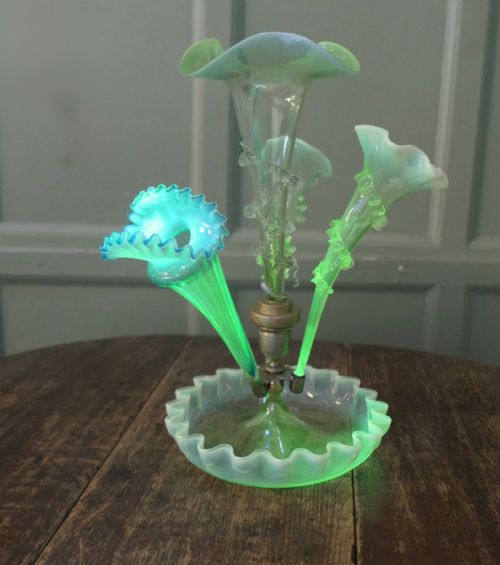
- A large table centerpiece featuring a central bowl with multiple branching trumpets or arms used for holding fruit or flowers.
- Ormolu
- Finely ground high-carat gold applied to a bronze base using a mercury amalgamation process, creating a rich golden surface.
- Pâte de Verre
- A glass-casting method where crushed glass is packed into a mould and fused in a kiln, producing a dense, textured object.
- Jardiniere
- An ornamental container designed to hold plants or floral arrangements, typically placed centrally on a table or pedestal.
French Glass Centerpiece: Frequently Asked Questions
What is a french glass centerpiece used for?
These vessels were historically placed in the middle of dining tables to hold fruit, flowers, or sweetmeats during formal meals. They served as conversation pieces that reflected candlelight through cut crystal or opalescent surfaces.
Today, they function as standalone decorative objects on sideboards, tables, or mantels. Their sculptural forms allow them to be displayed empty or used for floral arrangements.
How do I tell Art Nouveau from Art Deco pieces?
Art Nouveau pieces, produced around the turn of the twentieth century, feature flowing organic lines inspired by nature. You will notice motifs like poppy flowers, tendrils, and asymmetrical curves in both the glass and the metal mounts.
Art Deco designs from the nineteen-twenties and thirties favour geometric symmetry, stylised flora, and bold moulded relief. The glass often has a heavier, more architectural presence with frosted or opalescent finishes.
What is an epergne?
An epergne is a multi-tiered table centerpiece that includes a main base bowl combined with several detachable trumpets or hanging baskets. Victorian examples often cast these in uranium glass or coloured crystal for dramatic effect.
These complex table garnitures allowed hosts to arrange flowers at different heights. The arms and trumpets fit securely into collar mounts on the central bowl.