


French Giltwood Hall Table
A french giltwood hall table brings interior grandeur through carved timber, gold leaf and marble surfaces.
French Giltwood Hall Table
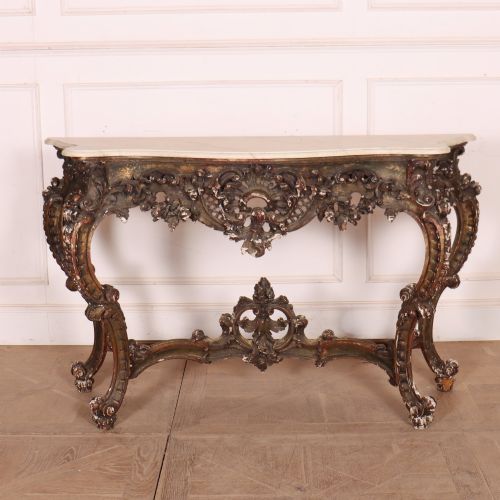
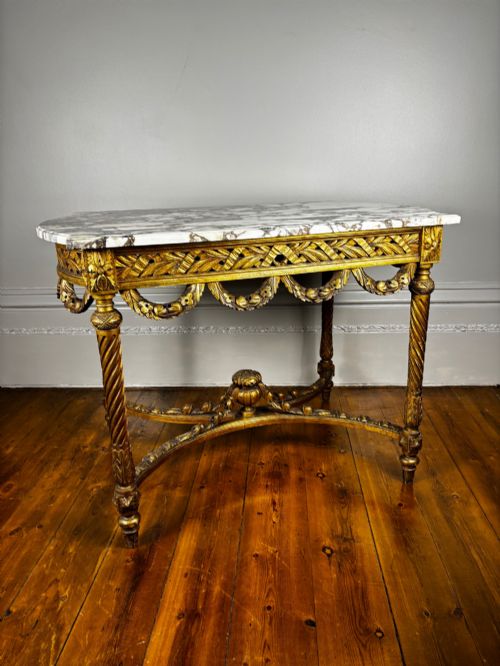
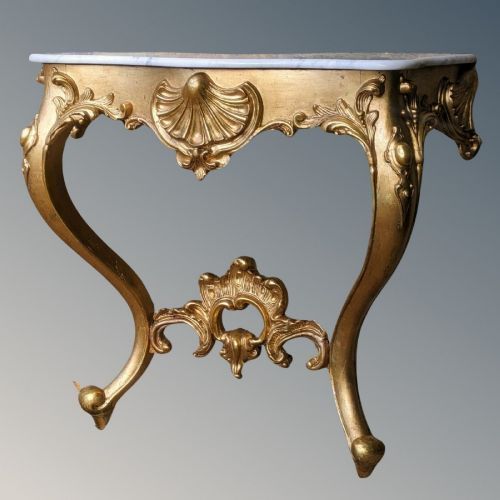
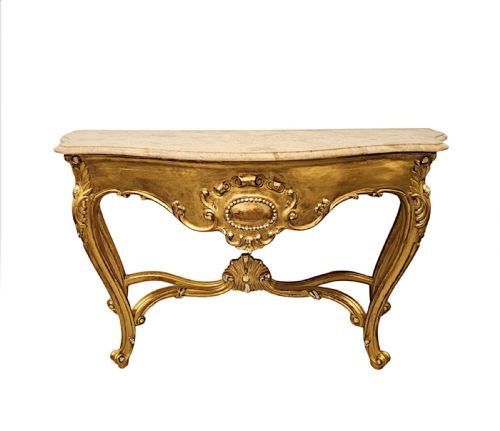
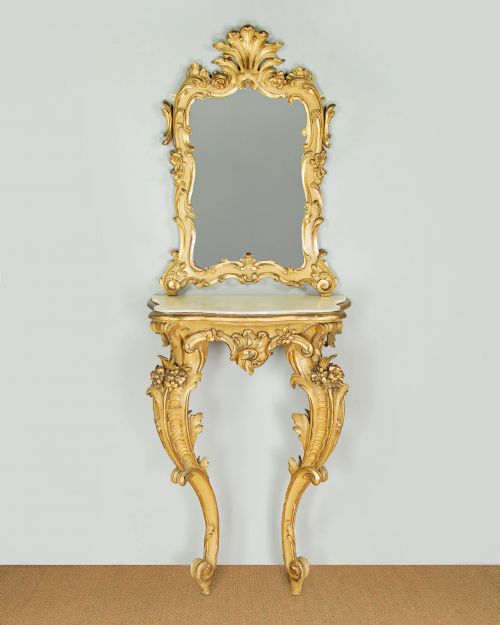
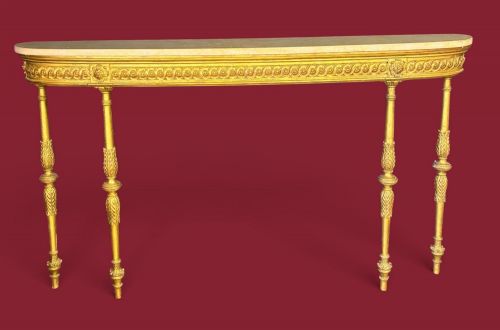
A french giltwood hall table is a striking ornamental furnishing designed to anchor an entrance hall or principal reception room. The pieces recorded here predominantly take the form of console tables, often paired with matching pier mirrors, alongside occasional centre tables and side tables.
Buyers will encounter examples spanning the eighteenth, nineteenth and early twentieth centuries. The aesthetic draws heavily from traditional French decorative idioms, including Rococo, Louis XV and Louis XVI revivals, alongside Neoclassical design.
The surviving forms range from small serpentine profiles to large monumental console tables with matching mirrors. These surfaces were built to command attention against a wall, frequently supporting decorative items or standing beneath a vertical looking glass.
How they were made
Construction relies on timber frames built from carved wood and gesso, prepared to receive applications of gold leaf, parcel gilt or paint. Artisans carved intricate organic motifs, scrolls and architectural details directly into the wooden structure before gilding.
Heavy marble slabs, including white Carrara and rouge varieties, form the typical tabletops resting upon these giltwood bases. Glass is integrated within the matching pier mirrors that frequently accompany the console tables.
French Giltwood Hall Table Retail Price Guide 2026
Typical asking prices for french giltwood hall table among the pieces listed under this phrase on Sellingantiques today, from the lower quarter to the upper quarter. They describe what is for sale here now, not the wider market.
Some nineteenth century makers incorporated striking sculpted baroque ram and maiden heads into their giltwood table designs.
The French Giltwood Hall Table Glossary
- Giltwood
- Timber that has been coated with gold leaf or gold paint over a prepared gesso ground. This technique provides the characteristic reflective golden surface seen across antique console tables.
- Console table
- A wall-mounted or freestanding table supported by front legs or brackets, designed to stand flat against a wall. They frequently carry heavy marble tops and appear beneath mirrors in entrance halls.
- Gesso
- A plaster-like mixture applied to wood surfaces as a smooth base for gilding or painting. It allows craftsmen to model sharp decorative details prior to applying gold leaf.
- Serpentine
- A furniture outline characterised by a wavy or curving front edge that undulates outward and inward. This shape adds visual movement to eighteenth and nineteenth century tables.
- Pier mirror
- A tall vertical looking glass designed to hang on the wall space between windows, often placed directly above a matching console table.
French Giltwood Hall Table: Frequently Asked Questions
Where should I place a console table?
These tables belong in entrance halls, corridors or principal reception rooms where their decorative profiles can be viewed against a wall.
Because most designs feature flat backs meant to sit flush against vertical surfaces, they fit neatly into narrow architectural spaces.
Are marble tops original to the tables?
Many period console tables were constructed specifically to carry heavy stone surfaces such as white Carrara or rouge marble.
Inspecting the seating rebate and the fit of the stone helps determine whether the marble matches the age and proportions of the wooden base.
How do I identify a revival style?
Revival pieces adopt the decorative vocabulary of earlier eighteenth century French reigns, such as Louis XV and Louis XVI, during the nineteenth and early twentieth centuries.
Clues lie in the timber preparation, gilding methods and secondary woods used within the hidden structural frame.
Can these tables support heavy objects?
While the heavy marble tops provide a stable surface, console tables are primarily decorative furnishings rather than heavy utility benches.
Many period examples rely on wall brackets or structural stretchers for complete stability against the wall.