



Ornate Entry Table
An ornate entry table brings immediate architectural presence to a hallway, offering a striking focal point with carved detail and marble surfaces.
Ornate Entry Table
When buyers search for an ornate entry table, they encounter console tables and centre tables shaped by nineteenth-century revivalist tastes and earlier traditions. These pieces function primarily as decorative statements in hallways, reception rooms, and grand corridors.
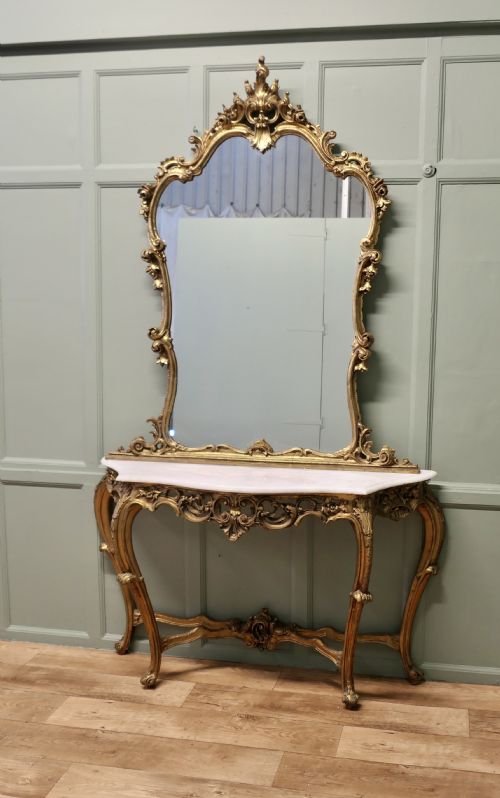
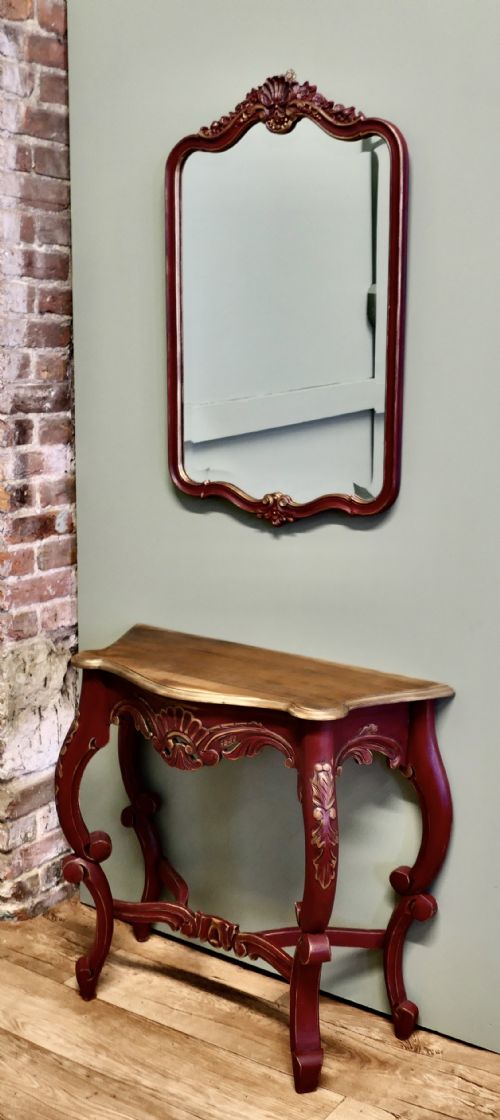
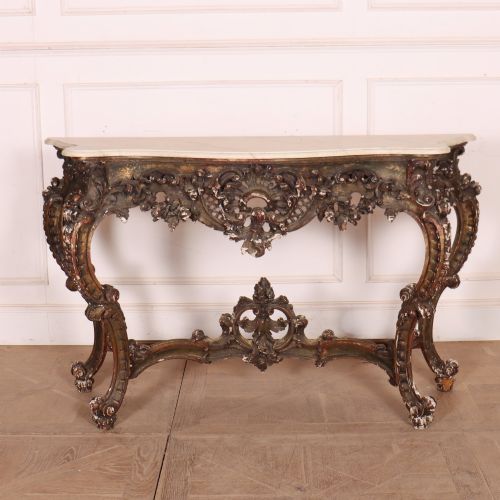
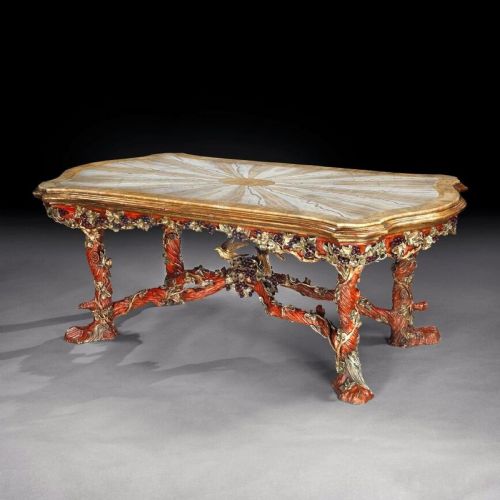
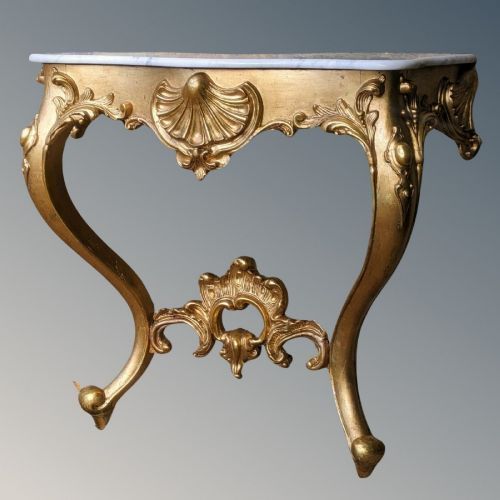
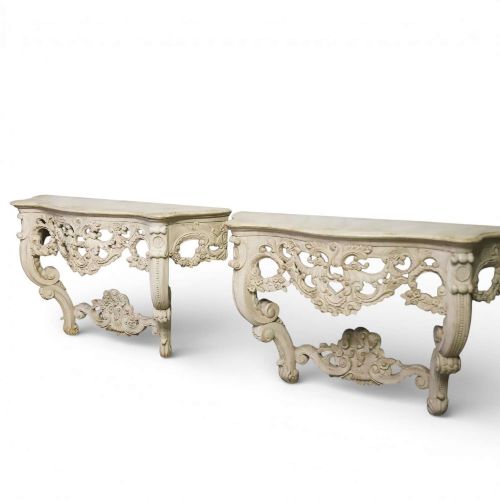
The selections here run from French Rococo giltwood and marble configurations to Italian carved wood examples and Anglo-Indian designs. Console tables designed to stand flat against a wall dominate the forms, frequently paired with matching mirrors.
Originating across periods spanning the Victorian era through the 1930s, these tables combine elaborate surface carving with heavy stone or timber tops. Buyers find everything from distressed white finishes to high-end burr walnut and giltwood constructions.
Materials and construction
Makers utilised solid timbers such as walnut, rosewood, and carved wood as the foundational structure for these tables. Giltwood and gesso applications provided the rich, reflective surfaces characteristic of French and Italian Rococo revivals.
Heavy marble slabs, including Sienna varieties and onyx, serve as durable, polished tops inset into carved wooden frames. Iron, brass, and copper elements appear alongside hand-carved polychrome finishes and painted wood treatments.
Ornate Entry Table Retail Price Guide 2026
Typical asking prices for ornate entry table among the pieces listed under this phrase on Sellingantiques today, from the lower quarter to the upper quarter. They describe what is for sale here now, not the wider market.
Keep an eye out for carved putto figures hiding beneath the marble, keeping eternal watch over your keys.
Assessing quality and execution
The distinction between standard execution and top-tier work rests on the depth and crispness of the hand-carving in the wood or gesso. Finer examples display intricate figural motifs, putto, or botanical detailing executed with sharp precision rather than soft moulding.
The quality of the top material - such as deeply veined Sienna marble or genuine onyx - separates ordinary pieces from exceptional ones. Heavier structural integrity, superior gilding application, and documented origins further elevate a piece within the range.
Amleto Bertoni
The Ornate Entry Table Glossary
- Console table
- A table designed to stand against a wall, frequently supported by ornate brackets or front legs rather than four traditional posts.
- Giltwood
- Timber treated with gold leaf or a gold-coloured metallic finish to create a brilliant decorative surface.
- Gesso
- A plaster-like mixture applied to wood surfaces and carved or moulded before gilding or painting.
- Rococo revival
- A nineteenth-century design movement resurrecting the asymmetrical scrolls, C-curves, and naturalistic motifs of the eighteenth-century French style.
- Sienna marble
- A distinctive yellow-brown ornamental marble quarried in Italy, valued for its dramatic veining.
Ornate Entry Table: Frequently Asked Questions
Where should an ornate entry table be placed?
These tables are traditionally positioned in hallways, foyers, or reception rooms to create an immediate visual impact upon entry. Their shallow console format allows them to sit flush against a wall without obstructing passageways.
Matching mirror sets are often hung directly above the surface to amplify light and complete the architectural composition of the entrance space.
How do I care for a marble top table?
Marble surfaces require gentle cleaning with a damp cloth and neutral soap to preserve the polish and prevent staining from acidic liquids. Avoid harsh chemical cleaners that can etch or dull the stone over time.
Using coasters and placestents helps protect the antique marble from scratches and moisture rings during daily use.
What is the difference between a console and a centre table?
Console tables feature a flat back designed to be placed directly against a wall, often anchored for stability. Centre tables are finished on all sides and intended to stand freestanding in the middle of a room.
While both serve decorative and surface functions, console tables suit narrow hallways whereas centre tables require open floor space to be viewed fully.
How do I identify a Rococo revival piece?
Rococo revival pieces display characteristic asymmetrical scrolls, shell motifs, C-scrolls, and deeply carved floral elements. The woodwork is frequently gilded or painted in antique white.
These designs draw inspiration from the French and Italian styles of the eighteenth century but were predominantly manufactured during the nineteenth century.