
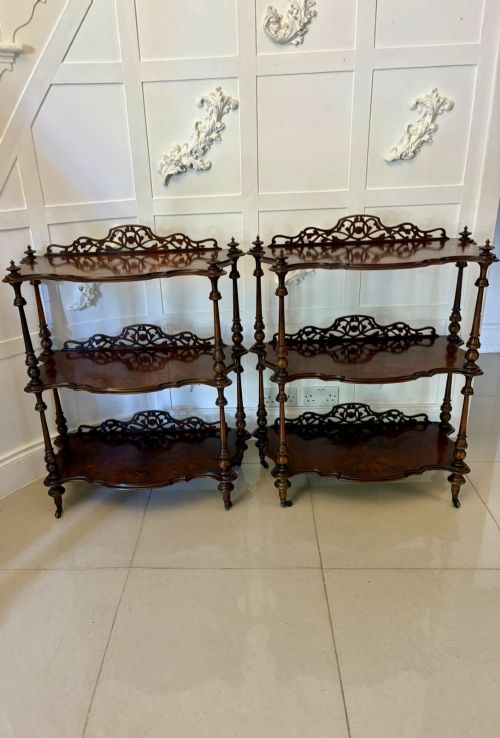
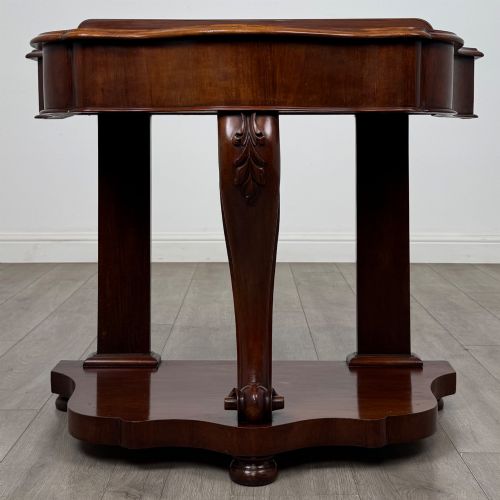
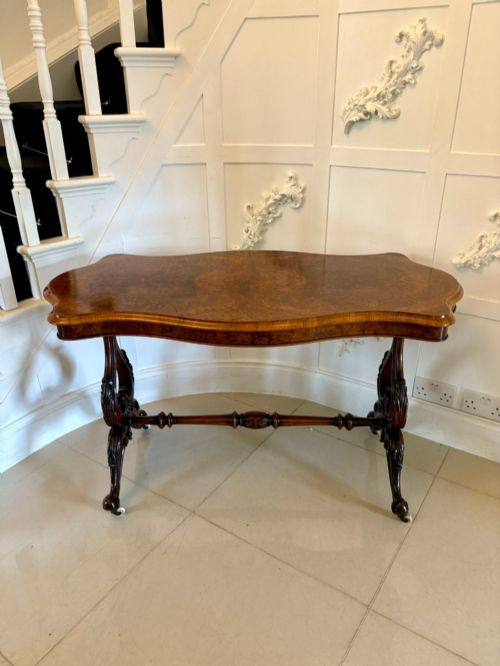
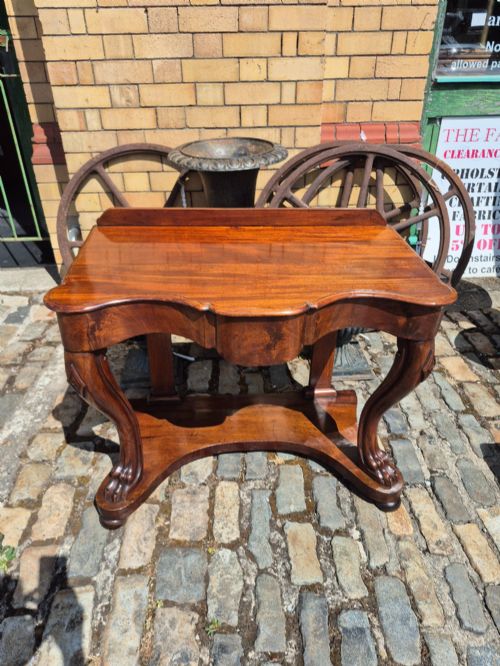
Carved Serpentine Table
A carved serpentine table brings rhythmic movement and rich timber into a room, shaped by a curving front edge that defines its classic silhouette.
Carved Serpentine Table
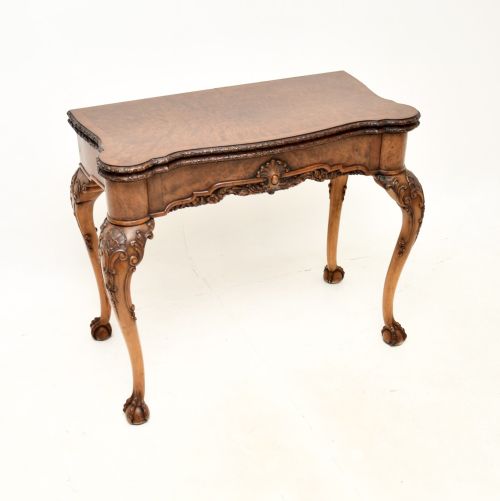
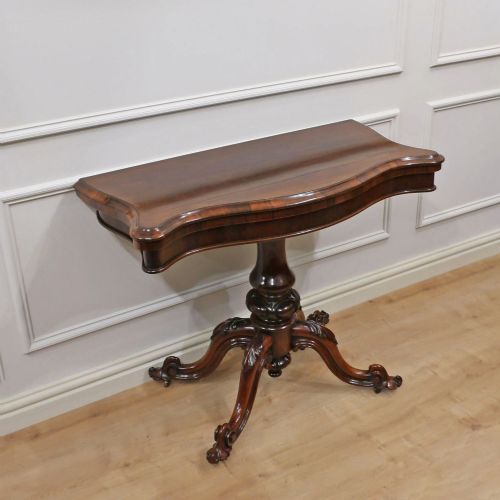
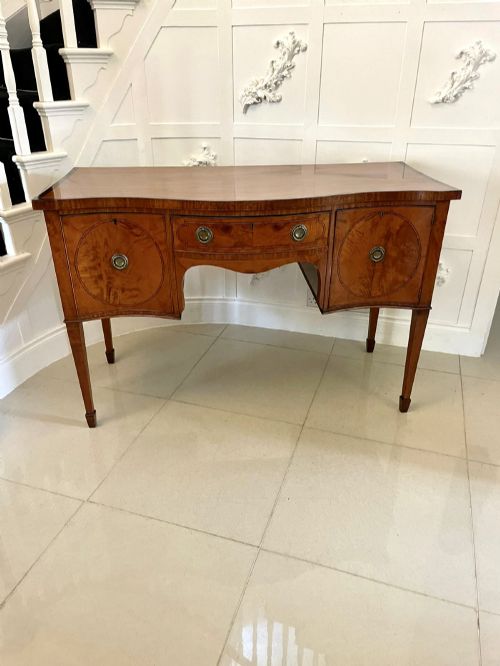
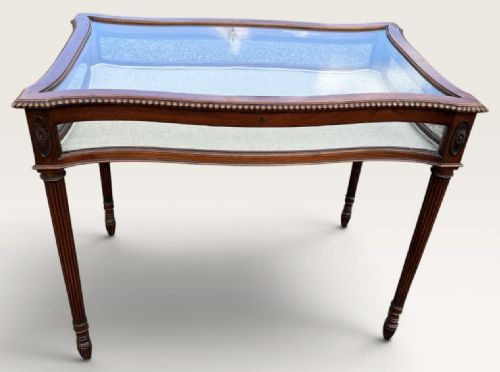
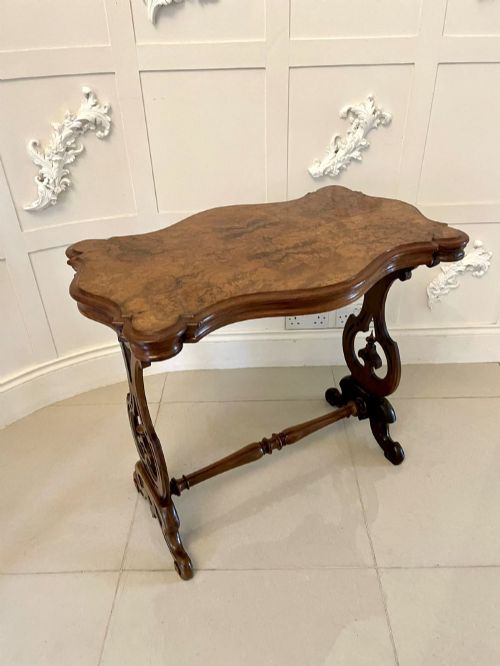
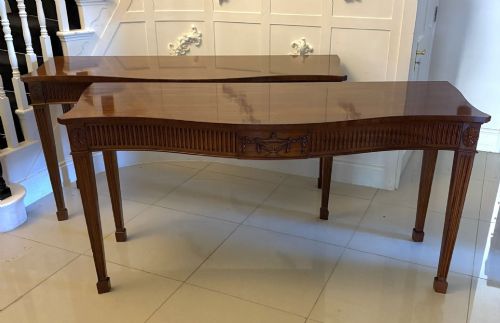
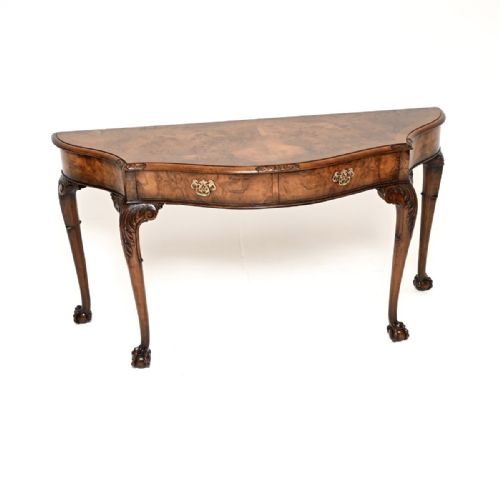
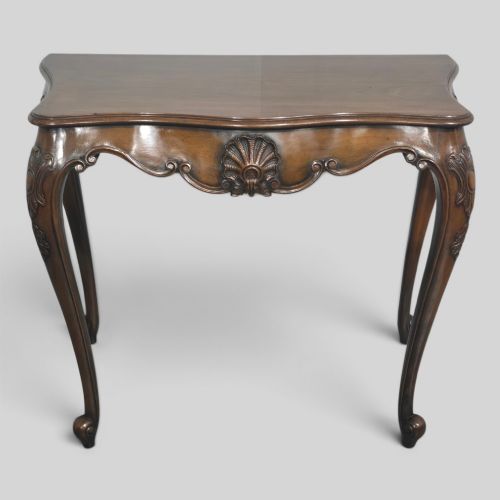
A carved serpentine table typically manifests as a console, card, or centre table designed with a distinctive undulating edge. The evidence shows these pieces appearing most frequently across the Victorian era and into the early twentieth century, spanning earlier Georgian forms as well.
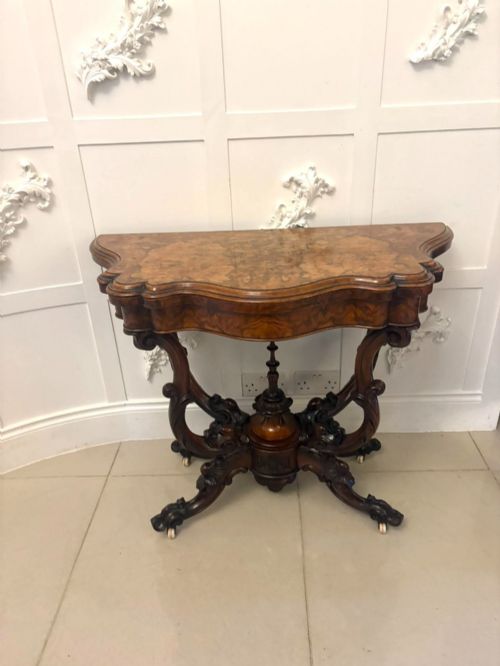
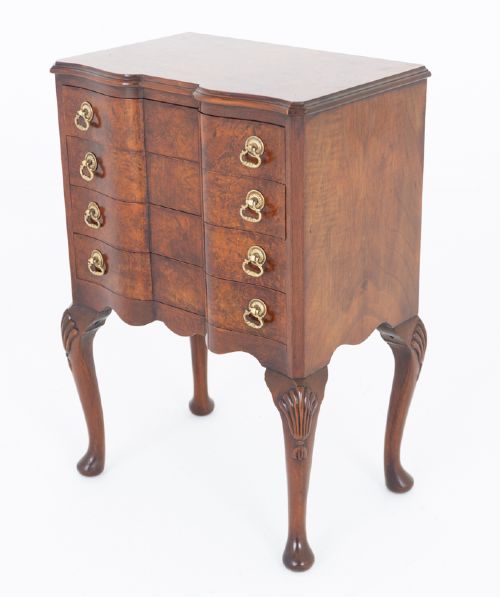
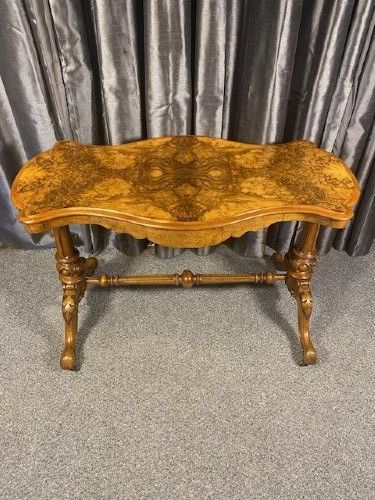
Makers utilised these flowing outlines across side tables, serving consoles, and occasional pieces, often pairing the serpentine profile with folding tops or carved stretcher bases. Walnut and mahogany dominate the offerings, frequently enhanced by burr veneers and detailed wooden carving.
Victorian examples in burr walnut sit alongside eighteenth-century mahogany iterations and later Edwardian interpretations. These tables function both as practical surfaces and as focal points within reception rooms and hallways.
Materials and Construction
Cabinet makers constructed these tables from dense hardwoods such as mahogany and walnut, frequently selecting burr walnut veneers to achieve complex, figured grain patterns across the top surface. Solid timbers like oak and rosewood also appear in structural elements and specific regional iterations.
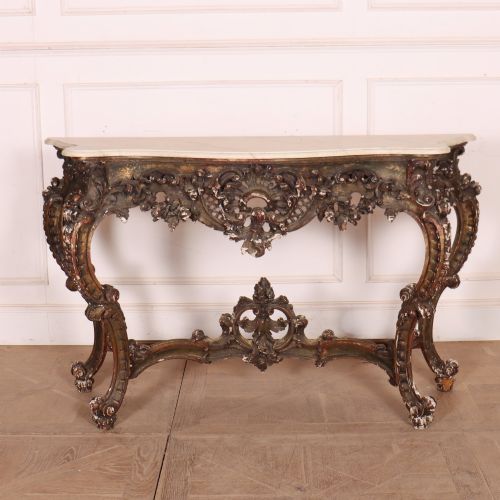
The characteristic undulating front requires careful sawing and shaping of the timber frame to maintain structural integrity along the curved edge. Carved ornamentation, from neoclassical motifs to naturalistic foliage, decorates the aprons, legs, and stretchers of finer examples.
Card tables hide folding leaves ready to drop open for an impromptu evening of whist.
Distinctions in Quality
The standard of a carved serpentine table rests upon the precision of the timber shaping and the depth of the hand-carved detail. Superior pieces exhibit crisp, undercut carving on the legs and aprons rather than shallow, mechanical moulding.
Figure matching in the veneer work marks the difference between standard production and exceptional craftsmanship, particularly on burr walnut tops. Original patination and integrated structural timber preservation further separate ordinary items from those of high collector standing.
The Carved Serpentine Table Glossary
- Serpentine
- A furniture front or edge shaped with a concave centre flanked by two convex ends, creating a continuous undulating line. This contour requires specialised woodworking skill to execute correctly.
- Burr walnut
- Timber sliced from the gnarled growths of a walnut tree, prized for its swirling, highly decorative grain pattern. Cabinet makers applied it as a veneer to prominent surfaces.
- Console table
- A table designed to stand against a wall, historically supported by brackets or ornate legs. These pieces often feature decorative front profiles intended for display.
- Card table
- A folding table equipped with a hinged top that opens to reveal a baize-lined playing surface. They gained popularity for social gaming during the eighteenth and nineteenth centuries.
- Patina
- The surface sheen and colour acquired by wood and metal through age, handling, and use. Collectors value an undisturbed surface history.
- Stretcher
- A horizontal wooden bar connecting the legs of a table to provide structural stability. Carved variations often serve a decorative as well as a bracing function.
Carved Serpentine Table: Frequently Asked Questions
What is a serpentine table?
A serpentine table is a piece of furniture featuring a top and front edge shaped into a distinctive wave-like curve, moving inward and outward. This design adds visual depth and movement to standard table forms.
Craftsmen applied this silhouette across console tables, card tables, and side tables in various historic periods, combining the flowing shape with carved wooden ornamentation.
How do I date a serpentine table?
Dating relies on examining the timber species, construction methods, and stylistic carving details present on the piece. Victorian examples frequently utilise burr walnut, while eighteenth-century pieces commonly employ solid mahogany.
Secondary woods used in the interior framing, along with the style of the legs and stretcher base, offer further clues to the decade or period of manufacture.
Where should I place a console table?
Console tables fit naturally against entrance hallway walls, beneath mirrors, or in reception rooms where floor space is limited. Their shallow depth allows them to serve as display surfaces without obstructing pathways.
Parks of lighting or decorative objects on top complete the arrangement while highlighting the carved front profile.
Are card tables still functional?
Card tables retain their operational folding mechanisms, allowing them to function as compact side tables that open into larger surfaces when needed. The internal hinges and folding tops remain robust on well-maintained pieces.
Owners often utilise them in living spaces as versatile surfaces that adapt for hosting or display.