
French Giltwood Fauteuils
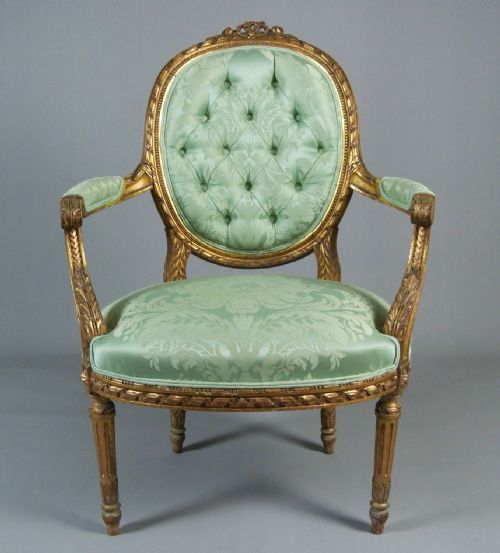
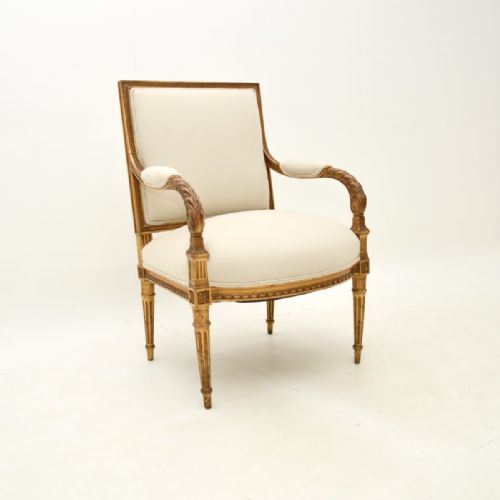
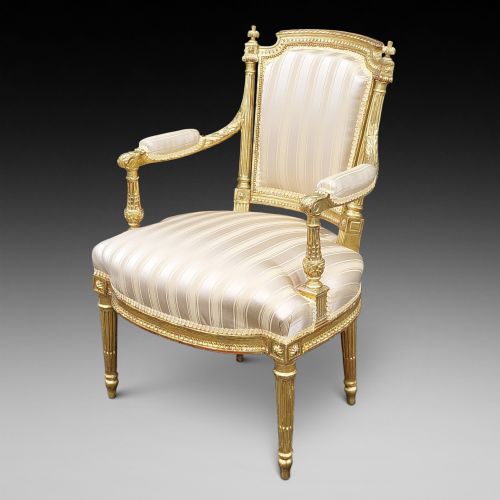
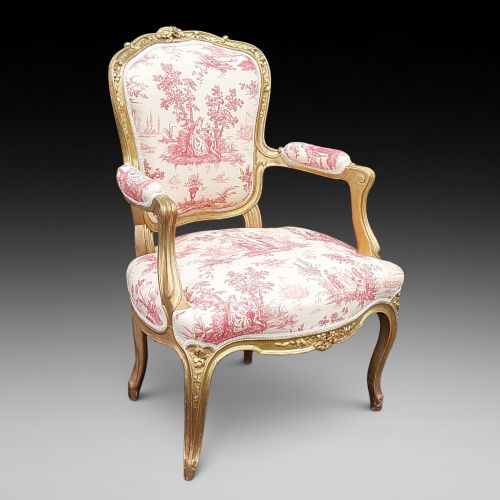
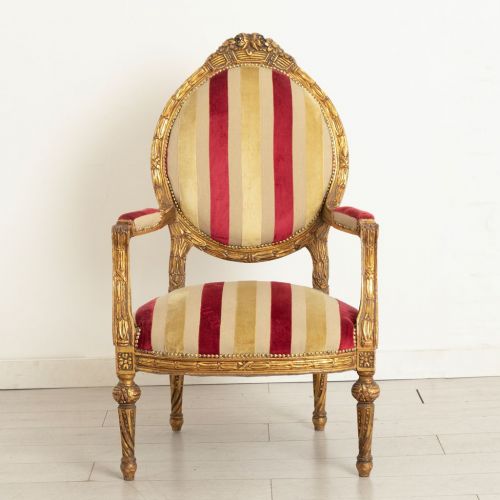
These French giltwood fauteuils combine carved wooden frames with generous proportions, offering a seating option designed to anchor a formal salon.
French Giltwood Fauteuils
When you search for french giltwood fauteuils, you encounter open-armed seating designed for formal domestic spaces rather than private repose. These seats emerge from periods spanning the eighteenth, nineteenth, and early twentieth centuries, reflecting changing interpretations of classicism and revivalist tastes.
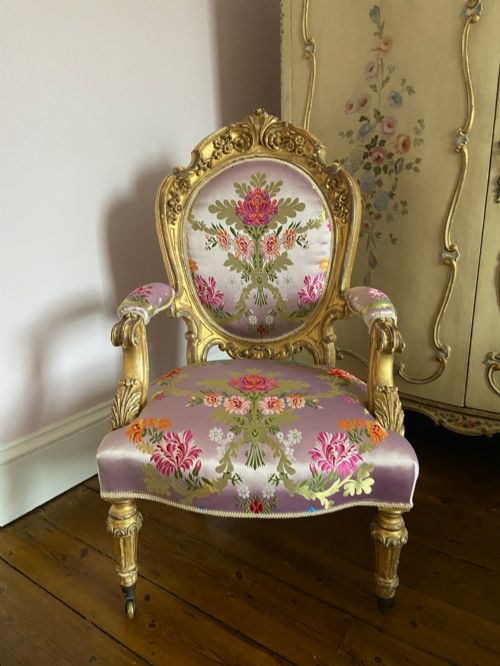
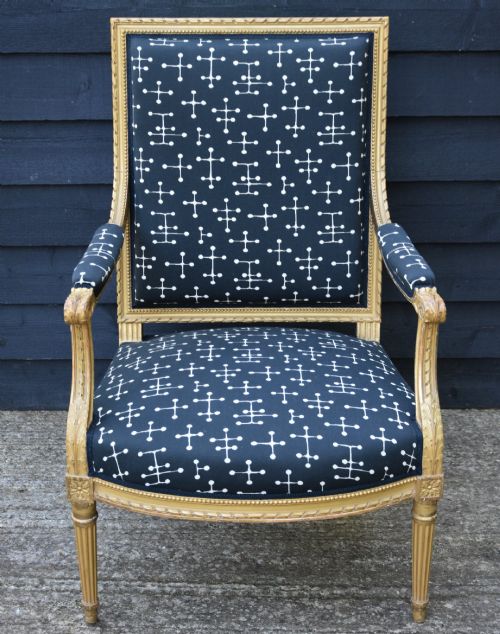
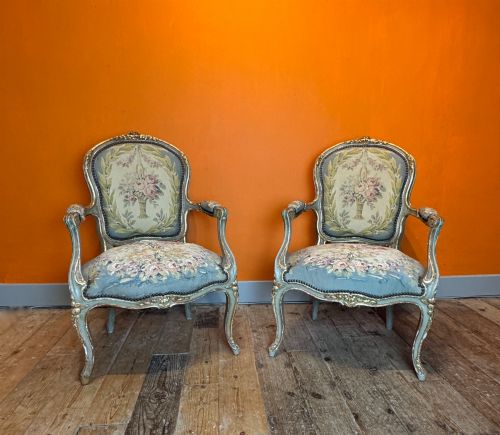
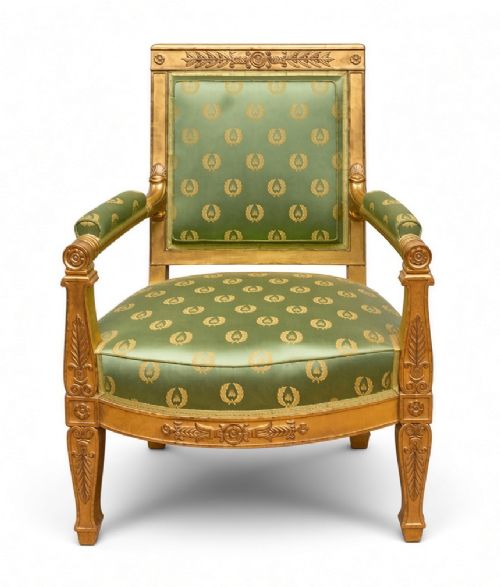
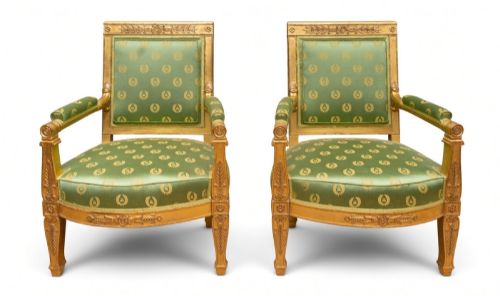
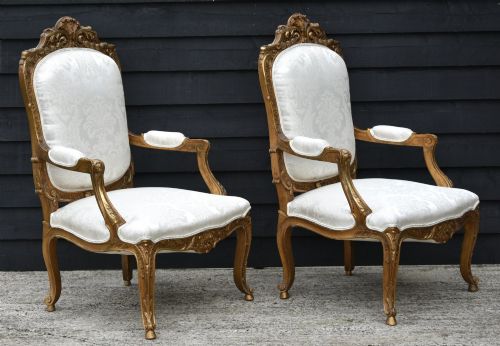
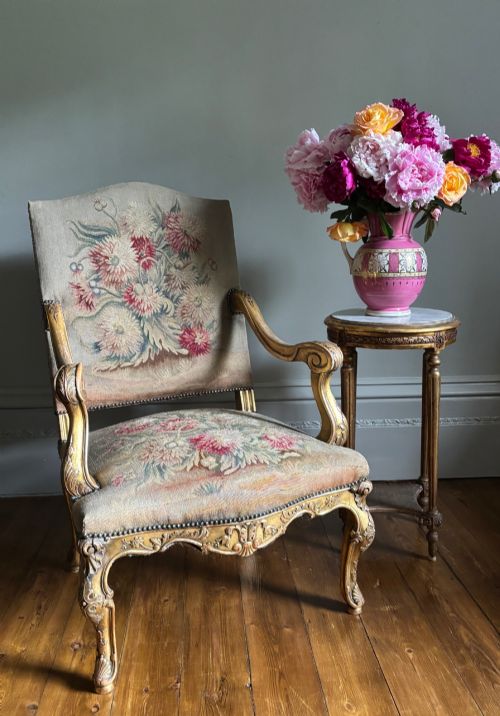
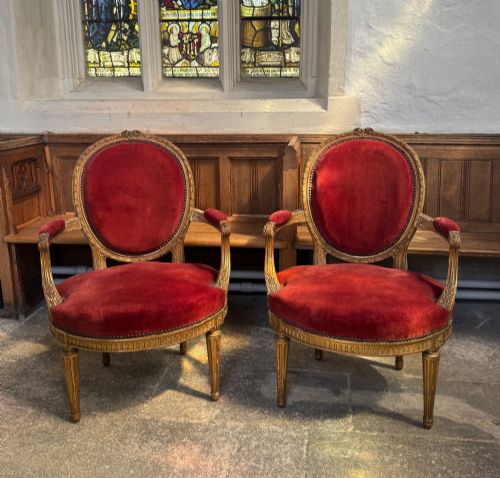
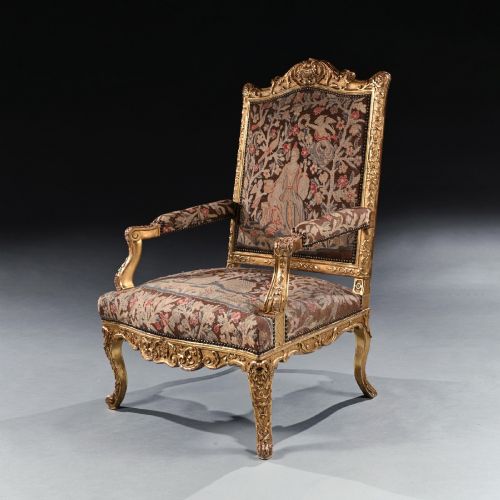
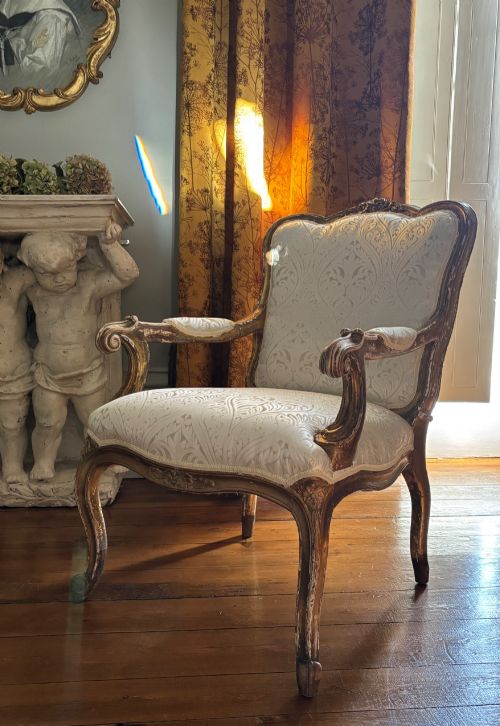
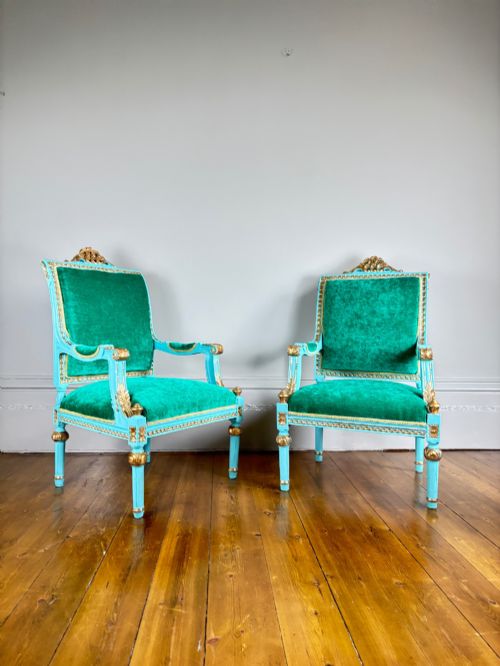
The version you meet most frequently on this page is the nineteenth-century revival piece, drawing heavily upon Louis XVI and Rococo forms. These chairs appear singly or in matched pairs, often accompanied by silk, velvet, or tapestry upholstery that complements the gilded frame.
The underlying timber forms the structural skeleton of each armchair, supporting elaborate carved details that define the aesthetic of the piece. Makers working across France and England adopted these classical vocabulary points, producing seating suited to grand interiors and reception rooms.
How they were made
Makers shaped structural timber such as beech and walnut into sweeping arm supports and curved legs, applying traditional joinery to ensure stability. Carvers then detailed the wooden frames by hand before applying a fine layer of gold leaf over preparation gesso.
Upholstery completed the construction, utilising materials like silk, velvet, and tapestry stretched over webbing and stuffing to provide a firm yet supportive seat. Craftsmen secured these textiles with decorative brass tacks along the borders of the wooden framework.
Upholstery choices across the inventory include silk fabric, velvet, and tapestry.
What varies in quality
The refinement of the hand carving separates standard production from exceptional examples, dictating how sharply the floral and linear motifs define themselves against the wood. Crisp depth in the acanthus leaves and scrollwork indicates a more skilled hand during the initial shaping phase.
The application and retention of the gilding layer determine visual depth, with burnished gold leaf reflecting light differently than flat metallic paint. Furthermore, the integrity of the original timber frame and the quality of the textile upholstery dictate the overall structural harmony of the armchair.
Jacob-Desmalter·Thomas Chippendale·Blaise Maucuy·Holland & Sons
The French Giltwood Fauteuils Glossary
- Fauteuil
- An open-armed upholstered armchair originating in France, traditionally featuring exposed wooden framing around the backrest and arm supports.
- Giltwood
- Timber coated with gold leaf applied over a gesso ground, creating a bright metallic surface finish.
- Rococo Revival
- A nineteenth-century design movement that reinterprets the asymmetric scrolls, shell motifs, and curving lines of the eighteenth-century French style.
- Louis XVI Style
- A neoclassical design aesthetic characterised by straight tapered legs, geometric symmetry, and classical architectural ornamentation.
- Tapestry
- A heavy woven textile featuring pictorial or decorative designs, frequently utilised for period upholstery on formal seating.
French Giltwood Fauteuils: Frequently Asked Questions
What is a fauteuil?
A fauteuil is an open-armed upholstered armchair designed in France, featuring exposed wood around the back and sides. It offers a formal seat for salons and reception rooms.
Unlike fully upholstered armchairs, the wooden frame remains visible, displaying carved details and gilded surfaces. These chairs combine decorative impact with practical seating.
Where were these armchairs used?
These armchairs served as prominent furnishings in formal drawing rooms, Parisian salons, and stately residences. They provided moveable seating that could be arranged for conversation.
Pairs or sets often lined the perimeter of a room until needed for gatherings. Their decorative backs ensured they looked appropriate from any angle.
How should I care for giltwood?
Giltwood requires gentle dusting with a soft, dry cloth to prevent the accumulation of abrasive particles. Avoid liquid cleaners and modern chemical polishes which can strip the delicate gold leaf.
Keep the chairs away from direct sunlight and excessive humidity to protect the underlying gesso and wood. Careful placement preserves the metallic surface over time.