


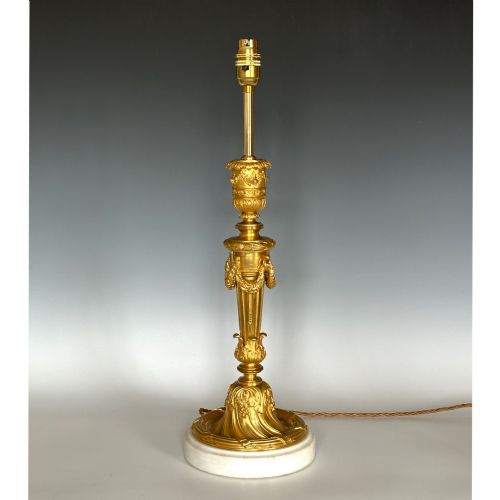
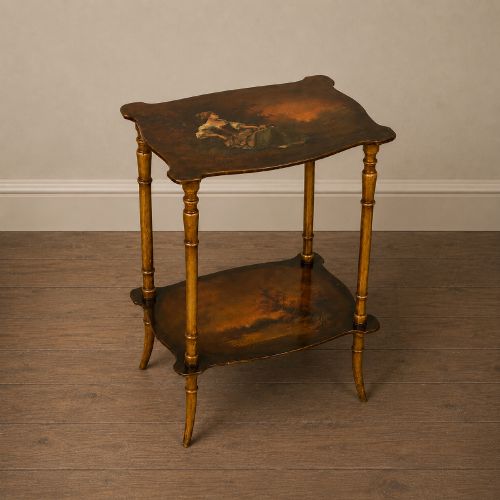
French Gilt Side Table
When you search for a french gilt side table, you are looking at ornamental surface furniture defined by gilded highlights and decorative mounts.
French Gilt Side Table
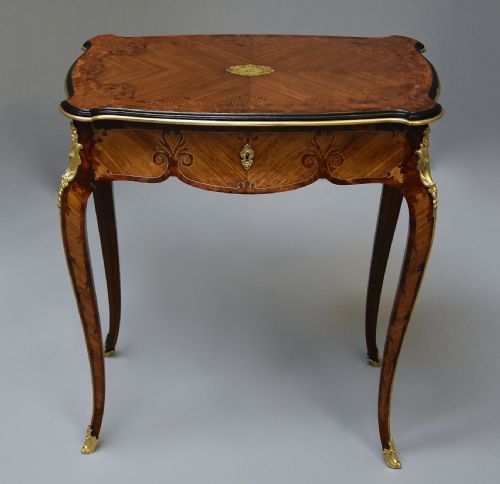
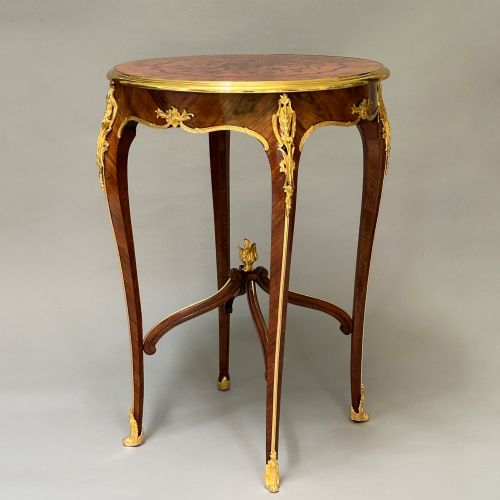
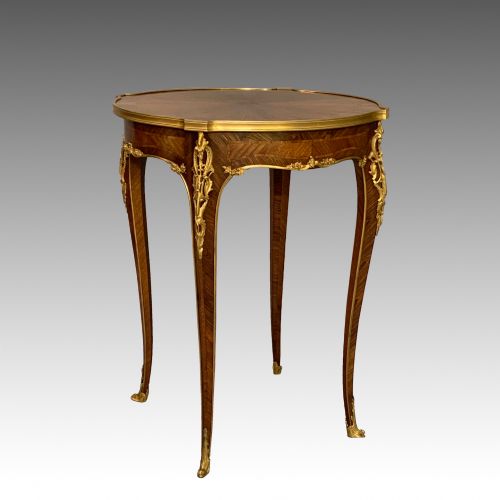
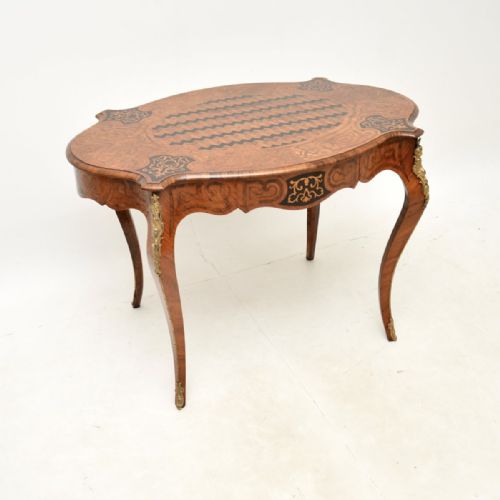
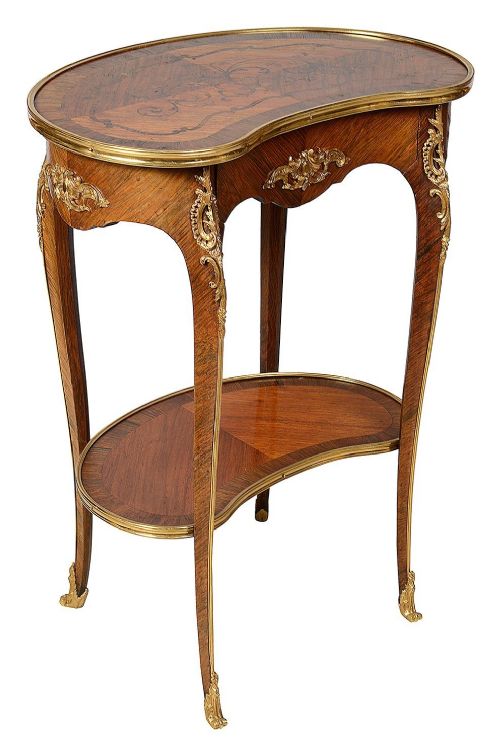
A french gilt side table serves as a decorative surface designed for display or intimate service within a reception room, frequently adopting compact proportions suited to placement beside seating or against walls. These pieces embody historical revival movements, drawing heavily on Louis XV, Louis XVI, and Empire design vocabulary that prioritises flowing serpentine lines or strict neoclassical symmetry.
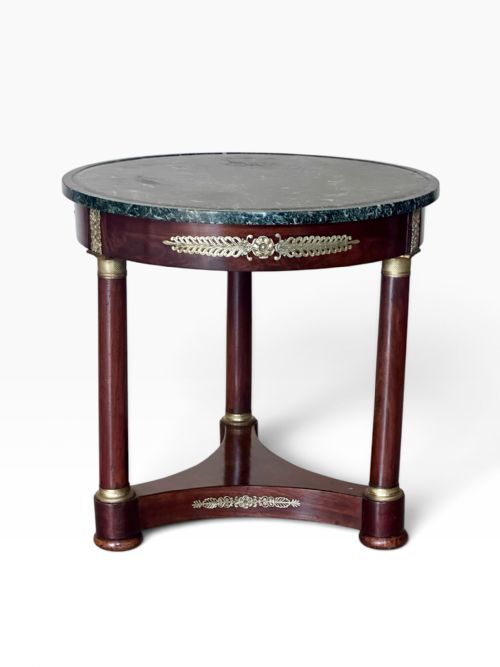
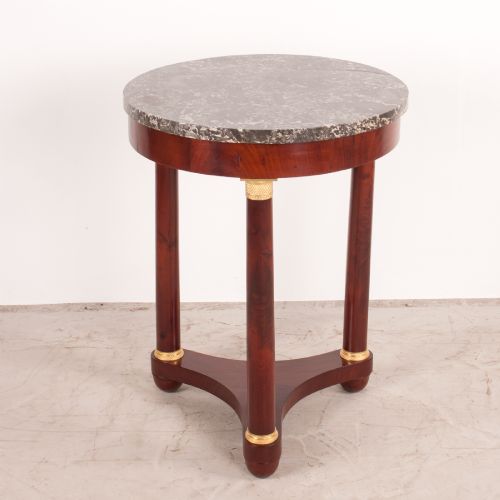
The versions most commonly encountered on this page date predominantly from the nineteenth century, spanning various decades up to the Edwardian period. They appear in forms such as gueridons, occasional tables, and console tables, frequently incorporating inset marble tops and metallic mounts.
Makers and workshops of the period adapted these historical styles to suit contemporary bourgeois interiors, resulting in both freestanding centre tables and wall-mounted console variations. Their presence introduces warmth and metallic reflection into a room through the combination of polished wood and applied gilt detailing.
Materials and Construction
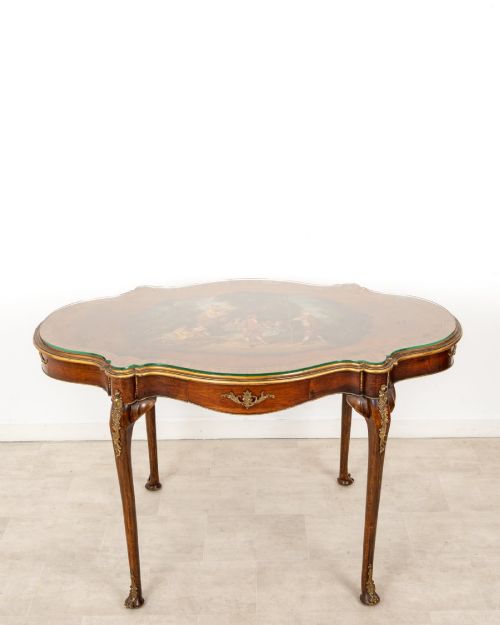
Makers utilised dense cabinet timbers such as kingwood, mahogany, and walnut as the foundational structure, often applying intricate marquetry or parquetry veneer patterns across the top and sides. These wooden surfaces were complemented by carved giltwood frameworks or applied cast metal mounts finished in ormolu and gilt bronze.
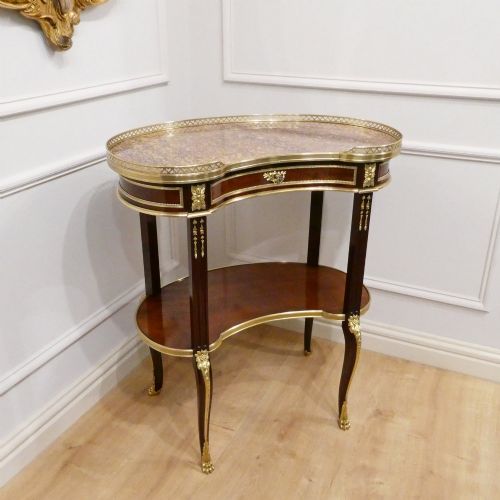
Marble tops, including figured varieties like breche d'alep, were heavily integrated into console and table designs, cut and polished to fit flush within wooden or gilt metal borders. Metal components were cast, chased, and gilded, then secured to the timber carcasses alongside secondary materials such as brass, onyx, and hand-painted porcelain plaques.
Assessing Quality and Execution
The distinction between standard commercial production and exceptional craftsmanship rests upon the depth of hand-chasing in the gilt bronze mounts and the precision of the marquetry inlays. Finer tables demonstrate superior articulation in cast ornament, where details remain sharp and defined rather than soft or flat.
Structural integrity also separates the output of notable Parisian ateliers from lesser workshops, visible in the smoothness of mechanisms, the thickness of the marble slabs, and the quality of the underlying secondary timbers. Tables bearing authentic cabinetmaker stamps or attributable to prominent makers generally exhibit a higher standard of overall execution.
Maison Millet·Joseph-Emmanuel Zwiener·E Rousseau·Maison Bagues·Krieger Paris·E. Kahn
The French Gilt Side Table Glossary
- Ormolu
- Gilded bronze used for decorative mounts and furniture trim. The technique involves applying a finely ground high-carat gold mercury amalgam to a bronze base before heating.
- Gueridon
- A small circular table supported by a central pillar or tripod legs. Originating in the seventeenth century, these tables frequently feature marble tops.
- Marquetry
- The art of applying pieces of veneer to a structure to form decorative patterns and pictorial designs. Cabinetmakers used various tinted woods to achieve tonal depth.
- Console Table
- A table designed to be fixed against a wall, often supported by front legs and secured with wall brackets. They frequently feature shaped marble slabs.
- Bouillotte Table
- A small neoclassical occasional table featuring a raised gallery rim around the edge of the marble top. It was traditionally used for the card game of the same name.
French Gilt Side Table: Frequently Asked Questions
What rooms suit a french gilt side table?
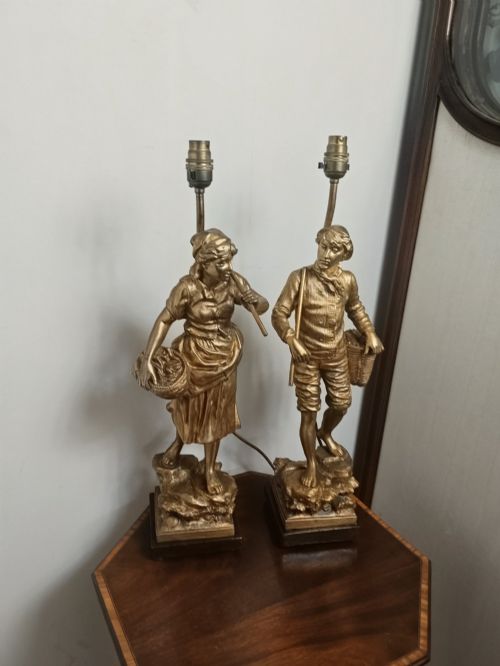
These tables find a natural home in drawing rooms, studies, and bedrooms where their decorative metal mounts and polished timber surfaces can catch the light. They function effectively as lamp stands or display surfaces beside armchairs and sofas.
Because of their compact scale, they also sit comfortably in hallways or against architectural walls as console tables without overwhelming the floor space.
How do I care for marble tops?
Marble surfaces require gentle cleaning with a damp cloth and mild, pH-neutral soap to avoid dulling the polish. Acidic substances like citrus or wine should be wiped away immediately to prevent etching.
Applying a specialist marble wax offers additional protection against moisture and everyday staining while preserving the natural figure of the stone.
How do I distinguish Louis XV and Louis XVI styles?
Louis XV style pieces, often linked to the Rococo revival, are characterised by asymmetrical curves, cabriole legs, and elaborate naturalistic scrollwork. The lines are fluid and organic.
Louis XVI style shifts towards neoclassical restraint, featuring straight fluted legs, geometric symmetry, and architectural motifs such as urns and laurel wreaths.
Are these tables suitable for daily use?
Nineteenth-century tables were built using traditional joinery and cabinet woods, making them sturdy enough for everyday placement of lamps, books, and decorative objects. However, delicate marquetry and gilded surfaces benefit from gentle handling and coasters to prevent scratching.
Placing them away from direct heat sources and strong sunlight preserves the stability of the timber and the richness of the gilt finish.