

French Gilded Fauteuils
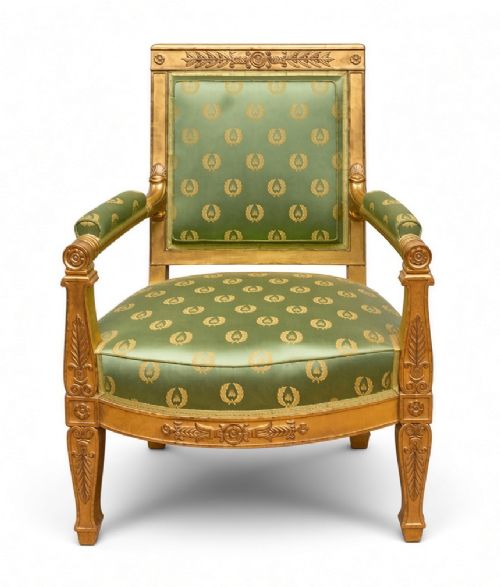
French gilded fauteuils are open-framed upholstered seats designed for formal rooms, combining carved wooden frames with decorative gold surfaces.
French Gilded Fauteuils
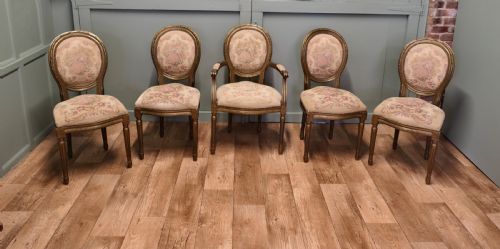
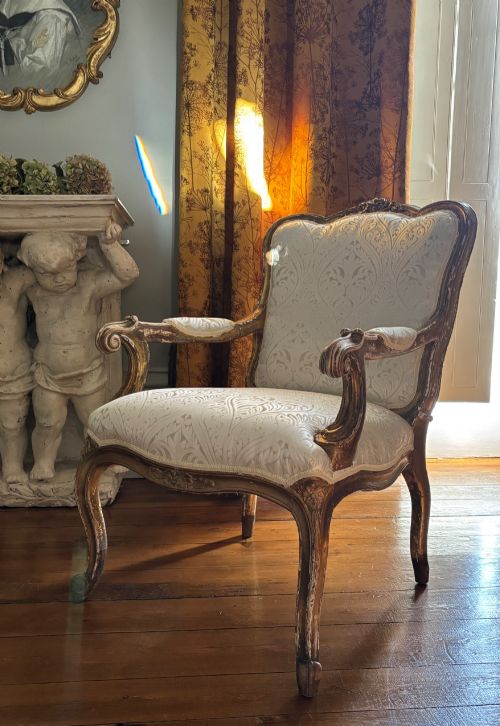
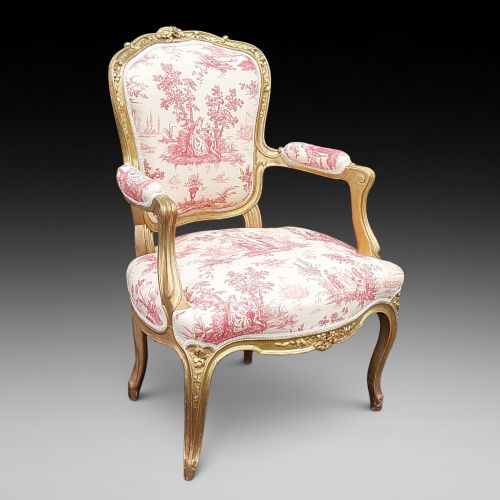
When you search for french gilded fauteuils, you are looking at open-armed seating designed for formal salons, drawing rooms and bedrooms. These chairs emerge primarily in nineteenth-century interpretations of earlier eighteenth-century designs, reflecting historic revivals of French court styles.
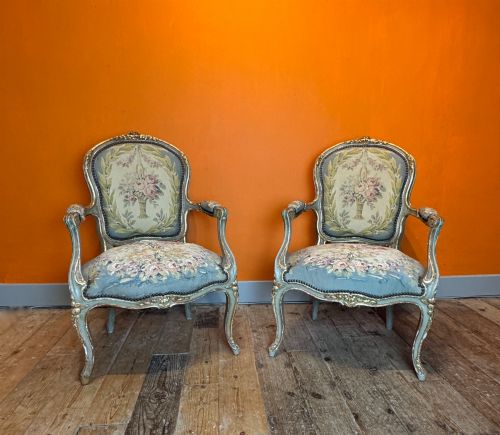
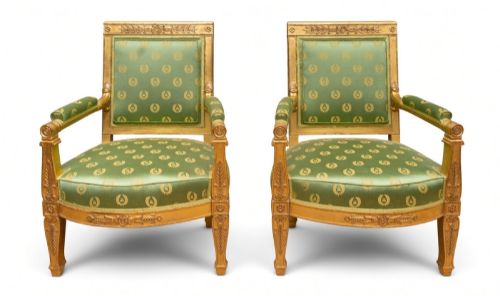
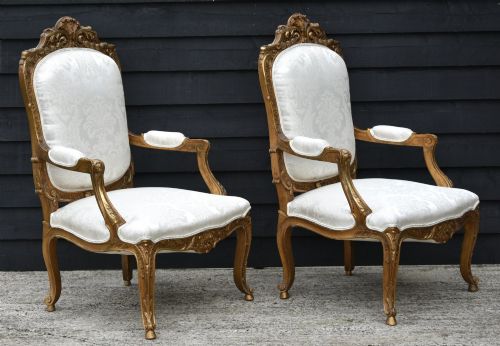
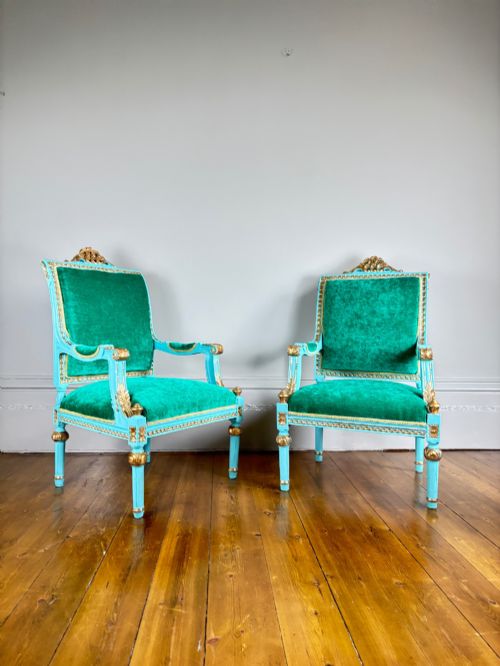
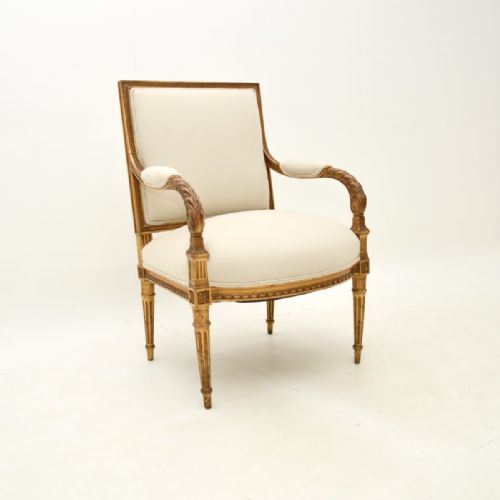
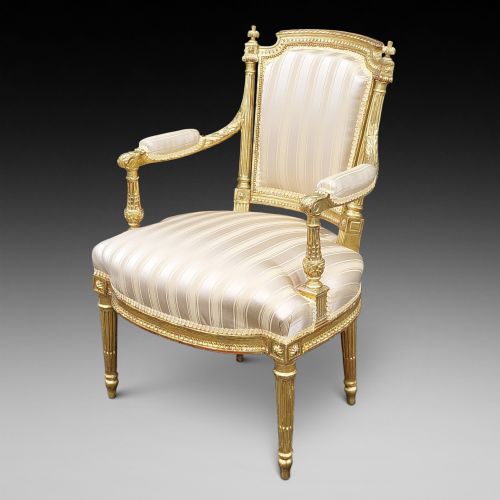
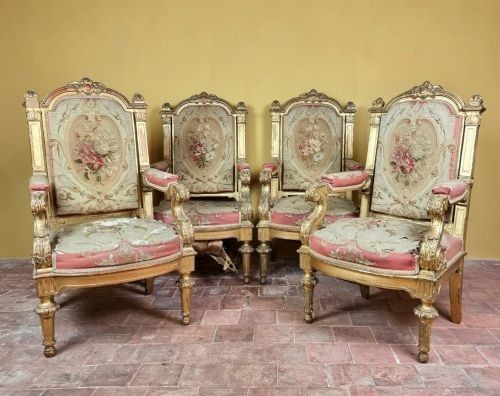
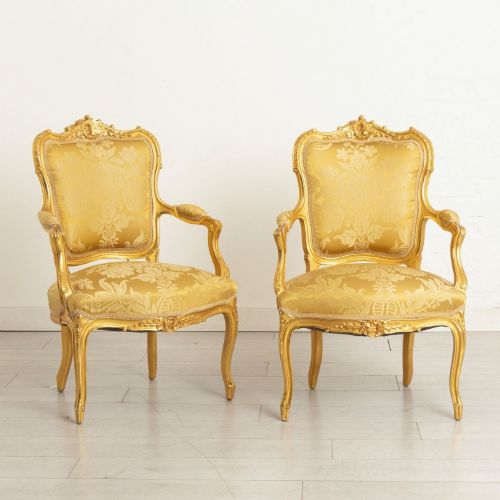
The version you are most likely to meet on this page is the nineteenth-century revival piece, often appearing in pairs or larger salon suites. These chairs take forms influenced by Louis XV and Louis XVI reigns, alongside later Napoleon III and Restauration periods.
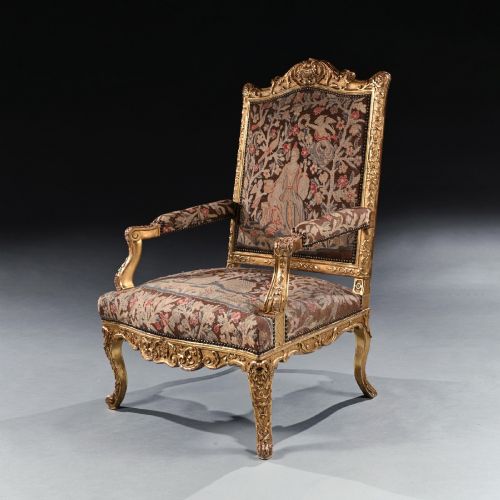
Makers and workshops across these periods produced armchairs, salon chairs and throne chairs intended to project elegance and status. They survive today upholstered in varied historic and modern textiles, from silk and velvet to tapestry.
Materials and construction
The structural framework of these chairs relies on wood, with beech frequently utilised by makers for its strength in carved applications. Artisans shaped these wooden frames into curved rails, cabriole legs and ornamented arm supports reflecting rococo or neoclassical aesthetics.
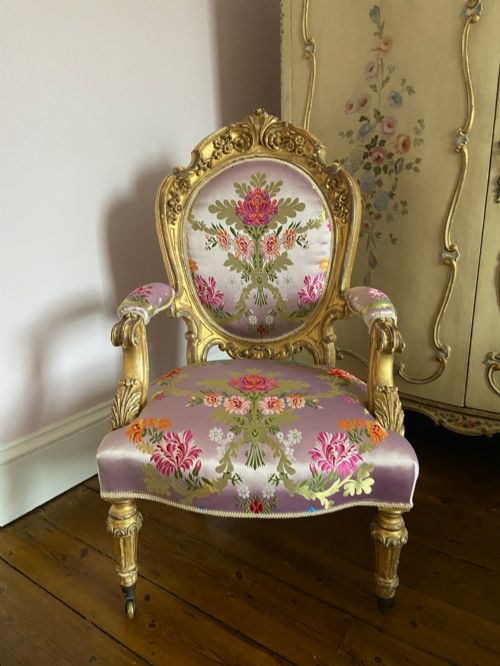
Surface decoration depends on the application of gold leaf or parcel gilt finishes over painted or bare wood grounds. Upholstery materials layer fabric, silk, velvet or tapestry over internal padding to complete the seat.
Distinctions in quality
Quality separates through the depth and crispness of the wood carving on the frame. Master carvers produced intricate floral, scrolling and acanthus details that maintain sharp edges through the gilding layers, whereas lesser examples show softer, flatter moulding.
The integrity of the gilded surface defines the visual impact of the piece. Hand-applied gold leaf demonstrates nuanced reflection and texture compared to flat, uniform modern metallic paints applied during later restorations.
Jacob-Desmalter·Holland & Sons·Blaise Maucuy
The French Gilded Fauteuils Glossary
- Fauteuil
- An open-framed upholstered armchair originating in France. These seats feature exposed wooden arms and upholstered backs and seats.
- Giltwood
- Wood that has been coated with thin sheets of gold leaf or powder. This finish provides a luminous decorative surface.
- Louis XVI
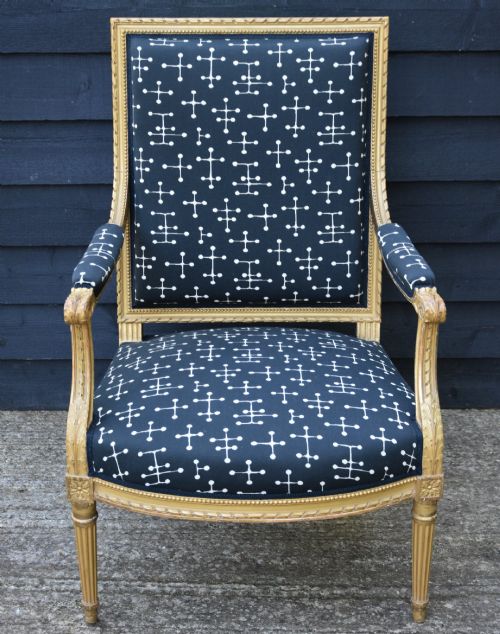
- A neoclassical design style characterised by straight tapering legs and geometric symmetry. Pieces in this manner appear frequently in nineteenth-century revivals.
- Tapestry
- A thick woven textile depicting pictorial or decorative scenes. Many salon chairs utilise tapestry for durable and ornamental upholstery.
- Rococo
- An ornate artistic style featuring asymmetrical scrolls and naturalistic plant motifs. It heavily influences nineteenth-century revival armchair designs.
French Gilded Fauteuils: Frequently Asked Questions
What is a fauteuil?
A fauteuil is a traditional French upholstered armchair with open wooden sides. The design allows generous room for elaborate historical dress.
These chairs served as principal seating in formal reception rooms and drawing rooms. They combine decorative woodwork with padded comfort.
How do I style these chairs?
Place pairs of gilded armchairs flanking a fireplace or beneath a large mirror to anchor a room. Their reflective frames brighten dark corners and formal spaces.
Mix them with simpler modern furniture to highlight their carved wooden details. Ensure they sit in low-traffic areas to protect delicate silk and velvet fabrics.
Are these original eighteenth century?
Most pieces found here date from the nineteenth century during revivals of earlier French styles. Makers recreated historical aesthetic vocabulary for Victorian and Edwardian interiors.
True eighteenth-century examples are exceptionally scarce and require careful provenance examination. Nineteenth-century interpretations offer the same visual grandeur with greater structural availability.
What fabrics are used?
Upholstery ranges from traditional silk and velvet to heavy woven tapestry. Many pieces retain later replacement textiles chosen for interior decoration.
Original covers rarely survive centuries of use intact. Historic restorations often utilise patterned fabrics that mimic period aesthetics.