
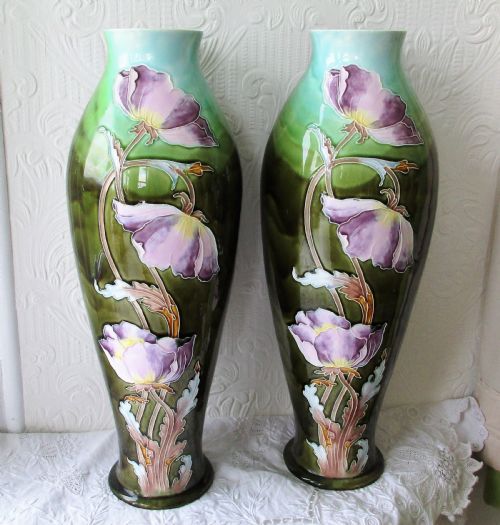


French Floral Porcelain Urns
French floral porcelain urns bring hand-painted botanical detail and gilt mounts into a room, offering nineteenth-century craftsmanship for a mantelpiece or side table.
French Floral Porcelain Urns
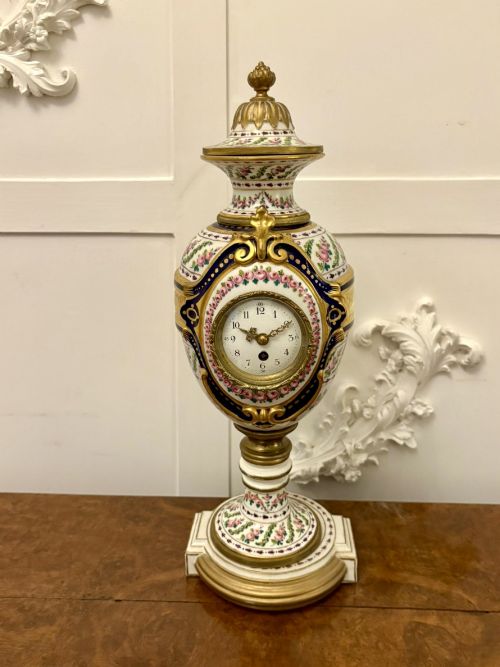
French floral porcelain urns encompass nineteenth-century decorative pieces shaped as vases, mantel clocks, and garniture sets. These items stem predominantly from the Victorian era and the broader nineteenth century, drawing on French Rococo Revival, Louis XVI, and Empire styles.
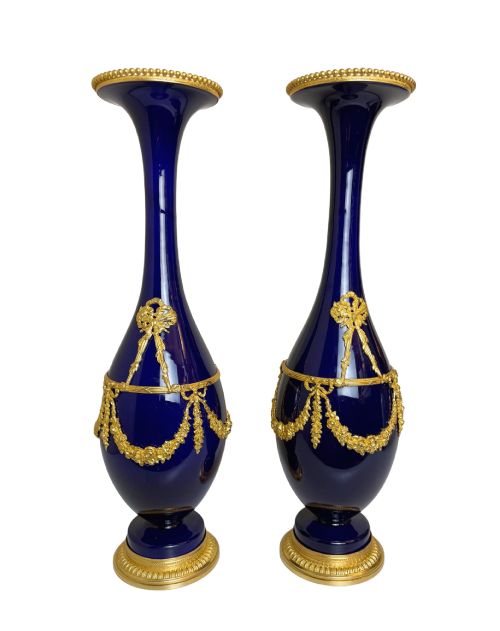
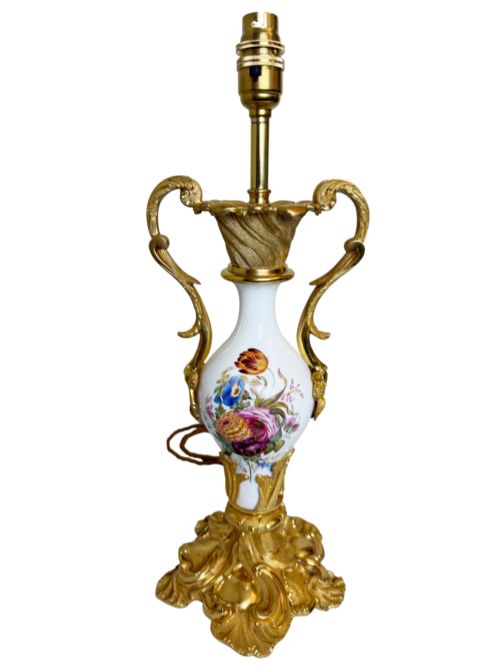
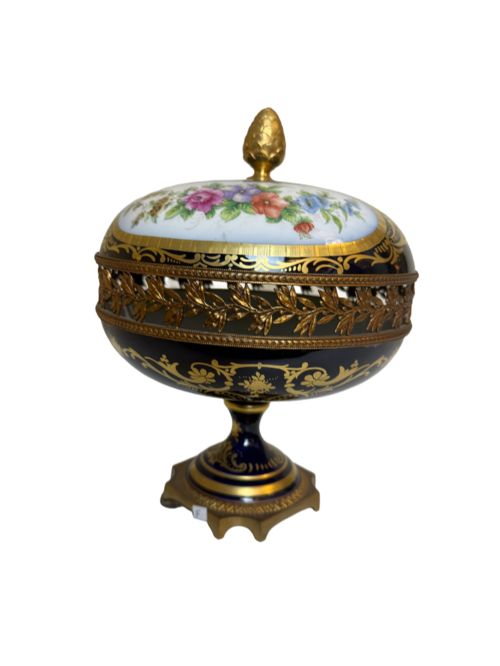
The version most commonly met on this page is the nineteenth-century porcelain vase or pair of vases featuring hand-painted floral motifs. These objects frequently incorporate gilt bronze, ormolu, or brass mounts that frame the ceramic body.
How they were made
These pieces combine ceramic bodies fashioned from porcelain or faience with hand-painted floral decoration and raised white enamel work. Makers shaped the ceramic vessels before applying detailed botanical pigments by hand.
Metal components such as ormolu, gilt bronze, and gilt metal were cast and finished to mount the porcelain bodies. These metal trims secure bases, rims, and handles, adding structural weight and decorative contrast to the glazed ceramic.
Listings feature porcelain, glass, and faience materials combined with brass, ormolu, and gold leaf across the nineteenth century.
What varies in quality
The standard of painting on the ceramic surface dictates much of the visual distinction across these pieces. Fine examples display precise brushwork in the hand-painted floral designs and careful application of enamel, whereas simpler items rely on more repetitive patterns.
The execution of the metal mounts similarly separates standard production from finer work. Finely chased ormolu and heavy gilt bronze handles or bases show sharper detail and superior fit to the porcelain body than lighter brass or gilt metal alternatives.
Samson of Paris·Jacob Petit
The French Floral Porcelain Urns Glossary
- Ormolu
- Gilded bronze used for mounts and decorative trims on furniture and porcelain. This technique involves applying a gold amalgam to a bronze base.
- Garniture set
- A matched group of three or more decorative vases or urns designed to be displayed together on a mantelpiece. These sets maintain uniform stylistic themes.
- Old Paris porcelain
- A term applied to the diverse output of various porcelain workshops operating in Paris during the eighteenth and nineteenth centuries. These factories produced wares without a single unified factory mark.
French Floral Porcelain Urns: Frequently Asked Questions
How do I identify Old Paris porcelain?
Old Paris porcelain pieces typically lack distinct factory marks because they were produced by numerous independent workshops operating around Paris during the nineteenth century. Identification relies on recognising characteristic hand-painted floral motifs and bright gilding styles.
These objects often display distinctive French styling from the Empire and Restoration periods, differing from standardised factory output through individual painterly details.
What is a clock garniture?
A clock garniture consists of a central mantel clock accompanied by matching side pieces such as vases or urns. These matched sets were designed to sit together on a fireplace mantel or console table.
The side urns mirror the materials, floral painting, and ormolu mounts of the central clock to create a unified decorative arrangement.
How should I clean gilt bronze mounts?
Gilt bronze and ormolu mounts require gentle dusting with a soft, dry cloth to remove surface particles. Avoid chemical polishes that can strip the delicate gold leaf or gilt surface.
Maintaining the mounts without harsh abrasives preserves the original patination and protects the adjacent porcelain glaze from accidental damage.
Are these urns waterproof?
Nineteenth-century decorative urns and vases were primarily created for display rather than functional use as flower holders. Their interior glazed surfaces can handle water, but antique joints and gilt bronze mounts risk damage from moisture.
Using these pieces as dry decorative objects or with a protective inner liner prevents water seepage into historic ceramic bodies and metal fittings.