
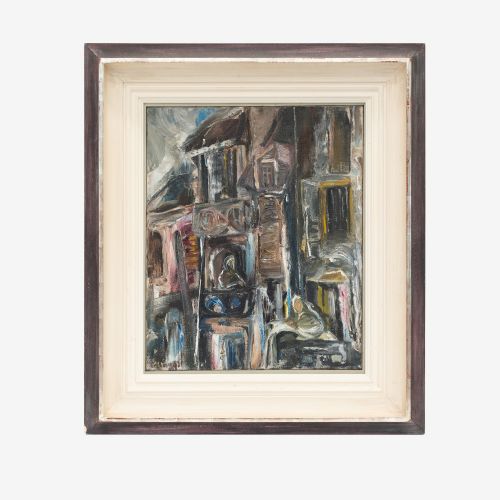


French Expressionist Canvas
A french expressionist canvas captures mid-century energy through thick textures, bold pigments and emotive brushwork.
French Expressionist Canvas
A french expressionist canvas is a mid-century oil painting originating from France, spanning decades from the nineteen-twenties to the nineteen-sixties. These works frequently depict Parisian streetscapes, horse races, figures, interiors and vibrant landscapes imbued with emotional resonance.
The version most commonly encountered on this page is an oil painting on canvas, housed within a wood or gilt frame. Subjects range from intimate nudes and still lifes to expansive cityscapes featuring harlequins, pierrots and café scenes.
How they were made
Artists built these compositions primarily using oil paint applied directly onto stretched canvas surfaces. Pigments were worked with both brushes and palette knives to create heavy impasto textures and dynamic, expressive brushwork.
Finished canvases were secured into wooden frames, sometimes accented with gilt finishes to complement the vibrant palettes of fauve and expressionist compositions.
Several listed and archived works share a glamorous past, having previously belonged to the legendary actress Greta Garbo.
What varies in quality
Quality rests upon the confidence of the brushwork and the clarity of the composition, where masterly control of oil paint creates depth and movement rather than flat application. The strength of the narrative within figures, landscapes or cityscapes dictates the visual impact of the piece.
Provenance and documented exhibition history elevate specific works, distinguishing standard decorative paintings from significant avant-garde examples handled by notable artists.
Lilian Colbourn·Gaetan Dumas·Gabriel Dauchot·Mercedes Legrand·Jean Hippolyte Marchand·Pinchus Kremegne·Andre Delfau·Pierre Peltier·Yvette Alde
The French Expressionist Canvas Glossary
- Impasto
- Paint applied thickly to a canvas, standing out in relief so that the marks of the brush or palette knife remain visible. This technique adds tactile dimension to expressionist surfaces.
- Fauvism
- A style characterised by strong, non-naturalistic use of colour and bold brushwork developed by early twentieth-century modernists. These paintings celebrate raw emotional pigment over strict realism.
- Provenance
- The documented history of ownership of an artwork, establishing its authenticity and previous collections. Notable past owners significantly enhance the standing of a canvas.
- Chiaroscuro
- The strong contrast between light and dark tones to create a dramatic sense of volume in figurative and still life subjects. Artists utilised this technique to model form dynamically.
- Avant-garde
- Artworks that push boundaries and experiment with new modernist concepts away from traditional academic standards. These pieces define the radical shifts seen across twentieth-century European painting.
French Expressionist Canvas: Frequently Asked Questions
What defines a French expressionist canvas?
These works are mid-century oil paintings created in France that prioritise emotional intensity, bold brushwork and vivid colour over strict academic realism. They often feature textured surfaces built up with thick oil paint.
Subjects span from Parisian street scenes and vibrant landscapes to intimate portraits and theatrical characters like harlequins.
How do I care for an oil painting on canvas?
Keep the canvas away from direct sunlight, high humidity and extreme temperature fluctuations to prevent the oil paint and wood stretcher from warping or cracking. Dust the surface gently with a soft, dry brush without applying pressure.
Avoid using water or liquid cleaners on the painted surface or the frame.
Are these paintings signed by the artists?
Many of the canvases feature artist signatures or inscriptions, often located near the lower corners of the composition. Documentation and historical records further verify authorship for pieces originating from this period.
Exhibition labels and stamps on the reverse of the canvas also provide clues to the origin of the artwork.
What framing is typical for these mid-century works?
These canvases are frequently housed in period wooden frames, some featuring gilt detailing that complements the expressive colour palettes. The frames often show age-appropriate wear consistent with mid-century origins.
While some collectors prefer original frames, others choose mounts that suit modern interiors.