
Vintage Equestrian Oil Painting
A vintage equestrian oil painting brings the muscle, speed and character of the stable and the racecourse directly onto the wall.
Vintage Equestrian Oil Painting
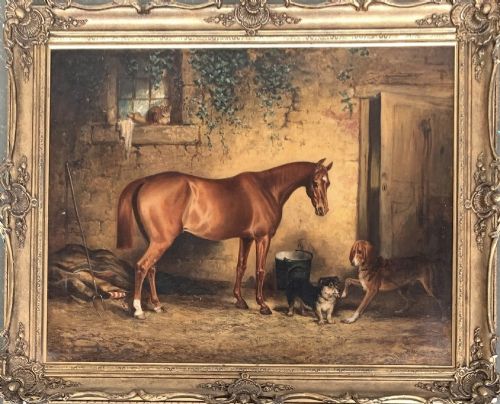
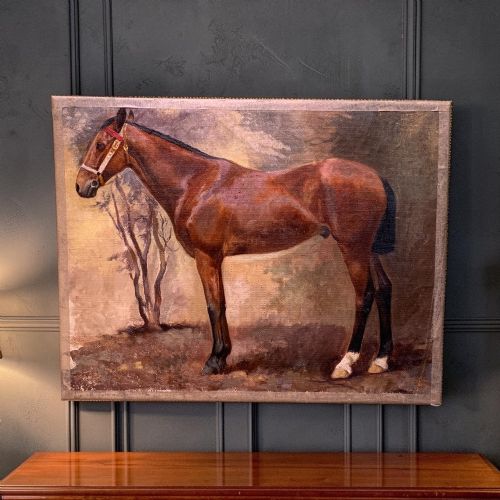
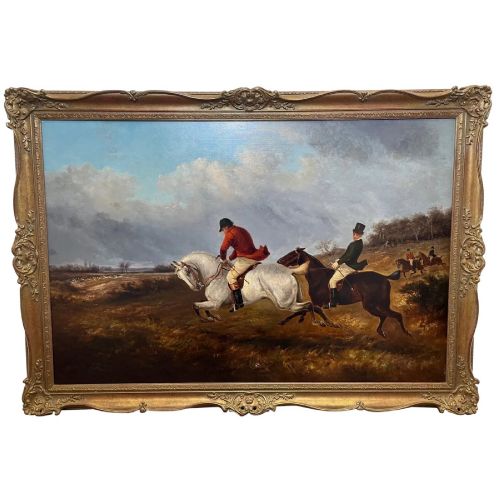
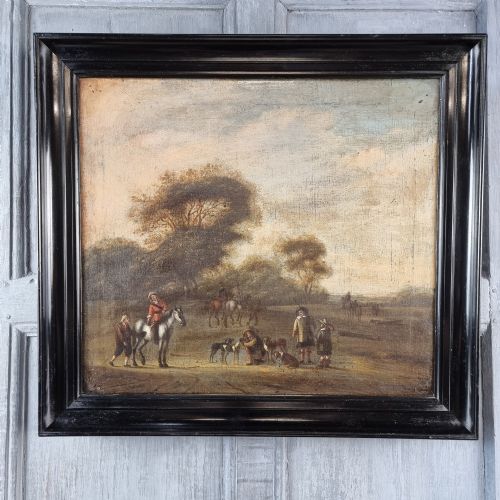
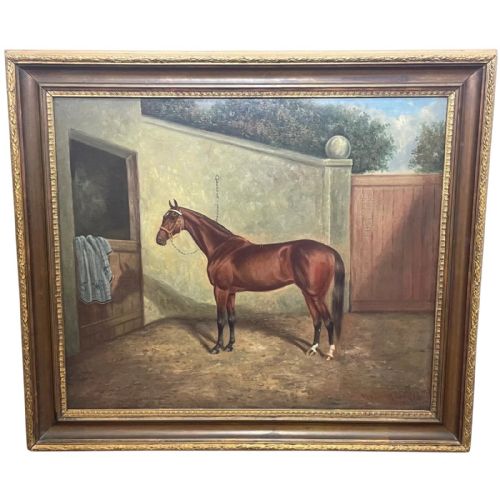
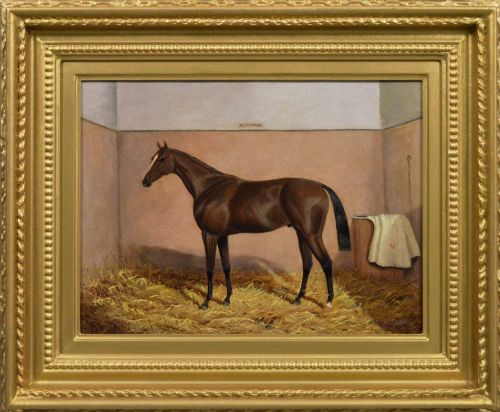
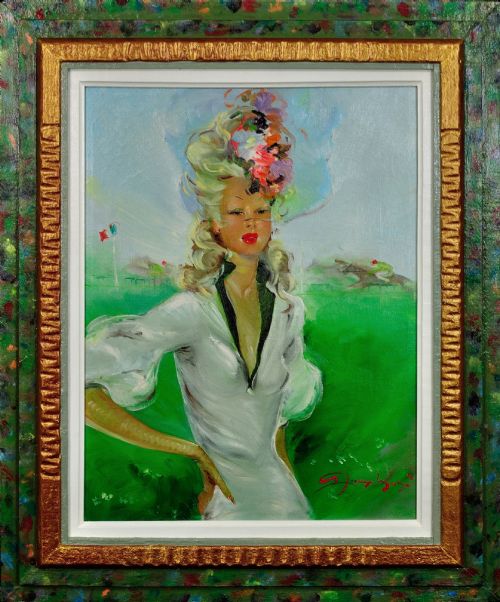
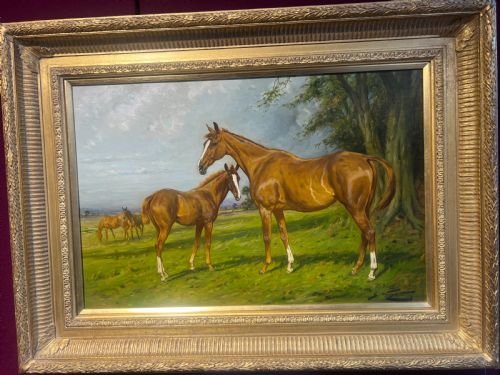
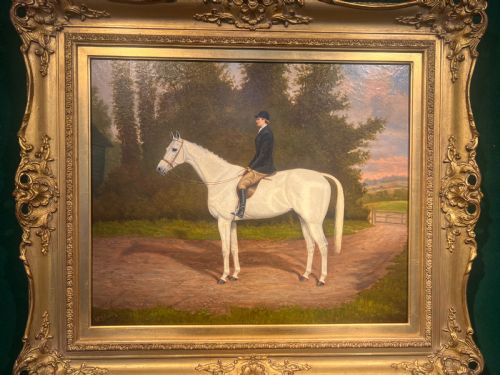
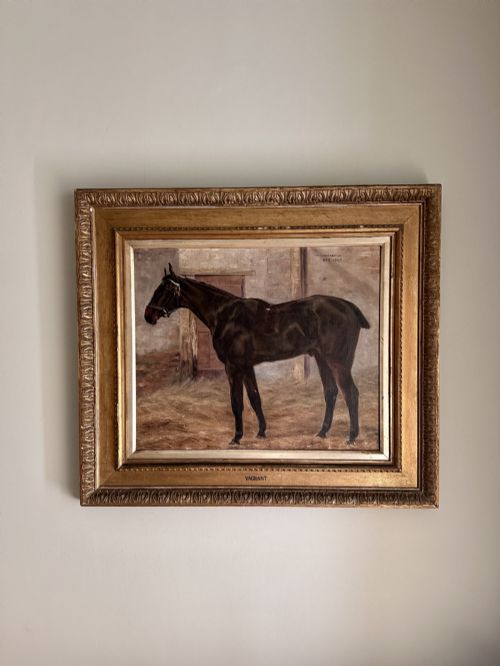
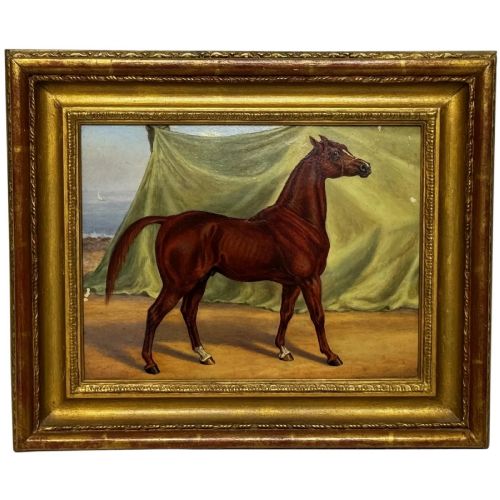
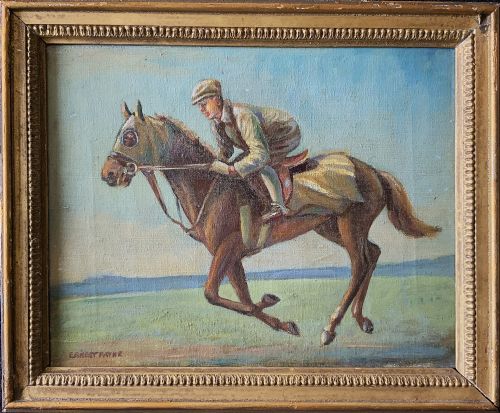
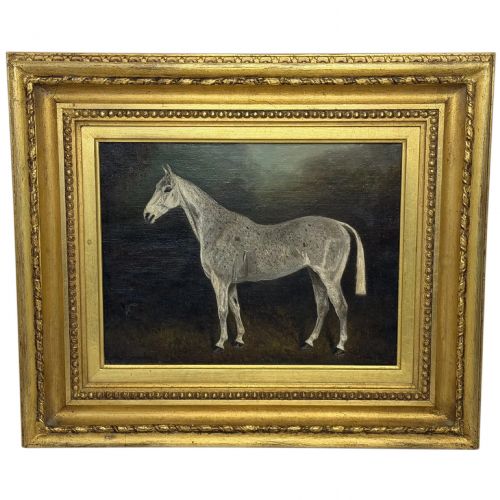
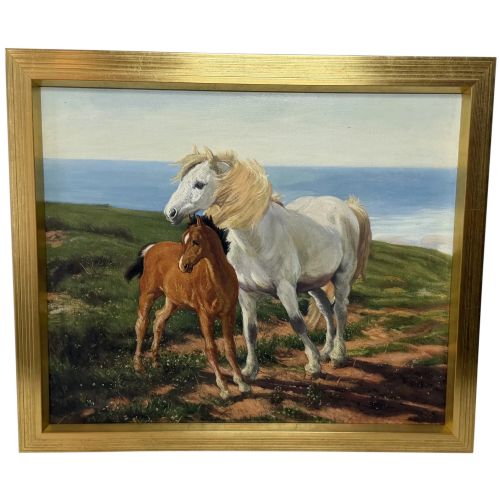
A vintage equestrian oil painting represents a long British tradition of portraying horses, hunting scenes and racing subjects on canvas. These works range from formal 19th-century portraits of named thoroughbreds to mid-20th-century studies of ponies and race paddocks.
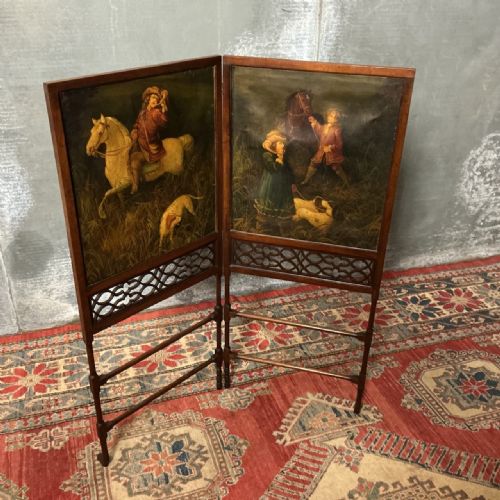
Buyers will encounter various formats, including framed single canvases and occasional decorative pieces like Edwardian mahogany fire screens set with oil paintings. The subjects span country stables, dramatic gallops and quiet portraits of bay hunters and grey mares.
The periods represented stretch from the Georgian era through Victorian sporting art into 20th-century British realism and impressionism. Works from the 1900s and 1950s frequently appear alongside earlier Victorian compositions.
How they were made
Artists painted primarily with oil paint applied to stretched canvas or occasionally wooden panels, building up layers to capture the sheen of a horse coat and the atmosphere of a landscape. The physical support provides the enduring structure for these pigments.
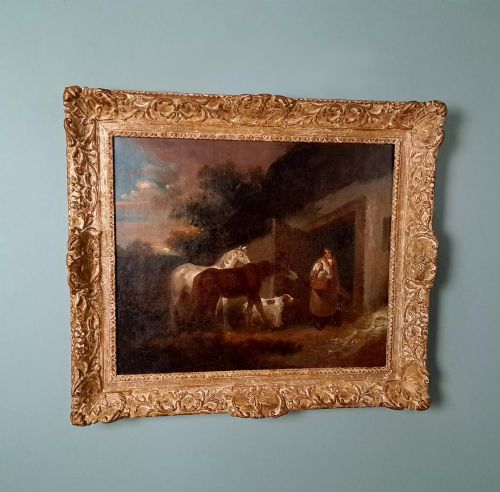
Frames play a vital role in presentation, with giltwood, gilt wood and swept gilt frames frequently housing the canvas. These surrounds often reflect the decorative tastes of the Victorian and Edwardian periods.
Buffalo Bill occasionally shares the frame with a grey horse in the mid-century selections.
What varies in quality
Quality in a vintage equestrian oil painting rests upon the artist ability to render the anatomy, muscle structure and posture of the horse with convincing realism. Lesser works may flatten the subject, whereas superior examples capture accurate movement and individual temperament.
The handling of light and background detail also distinguishes the selection, separating simple decorative portraits from works displaying accomplished brushwork and atmosphere.
Henry Barraud·William Joseph Shayer Senior·Thomas Smythe·Frederick Albert Clark·George Wright·William Albert Clarke·Fred Fitzpatrick·Ernest Payne·Vernon DeBeauvoir Ward·C R Breytle·Philip Rideout·Thomas Walker Bretland·Charles Walter Simpson·Harry Freckleton·Hazel M Barnett
The Vintage Equestrian Oil Painting Glossary
- Canvas
- A heavy woven fabric used as a surface for oil painting. It provides the traditional texture found beneath many period works.
- Giltwood
- Wood carved and covered with a thin layer of gold leaf or gilt. It provides the ornate framing typical of many sporting paintings.
- Equestrian
- Relating to horse riding and horse breeding. This genre forms the core subject matter of these paintings.
- Sporting Art
- A category of art dedicated to rural sports, horse racing, hunting and hounds. It flourished in British painting during the 18th and 19th centuries.
- Impressionism
- A style of painting emphasising spontaneous brushwork and the depiction of light. British impressionist works often capture open landscapes and ponies.
Vintage Equestrian Oil Painting: Frequently Asked Questions
What subjects appear in these paintings?
The canvases depict named racehorses, hunting scenes, stable interiors and regional ponies in various landscapes. Many focus closely on the anatomy and character of individual animals.
Other works place the horse within a wider sporting context, such as race paddocks, coaching journeys or hunts involving hounds and riders.
How do I date a painting?
Dating relies on stylistic clues, clothing in figures, framing methods and signatures recorded on the canvas or stretcher. Victorian and Edwardian works often display specific artistic conventions of their respective decades.
Artists active dates and recorded exhibition histories provide further benchmarks for establishing the period of creation.
Where were these works created?
Many originate from British studios and rural estates, reflecting the nation deep historical connection to horse racing and field sports. Occasional works point to continental European schools or specific overseas settings.
The regional focus often includes English countryside scenes, Welsh valleys and Dublin galleries.
How should I hang them?
These works suit traditional reception rooms, studies and hallways where their rich colours and gilt frames complement period interiors. Adequate wall space allows larger hunting scenes to command the room.
Lighting should be positioned carefully to avoid glare on the oil surface while highlighting the brushwork and detail of the canvas.