

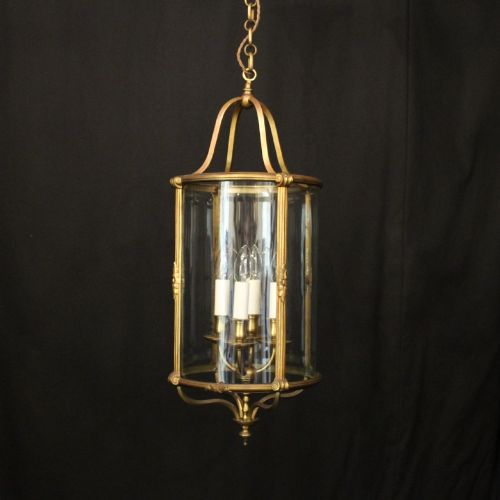
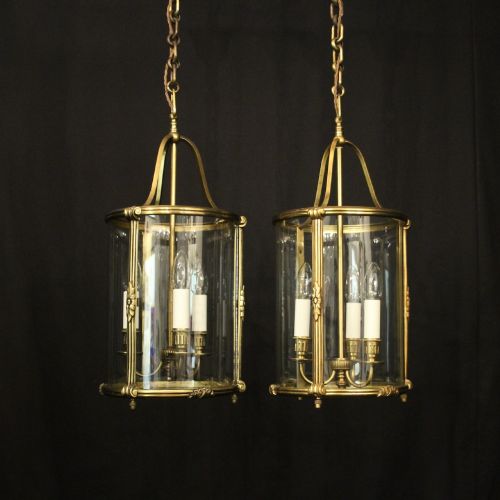
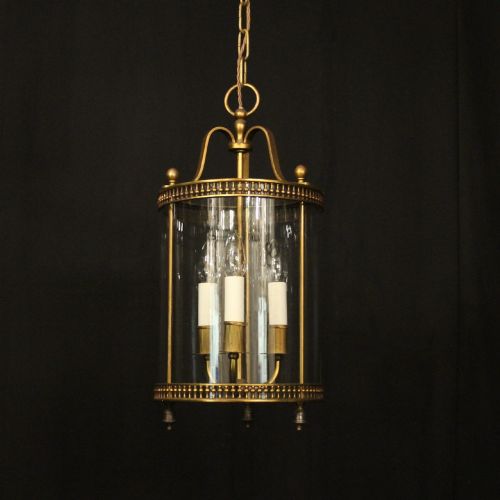
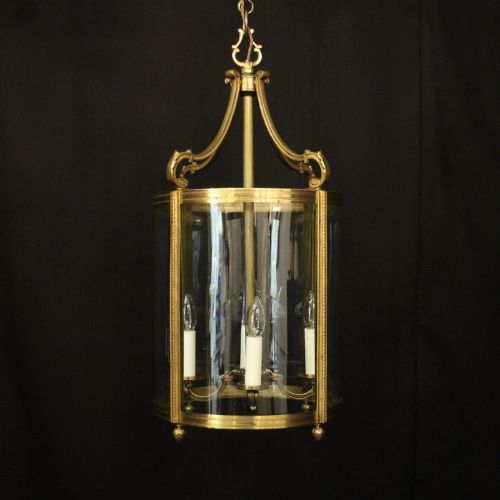
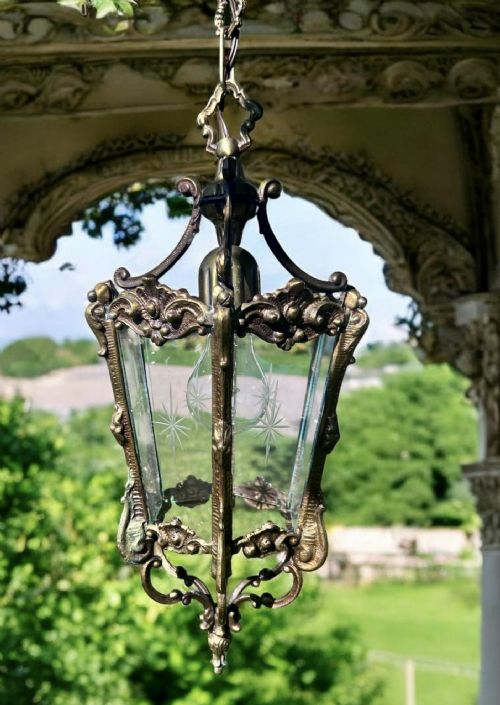


French Entry Lantern
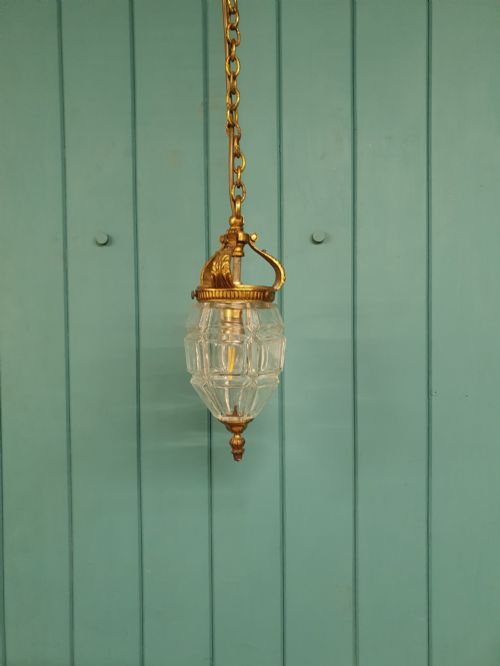
A french entry lantern commands an entrance hall with its warm metalwork and glass, casting welcoming light from above.
French Entry Lantern
A french entry lantern is a hanging ceiling light designed specifically to illuminate halls, vestibules, and stairwells. These pieces primarily date from the nineteenth century through to the 1930s, reflecting classical and chateau influences in their forms.
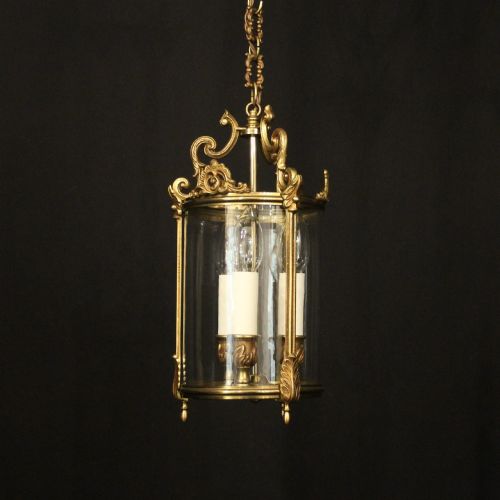
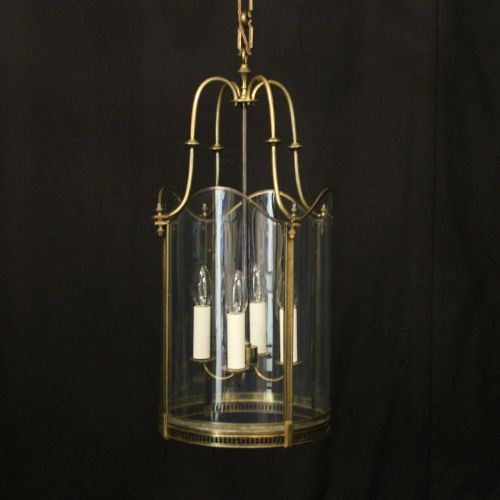
The most common examples encountered here are single, triple, or four-light pendants framed in brass, bronze, or gilded bronze. They frequently incorporate convex or bevelled glass panes that refract the internal light across the surrounding walls.
Makers drew heavily upon historical French design repertoires, ranging from Rococo scrollwork to Louis XV and Louis XVI symmetries. The resulting fixtures serve both as practical ceiling lighting and as architectural statements for domestic entryways.
Materials and construction
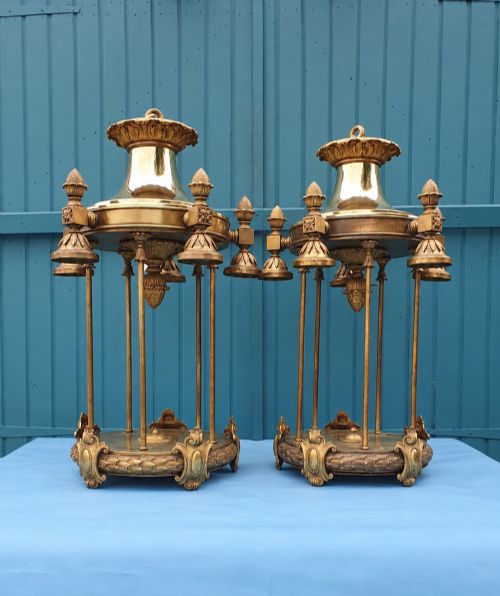
Foundry-cast bronze and brass form the rigid structural skeletons of these lanterns, often finished with a layer of applied gilding or silvering. Metal components are joined mechanically or pinned together to support the weight of the frame and internal electrical fittings.
Panes of glass are individually cut, bevelled, or etched to fit snugly within the metal cage frames. Convex glass panels require specialised moulding techniques to achieve their outward curve, bending the transmitted light in distinctive ways.
French Entry Lantern Retail Price Guide 2026
Typical asking prices for french entry lantern among the pieces listed under this phrase on Sellingantiques today, from the lower quarter to the upper quarter. They describe what is for sale here now, not the wider market.
Some lanterns feature convex glass windows specifically designed to make single internal candles look brighter.
Distinctions in quality
The sophistication of the metal casting and the crispness of the chased detail separate standard lanterns from superior examples. Heavier bronze frames with deeply articulated ornamental motifs demonstrate higher craftsmanship than simpler, thinner brass stampings.
Glass selection significantly influences the overall caliber of the fixture, particularly where bevelled, cut, or convex panes are utilised. Thick, clear glass with precise edge-bevelling catches and holds light far more effectively than flat, thin alternatives.
The French Entry Lantern Glossary
- Convex glass
- Curved glass panels that bulge outward from the lantern frame. This shape disperses illumination across a wider angle than flat glass.
- Gilded bronze
- Bronze metal coated with a thin layer of gold leaf or applied gold paint. It provides a rich, reflective surface that resists tarnishing over decades.
- Hall lantern
- A pendant light fixture intended for corridors, entryways, and staircases. These pieces hang closely or moderately from the ceiling to clear passage below.
- Bevelled glass
- Glass panes featuring an angled, polished edge around the perimeter. This treatment creates prismatic light effects when internal bulbs are illuminated.
French Entry Lantern: Frequently Asked Questions
Are these lanterns wired for modern electricity?
Most surviving examples have been converted to take standard electrical lamp holders over the course of their long histories. Rewiring is straightforward for a qualified electrician working with internal candelabra fittings.
Original candle sockets are rarely retained for daily use due to fire safety and convenience. Modern wiring allows these decorative fixtures to function as primary hallway illumination.
How do I clean the glass panels?
Carefully remove individual glass panes if the metal retaining tabs allow safe detachment without damaging the frame. Clean them using a mild glass cleaner and a soft microfiber cloth.
Avoid spraying liquid directly onto aged metal surfaces or gilded areas, as moisture can degrade historical finishes. Wipe the bronze or brass framework gently with a dry, lint-free cloth instead.
What styles do these lanterns come in?
The available pieces span various historical French aesthetics, including Rococo, Neoclassical, and Louis XVI designs. These styles feature symmetrical floral motifs, acanthus leaves, and clean architectural lines.
Chateau and nineteenth-century interpretations lean towards heavier bronze castings with ornate detailing. Each style dictates the specific silhouette and decorative flourishes of the hanging frame.