


French Empire Seating
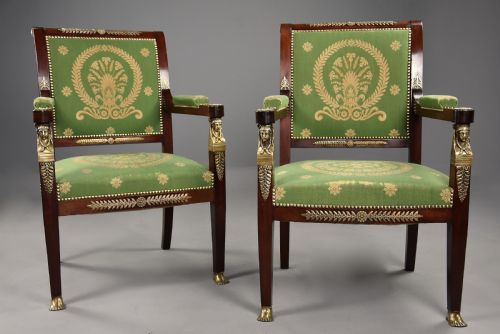
French empire seating brings neoclassical grandeur to an interior through architectural mahogany frames, gleaming ormolu mounts, and restrained upholstery.
French Empire Seating
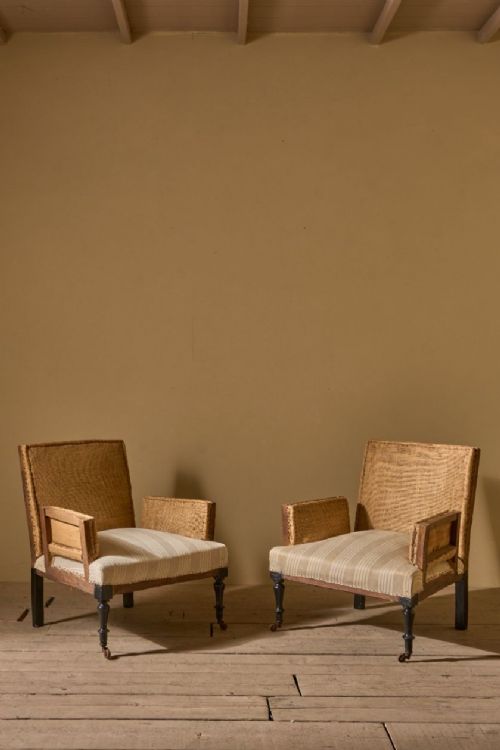
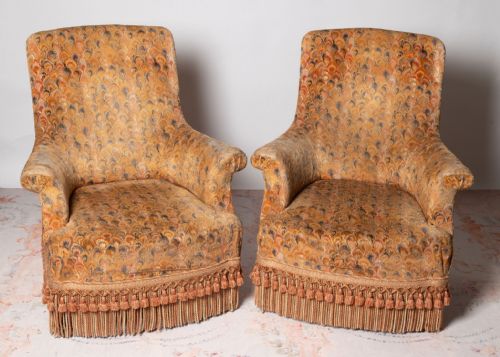
French empire seating encompasses armchairs, fauteuils, settees, and stools dating primarily from the nineteenth century, including later revival periods. Buyers frequently encounter nineteenth-century mahogany open armchairs and Napoleon III chairs displaying neoclassical lines.
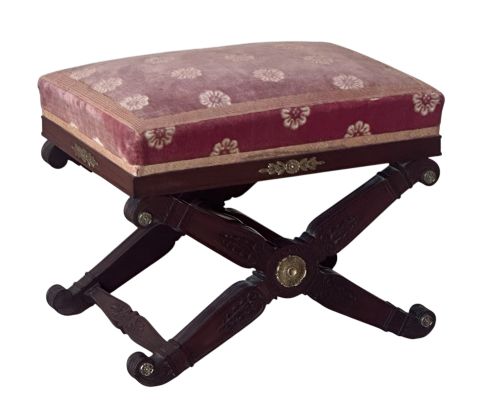
Forms range from compact X-frame stools and piano stools to large salon suites, settees, and ottomans. Many pieces demonstrate direct stylistic ties to the French Consulate and Empire periods, alongside later nineteenth-century revivals.
Makers and designers worked within strict classical idioms, drawing inspiration from ancient Rome and Greece. Pieces often feature curule bases, scroll arms, and structural symmetry suitable for formal reception rooms.
Materials and Construction
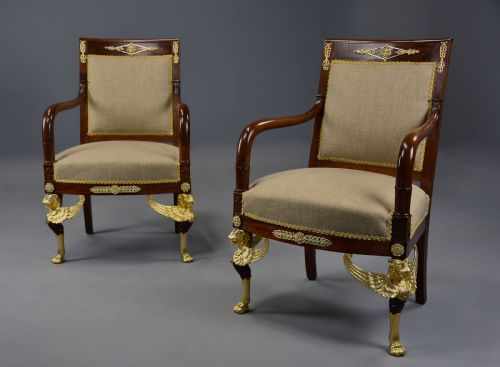
Makers relied heavily on solid mahogany and walnut for structural frames, frequently pairing dark timbers with giltwood or painted finishes. Ormolu and bronze mounts provide classical decorative accents along armrests and rails.
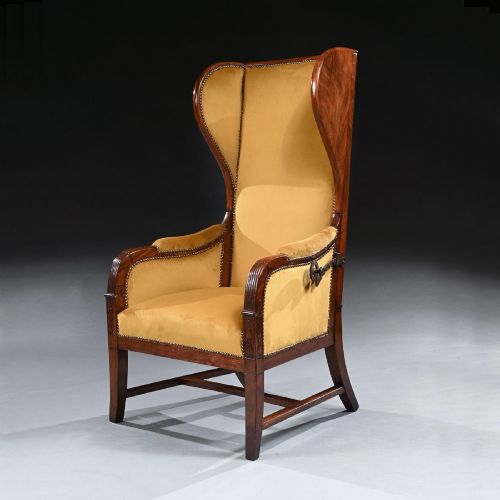
Upholstery utilised traditional textiles, silk velvet, and fabric to line seats and backs. Frames often incorporate precise joinery, with specific pieces featuring adjustable screw tops or folding X-frame configurations.
Listings feature mahogany, walnut, and giltwood frames accented with ormolu mounts across nineteenth-century seating forms.
Assessing Quality and Execution
The distinction between standard production and superior execution rests upon the crispness of the wood carving and the weight of the cast ormolu mounts. Finer examples display deeply chased gilt bronze details rather than superficial pressed metal.
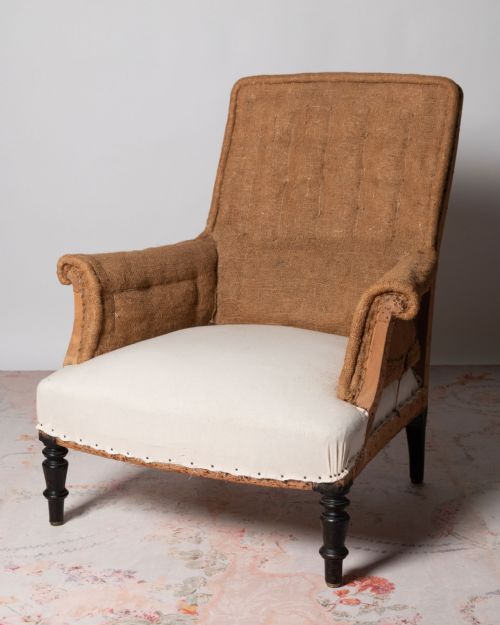
Structural integrity of the timber frame and the retention of original gilding or polish determine the preservation standard. Chairs intended for upholstery vary according to whether their internal webbing and frame webbing remain sound.
The French Empire Seating Glossary
- Fauteuil
- An open-armed upholstered armchair with exposed wooden framing around the back and sides. This form is central to formal French seating design.
- Ormolu
- Gilded bronze applied as decorative mounts to furniture frames. It provides a bright metallic contrast against dark mahogany.
- Curule
- A distinctive X-shaped furniture frame derived from ancient Roman magistrate seats. Stools and folding chairs frequently adopt this structural silhouette.
- Napoleon III
- A mid-nineteenth-century French design period encompassing revivals of earlier imperial styles. Pieces from this era often feature eclectic upholstery and rich wood finishes.
- Canape
- A decorative sofa or settee designed for multiple occupants in a salon setting. These seats match larger pairs of armchairs within formal suites.
French Empire Seating: Frequently Asked Questions
How do I identify a true empire piece?
Authentic pieces rely on neoclassical architectural motifs, heavy mahogany construction, and strict symmetry. Look for classical references such as paw feet and scrolled arms rather than later Victorian ornamentation.
Hardware and mount placement also offer clues, as period ormolu mounts are cast with sharp chiselling and integrated securely into the timber frame.
Are these chairs comfortable for daily use?
Many salon chairs and armchairs were built for formal posture rather than deep lounging. Upright backs and firm upholstery reflect nineteenth-century standards of drawing room etiquette.
Reclining models and padded settees offer softer seating, though older frames often require supportive re-webbing before heavy daily use.
How should I clean ormolu mounts?
Ormolu requires gentle dusting with a dry microfibre cloth to prevent accumulation of grit within the recessed chasing. Avoid commercial metal polishes, which strip the original mercury gilding.
Professional conservation is recommended if oxidation obscures the bright gold finish on intricate bronze mounts.
Can I mix these chairs with modern furniture?
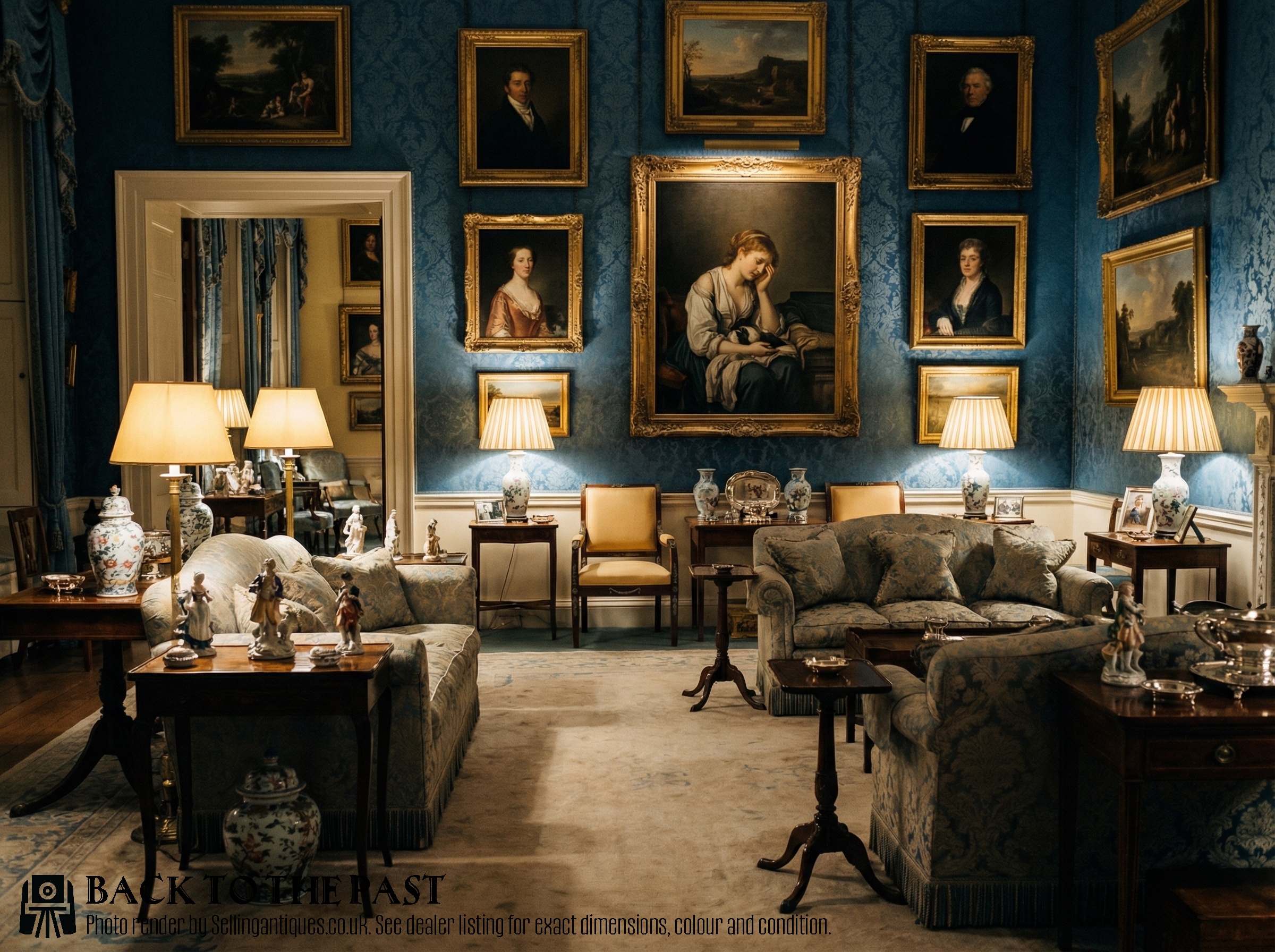
The strong architectural lines of mahogany and gilt frames allow them to anchor minimalist or contemporary interiors. Placing a single fauteuil or X-frame stool in a modern room creates a striking focal point.
Keeping surrounding decor neutral lets the classical proportions and bronze mounts stand out without visual competition.