



Mahogany Empire Armchair
A mahogany empire armchair brings architectural dignity and classical proportion to a room, drawing the eye with rich timber and crisp metal mounts.
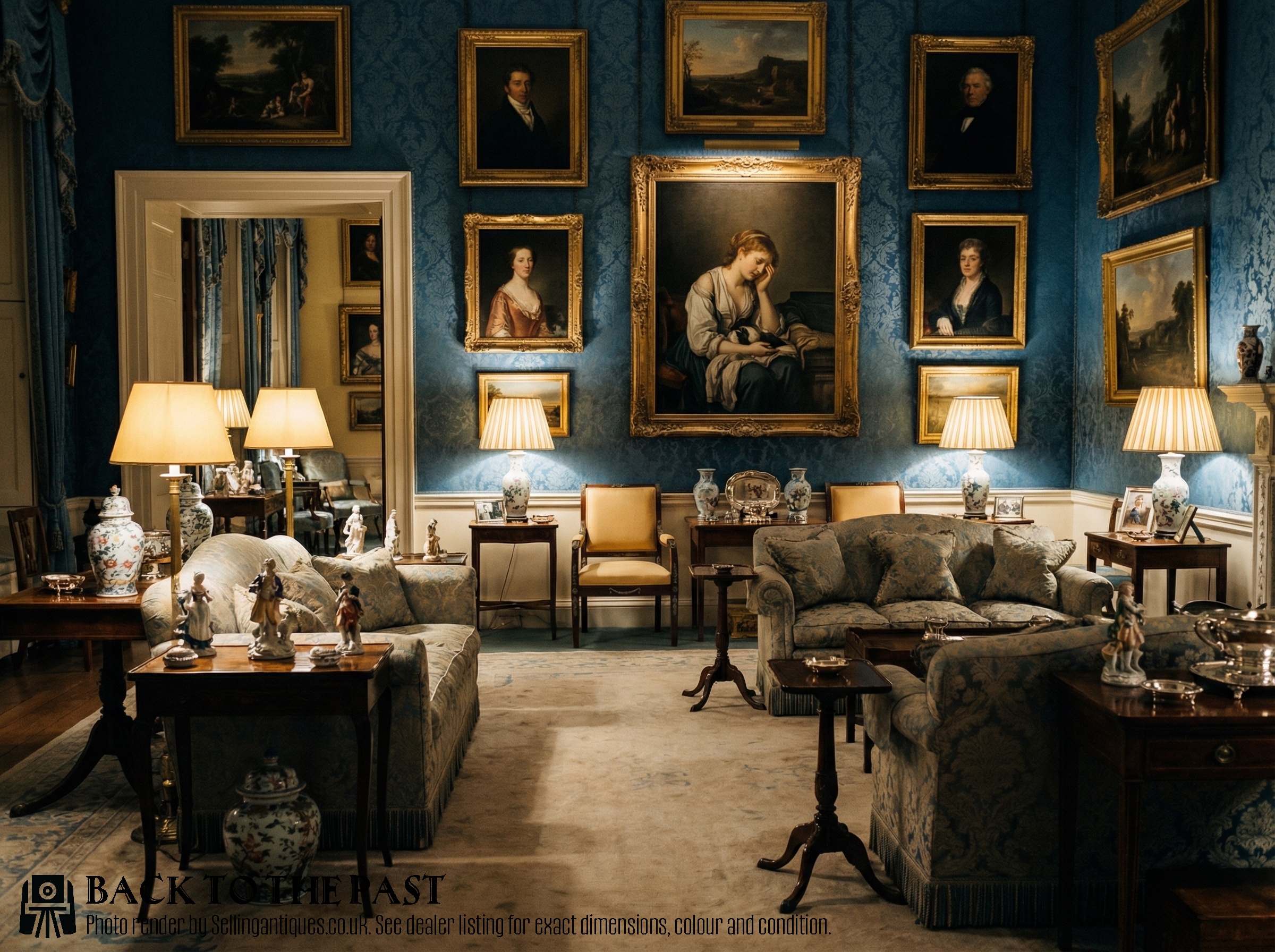
Mahogany Empire Armchair
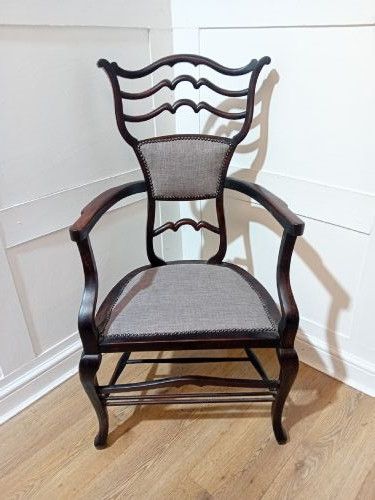
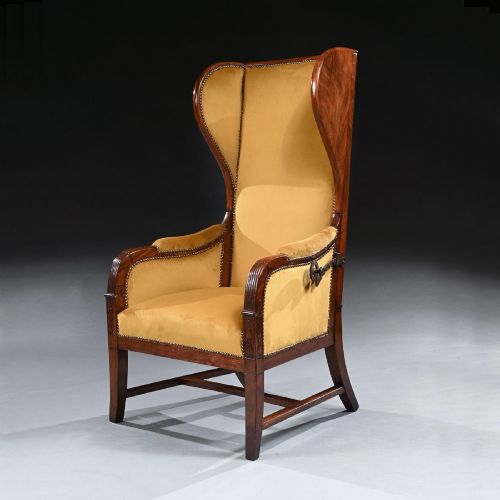
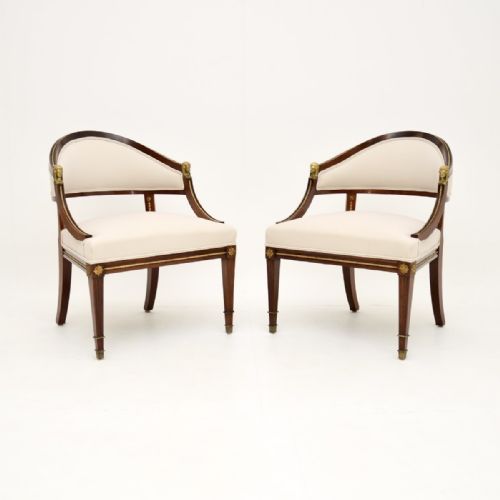
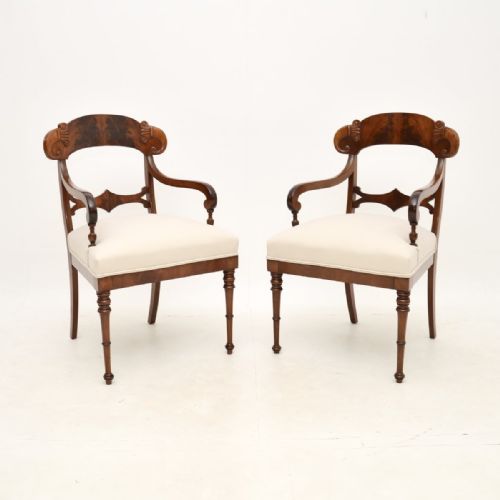
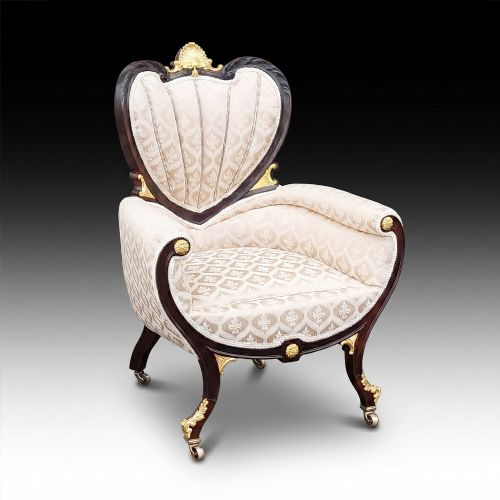
A mahogany empire armchair combines sturdy tropical timber with the classical symmetry of the nineteenth century, drawing on French and Swedish design traditions. These seating pieces span formal library chairs, open fauteuils, and reclining wingbacks created across the nineteenth and early twentieth centuries.
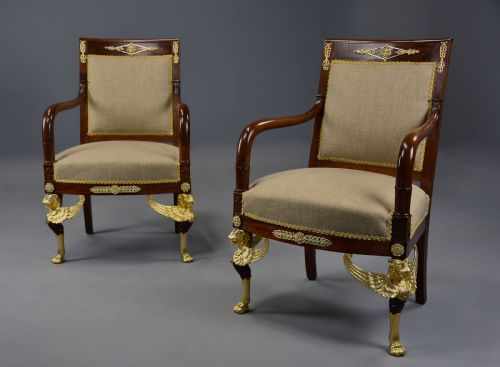
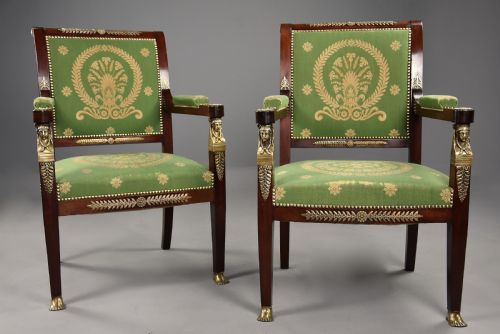
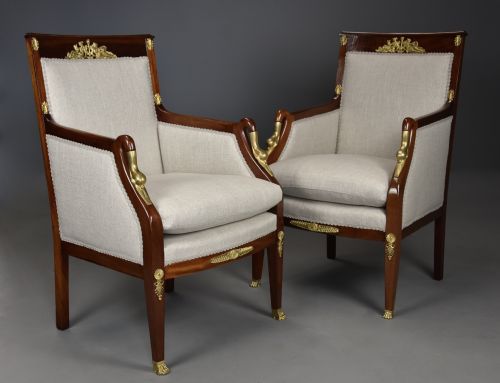
The version most commonly encountered on this page is the French Empire open armchair or its later revival counterpart from the late nineteenth century. Makers often incorporated sweeping arm supports and sculptural timber forms that reflect both the original Napoleonic era and later revival periods.
How they were made
Cabinet makers utilised dense mahogany solids and veneers over secondary timbers, often selecting stock with deep grain figures to highlight the sweeping structural lines. Frames were joined using traditional woodworking techniques before receiving hand-rubbed finishes that brought out the natural warmth of the wood.
Metal ornament played a defining role, with cast brass, ormolu, and gilt bronze mounts secured to the timber frame to accent classical motifs. Upholstery materials like horsehair and webbing supported layers of fabric, velvet, or leather fixed with decorative brass tacks.
Object forms span dining chairs, desk chairs, and three-piece lounge suites in French and Swedish styles.
What varies in quality
The distinction between standard and superior pieces rests on the crispness of the timber carving and the weight of the metal mounts. Fine examples display sharply cast ormolu and hand-chiselled details rather than hollow stamped brass, alongside timber frames with well-matched veneer grain.
Structural integrity and the retention of original decorative elements separate finer seating from heavily altered examples. Chairs that preserve their early upholstery webbing, original gilt bronze mounts, and uncompromised joinery command greater appreciation among collectors.
Henry Thomas Peters
The Mahogany Empire Armchair Glossary
- Fauteuil
- An open-armed French armchair with upholstered back and seat, typically featuring exposed wooden arm supports and rails. These chairs formed standard elements of formal nineteenth-century salon suites.
- Ormolu
- Gilt bronze mounted onto furniture frames, created through a mercury gilding process on pieces from the early nineteenth century or via electroplating on later revivals. This bright metallic detail highlights structural corners and aprons.
- Neoclassical
- A style drawing inspiration from classical antiquity, favouring straight lines, symmetry, and architectural motifs over curved rococo excess. This aesthetic heavily influences the proportions of empire seating.
- Bergere
- A closed armchair featuring upholstered sides enclosed with cane or fabric panels, offering a deeper and more enclosed seat than an open fauteuil. They appeared frequently in French drawing rooms.
- Directoire
- A transitional design style bridging Louis XVI and Empire periods, characterised by restrained classical geometry and simpler mahogany framing before heavier mounts became dominant.
Mahogany Empire Armchair: Frequently Asked Questions
How do I spot an original nineteenth-century piece from a later revival?
Original period chairs from the early nineteenth century display hand-cut joinery, aged patination on the mahogany timber, and mercury-gilded bronze mounts. Tool marks on the secondary woods and traditional hand-forged fixings also help distinguish authentic pieces from later copies.
Revival pieces made toward the end of the nineteenth century often utilise machine-sawn framing and different assembly methods. Examining the underside and the construction of the seat frame reveals the true manufacturing era.
Were these armchairs used at desks or in salons?
These seating forms served multiple domestic functions, appearing as desk chairs, library chairs, and matching elements within large salon suites. Specific variants like the fauteuil du bureau were built lower and wider specifically for writing.
Library versions often featured heavier frames and reclining mechanisms for prolonged reading. Meanwhile, salon suites included matched armchairs and side chairs designed to furnish formal entertaining spaces.
How should I care for the mahogany and ormolu mounts?
Maintain the mahogany timber by applying a microcrystalline wax sparingly to nourish the grain without building up heavy residue. Keep the chair away from direct sunlight and heat sources to prevent timber shrinkage and veneer splitting.
Clean the ormolu or gilt bronze mounts gently with a soft, dry cloth, avoiding aggressive metal polishes that strip the surface gilding. Dust the upholstered areas regularly with a soft brush attachment.
What is the difference between French Empire and Swedish Neoclassical styles?
French Empire design leans toward heavier, more imposing forms with striking ormolu mounts and rich, dark mahogany surfaces. It draws direct visual inspiration from Roman and Egyptian military campaigns under Napoleon.
Swedish Neoclassical furniture tends to feature lighter colour palettes, cleaner geometric lines, and more restrained carved decoration. The timber often retains a bright, warm amber tone rather than the deep, sombre hues of French pieces.