


Gilt Bronze Chair
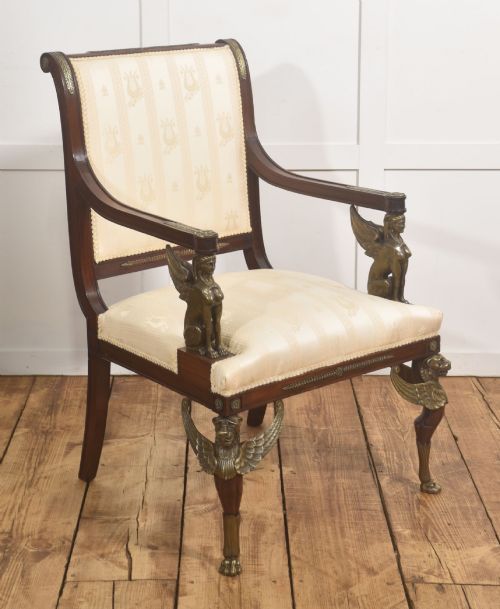
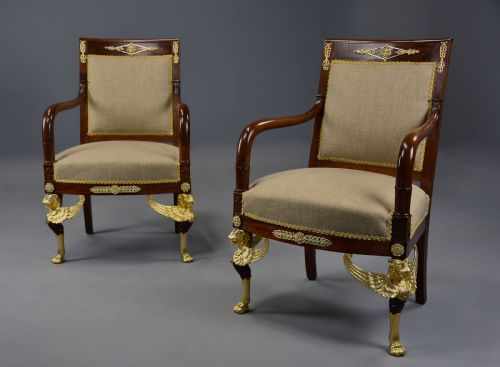
These gilt bronze chair examples bring monumental neoclassical presence and rich metal mounts straight into a room.
Gilt Bronze Chair
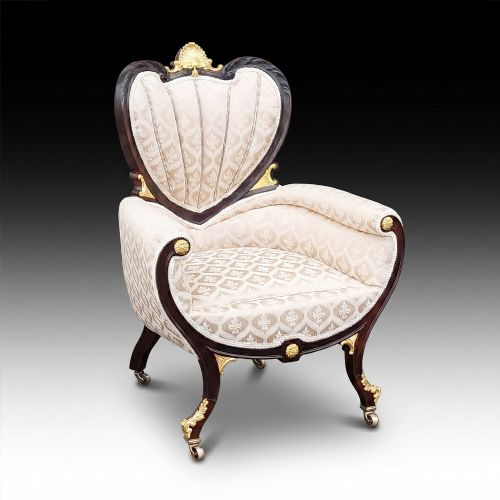
A gilt bronze chair combines robust timber framing with cast metallic ornamentation, taking the form of armchairs, desk chairs and lounge suites. When you search for a gilt bronze chair, you encounter seating largely rooted in the French Empire style and its later revivals.
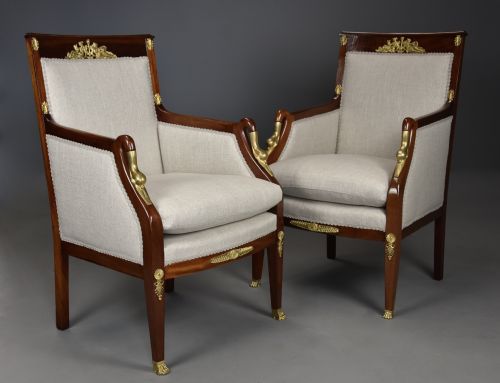
Most pieces on this page originate from the nineteenth and early twentieth centuries, spanning periods from eighteen fifty through to nineteen twenty. They often appear as pairs or part of suites rather than isolated items.
Makers drew heavily on classical vocabularies, producing heavy mahogany frames accented with gilt bronze, ormolu and gilt brass mounts. These grand proportions suit studies, libraries and principal reception rooms.
How they were made
Cabinetmakers utilised dense timbers such as mahogany to construct the structural frames of these seats, ensuring durability beneath the decorative metalwork. Ormolu and gilt bronze components were cast and applied to highlight structural lines and classical motifs.
Upholstery techniques involved traditional textiles, incorporating linen, leather and patterned fabrics to finish seats and backrests. Metal mounts were secured carefully to the timber chassis to contrast against the polished wood grain.
Some nineteenth-century sitters were expected to maintain such rigorous posture that the chairs practically insisted on an upright spine.
What varies in quality
The refinement of the cast metal mounts separates standard examples from exceptional ones. Crisply chased ormolu and gilt bronze details display sharper architectural definition and deeper relief than simpler brass fittings.
Timber selection and the handling of the mahogany frame dictate the overall integrity of the piece. Heavier architectural presence and sophisticated revival styling elevate certain armchairs above plain vernacular equivalents.
The Gilt Bronze Chair Glossary
- Ormolu
- Gilded bronze produced through a mercury amalgamation process, widely utilised for decorative mounts on nineteenth-century furniture. This finish gives a rich, metallic lustre.
- Fauteuil
- An open-armed upholstered armchair with exposed wooden framing, typical of French seating design. Such chairs often feature carved or mounted arm supports.
- Empire Revival
- A nineteenth-century design movement that looked back to the classical styling of the First French Empire. Pieces in this style utilise heavy mahogany and formal neoclassical mounts.
- Parcel-gilt
- Partially gilded woodwork or metalwork where only specific carved details or raised ornaments receive gold leaf or gilt treatment. This creates visual contrast against a dark timber or bronzed ground.
Gilt Bronze Chair: Frequently Asked Questions
What is a gilt bronze chair?
A gilt bronze chair is a timber-framed seat decorated with cast metal mounts plated or finished to resemble gold. They frequently appear in French Empire and revival styles.
These pieces use mahogany frames and incorporate armchairs, desk chairs or lounge suites designed for formal interiors.
How do I date these chairs?
Dating relies on stylistic markers, timber types and the execution of the metal mounts. Nineteenth-century examples often display Empire Revival characteristics.
Comparing the mount chasing and the construction of the mahogany frame helps distinguish between eighteen-fifties production and later twentieth-century revivals.
Where should I place one?
These imposing seats suit studies, libraries or drawing rooms where their classical proportions can anchor a space. They function well as statement armchairs.
Pairing them with traditional interiors allows the mahogany and gilt metal details to stand out against neutral walls.
What styles are common?
French Empire and its later revivals dominate this category, alongside Swedish Empire revival pieces. Designs draw inspiration from classical antiquity.
Library armchairs and bureau chairs often incorporate specific nineteenth-century design sources like those of George Smith.