
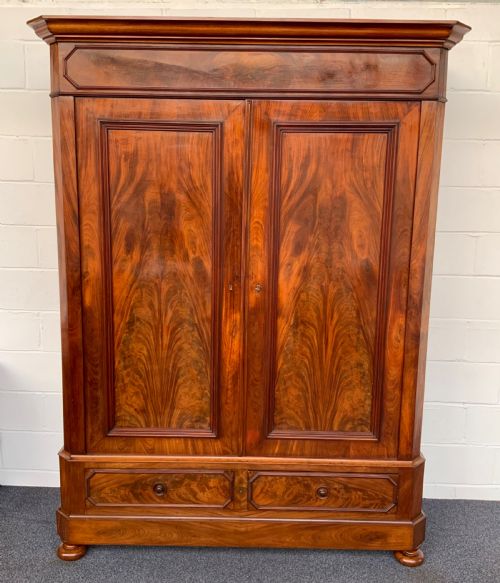


French Double Armoire
These heavy timber French double armoire pieces offer deep storage and grand presence, built for domestic rooms where scale matters.
French Double Armoire
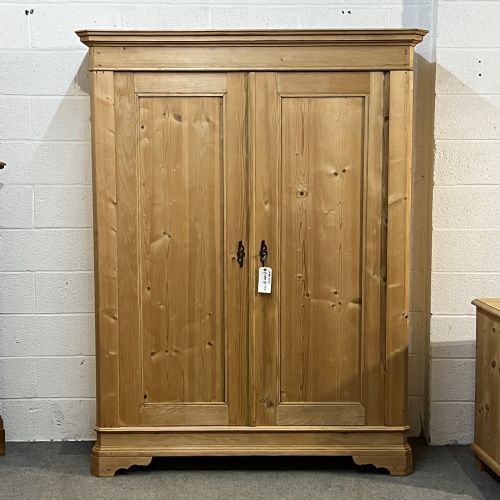
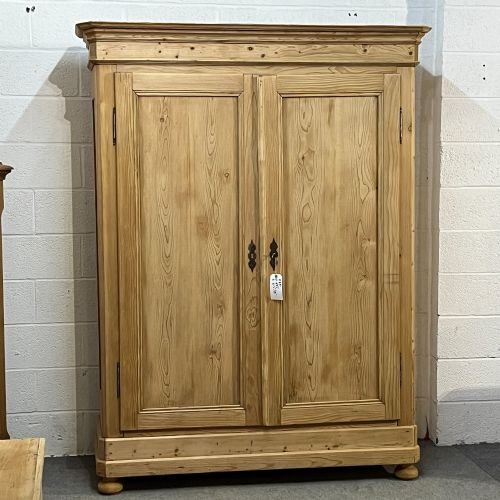
A French double armoire is a substantial storage piece designed with twin doors, appearing across 18th century, 19th century, and early 20th century periods. These items serve primarily as wardrobes, linen presses, and cupboards, providing wide internal volume for domestic organisation.
Materials and construction methods
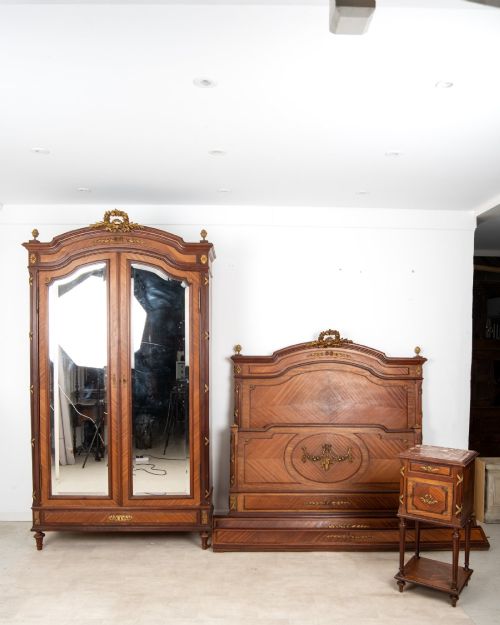
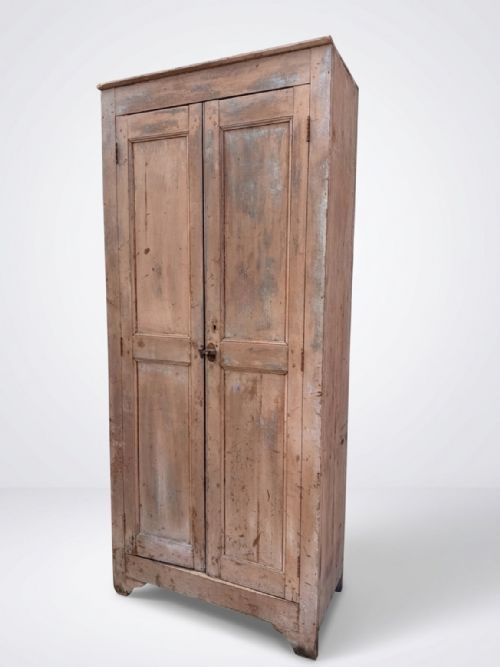
Joiners built these large wardrobes using dense hardwoods like oak, walnut, mahogany, and rosewood, alongside softer timbers such as pine and cherry for regional painted pieces. Panels were typically frame-and-panel construction to allow for natural timber movement across the wide double doors.
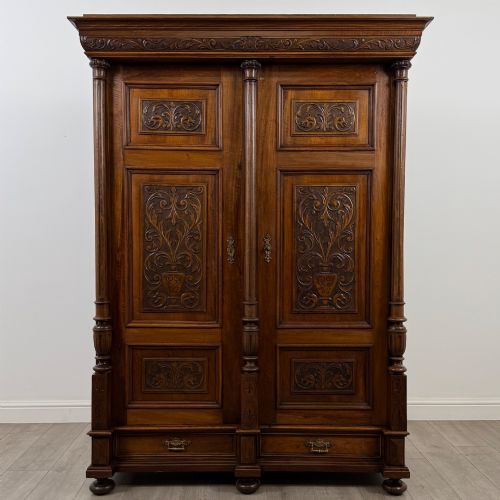
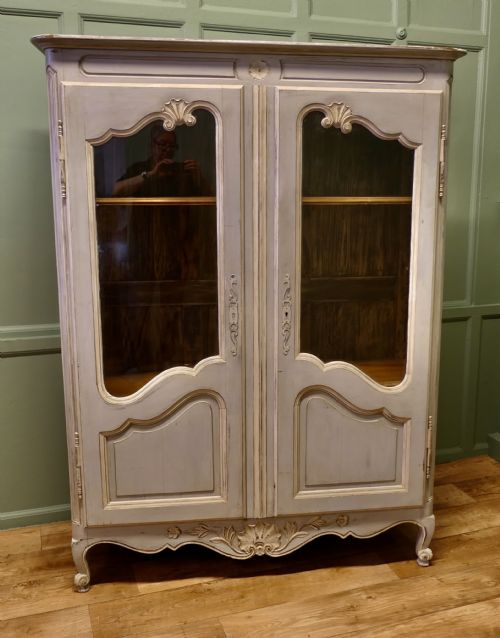
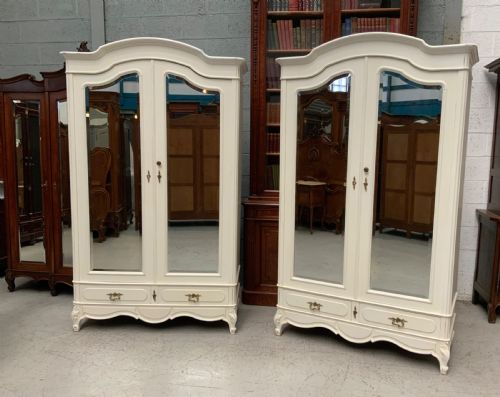
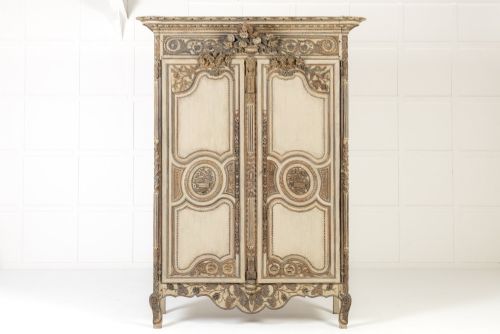
Decoration relied on hand carving, applied mouldings, and parquetry, sometimes enhanced with brass or ormolu mounts around keyhole escutcheons and hinges. Painted surfaces utilised layered oil or distemper ground work, which aged to patinated finishes on country and provincial examples.
Design styles recorded across the inventory range from provincial and country pieces to formal Louis XVI revival and Empire models.
Judging the standard of manufacture
Quality rests in the weight of the timber and the crispness of the hand-carved detailing, where deep relief work on oak and walnut distinguishes superior cabinets from plain utilitarian boxes. The integrity of the carcass frame determines whether the large double doors hang true without sagging over decades of use.
Interior timber selection and the presence of original brass hardware or working locks mark out the better examples. Cabinets featuring flame mahogany veneers, burr walnut, or precise parquetry show an elevated level of cabinetmaking compared to standard painted pine or basic oak builds.
Mercier
The French Double Armoire Glossary
- Armoire
- A tall cupboard or wardrobe with doors enclosing storage space. These pieces typically feature hanging rails or internal shelving for garments and linen.
- Cornice
- The ornamental moulding running round the top edge of a cabinet piece. It crowns the structure and often defines the regional style or period.
- Parquetry
- Geometric wood mosaic work used for decorative surface patterns. Craftsmen apply thin veneers to create contrasting grain effects on doors and panels.
- Ormolu
- Gilded bronze mounts applied to furniture for decorative accent. This material appears on revival and formal pieces to highlight structural corners and locks.
- Escutcheon
- A flat plate around a keyhole protecting the surrounding wood. These fittings are frequently cast in brass and styled to match the period.
French Double Armoire: Frequently Asked Questions
How do I dismantle a French double armoire?
Many large antique armoires utilise pegged tenon joints or knock-down bolt construction to allow transportation through doorways. Removing the heavy doors first reduces weight and strain on the frame.
Carefully release the internal nuts or wooden pegs holding the top cornice and side panels together, keeping track of each numbered or positioned component.
Will a French double armoire fit modern hangers?
Older wardrobes often feature shallow internal depths designed for historical garments or folding linen rather than bulky modern coat hangers. Some pieces retain original wooden peg rails instead of metal hanging rods.
Checking the internal depth before purchase ensures standard coat hangers clear the closed doors without jamming against the back panel.
How do I care for antique waxed timber?
Regular dusting with a dry, soft cloth prevents surface grit from dulling the polished grain of oak and walnut surfaces. Applying a traditional beeswax nourishment once or twice a year maintains the moisture and natural sheen of the wood.
Avoid placing large timber cabinets near direct heat sources or strong sunlight, which causes wood to warp and paint or varnish to crack.
Are painted finishes original on these cabinets?
Many provincial pine and fruitwood cupboards carry layers of historic painted decoration applied over generations of domestic use. Examining the wear around handles and edges reveals whether the paint has aged naturally with the timber substrate.
Distinguishing between original distemper, old repainting, and modern decorative work involves looking for craquelure and underlying timber oxidation.