
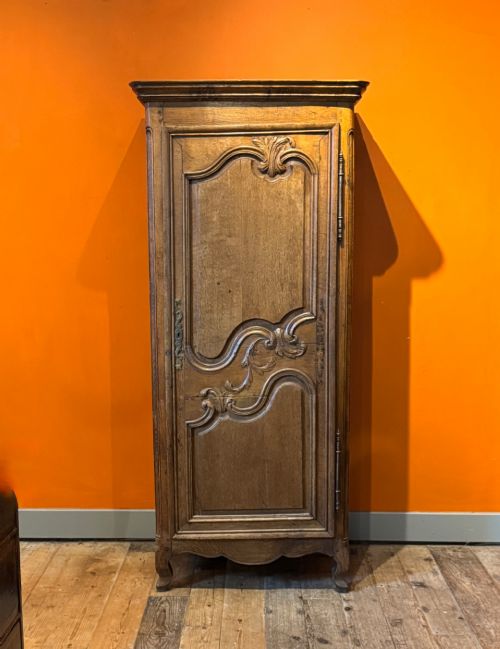


Carved French Wardrobe
A carved french wardrobe offers generous timber storage built with regional detail, bringing historic cabinet work directly into the modern bedroom.
Carved French Wardrobe
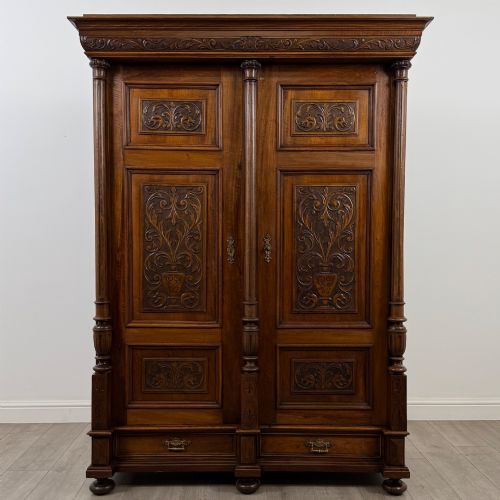
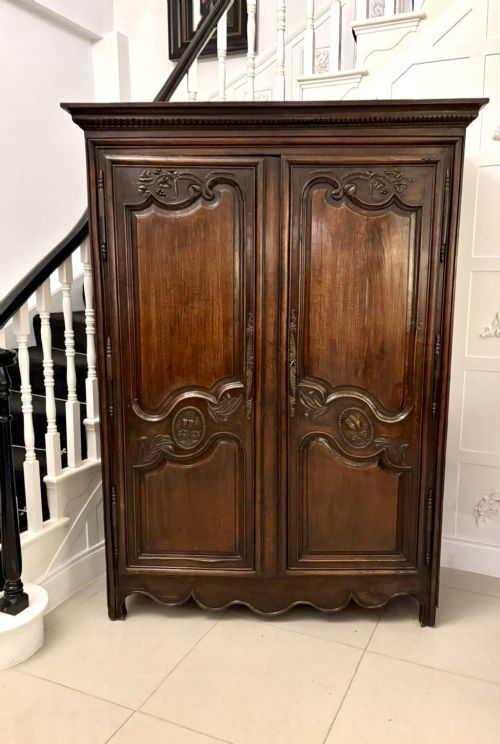
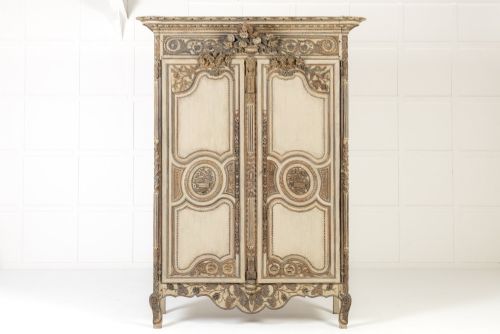
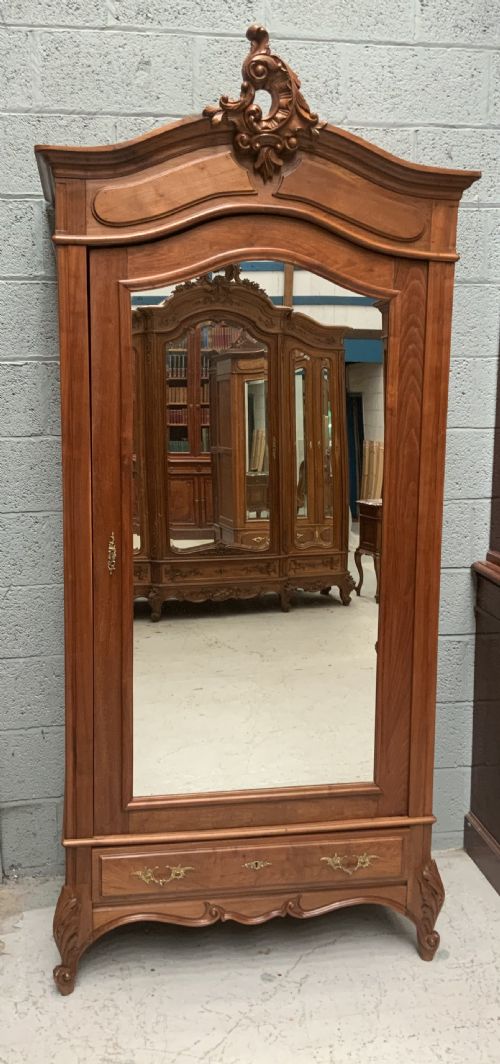
A carved french wardrobe, frequently encountered as an armoire or bonnetiere, provides substantial bedroom storage through single, double, or triple door configurations. These pieces span the eighteenth century through the early twentieth century, incorporating regional styles such as provincial, Breton, and various revival tastes.
The material selection centres heavily on solid oak and walnut, alongside cherrywood, mahogany, rosewood, and fruitwood. Many examples display applied paint finishes or bleached treatments, while structural hardware typically involves brass and iron hinges or locks.
Cabinetmakers constructed these large storage units to dismantle in many instances, allowing transport of massive proportions up narrow stairwells. Interiors frequently combine hanging space with adjustable shelving or smaller internal compartments.
Materials and construction
Craftsmen utilised dense native hardwoods, principally oak and walnut, joined with traditional pegged mortise and tenon framing to support heavy panelled doors. Carved ornamentation is cut directly into the solid timber framework rather than applied as separate compo mouldings.
Surface treatments range from waxed natural grain and French polish to decorative paintwork and applied ormolu mounts. Secondary timbers line the interiors, whilst iron and brass provide robust structural door furniture and operational latches.
Several towering cabinets arrive with secrets, concealing hidden interior compartments or deep floor drawers originally intended to hoard winter blankets.
Evaluating craftsmanship
The depth and crispness of the hand-carved relief work dictate the refinement of a piece, distinguishing artisan workshops from standard production. Timber selection also governs quality, with dense burr walnut veneers or finely figured oak commanding greater visual presence.
Proportion and scale separate superior cabinets from simpler domestic cupboards, particularly where cornices and panelled doors align harmoniously. Original hardware, intact locks, and balanced proportions preserve the architectural integrity of the cabinet.
The Carved French Wardrobe Glossary
- Armoire
- A large upright cupboard or wardrobe used primarily for hanging clothes or storing household textiles. These tall storage units often feature panelled doors and decorative carved cornices.
- Bonnetiere
- A narrow single-door cupboard originating in France, traditionally designed to store caps and bonnets. They generally present as taller, slender variants of the standard wardrobe.
- Ormolu
- Gilt-bronze decorative mounts applied to furniture surfaces. This metallic ornamentation enhances the architectural corners and keyhole escutcheons of refined cabinets.
- Breton
- A regional style originating from northwestern France, characterised by distinctive folklore carvings and sturdy construction. Pieces from this tradition often display human figures or traditional motifs.
- Cartouche
- An ornamental tablet or oval frame design applied to furniture woodwork, frequently enclosing carved crests or floral motifs. It anchors the central pediment of many large armoires.
Carved French Wardrobe: Frequently Asked Questions
How do I dismantle a large armoire?
Many traditional French wardrobes utilise a knockdown construction method with wooden pegs and wedge joints rather than metal screws. This engineering allows the heavy cornice, sides, and base to separate for easier transport.
Marking each timber component before disassembly ensures correct reassembly inside the room. Assistance is essential due to the substantial weight of solid oak or walnut panels.
Will these wardrobes fit modern clothes hangers?
Older European cabinets often feature shallow internal depths designed for historical garments rather than contemporary shoulder widths. Modern wooden or wire hangers may prevent the heavy doors from closing completely.
Checking the internal front-to-back measurement before purchase determines whether hanging rails need repositioning or if shelves are better utilised. Some pieces function primarily as shelved linen cupboards rather than hanging wardrobes.
How do I care for antique French timber?
Maintaining solid oak, walnut, or fruitwood requires stable room humidity away from direct heat sources to prevent timber splitting. Regular application of a traditional beeswax feed nourishes the grain without building up synthetic residues.
Avoid commercial silicone sprays that can penetrate porous historic finishes. Gentle dusting with a soft, dry cloth preserves the natural lustre of the aged surface.
How do I date a carved wooden wardrobe?
Dating relies on observing construction methods, timber choice, and stylistic motifs carved into the framework. Eighteenth-century examples frequently show hand-planed internal surfaces and pegged joints, whilst later nineteenth-century pieces adopt revival aesthetics and machine assistance.
Hardware styles, including hand-beaten iron hinges or cast brass escutcheons, provide additional clues regarding the period of manufacture.