
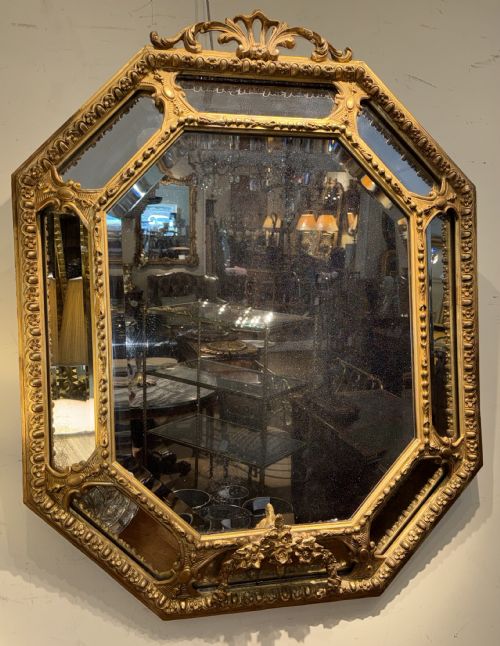
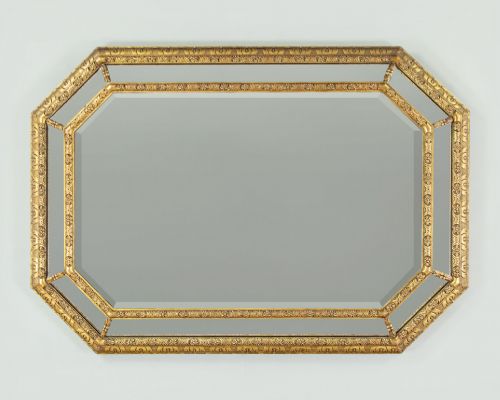


French Cushion Wall Mirror
A French cushion wall mirror brings depth and refracted light to a room through its distinctive curved frame and layered plates.
French Cushion Wall Mirror
A French cushion wall mirror presents a convex or stepped frame profile that steps outwards towards the edge, drawing the eye towards the central reflective plate. The form emerges frequently in nineteenth century pieces spanning the Victorian era, Regency period, and Napoleon III reign.
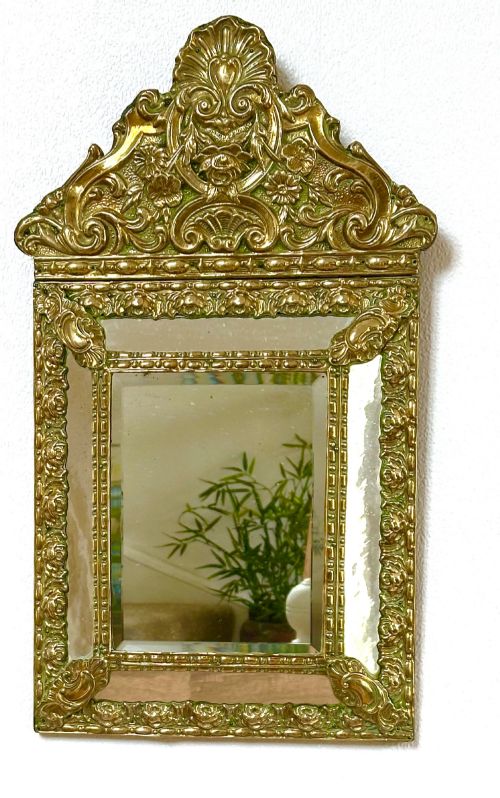
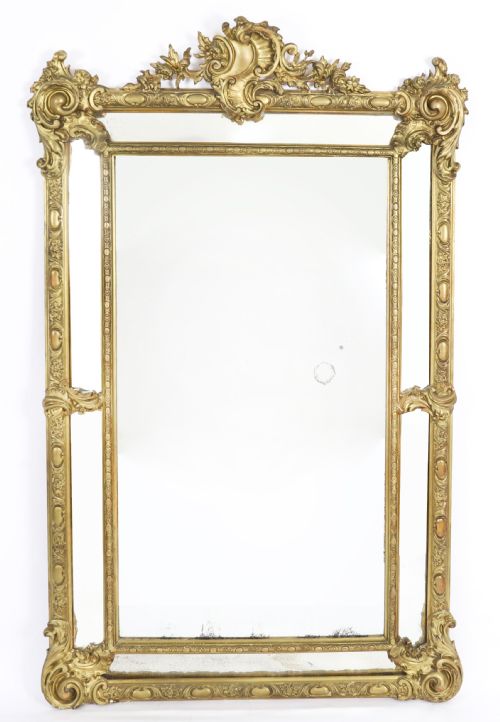
Most examples found in this selection take the form of large overmantel mirrors or wall mirrors, often incorporating marginal plates or brass frames alongside traditional giltwood. Makers frequently employed Louis Philippe, Louis Revival, and French Chateau styles to create ornate decorative focal points.
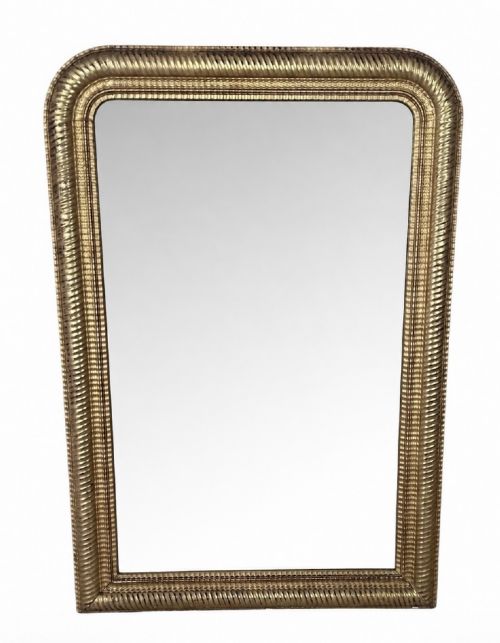
Buyers often encounter variations featuring carved wood and gesso, ripple mouldings, and crests with dragons or decorative motifs. These pieces range from neat arched silhouettes to exceptionally large formats designed for principal reception rooms.
Materials and construction
Artisans built the structural carcass using carved wood or oak, frequently applying layers of gesso to form intricate surface ornamentation and crisp relief details before applying gold leaf or paint. Giltwood and parcel-gilt finishes dominate the selection, alongside pressed brass and ebonised frames.
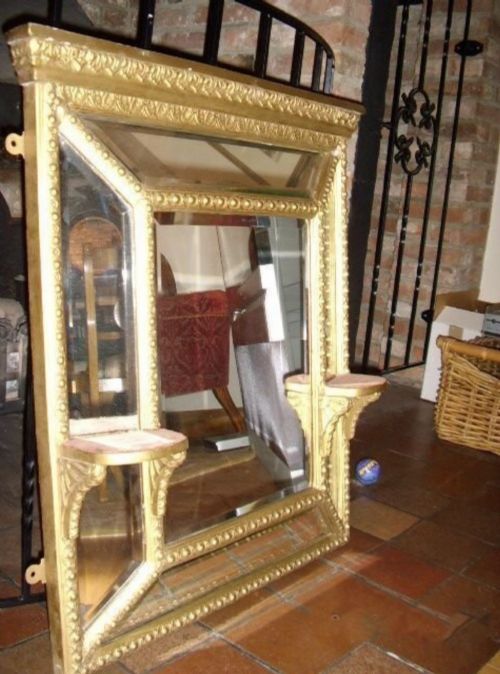
Glazing relies on traditional techniques incorporating bevelled glass, marginal plates, and mercury glass. Metal mounts and decorative brass elements secure the secondary frames and structural joints.
Markers of quality
Quality rests in the crispness of the carved wood and gesso relief work, where deep undercut moulding and refined gilding separate superior workshop output from simpler production. The handling of the cushion profile itself dictates the sculptural presence of the object on the wall.
The integrity of the original glass plates, whether bevelled or mercury coated, influences the character of the reflection. Original parcel-gilt surfaces and undisturbed metal mounts retain historical authenticity that later restoration often obscures.
The French Cushion Wall Mirror Glossary
- Cushion mirror
- A mirror featuring a convex or outwardly sloping frame profile that resembles a cushion. This design creates a tiered effect that bounces light across multiple angles.
- Giltwood
- Wood that has been coated with a thin layer of gold leaf or gold paint. It provides a luminous surface finish characteristic of formal nineteenth century interior decoration.
- Marginal plate
- Smaller secondary mirrors set into the border surrounding the central reflective glass. These flanking plates are often bevelled to catch the light.
- Gesso
- A plaster-like mixture applied to wood frames to create a smooth base for carving or gilding. It allows artisans to shape sharp decorative motifs and scrollwork.
- Mercury glass
- A type of silvered glass produced by pouring a liquid mercury amalgam between double-walled glass. It yields a distinctive mottled and deep reflective quality.
French Cushion Wall Mirror: Frequently Asked Questions
Where should I hang a cushion mirror?
These pieces suit principal reception rooms, hallways, and above mantelpieces where their generous proportions and reflective qualities can open up the surrounding space.
Because many examples in this group are exceptionally large or heavy, secure wall fixings into solid masonry or substantial studwork are essential for safe installation.
How do I identify a nineteenth century French frame?
Look for construction details such as hand-carved wood beneath gesso layers, traditional joinery, and the use of mercury glass or early bevelled plates.
Stylistic cues like Louis Philippe shaping, ripple mouldings, and patinated parcel-gilt surfaces further point to nineteenth century French workshop origins.
What is the difference between a wall mirror and an overmantel mirror?
Wall mirrors are generally proportioned to hang on any vertical surface as standalone decorative art, while overmantel mirrors are traditionally designed to sit directly above a fireplace.
Overmantel formats in this selection tend to be wider and heavier, accommodating the grand proportions typical of nineteenth century drawing rooms.
How should I clean a antique gilt frame?
Dust the carved wood and gesso surfaces gently with a soft, dry brush to prevent accumulating dirt within the intricate relief work without disturbing the gold leaf.
Avoid using liquid cleaners, solvents, or abrasive cloths on giltwood and painted finishes, as moisture can lift the delicate gesso ground.