


Gold Leaf Cushion Mirror
A gold leaf cushion mirror brings convex depth and reflective warmth to a room, drawing the eye with its curved, projecting frame.
Gold Leaf Cushion Mirror
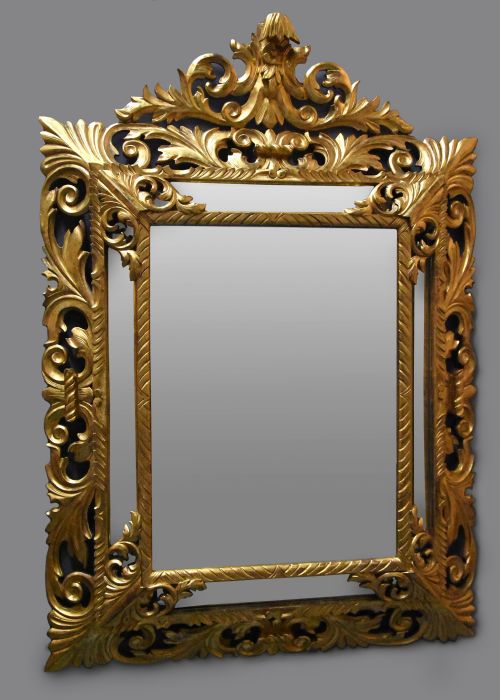
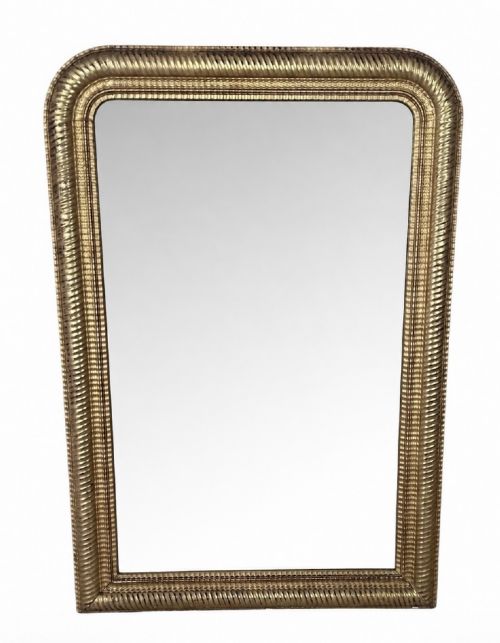
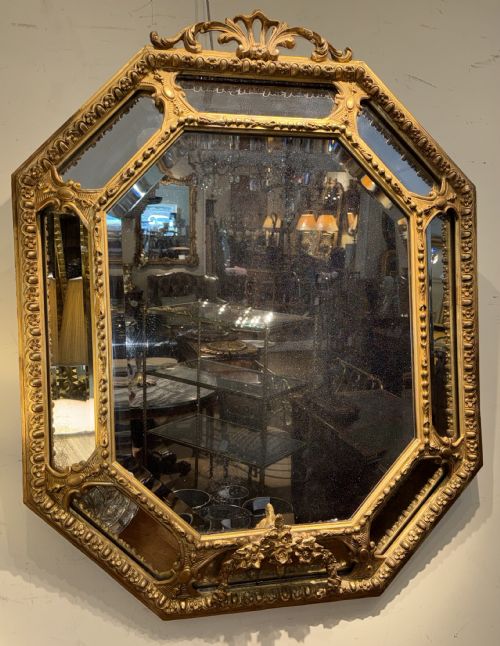
A gold leaf cushion mirror presents a distinct convex profile where the frame slopes inward or outward toward the glass, creating a sculptural presence on the wall. When you search for a gold leaf cushion mirror, you encounter pieces primarily from the nineteenth century, ranging from eighteen-sixty through nineteen hundred, with strong French, Italian, and Dutch influences.
The forms span large wall mirrors, overmantel mirrors, and oval shapes, often displaying rich carving or ripple moulding. French Louis Philippe examples and Italian baroque revival pieces dominate the selection, bringing substantial scale and traditional craftsmanship into domestic interiors.
These mirrors serve as focal points above mantelpieces or along principal reception walls. Their design captures and refracts ambient light through bevelled or flat mirror glass set deep within gilded wooden or embossed brass surrounds.
How they were made
Makers constructed these frames from wood, applying layers of gesso to smooth the surface before laying down fine gold leaf or giltwood finishes. This traditional water-gilding or oil-gilding technique provided the brilliant metallic sheen characteristic of nineteenth-century frames.
Alternative iterations incorporate embossed brass or ebonised wood alongside gilt highlights, creating striking tonal contrasts such as black and gold finishes. The glass itself is heavy mirror glass, occasionally framed by intricate ripple mouldings or carved dragons and crests.
Some nineteenth-century French frames feature carved wooden dragons guarding the crest, ready to scare off unwanted household spirits.
What varies in quality
Depth of carving and crispness of detail separate standard frames from exceptional examples, particularly in Italian giltwood or baroque influenced pieces. The skill of the carver dictates whether acanthus leaves, crests, and ripple details retain sharp definition beneath the layers of gold leaf.
The integrity of the gilded surface and the original weight of the wooden substrate also define the upper tier of pieces. Substantial timber construction prevents warping, while well-preserved gesso and leaf retain their luminous warmth across decades.
The Gold Leaf Cushion Mirror Glossary
- Giltwood
- Wood that has been coated with gold leaf or gold paint. This finish provides the bright metallic appearance seen on nineteenth-century frames.
- Gesso
- A plaster-like mixture applied to wood frames to create a smooth base before gilding. It allows carvers to add fine relief details.
- Cushion mirror
- A mirror featuring a convex or sloping frame that pushes the profile outward or inward. This shape enhances reflection and adds architectural depth to the wall.
- Ripple moulding
- A decorative, undulating pattern machined or carved into the wood of a frame. It creates rhythmic shadows around the glass.
- Overmantel mirror
- A large horizontal mirror designed specifically to hang above a fireplace mantel. These pieces often anchor the proportions of a principal room.
Gold Leaf Cushion Mirror: Frequently Asked Questions
Where should I hang a cushion mirror?
These mirrors suit principal reception rooms or above a fireplace mantel where their reflective depth can expand the visual space.
Ensure the wall construction supports the substantial weight of carved wood and heavy mirror glass.
How do I identify a nineteenth-century mirror?
Examine the construction methods, materials such as gesso and gold leaf, and the weight of the timber backing. Nineteenth-century pieces frequently display hand-carved details and period-specific styling like Louis Philippe or baroque revival.
What is the difference between wall and overmantel mirrors?
Wall mirrors are typically square, oval, or arched for versatile placement across different room elevations. Overmantel mirrors are proportioned specifically to sit horizontally above mantelpieces.
How do I clean a giltwood frame?
Dust the gilded surfaces gently with a soft, dry brush to prevent disturbing the delicate gold leaf layer. Avoid liquid cleaners or moisture, which can damage historic gesso and wood underneath.