


French Cushion Frame Mirror
A french cushion frame mirror brings deep architectural profile and reflected light to a room through its distinctive rounded outward sweep.
French Cushion Frame Mirror
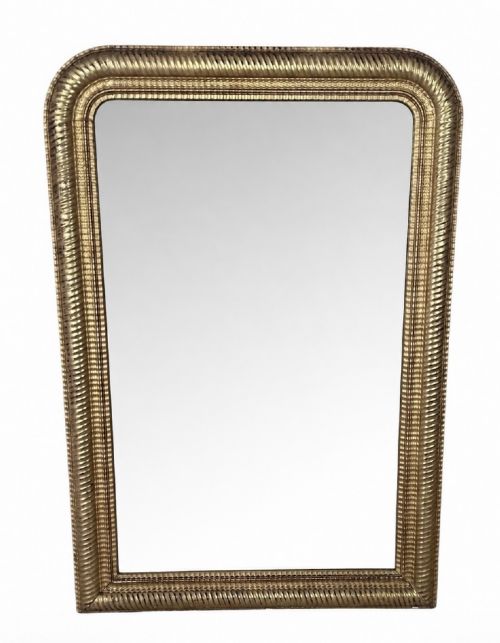
A french cushion frame mirror presents a distinct convex moulding that curves outwards towards the edge, drawing the eye directly towards the central glass. These pieces function primarily as wall mirrors and large overmantle mirrors, appearing frequently in nineteenth century forms influenced by Louis Philippe, French Chateau, and Second Empire styles.
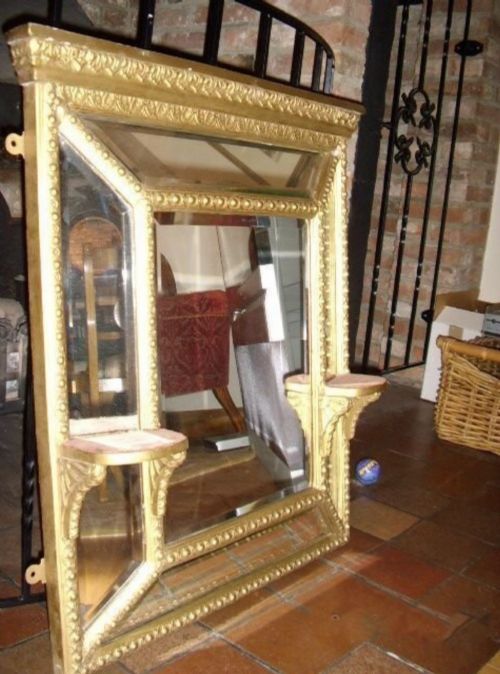
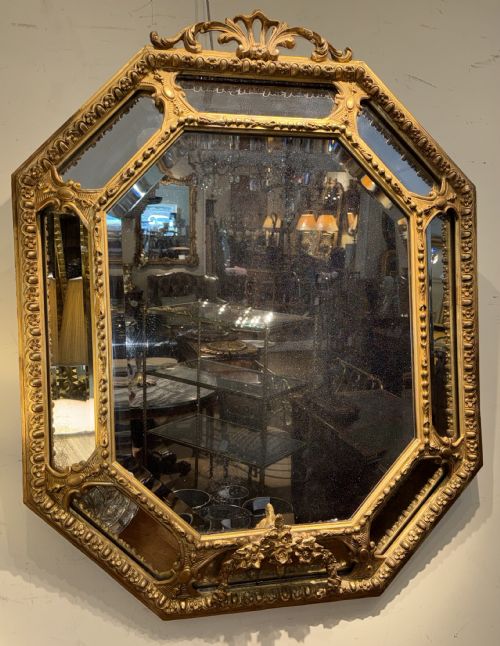
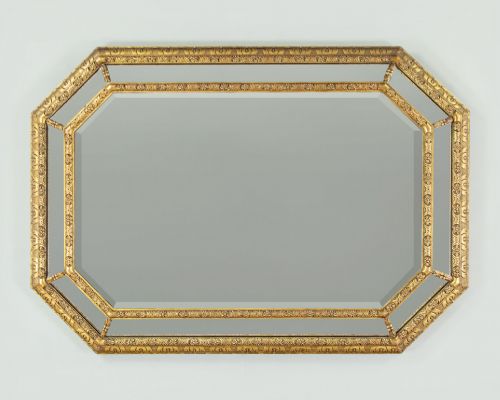
The profile emerges in various configurations including rectangular, oval, and arched tops, sometimes featuring crests, dragons, or ornament shelves. While many examples originate from the nineteenth century, variations stretch from eighteen hundred through the Victorian era and into early twentieth century production.
Buyers encounter these pieces executed in distinct regional aesthetics, spanning heavily carved scrubbed oak, ebonised and gilt finishes, and ornate gilded surfaces. The convex frame design provides a substantial visual weight that anchors a room, whether chosen in a neat domestic scale or as a very large overmantle format.
How they were made
Wood serves as the primary structural foundation for the frames, shaped into the characteristic convex sweep using carved wood or built-up timber substructures. Artisans applied gesso over the wooden base to build intricate surface details, rope twists, and repousse metal work before finishing.
Gilding techniques involved the application of gold leaf and parcel-gilt treatments to the prepared gesso and carved surfaces, creating the luminous metallic sheen seen on antique examples. Brass frames and repousse brass sheet elements also appear, fastened directly to the structural framework to form the reflective boundary.
Glass panels include bevel cut nineteenth century glass and bevelled mercury glass, secured within the rebated frame behind the prominent cushion moulding. Frame construction ranges from heavy carved oak and scrubbed timber to painted, distressed, and ebonised wood finishes.
Current listings feature materials including glass, gesso, giltwood, wood, gold leaf, brass, carved wood, and bevelled glass.
What varies in quality
The depth and execution of the carved wood and gesso ornamentation dictate the upper tier of quality, distinguishing deeply hand-modelled rope twists and crisp crests from simpler mouldings. Superior examples retain their original parcel-gilt or gold leaf surfaces with honest patination rather than later overpainting.
The integrity of the frame construction and the original state of the glass plate separate exceptional pieces from standard items. Substantial scale combined with robust joinery in materials like oak or well-preserved giltwood indicates higher atelier standards during production.
The French Cushion Frame Mirror Glossary
- Cushion frame
- A convex, outward-sloping moulding profile that curves away from the central glass plate towards the outer edge. This distinctive shape gives the mirror its characteristic three-dimensional volume.
- Gesso
- A plaster-like mixture applied to wood frames to provide a smooth base for carving or gilding. It allows artisans to shape intricate decorative relief details before applying gold leaf or paint.
- Mercury glass
- An early form of double-walled silvered glass produced by pouring a mercury amalgam between glass layers. It often exhibits characteristic mottling and depth behind the reflective surface.
- Repousse
- A metalworking technique where the metal is hammered into relief from the reverse side. In these pieces, thin brass sheets feature raised decorative patterns around the mirror frame.
- Overmantle mirror
- A large horizontal mirror designed specifically to hang above a fireplace mantelpiece. These pieces often feature extended proportions to match the width of the hearth below.
French Cushion Frame Mirror: Frequently Asked Questions
How do I hang a heavy cushion mirror?
Due to the substantial timber and gesso construction of these pieces, secure wall fixing requires heavy-duty mirror plates or French cleats screwed directly into wall studs or masonry. Professional installation is strongly recommended for large overmantle formats.
Ensure the hanging wire or integrated brackets distribute the considerable weight evenly across the structural frame rather than relying on decorative crests or moulding joints.
How should I clean the antique glass?
Clean the glass surface gently using a soft microfibre cloth and a mild, ammonia-free glass cleaner sprayed onto the cloth rather than directly onto the mirror. This prevents moisture from seeping behind the plate.
Take care around the edges of bevelled and mercury glass where the silvering is older and more vulnerable to moisture ingress.
Are these mirrors suitable for bathrooms?
Bathrooms subject these delicate antique materials to fluctuating humidity and steam that can damage historic gesso, gilding, and the backing of old glass plates. Dry living areas, hallways, and reception rooms provide a much safer environment.
If placed in a room with intermittent moisture, ensure adequate ventilation and keep the frame well away from direct water contact.