
French Crested Wall Mirror
A french crested wall mirror brings dramatic height and decorative presence to a room, drawing the eye upwards with carved crests and gleaming gilt surfaces.
French Crested Wall Mirror
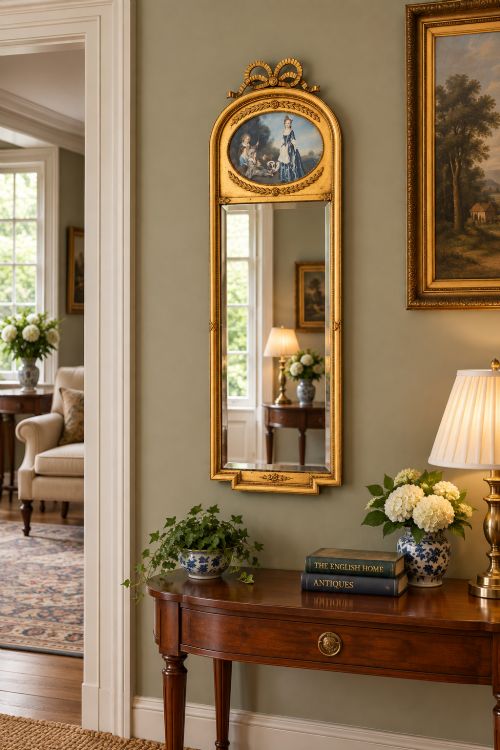
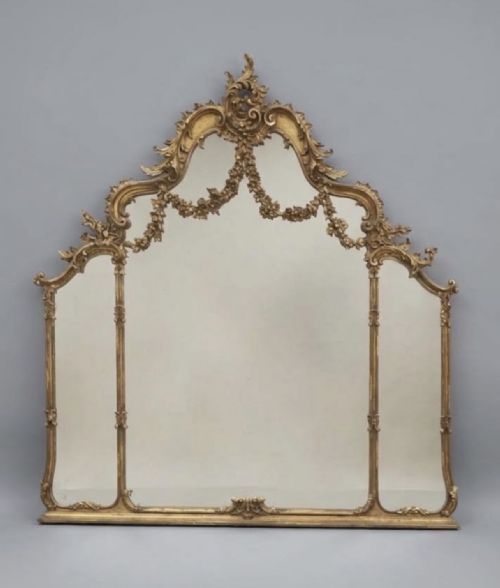
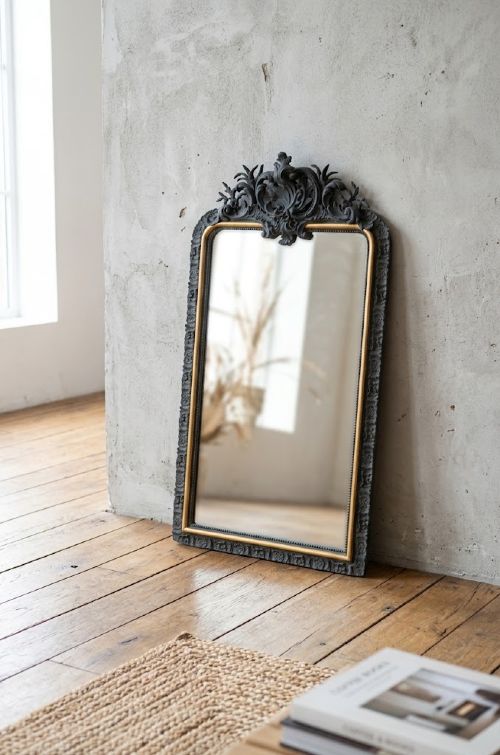
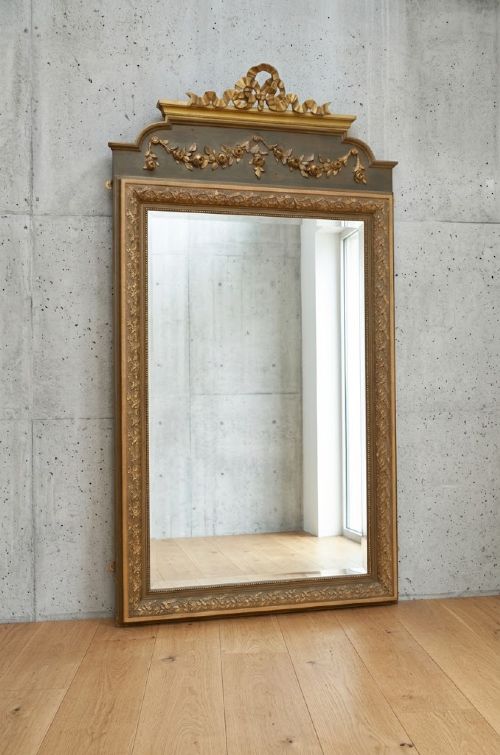
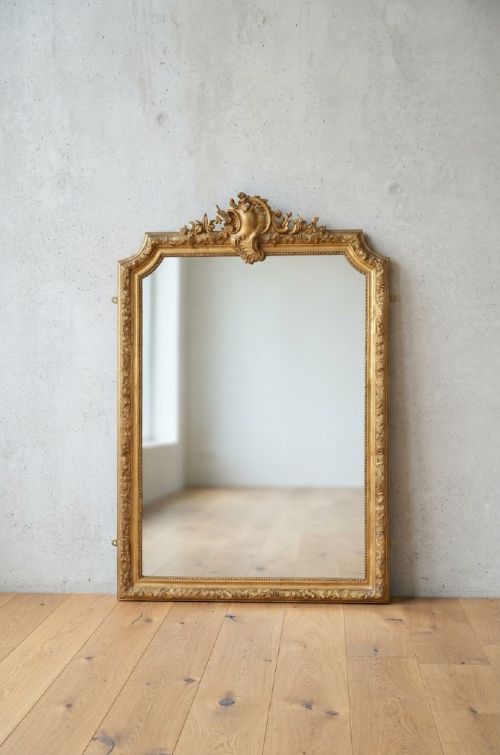
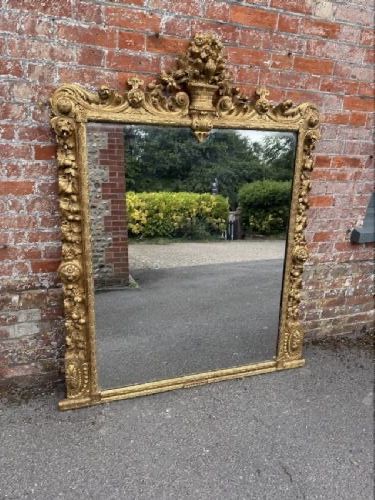
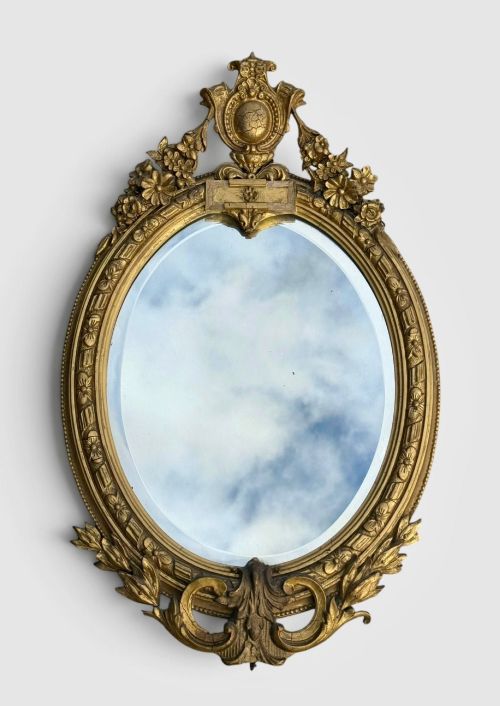
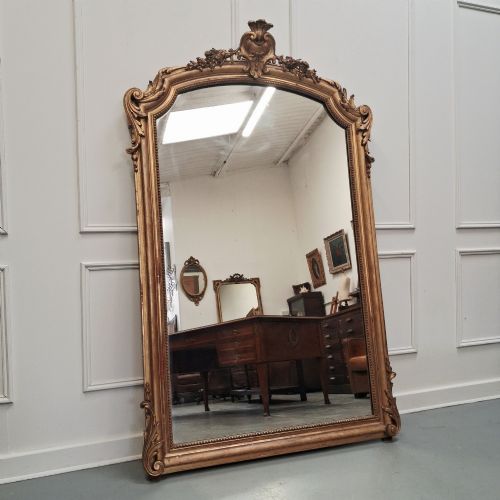
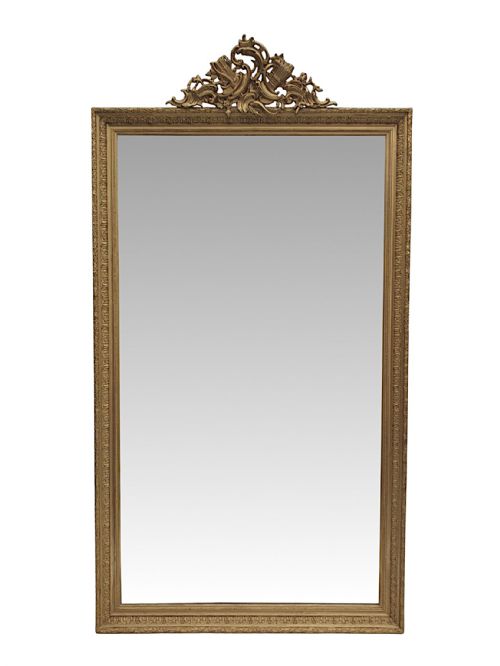
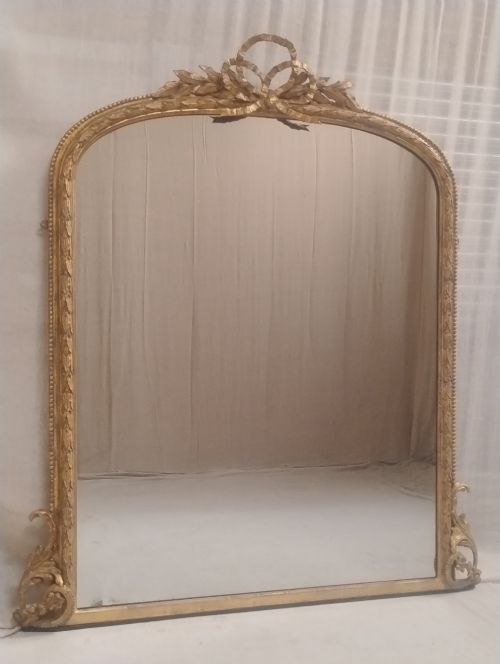
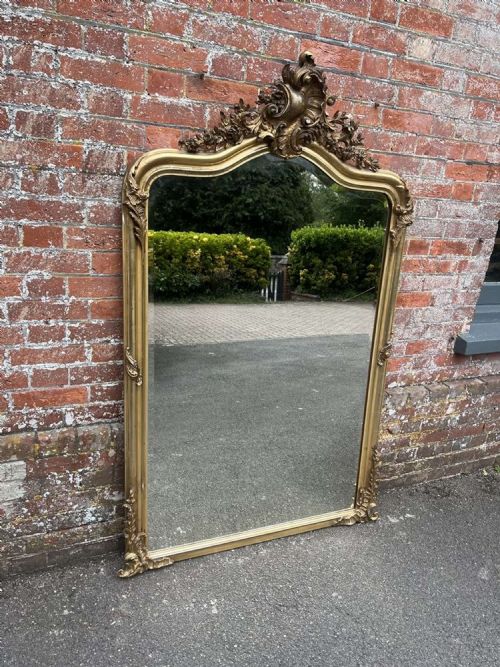
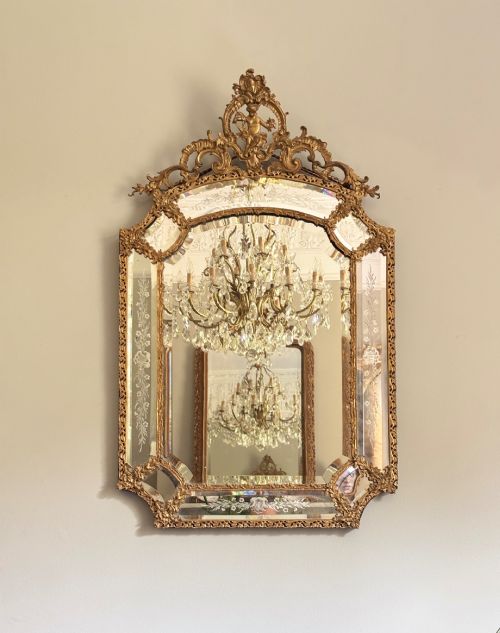
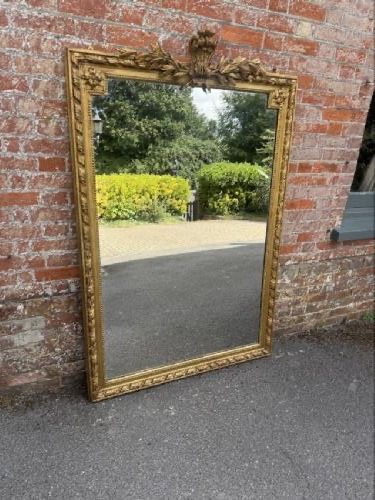
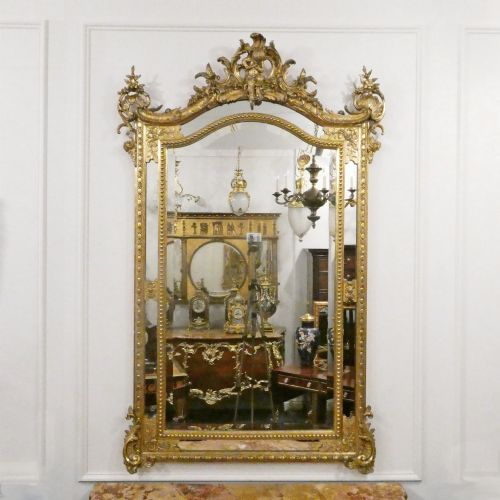
A french crested wall mirror is a large, decorative looking glass distinguished by an ornate upper flourish, ranging from ribbon motifs to carved urns and dragon crests. These pieces function primarily as overmantel mirrors or grand wall hangings, originating mainly from the nineteenth century with occasional eighteenth-century examples appearing.
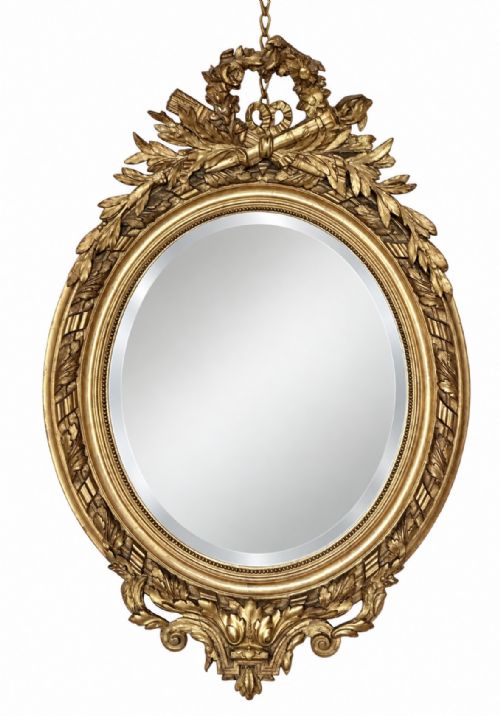
The version most commonly met on this page is the nineteenth-century giltwood and gesso overmantel mirror, often featuring a shaped top and classical revival styling such as Louis XVI or Rococo. Alongside these large architectural forms, smaller oval and pier mirrors surface with similar decorative cresting.
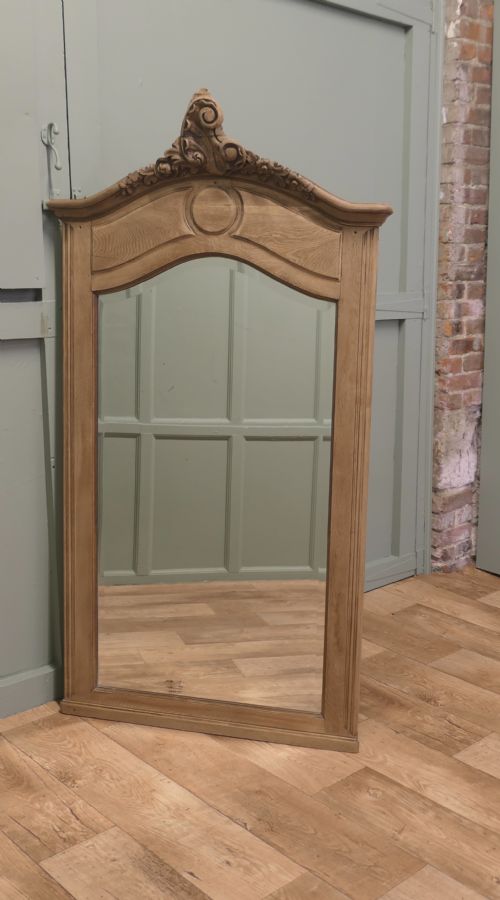
The inventory spans multiple decades and aesthetic movements, encompassing Napoleon III chateau mirrors, Victorian interpretations, and earlier eighteenth-century marriage mirrors. Regional variations include French provincial bleached oak frames as well as English adaptations sharing the characteristic crested profile.
Materials and Construction Techniques
Carved wood and gesso form the structural foundation for the majority of these frames, allowing artisans to build up high-relief ornamental crests and delicate scrollwork before applying gold leaf or paint.
Gilding techniques involve laying thin sheets of gold leaf or silver-gilt over a prepared ground, creating a brilliant reflective finish that catches candlelight and natural room illumination.
Glass plates vary from early foxed mercury glass and original bevelled sheets to later replacement plates, set within frames constructed from giltwood, painted wood, ebonised timber, or gilt bronze.
Certain nineteenth-century frames sport fierce dragon crests, standing guard above the glass with snarling mouths and scaly wings.
Distinctions in Quality and Craftsmanship
The depth and crispness of the hand-carving define the upper tier of these mirrors, where intricate details on the crest remain sharp rather than softened by excessive layers of subsequent gesso or poor restoration.
Originality of components dictates the standing of a piece, particularly the retention of the original mercury glass plate or early bevelled mirror glass within its primary gilded frame.
The structural integrity of large overmantel frames relies upon robust joinery at the corners and secure attachment of the heavy upper crest, separating master-carved examples from utilitarian production pieces.
The French Crested Wall Mirror Glossary
- Gesso
- A plaster-like material applied to wood frames as a smooth base for gilding or painting. It allows craftsmen to model intricate high-relief scrollwork and floral motifs.
- Giltwood
- Timber coated with gold leaf or gold paint. This traditional finish provides a warm, enduring metallic sheen.
- Overmantel mirror
- A large horizontal mirror designed specifically to hang above a fireplace mantel. These pieces often feature grand crested tops to fill tall vertical wall spaces.
- Mercury glass
- An early type of mirror glass created by pouring a mercury-and-tin amalgam behind the glass plate. It produces a characteristic mottled, dark reflective surface known as foxing.
- Pier mirror
- A tall, narrow looking glass built to hang on the wall space between two windows. They frequently incorporate lower consoles or display brackets.
- Girandole
- A decorative wall mirror featuring attached candle sconces or arms. The candle flames reflect in the glass to multiply light within the room.
French Crested Wall Mirror: Frequently Asked Questions
Where should I hang a large overmantel mirror?
These tall mirrors sit naturally above a fireplace mantel, where their proportions balance the vertical space of a chimney breast. They also function effectively on a principal living room wall to reflect light and expand the sense of depth.
Secure mounting is essential due to the substantial weight of carved wood, gesso, and thick glass. Professional wall anchors attached directly to structural studs ensure safe support for heavy frames.
How do I identify a nineteenth-century French mirror?
Look for characteristic stylistic markers such as Louis XVI revival symmetry, Rococo curves, or Napoleon III chateau aesthetics. Frame construction often involves traditional gesso over carved wood, accompanied by aged mirror plates.
Backboards made of old pine planks and hand- cut fixings offer further clues to the period. Examining the joinery behind the crest reveals the hand-assembly methods typical of the era.
What is foxed glass on an antique mirror?
Foxing refers to the dark, speckled spots and aged degradation that develop within the reflective backing over decades. This natural chemical breakdown creates a cloudy, atmospheric appearance.
Many collectors prize foxed mercury glass because it confirms the high age and authenticity of the mirror plate. It provides a softer, less clinical reflection than modern float glass.
How do I clean and care for a giltwood frame?
Dust the carved crest and frame gently using a soft, dry artist brush or feather duster. Avoid commercial chemical sprays and damp cloths, which can lift delicate gesso and gold leaf.
Keep the mirror out of direct, harsh sunlight to protect the gilded surfaces from fading. Stable indoor humidity prevents the underlying wood from expanding and cracking the plaster work.