




French Cherub Clock
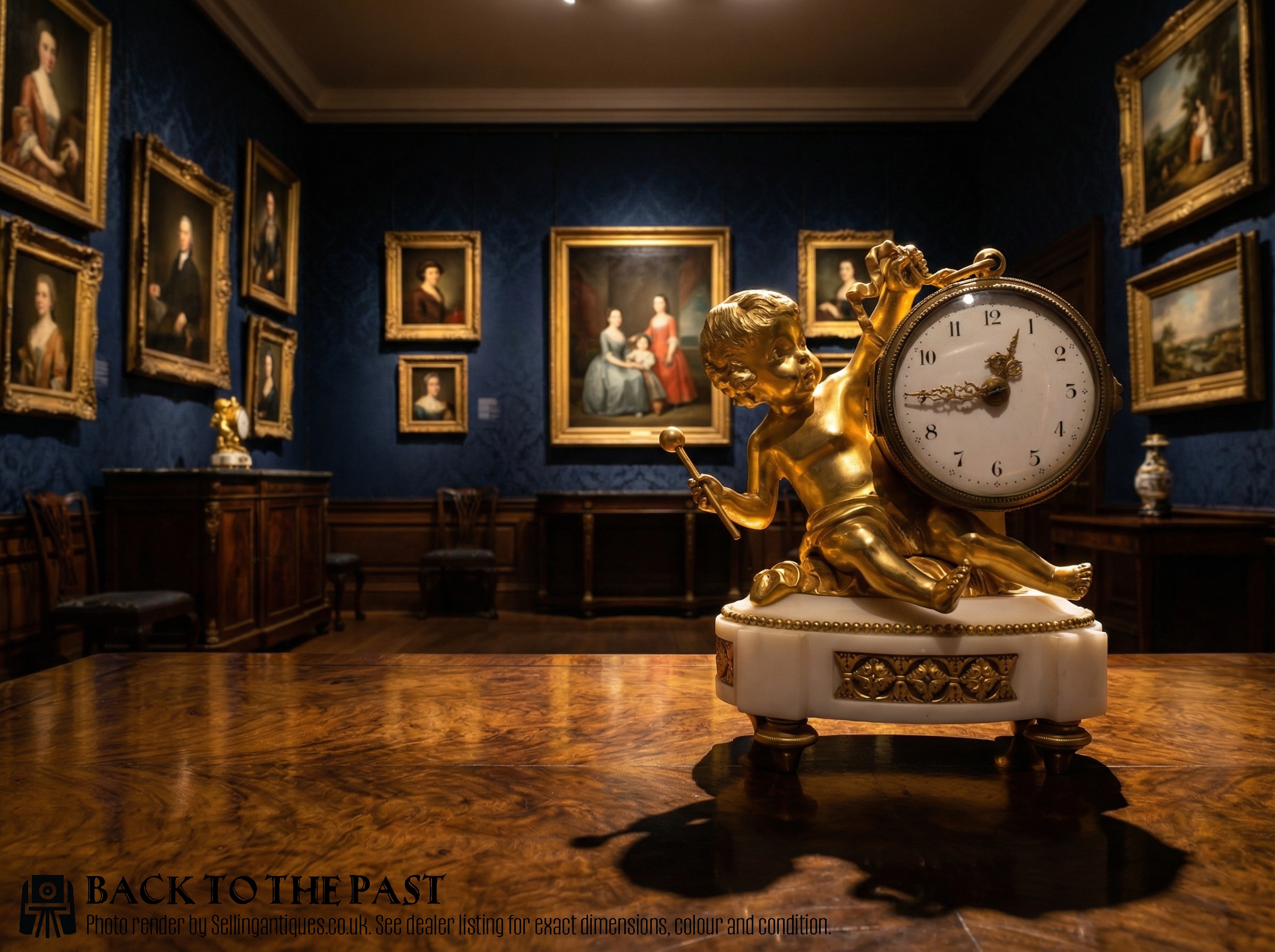
A french cherub clock brings sculptural putti and nineteenth-century horology together into a single decorative centrepiece.
French Cherub Clock
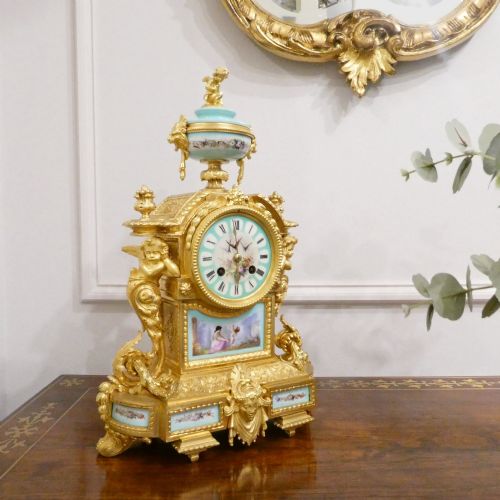
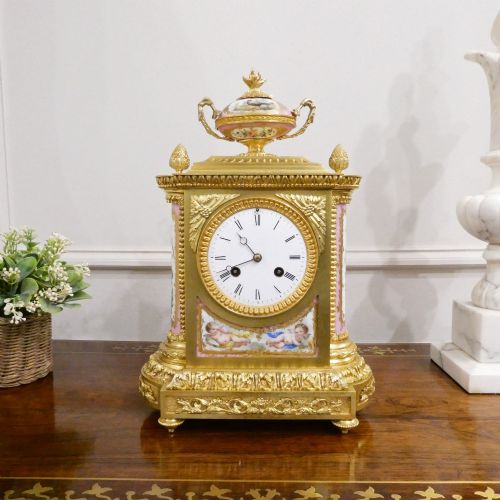
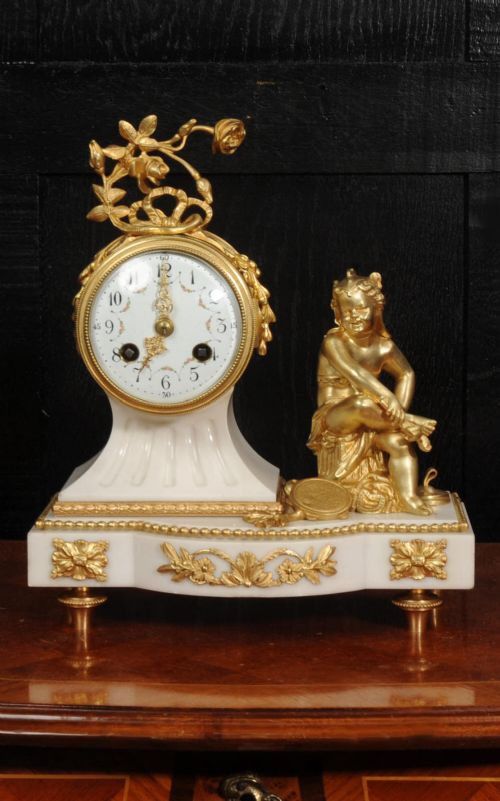
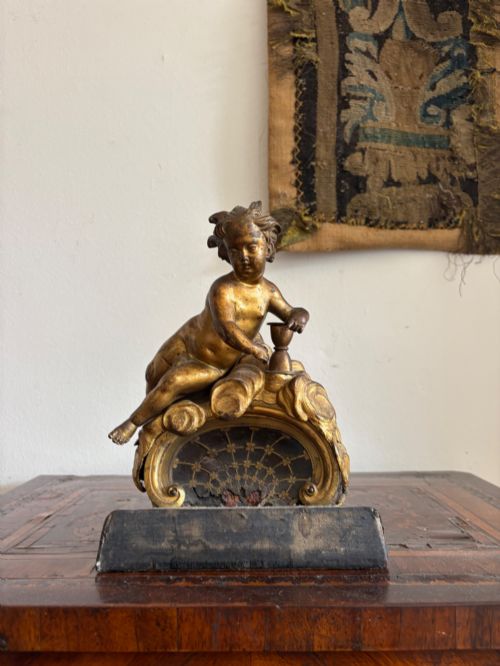
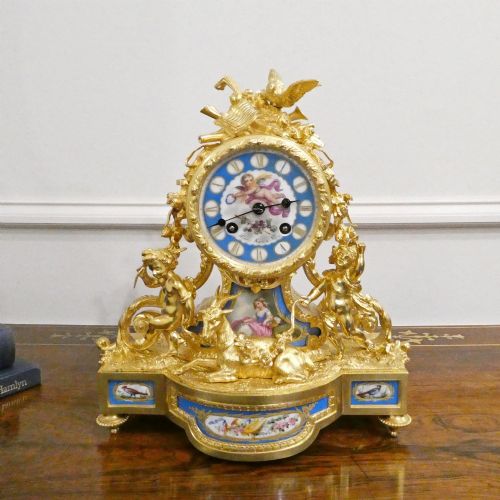
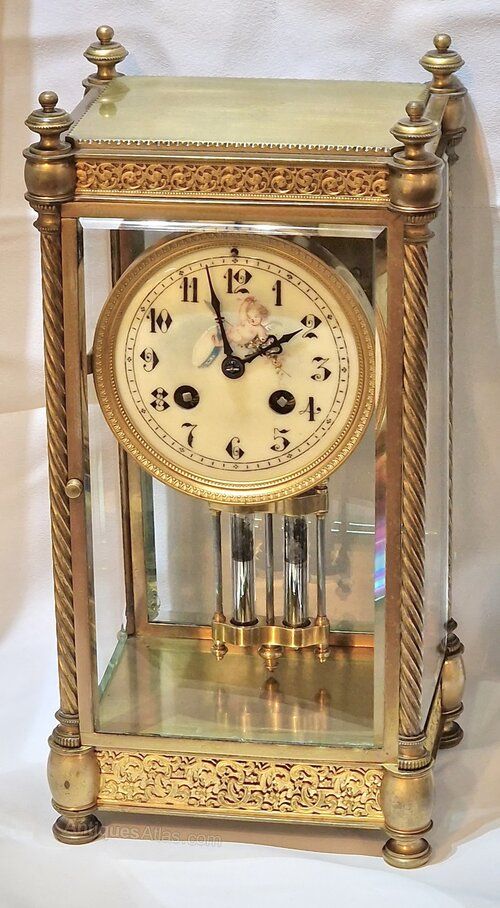
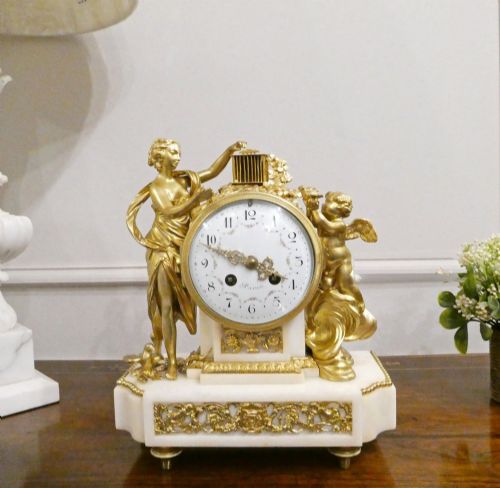
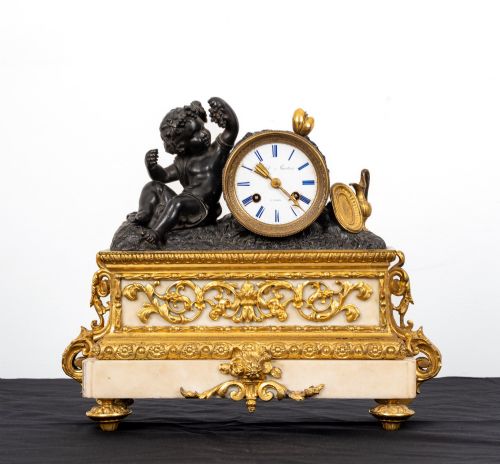
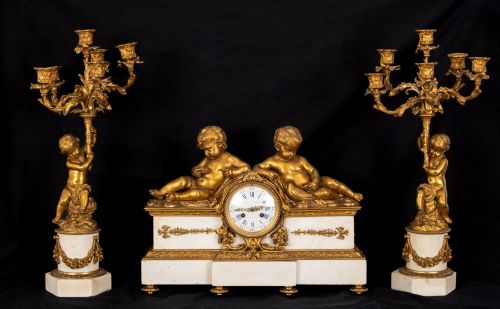
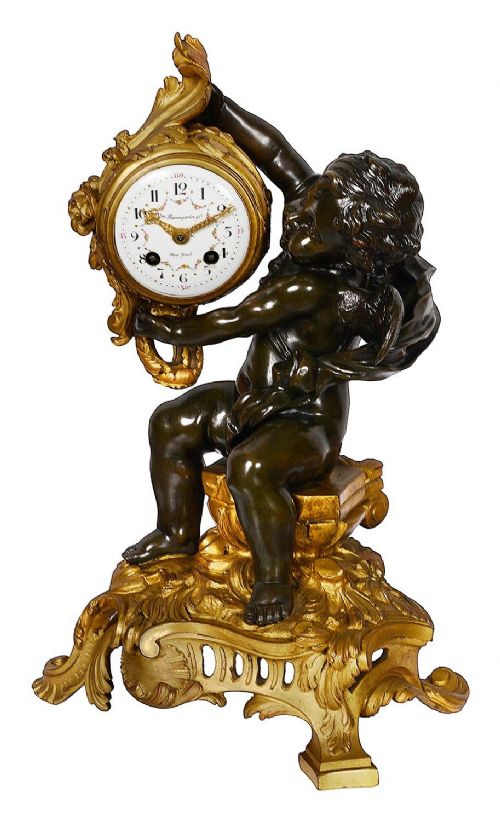
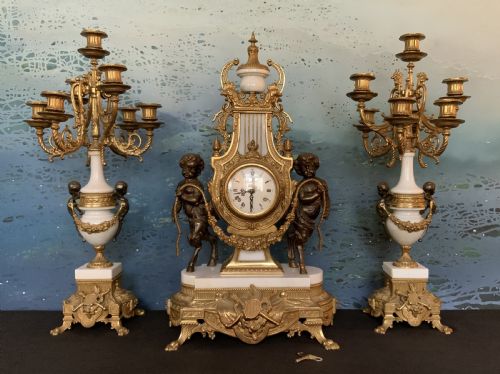
A french cherub clock combines functional timekeeping with figurative sculpture, frequently depicting winged putti as finials, dial attendants, or carrying figures alongside the main dial. The version most commonly encountered on this page originates from the nineteenth century, taking the form of mantel clocks or complete garniture sets flanked by matching candelabras.
Makers and foundries often housed these movements in architectural cases made of white marble, onyx, or cast bronze, adopting stylistic revivals ranging from Louis XVI to Rococo and Empire. These pieces served as salon and drawing-room ornaments designed to display wealth and artistic taste through classical mythology and allegorical themes.
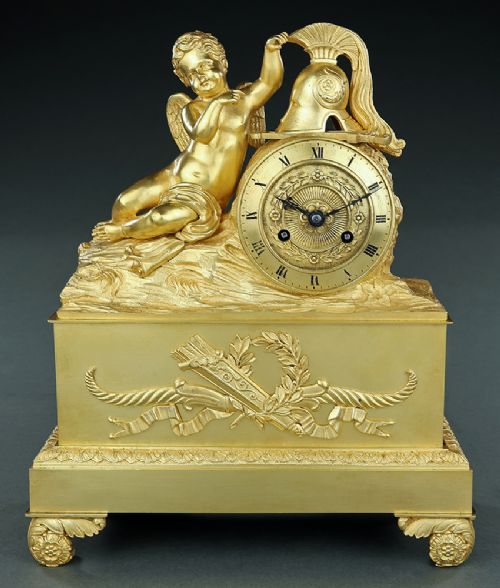
Buyers will encounter single mantel timepieces as well as larger multi-piece garniture sets featuring candelabras or side urns. The sculptural elements frequently interact with the clock face, showing putti reading, holding garlands, or leaning against the drum head.
Materials and Construction
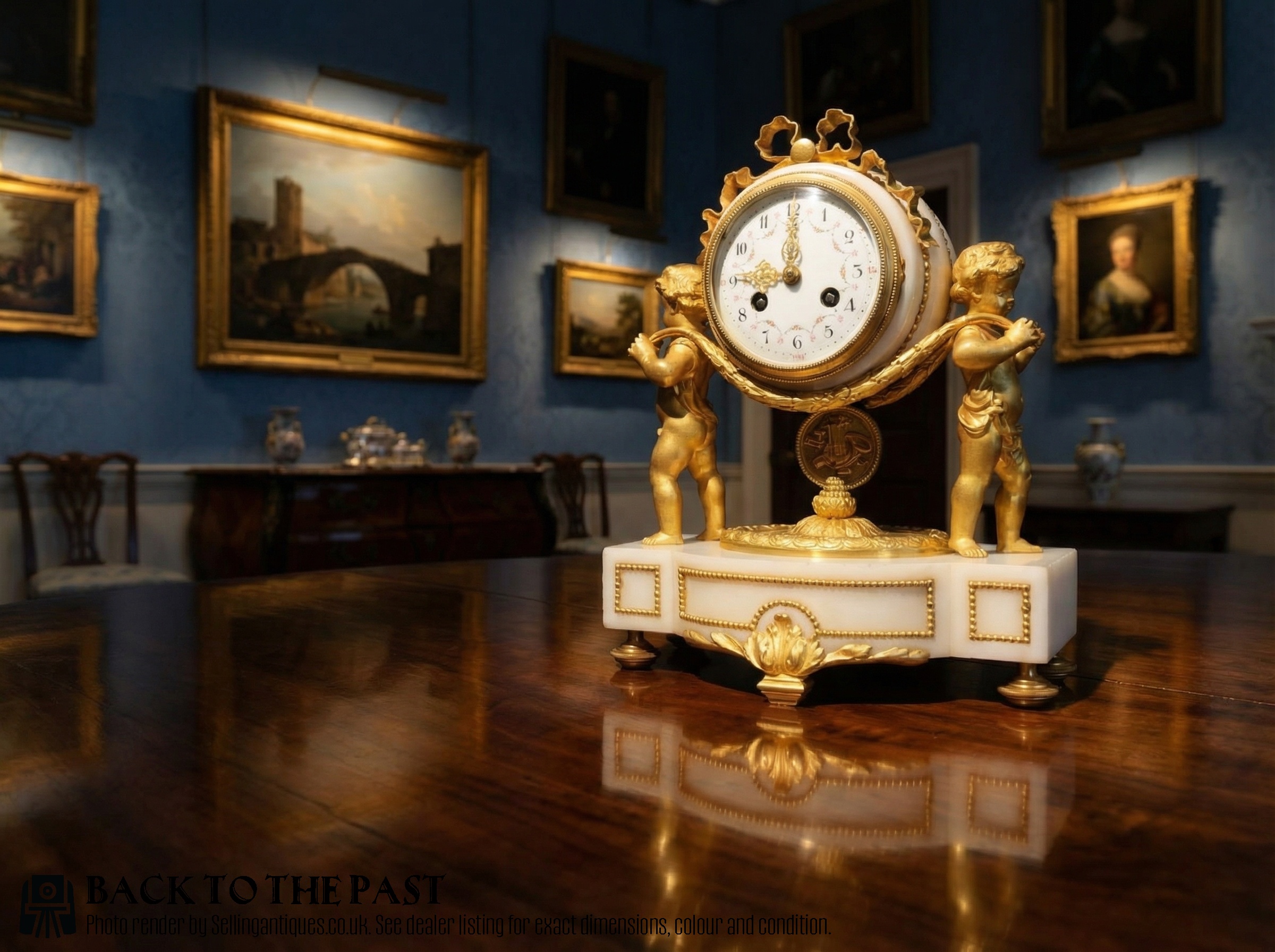
Clockmakers paired these metal mounts with white marble or onyx plinths, drilling the stone to accommodate the movement and porcelain enamel dial faces. Dial numbers were typically painted by hand, while the movements themselves utilised brass gears and escapements driven by coiled mainsprings.
Object forms span mantel clocks, portico clocks, boudoir timepieces, and three-piece garniture sets with matching candelabras.
Judging Quality
Quality rests upon the crispness of the bronze casting and the depth of the subsequent ormolu finish. Finer examples display sharp hand-chased definition in the cherub's feathers and hair, whereas lesser pieces rely on softer, unrefined cast surfaces.
The integration between the sculptural figure and the clock housing dictates overall harmony. Superior pieces feature figures specifically modelled to embrace the dial or case, rather than standard catalogue putti bolted onto generic marble plinths.
Jean-Baptiste Delettrez·Henry Marc·Siffel and Cartier·Japy Freres·Henry Dasson·Le Roy·Leon Message·Jollet et Cie·Samuel Marti·Achille Brocot·Eugene Farcot·Albert Ernest Carrier-Belleuse·Vincenti·Charles Hour
The French Cherub Clock Glossary
- Ormolu
- Gilt bronze created by applying a mixture of gold and mercury to a cast bronze base, then firing the piece to drive off the mercury. This technique produces a warm, durable golden finish characteristic of nineteenth-century decorative arts.
- Garniture
- A set of matching decorative objects designed for display together on a mantelpiece, usually comprising a central clock flanked by two matching candelabras or urns.
- Putto
- A plump, naked male child figure, frequently winged, appearing in classical art and used extensively as a decorative motif on nineteenth-century French clock cases.
- Spelter
- A zinc alloy used as a cheaper alternative to bronze for casting figures and mounts, often painted or electroplated to imitate bronze or ormolu.
- Escapement
- The mechanical linkage that controls the release of power from the mainspring to the pendulum, sometimes visible through a glass aperture on the dial face.
French Cherub Clock: Frequently Asked Questions
What is a clock garniture?
A clock garniture is a matched set of three decorative objects designed to sit together on a mantelpiece. It includes a central clock accompanied by two side pieces, such as candelabras or urns.
These sets were produced in France during the nineteenth century to provide a balanced, symmetrical arrangement for large fireplaces and drawing-room furniture.
How do I identify a French cherub clock?
These clocks are identified by the presence of cast bronze or spelter putti figures incorporated into the design, either supporting the dial or draped over the marble base. They frequently feature hand-painted enamel dials and French movement stamps.
Stylistic cues such as Rococo scrolls, Louis XVI neoclassical columns, or Empire bronze mounts further indicate French manufacture during the nineteenth century.
Are these clocks mechanical?
Yes, these are mechanical timepieces driven by wound mainsprings and regulated by a pendulum or balance wheel. They require manual winding using a matching key to power the gear train and striking mechanism.
Most period examples operate on an eight-day movement, meaning they need winding approximately once a week to maintain accurate time.
Where should I place a heavy marble clock?
Marble and bronze clocks are exceptionally heavy due to the density of the stone and metal components. They require a sturdy, level surface capable of supporting considerable weight without sagging.
mantelpieces or heavy wooden sideboards provide suitable placement, provided the surface is completely flat to ensure the pendulum hangs evenly and keeps accurate time.