


Antique Putto Clock
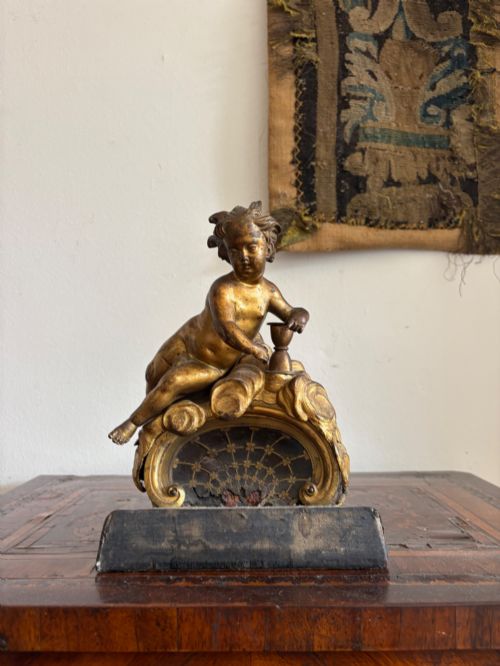
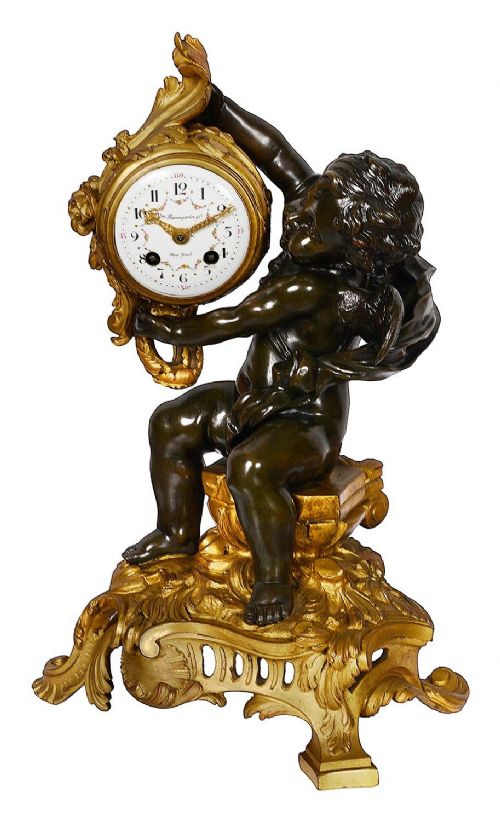
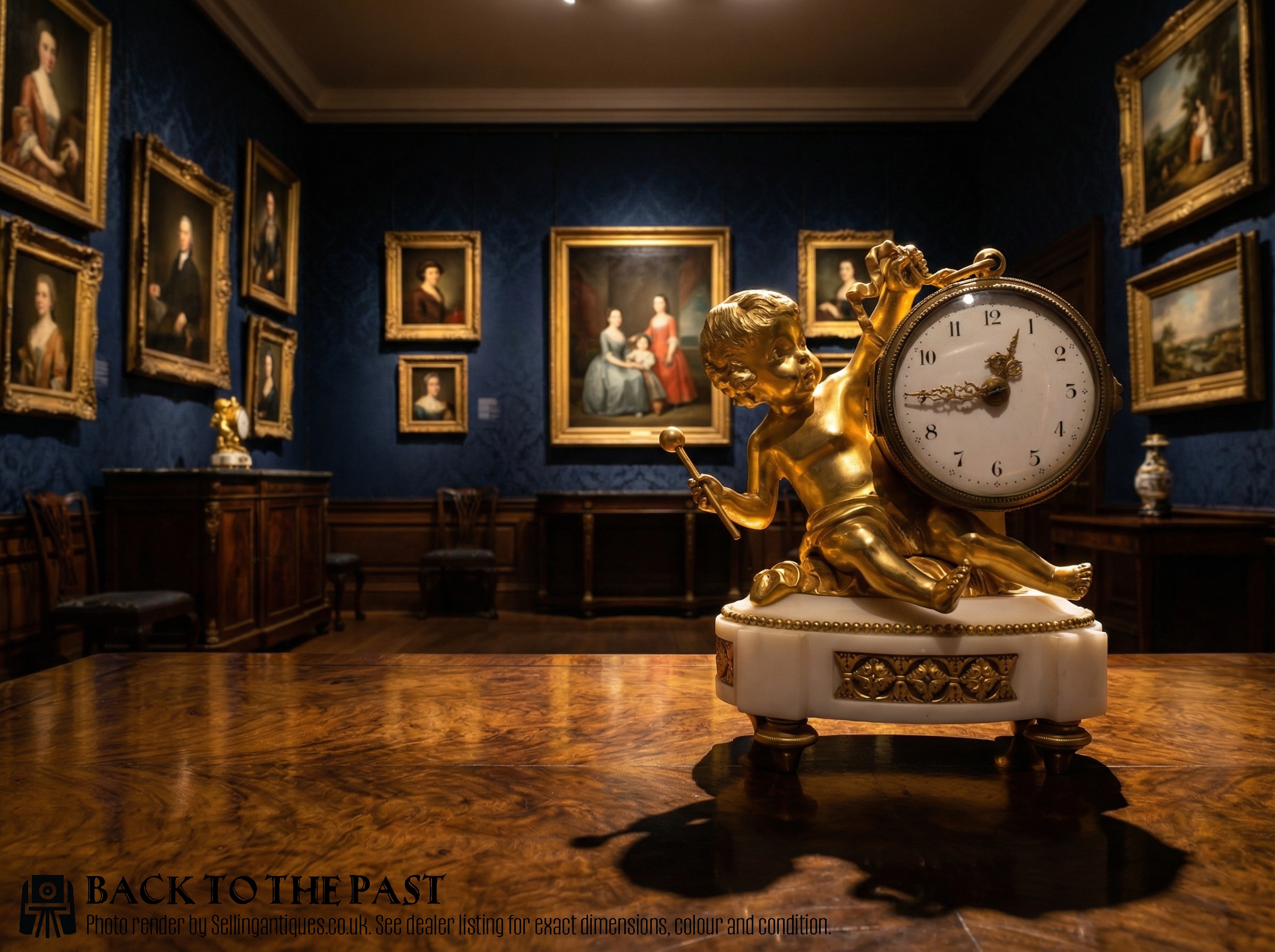
An antique putto clock brings figural charm to a room, driven by cherubic figures cast in gilt metal and marble.
Antique Putto Clock
When you search for an antique putto clock, you encounter domestic timepieces dominated by sculptural child figures representing cherubs, putti, or Cupid. These works span the nineteenth century and originate primarily from French workshops, with occasional English examples appearing in the record.
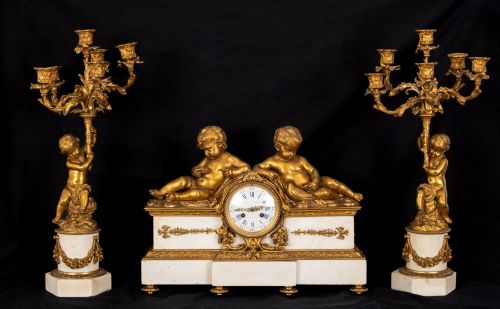
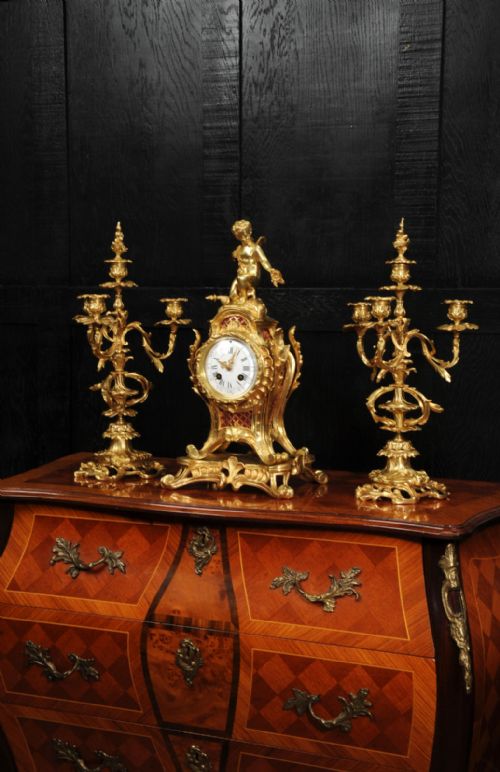
The most common form on this page is the mantel clock, often accompanied by matching candelabras in a garniture set. You also find cartel wall clocks, figural globe clocks, and individual decorative mounts intended for interiors.
Materials and Construction
Maker workshops utilised cast ormolu and gilt bronze to shape the elaborate frames and figures, frequently pairing the warm metal with white or red marble bases. Enamel dials and glass covers protect the clock faces, while porcelain elements such as Sevres-style plaques or Meissen ceramic bodies add colour and texture.
Foundries employed detailed chasing and fire gilding to finish the bronze surfaces, mounting mechanical movements driven by springs or pendulums inside the heavy cases.
At least one putto on these clocks is caught mid-action, floating in clouds while playing a tiny drum.
Distinctions in Quality
The standard of an antique putto clock rests on the crispness of the bronze casting and the depth of the hand-chased detail in the cherub figures. Weaker examples show soft edges and flat surfaces where the sculptor's definition has worn or was poorly cast.
The harmony of the materials dictates the tier of the piece, as superior examples integrate the marble plinths, enamel dials, and fire-gilded mounts into a balanced whole rather than assembling disparate elements.
Le Roy Paris·Leon Message·Jollet et Cie·Phillipe H. Mourey·Bellenot Paris·John Bennett
The Antique Putto Clock Glossary
- Ormolu
- Gilded bronze produced by applying a mercury and gold amalgam to a bronze base and heating it. This technique creates a durable, luminous golden finish characteristic of French decorative arts.
- Garniture
- A set of matching decorative objects designed to sit together on a mantelpiece. These typically comprise a central clock flanked by matching candelabras or urns.
- Cartel clock
- A wall-mounted clock with an ornate frame attached directly to a wall bracket. They became popular during the Rococo and Louis XVI periods.
- Putto
- A plump, naked male child figure often depicted with wings. They appear frequently in classical art and ornament.
- Fusee
- A conical pulley used in clock movements to maintain even tension on the chain as the mainspring unwinds. It ensures more accurate timekeeping.
Antique Putto Clock: Frequently Asked Questions
Where do these clocks originate?
The majority of the pieces originate from French workshops and Parisian makers active during the nineteenth century. English clockmakers also produced comparable gilt mantel clocks during the same period.
French pieces lean heavily towards Rococo Revival and Louis XVI styles, while English examples often feature distinct dial signatures and London addresses.
What is a clock garniture?
A clock garniture is a matched set consisting of a central mantel clock and two accompanying side pieces, usually candelabras or urns. They were designed to create a symmetrical display on a fireplace mantel.
These sets utilise identical materials and decorative motifs, such as putti and ormolu mounts, to tie the whole arrangement together.
How do I identify the period?
Stylistic clues such as Rococo asymmetry, Louis XVI symmetry, or Victorian mass-production techniques help determine the age of the piece. Materials like white or red marble and fire-gilded bronze align with nineteenth-century manufacturing practices.
Maker signatures on the movement backplates or dials offer a direct path to dating the clock accurately.
How do I care for marble and ormolu?
Maintenance requires gentle dusting with a soft, dry cloth to prevent dirt accumulation in the recessed chasings of the ormolu. Avoid chemical polishes, which can strip the historic gilding from the bronze.
Marble bases respond well to occasional wiping with a damp cloth, followed immediately by drying to protect the polished stone surface.