





French Chateau Salon Seating
French chateau salon seating brings grand reception rooms to life through carved giltwood frames, painted finishes and formal upholstery.
French Chateau Salon Seating
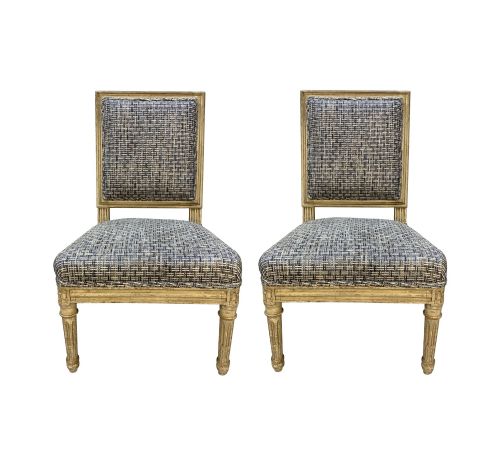
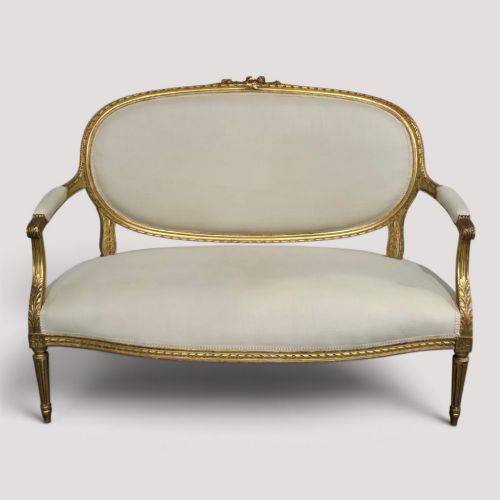
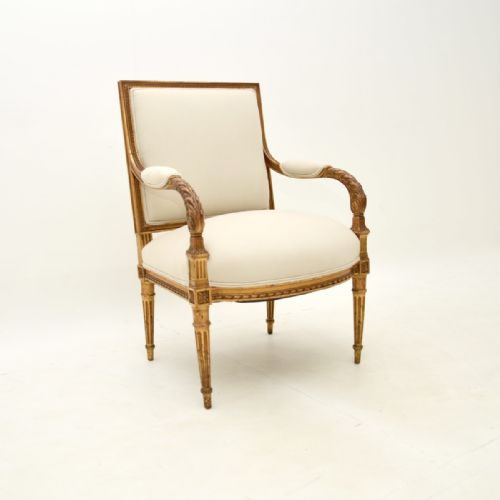
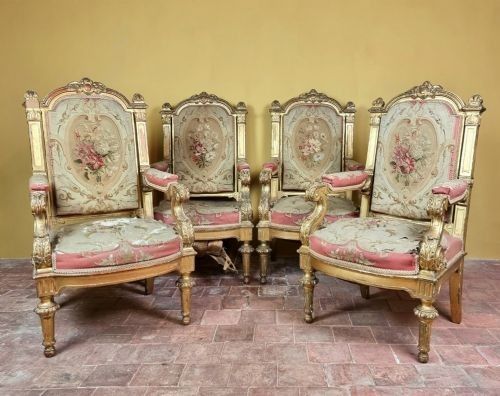
French chateau salon seating encompasses formal armchairs, side chairs, slipper chairs and settees designed for reception spaces. The pieces appearing on this page span the nineteenth century and the early twentieth century, showing revival aesthetics rooted in earlier monarchical periods.
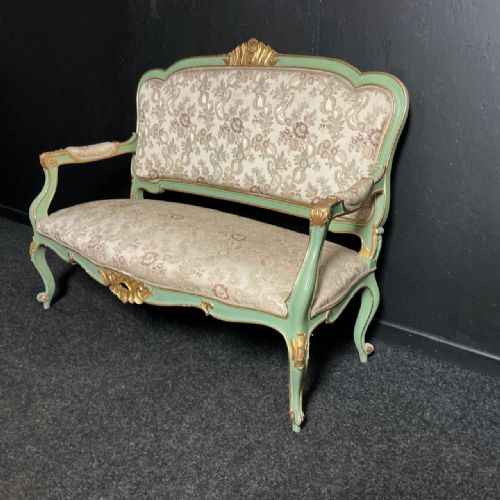
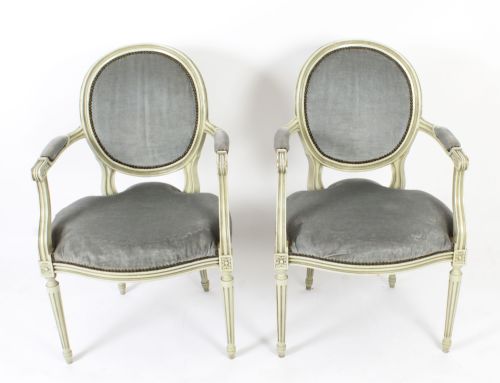
Buyers most frequently encounter pairs of painted armchairs or giltwood salon chairs bearing the hallmarks of Louis XV and Louis XVI revival styles. These forms range from ornate giltwood frames covered in silk fabric to later painted boudoir chairs and carved wooden settees.
The selection reflects the enduring appeal of French provincial and rococo revival design in domestic interiors. Makers drew inspiration from classical French furniture traditions to create substantial seating for drawing rooms and boudoirs.
How they were made
Craftsmen built these frames primarily from beech or other carved wood, applying layers of gesso and gold leaf to create brilliant giltwood surfaces. Alternatively, frames received painted finishes, sometimes updated later in their lifespan to suit changing decorative tastes.
Upholstery involved traditional methods using velvet, silk fabric and supportive stuffing suited to formal reception seating. Carved details on the wood structures showcase elaborate floral and scroll motifs typical of revival cabinetmaking.
French Chateau Salon Seating Retail Price Guide 2026
Typical asking prices for french chateau salon seating among the pieces listed under this phrase on Sellingantiques today, from the lower quarter to the upper quarter. They describe what is for sale here now, not the wider market.
Some nineteenth-century chairs received fresh paint decades later, proving that upcycling is merely a very old habit in French decorating.
What varies in quality
The distinction between ordinary and superior pieces rests upon the crispness of the wood carving and the integrity of the giltwood or painted finish. Master carvers produced deeply defined foliage and scrollwork that retain their precision through the layers of gesso and gold leaf.
Proportion and structural balance also separate exceptional items from standard production, as finer frames maintain harmonious curves and sturdy joints. The choice of original or high-grade silk and velvet upholstery further elevates the standing of a salon chair or settee.
The French Chateau Salon Seating Glossary
- Giltwood
- Wood that has been covered with a thin layer of gold leaf over gesso. This finish creates a luminous metallic surface characteristic of high-status French salon furniture.
- Fauteuil
- An open-armed upholstered armchair with wooden sides left exposed. These chairs were staple seating in formal French reception rooms.
- Gesso
- A plaster-like mixture applied to wood frames to prepare the surface for gilding or painting. It allows craftsmen to achieve smooth contours and sharp relief details.
- Settee
- A small upholstered sofa designed for two or more people. They often match the armchairs and side chairs in a unified salon suite.
French Chateau Salon Seating: Frequently Asked Questions
Were these chairs meant for everyday sitting?
French salon seating was primarily designed for formal reception rooms, entertaining and social gatherings. The construction prioritised elegance and upright posture over casual lounging.
Consequently, antique salon chairs function best in low-traffic drawing rooms or as decorative statement pieces in modern homes.
How should I care for antique giltwood frames?
Giltwood surfaces require gentle dusting with a soft, dry cloth to prevent the accumulation of dirt. Avoid chemical sprays, moisture and direct sunlight, which can degrade the fragile gold leaf and underlying gesso.
Professional handling is recommended if the gilt finish begins to flake or separate from the carved wood base.
Can I mix painted and giltwood salon chairs?
Mixing painted and giltwood seating was common in eclectic historic interiors and works well in contemporary settings. Pairing pieces with similar period proportions helps maintain visual harmony across the room.
Unified upholstery fabrics also bridge the gap between contrasting frame finishes.