


French Painted Accent Chairs
French painted accent chairs bring provincial seating into the modern interior through enduring finishes and carved wooden frames.
French Painted Accent Chairs
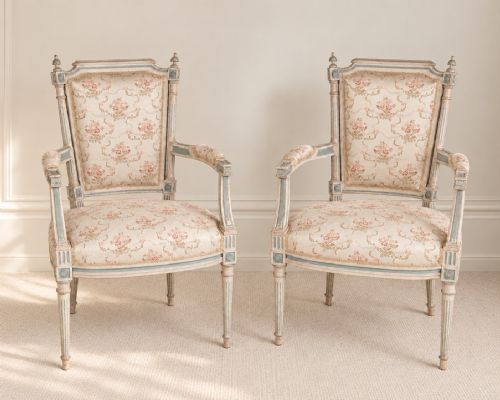
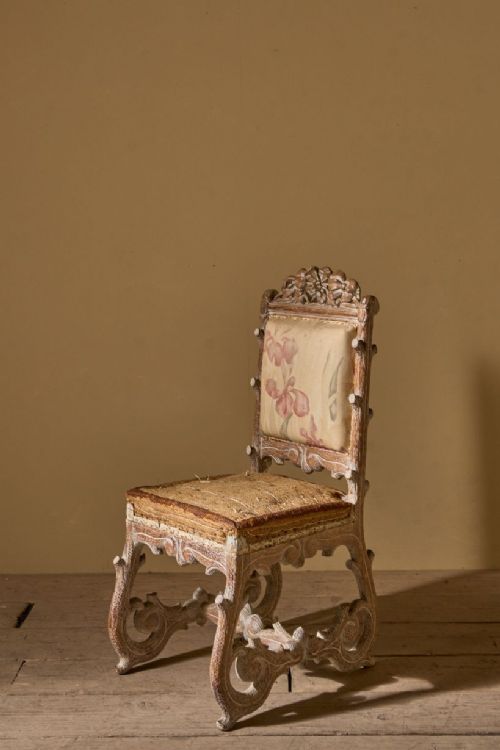
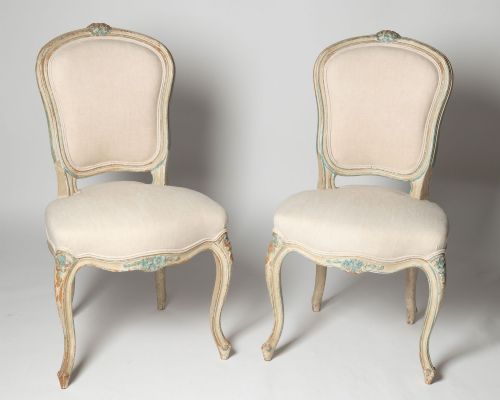
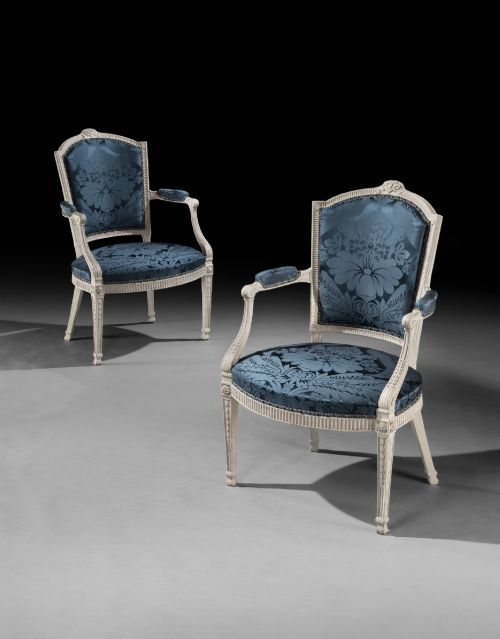
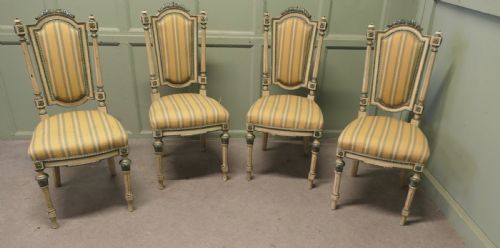
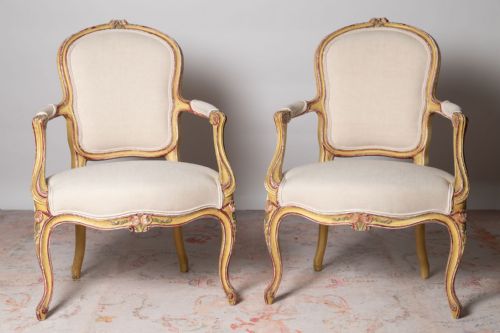
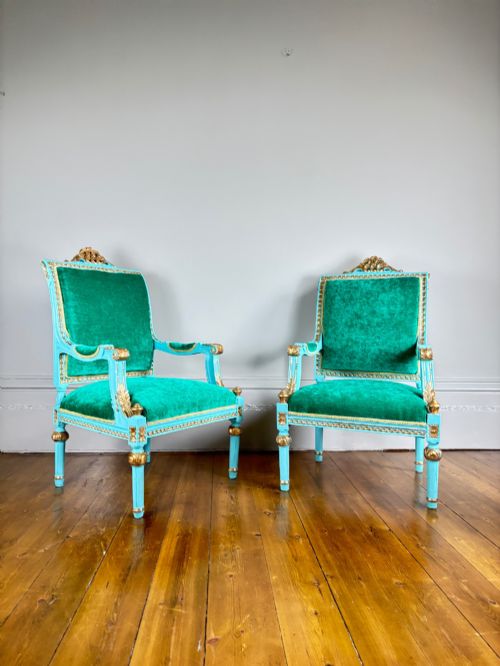
French painted accent chairs comprise a broad selection of antique seating including armchairs, side chairs, and salon chairs intended for decorative and functional placement in domestic spaces. When exploring French painted accent chairs, buyers encounter pieces spanning from the eighteenth century through the early twentieth century, reflecting varied regional tastes and historical revivals.
Makers and workshops from these eras utilised established seating archetypes, incorporating cane work, upholstery, and structural carving into domestic furnishings. The resulting selection provides options ranging from formal salon seating to lighter decorative side chairs suited to contemporary rooms.
How they were made
Makers of French painted accent chairs relied predominantly on beech and other structural timbers, shaping frames through traditional joinery and carving techniques before applying surface finishes. Paint was applied directly to the wood, sometimes accompanied by parcel gilt highlights or faux bois effects that emulated more costly materials.
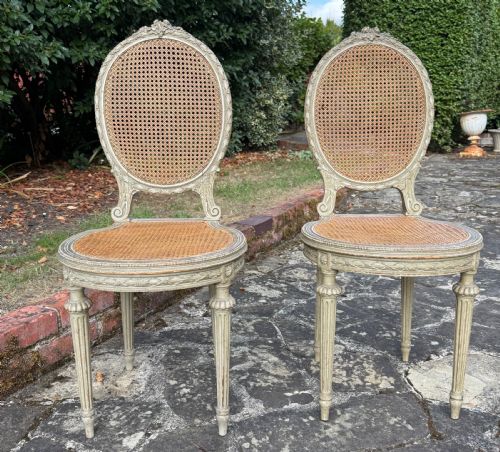
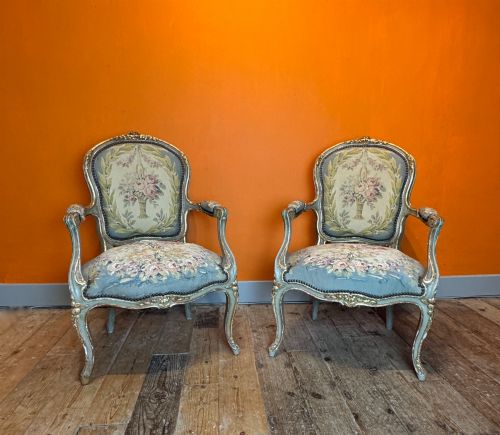
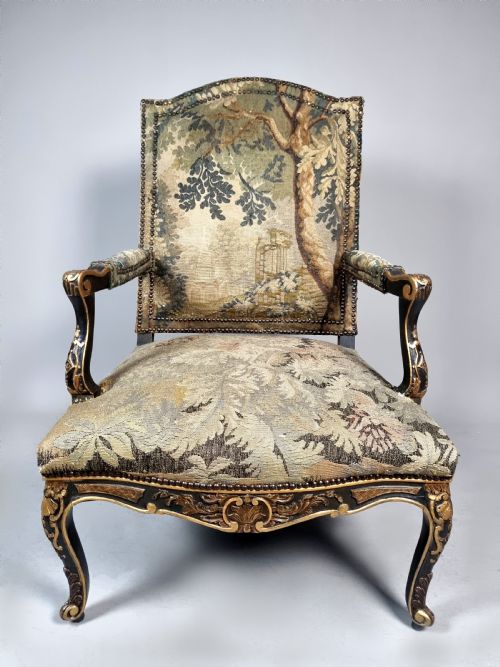
Upholstery methods involved textile applications such as tapestry, linen, velvet, and needlepoint panels, secured to support the sitter within open or enclosed arm structures. Cane work also appears frequently on seat backs and bases, woven to introduce texture and lightness to the framed wooden silhouettes.
French Painted Accent Chairs Retail Price Guide 2026
Typical asking prices for french painted accent chairs among the pieces listed under this phrase on Sellingantiques today, from the lower quarter to the upper quarter. They describe what is for sale here now, not the wider market.
Several armchairs incorporate woven cane panels designed to keep eighteenth-century sitters cool during warm summer afternoons in French chateaux.
What varies in quality
The calibre of French painted accent chairs depends largely on the crispness of the hand-carved detailing within the wooden frame and the historical integrity of the surface finish. Pieces retaining original paint layers demonstrate greater continuity of character than those redecorated at later dates.
Structural refinement is evident in the balance of the proportions, the tautness of the joinery, and the execution of stylistic motifs derived from neoclassical or rococo revivals. Finer examples combine harmonious upholstery choices, whether period tapestry or supportive cane, with robust timber construction that endures through generations of use.
The French Painted Accent Chairs Glossary
- Bergère
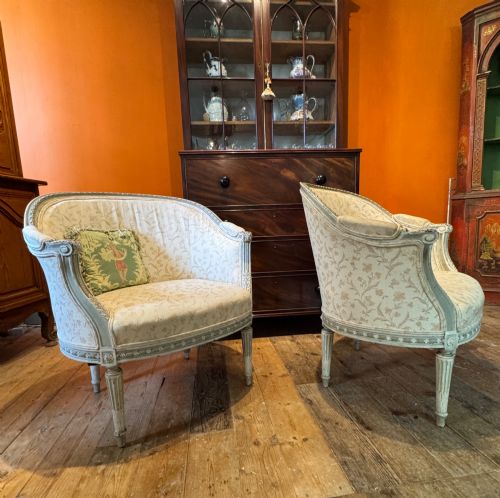
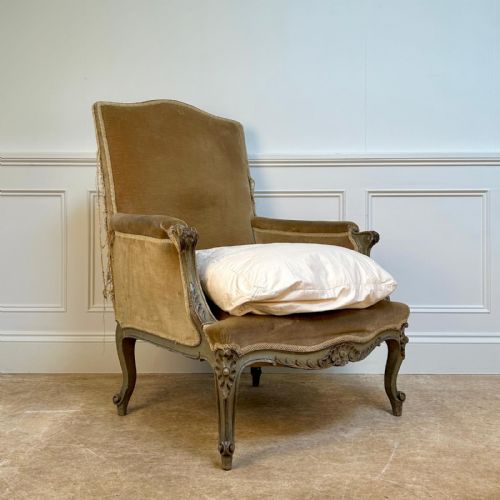
- An enclosed upholstered armchair with closed sides padded or caned beneath the armrests. This form provides deep, comfortable seating often found in nineteenth-century drawing rooms.
- Fauteuil
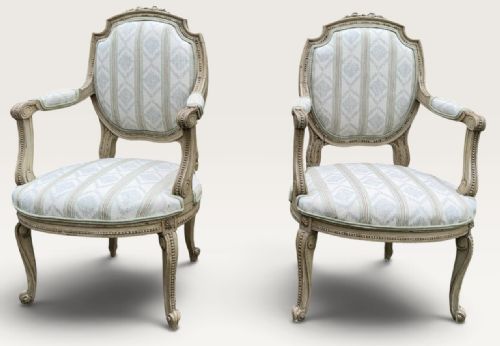
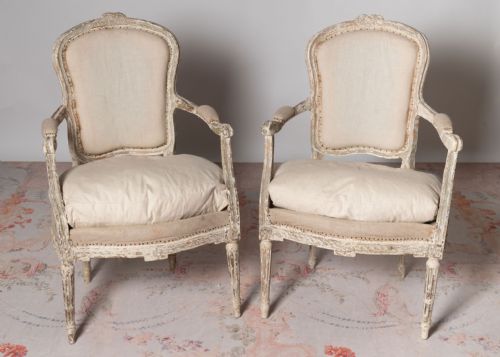
- An open-armed French armchair featuring exposed wooden framing and upholstered seat and back panels. The arms typically curve outwards to accommodate formal attire.
- Gilt
- A thin layer of gold leaf applied to portions of the wooden frame to highlight carved ornaments and mouldings. It contrasts with the painted base coat.
- Caning
- Woven rattan or split cane utilised for seat panels and chair backs. This technique introduces breathability and visual lightness to the seating design.
- Faux bois
- A decorative painting technique designed to imitate the appearance of natural wood grain. Artisans employed this method on alternative timbers to achieve specific aesthetic effects.
French Painted Accent Chairs: Frequently Asked Questions
What is a bergere chair?
A bergère is a traditional French armchair characterised by upholstered sides enclosed with fabric or cane. These chairs offer a deep and comfortable seat suited to domestic reception rooms.
They emerged in various stylistic revivals throughout the eighteenth and nineteenth centuries, maintaining a distinct enclosed silhouette that sets them apart from open armchairs.
How do I identify Louis XVI style?
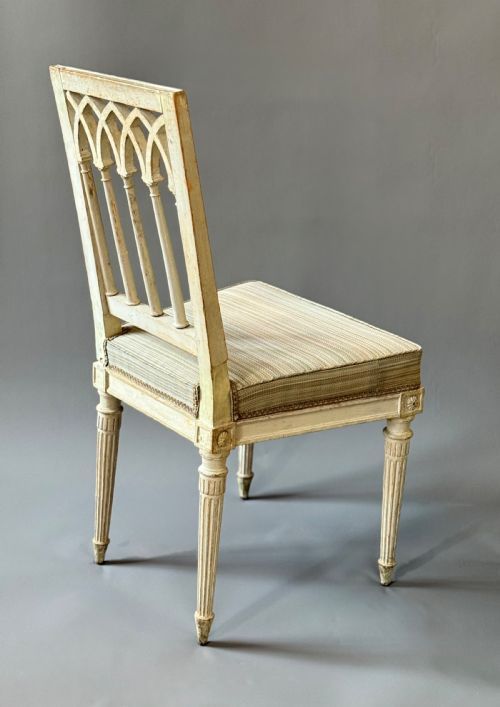
Louis XVI style is distinguished by straight tapered legs, geometric symmetry, and neoclassical ornamentation such as fluting and carved ribbon motifs. These designs move away from earlier curved rococo lines.
Chairs from this aesthetic often feature medallion-shaped backs or rectangular frames with restrained, architectural proportions.
Where should I place an accent chair?
Accent chairs function effectively in living rooms, bedrooms, or hallways as both seating and decorative focal points. Their painted finishes allow them to complement existing interior colour schemes.
Pairs look balanced placed opposite a fireplace or flanking a low table, while single chairs fit comfortably into unused corners.
Are painted chairs durable?
Painted wooden frames on antique seating are generally robust, constructed from durable hardwoods like beech designed for everyday use. Original painted surfaces require gentle handling to preserve their historical patina.
Regular care involves dusting with a soft cloth and avoiding moisture exposure to protect both the timber substrate and the decorative finish.
What is the difference between a fauteuil and a side chair?
A fauteuil is an open armchair featuring padded armrests designed to support the arms while seated. Side chairs lack arms entirely, making them more compact for dining or vanity tables.
Both forms share similar decorative painted frames and upholstery styles within French interior design traditions.