


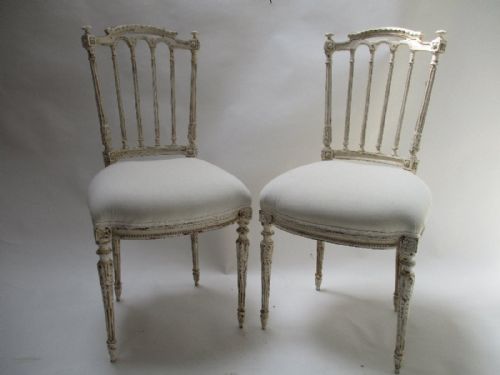
Cream Painted Side Chairs
Cream painted side chairs bring together period form and decorative painted surfaces, offering seating that carries history into any room.
Cream Painted Side Chairs
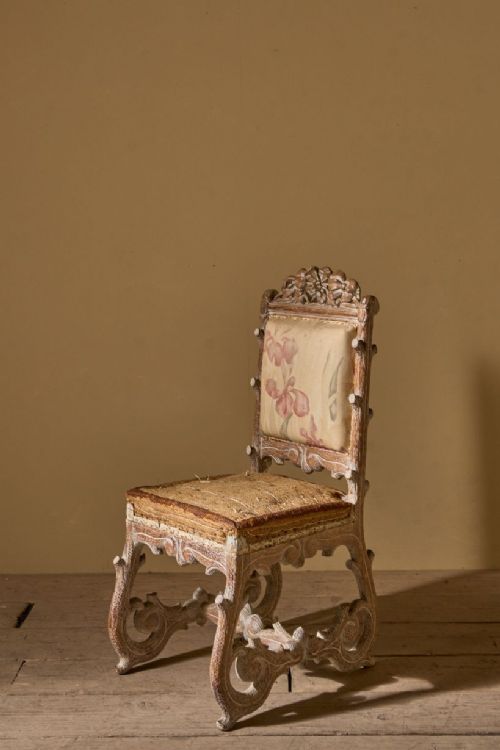
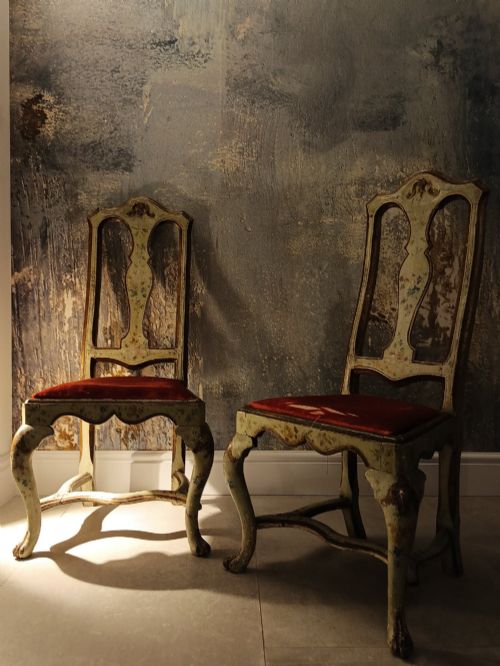
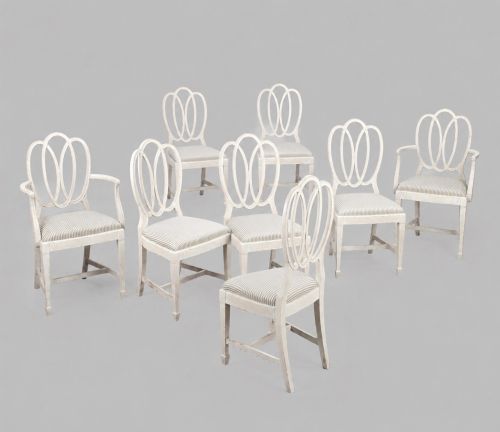
Cream painted side chairs span multiple centuries and regional styles, appearing as single seats, pairs, and larger dining sets. When you search for cream painted side chairs, you encounter pieces that range from 18th century Italian workshops to later Victorian interpretations.
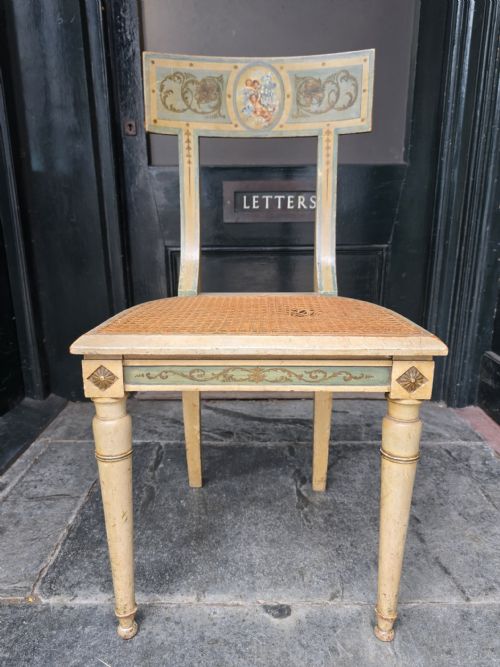
The forms encompass dining chairs, boudoir chairs, and occasional seats, often drawing on distinct design influences such as Louis XVI revival, Queen Anne, and George III. These chairs function as practical seating while introducing distinct architectural lines and decorative painted finishes to an interior.
Most examples found here reflect European origins, particularly French, Italian, and Swedish traditions. They vary from restrained neoclassical profiles to more ornate rococo carving, yet all share the defining characteristic of a painted wooden framework.
Materials and construction
These chairs are constructed from carved wood, providing the structural frame for decorative paint and gesso layers. Artisans shaped the timber into cabriole legs, straight tapered supports, and pierced splats before applying the surface finishes.
Surfaces are treated with paint, sometimes enhanced with gesso or gold leaf details to highlight carved mouldings and floral motifs. Upholstery materials such as fabric and velvet are frequently added to the seats, completing the traditional construction.
Some chairs pretend to be trees by wearing painted faux bois grain.
Judging quality and craftsmanship
Quality in these chairs rests upon the crispness of the wood carving and the integrity of the underlying timber frame. Finer examples display deeply carved details that retain their definition beneath layers of historic paint.
The character of the paint surface itself distinguishes different grades of work, with aged patination and original polychrome decoration holding greater interest than flat, modern repainting. Well-executed joinery ensures the chair remains stable and sturdy for daily use.
The Cream Painted Side Chairs Glossary
- Side chair
- A chair without arms, designed primarily for dining or occasional use around a room.
- Gesso
- A plaster-like mixture applied to wood surfaces as a smooth base for paint or gold leaf gilding.
- Neoclassical
- A style drawing inspiration from classical antiquity, marked by symmetry, straight lines, and restrained ornamentation.
- Polychrome
- Decorated in multiple colours, often found on painted wooden furniture and decorative frames.
- Faux bois
- A decorative painting technique that imitates the natural appearance of wood grain on a prepared surface.
Cream Painted Side Chairs: Frequently Asked Questions
How do I clean a painted wooden chair?
Dust the wooden frame gently with a dry, soft cloth to remove everyday particles. Avoid harsh chemical cleaners or excessive moisture, which can damage the historic paint layer.
For upholstered sections, use a gentle vacuum attachment or consult a professional textile restorer. Keeping the chair away from direct sunlight protects both the fabric and the painted finish from fading.
Are these chairs suitable for daily dining?
Many of these pieces were originally constructed as dining chairs and remain structurally sound for regular seating. Checking the stability of the joints ensures they can handle daily use without strain.
Pairing antique chairs with a sturdy table creates a functional dining space while preserving historic character. Lighter boudoir or occasional chairs are better suited for occasional seating.
How do I identify French versus Italian styles?
French-influenced pieces often display Louis XVI revival details, such as fluted legs, oval backs, and carved neoclassical motifs. These designs emphasise elegance and symmetry.
Italian chairs from the 18th century frequently lean towards rococo curves and bolder carved ornamentation. Comparing the leg shape and carving style helps clarify the regional origin of each piece.
What does faux bois mean?
Faux bois translates to false wood, describing a decorative paint finish that mimics natural wood grain. Artisans used this technique to create patterned surfaces on solid timber frames.
This finish adds texture and visual depth to the chair while maintaining a painted exterior. It reflects the decorative experimentation found in nineteenth-century seating.
Can I mix different periods around a table?
Mixing chairs from different periods, such as pairing 18th century styles with Victorian sets, creates a curated, collected interior. Matching the overall colour palette of the painted finishes helps unify diverse forms.
Height and scale are the main practical considerations when combining different chairs for a seating arrangement. Ensuring comfortable seat heights keeps the arrangement functional.