
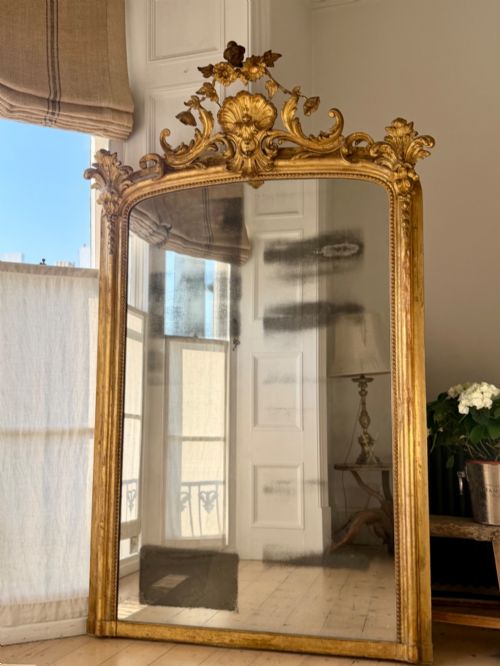
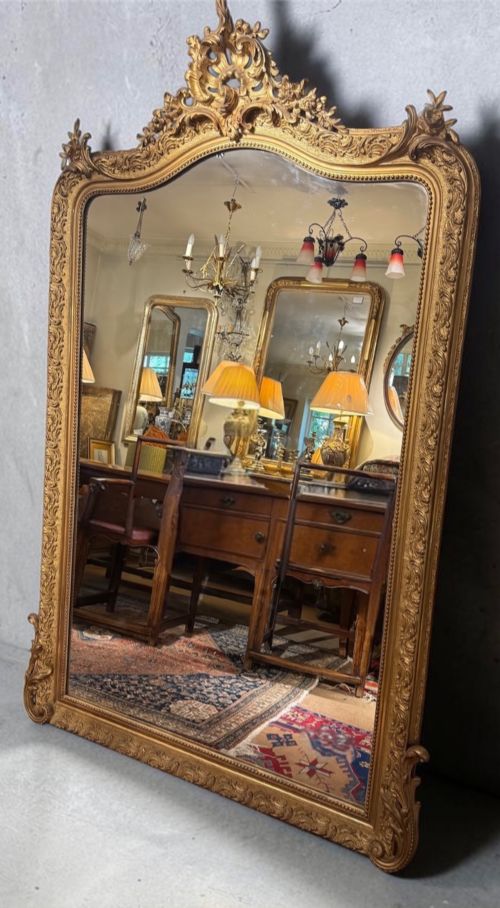
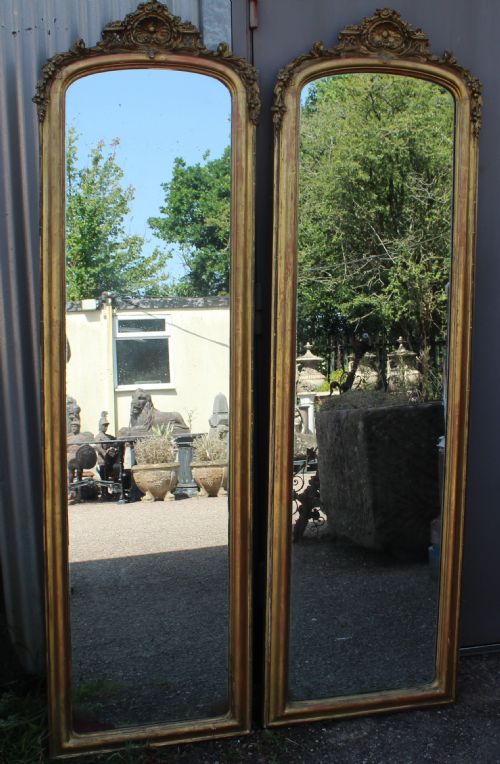
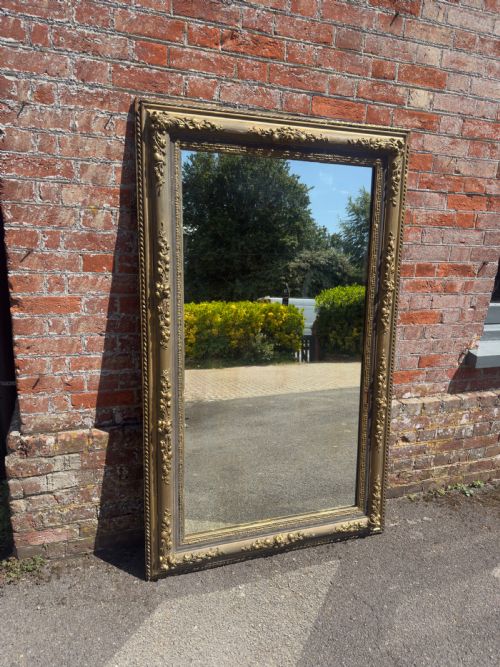


French Chateau Floor Mirror
A french chateau floor mirror brings generous scale and period character into a room, serving as both a functional glass and a commanding architectural presence.
French Chateau Floor Mirror
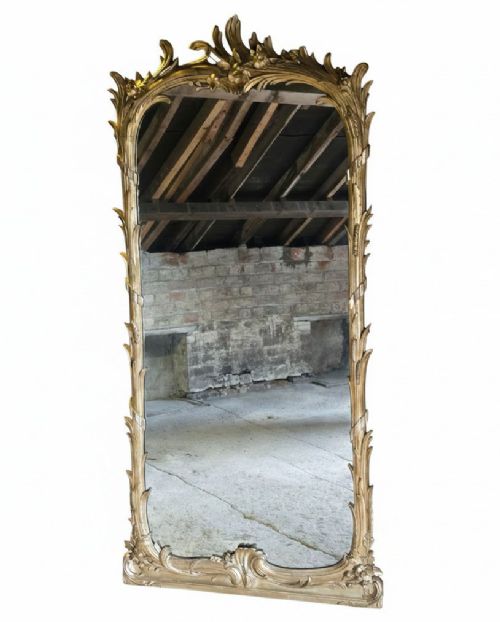
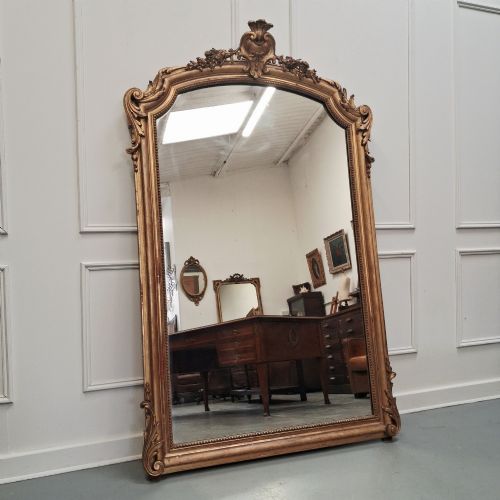
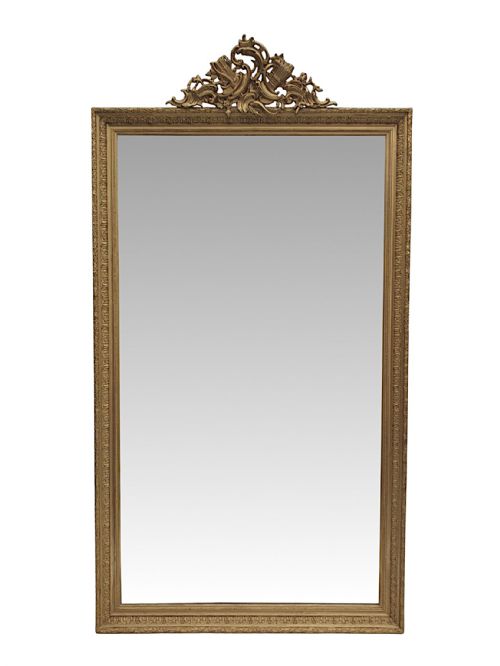
A french chateau floor mirror typically presents as a tall, full-length leaner or large wall-hung glass designed to anchor a principal room. These pieces mostly emerge from the nineteenth century, drawing on French provincial, Rococo revival and Louis Philippe design traditions.
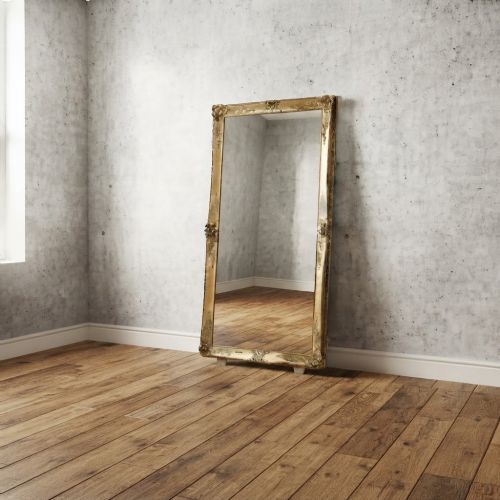
The forms span straightforward rectangular shapes, arched tops and elaborate shaped crests designed to sit directly on the floor or above a fireplace mantel. Buyers encounter significant timber frames finished in giltwood or muted paint alongside substantial glass plates.
Originating largely from French workshops and country houses, these large mirrors share a domestic lineage that prioritises proportion and reflective light. Their scale allows them to transform the sense of space in contemporary interiors just as they did in nineteenth-century salons.
Materials and Construction
Framing relies primarily on carved wood and timber build-ups smoothed with layers of gesso to accept gilding or paint. Artisans applied gold leaf or metallic pigments over the gesso base, or painted the timber directly in subtle neutral tones.
Glass plates of the period frequently display traditional silvering methods, sometimes showing the characteristic dark speckling of foxing through age. The heavy wooden structures often incorporate internal bracing or original backing boards to support the considerable weight of the mirror plate.
French Chateau Floor Mirror Retail Price Guide 2026
Typical asking prices for french chateau floor mirror among the pieces listed under this phrase on Sellingantiques today, from the lower quarter to the upper quarter. They describe what is for sale here now, not the wider market.
Listings feature periods spanning from the eighteenth century through to the early twentieth century, with nineteenth-century pieces forming the largest group.
Assessing Quality and Execution
The depth and crispness of the carved wood and gesso ornamentation dictate the visual strength of the frame. Skilled carvers produced crisp foliage, scrolls and architectural mouldings that hold their definition beneath layers of paint or gold leaf.
The integrity of the original glass plate and the harmony between the frame proportions and the crest design separate standard examples from finer works. Original gilt surfaces and untouched painted finishes retain a depth of tone that mechanical cleaning or modern repainting removes.
The French Chateau Floor Mirror Glossary
- Gesso
- A plaster-based mixture applied to wood frames to create a smooth surface for gilding or painting. It is built up in thin layers before being carved or moulded.
- Giltwood
- Timber that has been decorated with gold leaf applied over a prepared gesso ground. This finish provides a warm, reflective metallic sheen.
- Foxing
- Small dark spots and discolouration within the mirror glass caused by the breakdown of the silvering backing over time. It is a natural marker of age.
- Louis Philippe
- A mid-nineteenth-century French style characterised by restrained classical proportions, gentle rounded upper corners and simple bead or leaf mouldings.
- Overmantel
- A large mirror specifically proportioned to hang on the wall directly above a fireplace mantelpiece. These often feature horizontal or arched formats.
French Chateau Floor Mirror: Frequently Asked Questions
How do I secure a floor mirror safely?
Leaner mirrors should be anchored securely to the wall using heavy-duty brackets attached to the upper frame to prevent tipping. This ensures the heavy wooden structure remains stable against foot traffic or domestic activity.
Professional wall fixings matched to your specific wall construction will bear the weight safely while keeping the visual profile clean.
What is foxed glass?
Foxed glass refers to the natural ageing of the reflective silver backing behind the glass, which produces dark spots and cloudy patches. This chemical process occurs over decades and authenticates the age of the mirror.
Collectors prize foxed glass for the soft, historic quality it brings to the reflection rather than offering a pristine, modern image.
Can these mirrors stand directly on the floor?
Many large nineteenth-century examples are built as leaner mirrors, designed to rest firmly on the floor and lean back against the wall. Their substantial weight and broad timber bases provide natural stability in this position.
Placing them on a level surface ensures the weight distributes evenly across the bottom frame without twisting the structure.
How do I clean an antique frame?
Dust giltwood and painted frames gently with a soft, dry brush to remove particles without disturbing the delicate gesso or leaf surfaces. Avoid using wet cloths or chemical cleaning sprays which can strip historic paint or lift the fragile metallic finish.
Glass panels can be wiped with a mild glass cleaner applied to a cloth rather than sprayed directly onto the glass near the frame.