
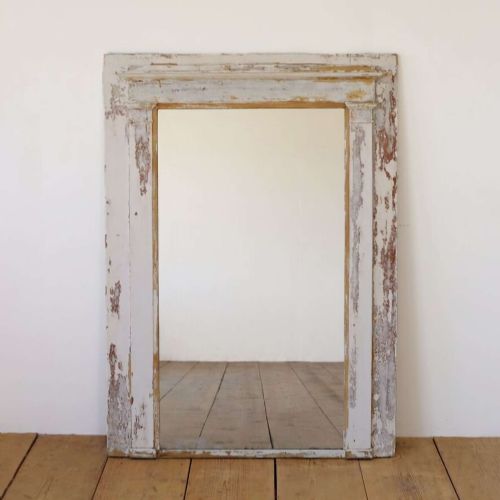


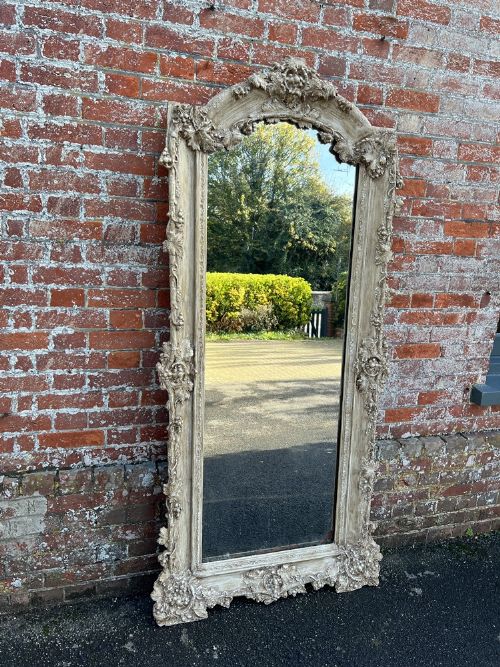


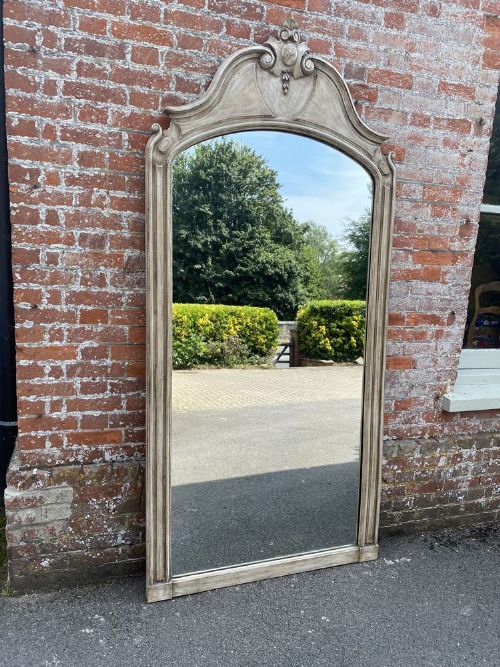


Grey Painted Floor Mirror
A grey painted floor mirror brings light and scale to a room, offering nineteenth-century French and English character through carved wood and gesso.
Grey Painted Floor Mirror
A grey painted floor mirror draws the eye with generous proportions and architectural presence, typically originating from the nineteenth century. These tall glass plates are designed to reflect natural light and open up interior spaces while anchoring a room with period weight.
The versions met on this page span the decades from 1850 to 1890, encompassing English overmantle forms and French bistro or provincial designs. Makers of the period favoured carved wood and gesso frames, applying muted paint finishes that have weathered into soft patinas over time.
Stylistic influences range from the clean lines of the Louis Philippe period to ornate Louis XV Rococo and French Neoclassical details. Buyers encounter arched tops, shaped profiles, and plain rectangular formats that suit both traditional and contemporary interiors.
Materials and construction methods
Carved wood provides the structural core for these large frames, often paired with moulded gesso to build up intricate relief ornament around the borders. Artisans shaped timber carcasses to form arched or shaped top profiles before applying preparation layers.
Mirror glass is set within the heavy timber rebate, backed by traditional wooden panels that protect the silvering. Painted finishes involve layered mineral or oil-based pigments applied directly over the primed gesso surface, sometimes revealing traces of earlier decorative schemes beneath.
Listings feature pieces spanning the decades from 1850 to 1890, constructed from carved wood, gesso, and mirror glass with painted finishes.
Determinants of quality
The depth and crispness of the carved wood and gesso ornament set the finest examples apart from simpler utilitarian pieces. Artisans who invested time in hand-carving detailed mouldings and smooth curves produced frames with enduring structural integrity.
The character of the mirror glass itself contributes significantly to the visual weight of the piece, with original plates showing subtle foxing and distortion that reflect age. Furthermore, the handling of the grey paint finish, whether uniform or gently distressed through decades of use, dictates the aesthetic balance of the frame.
The Grey Painted Floor Mirror Glossary
- Gesso
- A plaster-like mixture applied to carved wood frames to create a smooth surface for painting or gilding. It allows artisans to shape sharp decorative details.
- Overmantle mirror
- A wide mirror specifically proportioned to hang above a fireplace mantelpiece. These pieces often feature arched tops to fit architectural chimney breasts.
- Louis Philippe
- A mid-nineteenth-century French style characterised by understated elegance and subtle curves. It marks a transition away from heavy ornamentation toward simpler geometry.
- Bistro mirror
- A commercial-scale mirror originally utilised in French cafes and wine bars. They typically feature robust painted frames built to withstand busy public spaces.
- Foxing
- Small dark spots and speckles that develop on antique mirror glass as the silver backing oxidises over time. This chemical ageing process creates a characteristic mottled reflection.
Grey Painted Floor Mirror: Frequently Asked Questions
How do I date a grey painted floor mirror?
Dating relies on examining the construction of the wooden frame, the composition of the gesso, and the style of the moulding. Nineteenth-century pieces often display specific proportions and joinery techniques typical of Victorian or French provincial workshops.
The glass itself provides additional clues, as original silvering develops distinctive foxing patterns and slight distortions that modern manufacturing processes do not replicate.
Where should I place a large mirror?
These tall mirrors work effectively when positioned opposite a window to maximise natural light distribution throughout a room. Placing one directly on the floor against a solid wall creates an illusion of depth and doubles the perceived living space.
Ensure the wall surface is structurally sound to support the substantial weight of the carved wood and glass combination, securing proper wall fixings where necessary.
How do I care for antique painted wood?
Dust the carved wood and gesso frame regularly with a soft, dry cloth to prevent dirt accumulation in the recessed mouldings. Avoid liquid cleaners or chemical polishes that can soften or strip the aged painted surface.
Maintain stable room temperatures and avoid placing the mirror in areas prone to dampness, which can damage both the wooden substrate and the original mirror plate.
What is the difference between French and English styles?
French nineteenth-century mirrors frequently exhibit Rococo or Neoclassical influences, featuring shaped tops and refined gesso ornamentation suited to salon interiors. English pieces from the same era often present sturdier proportions, particularly in overmantle formats designed for domestic hearths.
Both traditions utilise painted wooden frames, but the regional variations in moulding profiles distinguish continental work from British craftsmanship.