






French Chateau Accent Mirror
These French chateau accent mirror examples bring decorative presence to a room through gilded surfaces and period forms.
French Chateau Accent Mirror
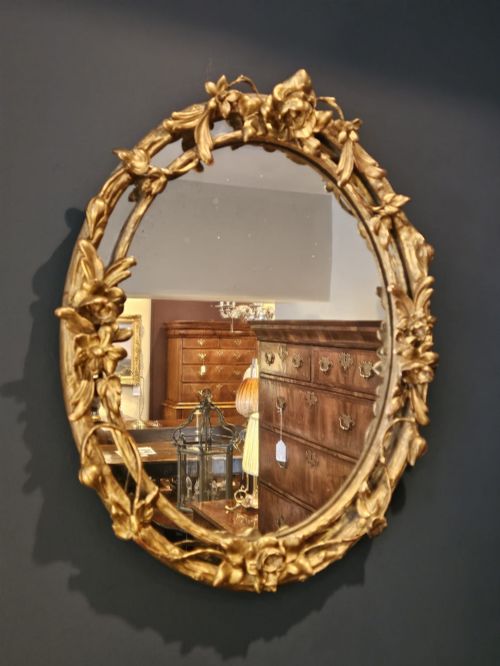
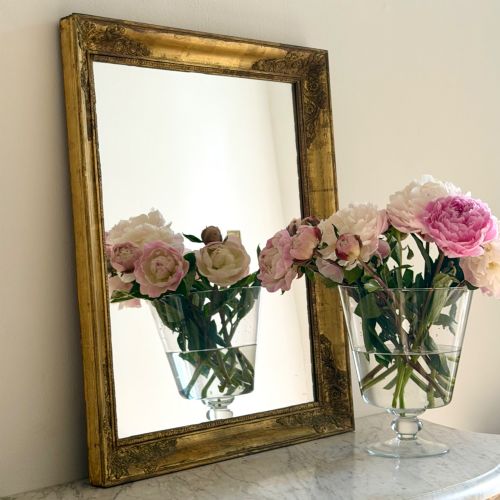
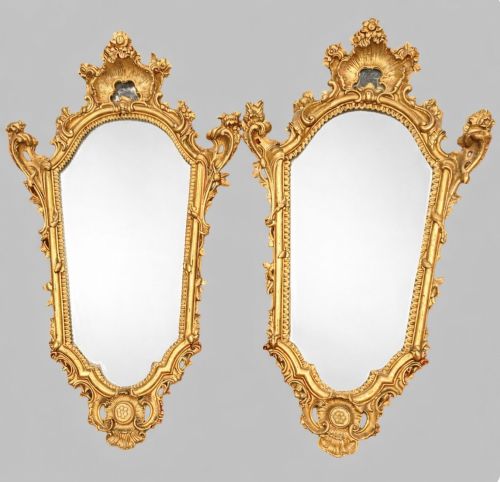
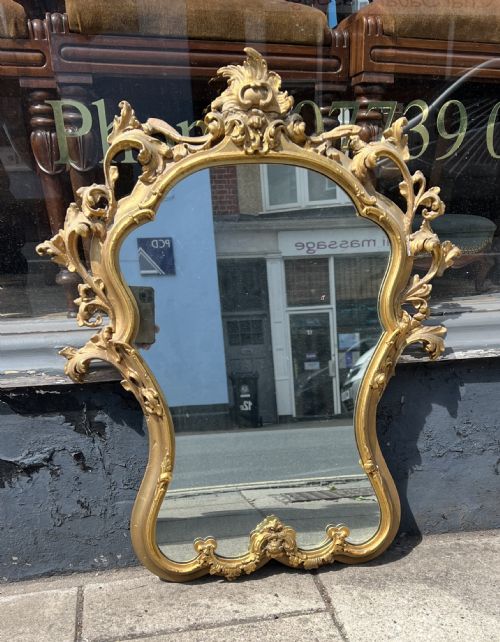
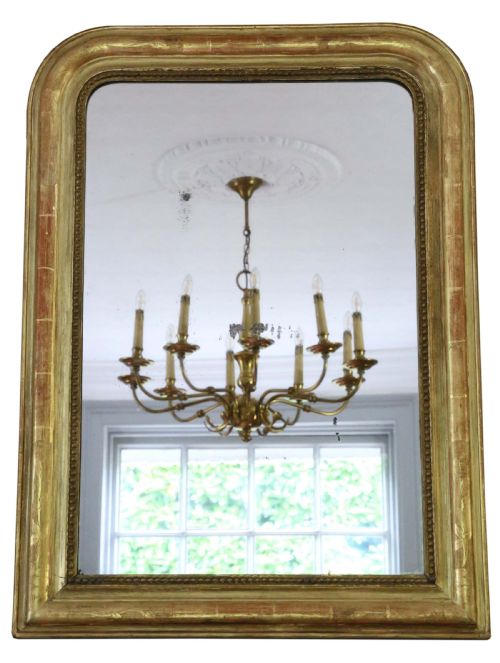
A French chateau accent mirror unites decorative wall hanging forms with period character derived from 18th century, 19th century, and early 20th century origins. Buyers searching for a French chateau accent mirror encounter wall mirrors and overmantel mirrors spanning Victorian, Rococo, Neoclassical, and Baroque styles.
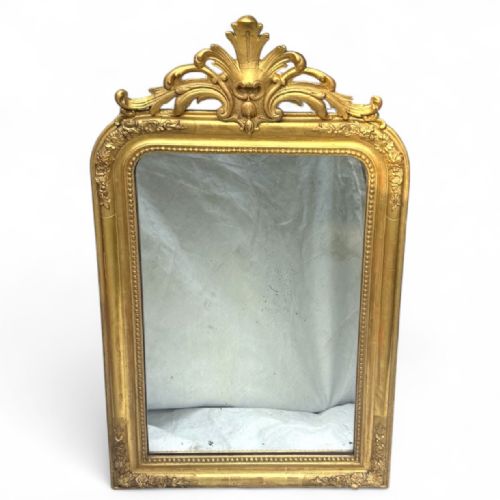
The selection on this page relies heavily on rectangular, oval, shield-shape, and arched top formats. Many examples incorporate carved wood or gesso frames finished with gold leaf or paint.
Mannerist interpretations of Louis XV and Louis XVI designs appear alongside French Chateau and Georgian style pieces. These objects function primarily as decorative wall mirrors or substantial overmantel installations.
Assessing Quality and Execution
Depth and precision in carved wood details separate finer examples from simpler production. Crisp foliate cresting and well-defined frame moulding indicate superior craftsmanship.
The integrity of the original giltwood, gold leaf, or painted finish dictates the visual impact of the piece. Preservation of surface texture contributes significantly to the character of the mirror.
The listings span the 18th century, 19th century, and early 20th century, utilising materials including glass, giltwood, gesso, and carved wood.
The French Chateau Accent Mirror Glossary
- Giltwood
- Wood that has been coated with gold leaf or a gold-coloured finish. This technique creates a luminous surface that defines many period frames.
- Gesso
- A plaster-like mixture applied to wood frames to create a smooth surface for carving and gilding. It allows for intricate relief decoration before leaf application.
- Foliate Cresting
- Ornamental carving featuring leaf and plant motifs positioned at the top of a mirror frame. This decorative flourish draws the eye upward.
- Overmantel Mirror
- A large mirror designed specifically to hang above a fireplace mantel. These pieces often feature extended rectangular formats to suit architectural proportions.
- Rococo Revival
- A 19th-century design movement inspired by the 18th-century Rococo style, characterised by asymmetrical curves and naturalistic ornamentation.
French Chateau Accent Mirror: Frequently Asked Questions
Where should I hang an overmantel mirror?
An overmantel mirror is traditionally positioned directly above a fireplace mantelpiece to reflect light and anchor the room's central focal point.
They also function effectively on large blank walls in reception spaces when secured with appropriate fixings for their weight.
How do I identify a Rococo style frame?
Rococo style frames feature characteristic asymmetrical curves, C-scrolls, and naturalistic plant motifs such as carved vines and leaves.
These elements create an organic, flowing silhouette distinct from the stricter symmetry of Neoclassical designs.
What is the difference between giltwood and painted mirrors?
Giltwood mirrors utilise gold leaf applied over gesso and wood to produce a reflective, metallic surface finish.
Painted mirrors instead rely on pigmented coatings, often incorporating muted tones or silk inserts to achieve a softer decorative effect.
How do I care for antique mirrored glass?
Antique mirrored glass requires gentle cleaning with a soft, dry cloth to prevent moisture damage to the silvered backing.
Avoid chemical glass cleaners that can seep behind the frame and degrade the historical glass plate.