


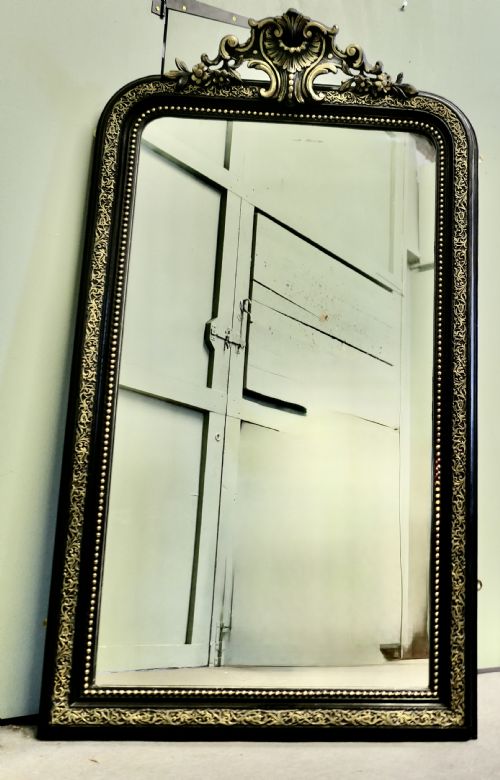
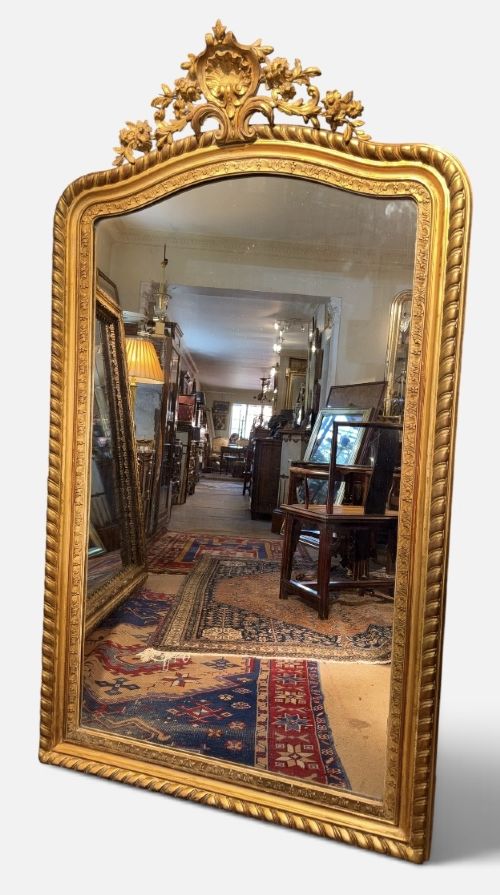
French Giltwood Mantel Mirror
A french giltwood mantel mirror brings immediate scale, light and architectural weight to a room through gilded carving and broad proportions.
French Giltwood Mantel Mirror
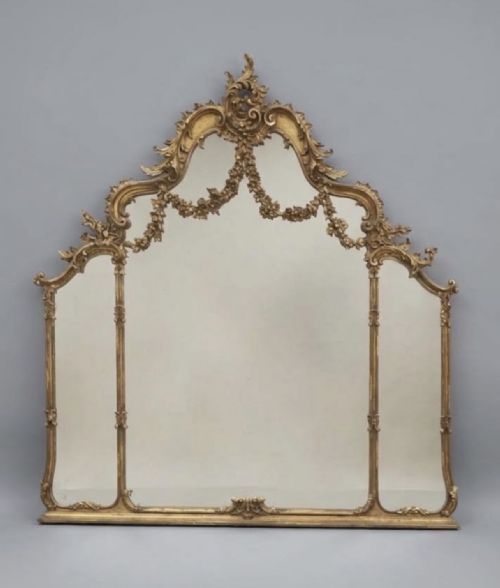
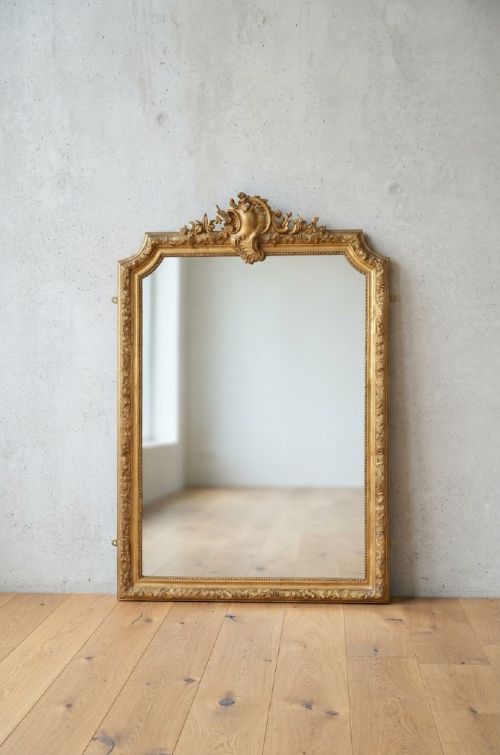
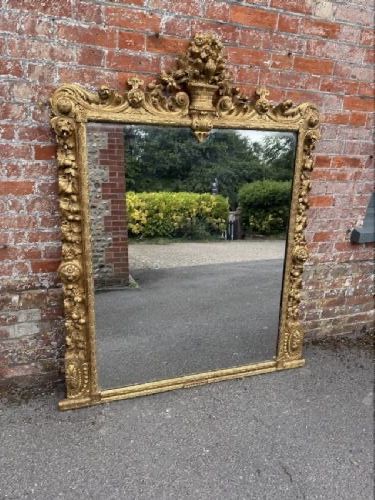
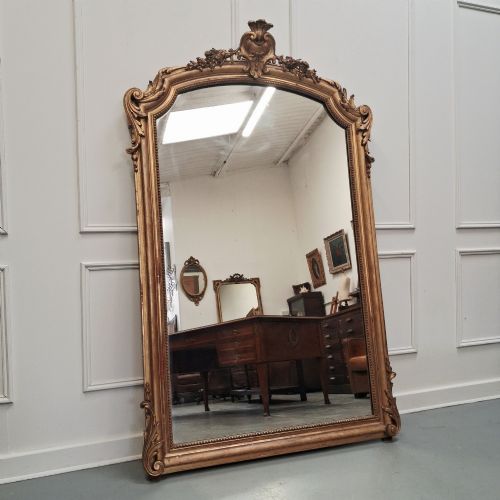
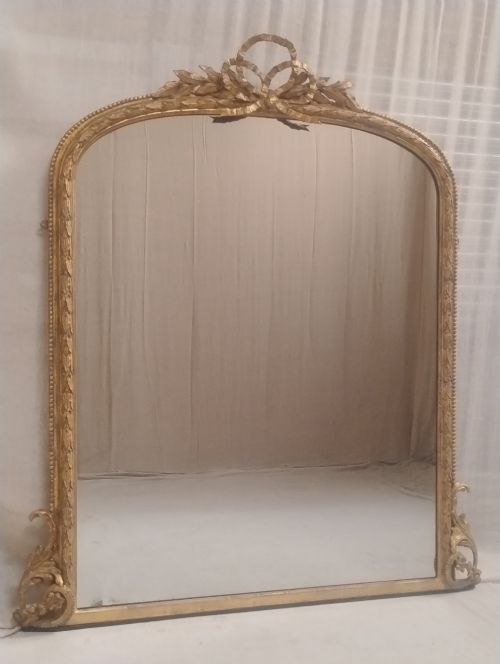
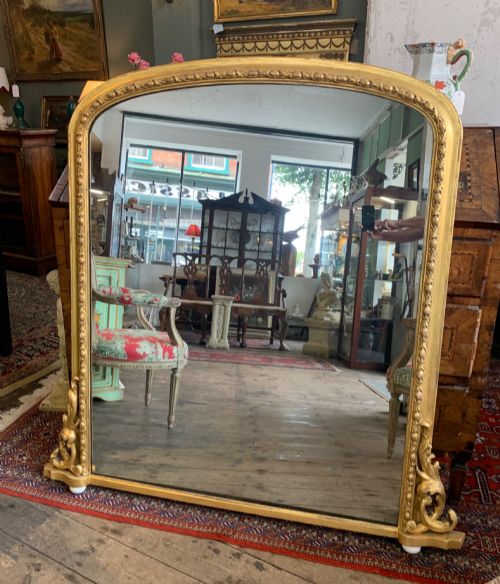
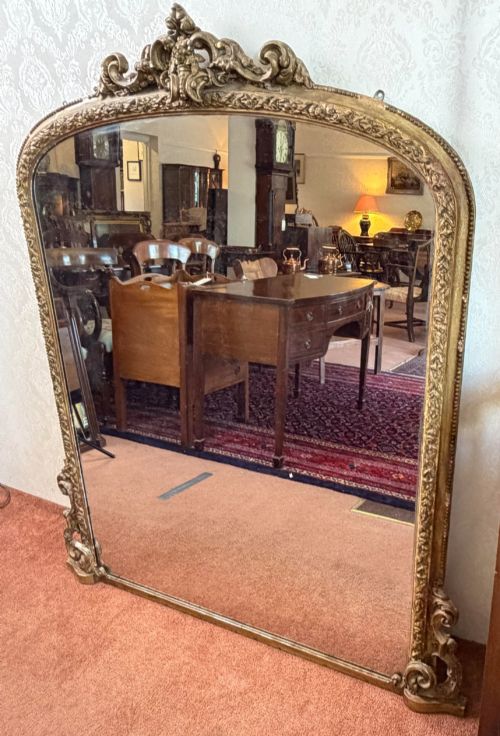
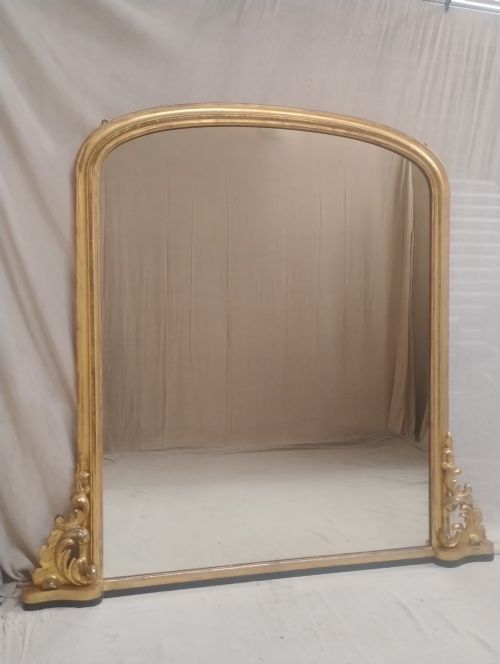
A french giltwood mantel mirror functions as a dominant architectural feature, designed historically to sit above a fireplace hearth and command the wall space of a formal room. The version you are most likely to encounter here is the large nineteenth-century overmantel mirror, often measuring well over a metre in height with an arched or shaped top.
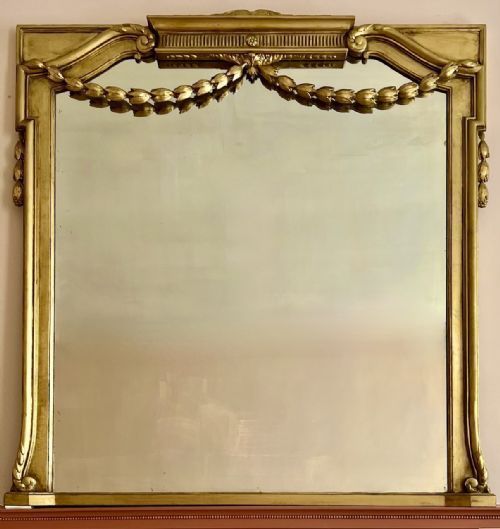
These pieces draw on established historical design idioms, appearing frequently in Rococo Revival, Louis Philippe and Neoclassical styles. Makers combined French aesthetic influences with robust proportions, producing monumental wall mirrors and smaller pier mirrors intended to reflect light deep into period interiors.
The inventory spans the nineteenth century, from early examples around eighteen hundred through to the later decades of the Victorian era and into the early twentieth century. Overmantel mirrors and wall mirrors predominate, anchored by characteristic rectangular or arched formats that suit high ceilings and traditional mantelpieces.
Materials and Techniques
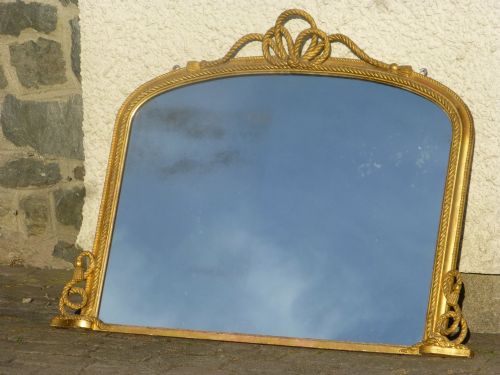
Carpenters built the foundational frame using solid wood, frequently applying a layer of gesso - a mixture of chalk and binder - to the timber substrate to create a smooth, pliable surface for intricate three-dimensional ornamentation. Artisans carved directly into this gesso layer or applied moulded composition details to achieve high-relief foliate scrolls, cartouches and rope-twist motifs.
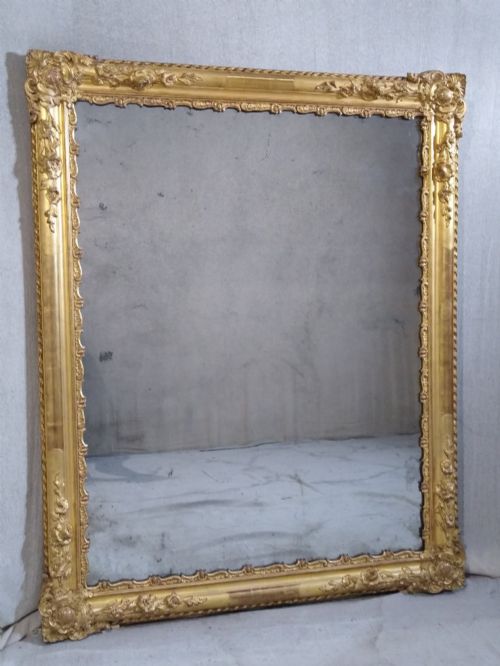
The decorative surfaces received applications of gold leaf or liquid gilding over an underlying bole, creating the characteristic brilliant metallic sheen associated with giltwood. Earlier pieces often incorporate original mercury glass plates, identifiable by their characteristic mottled foxing and deep, distorted reflections.
Some nineteenth-century makers snuck nautical rope-twist carvings into formal drawing-room mirrors, proving even gilded aristocracy enjoyed a subtle maritime nod.
Judging Quality
The distinction between ordinary and exceptional examples rests primarily on the depth and crispness of the carved detail. Hand-carved wooden frames with sharp, undercut foliage demonstrate superior craftsmanship compared to mass-produced composition ornament that appears soft or blunt at the edges.
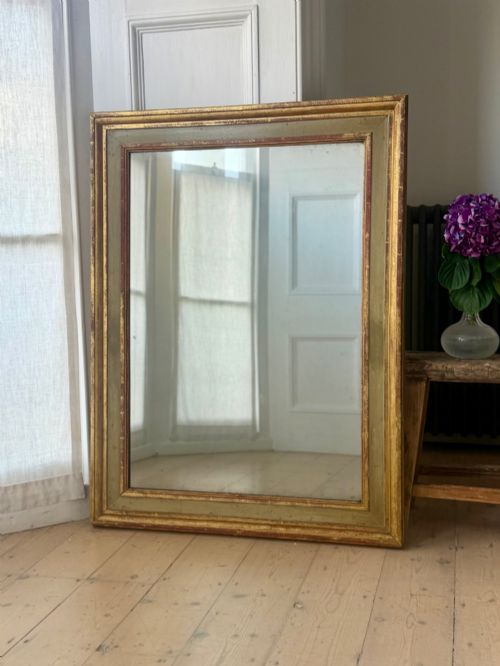
Proportion and structural integrity also define the upper tier of pieces, where heavy frames remain square and joints hold firm under the weight of thick glass. The survival of original gilding without heavy over-painting, alongside untouched original mirror plates, marks the difference between a pristine survival and a heavily restored item.
The French Giltwood Mantel Mirror Glossary
- Giltwood
- Wood that has been coated with gold leaf or a gold-coloured metallic finish. This surface treatment provides the bright, reflective exterior characteristic of formal period mirrors.
- Gesso
- A plaster-like mixture applied to wooden frame foundations to build up a smooth ground for carving and gilding. It allows artisans to model complex relief decoration.
- Overmantel mirror
- A large mirror specifically proportioned to hang on the wall directly above a mantelpiece or fireplace surround. These pieces often feature wide horizontal or tall arched formats.
- Mercury glass
- A type of mirrored glass produced by pouring a mercury amalgam behind the glass plate, popular in the nineteenth century. It yields a distinctive, slightly uneven reflection marked by dark spots or foxing.
- Cartouche
- An ornamental tablet or panel frame, often resembling a rolled-up scroll or shield, placed centrally on the crest of a mirror. It frequently serves as the focal point of the decorative carving.
French Giltwood Mantel Mirror: Frequently Asked Questions
How do I hang a heavy overmantel mirror safely?
These massive timber and glass frames require secure anchoring directly into structural wall studs using heavy-duty brackets or steel mirror plates. Professional installation is essential to bear the substantial combined weight of the wood, gesso and mirror glass.
Position the frame so that the lower edge rests firmly on the mantel shelf if possible, distributing part of the vertical load away from the wall fixings.
What is the difference between an overmantel and a pier mirror?
An overmantel mirror is traditionally wider or proportioned specifically to span the horizontal space above a fireplace opening. A pier mirror is designed for the narrow wall section, or pier, situated between two windows.
While both utilise giltwood frames and large glass plates, pier mirrors often incorporate lower consoles or narrower profiles to fit constrained architectural spaces.
Should I replace foxed or aged mirror glass?
Original mercury glass and early silvered plates display age spots, known as foxing, which collectors prize as genuine evidence of period authenticity. Replacing the plate with modern clear glass removes the historic character and diminishes the visual integrity of the antique.
Retain the original glass wherever possible, as the gentle distortion and dark oxidation contribute directly to the visual charm of the piece.