


French Chaise Longue
These french chaise longue pieces offer reclining elegance and period charm, bringing classic seating to your interior scheme.

What they are
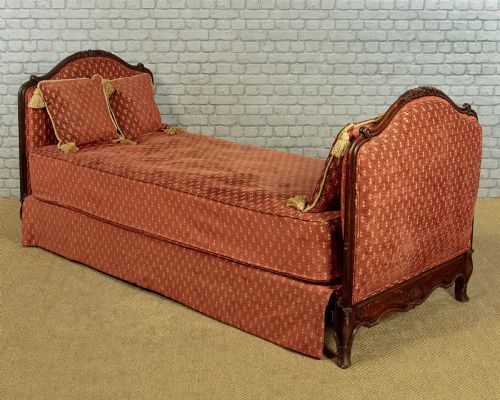
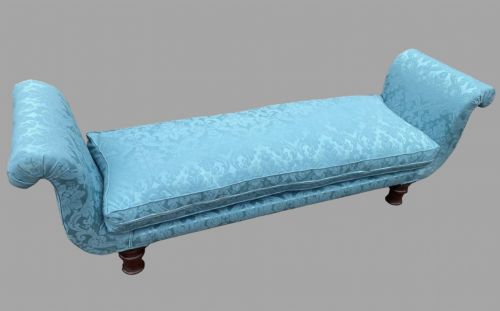
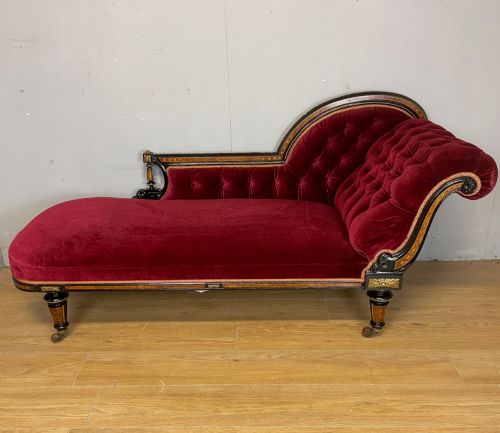
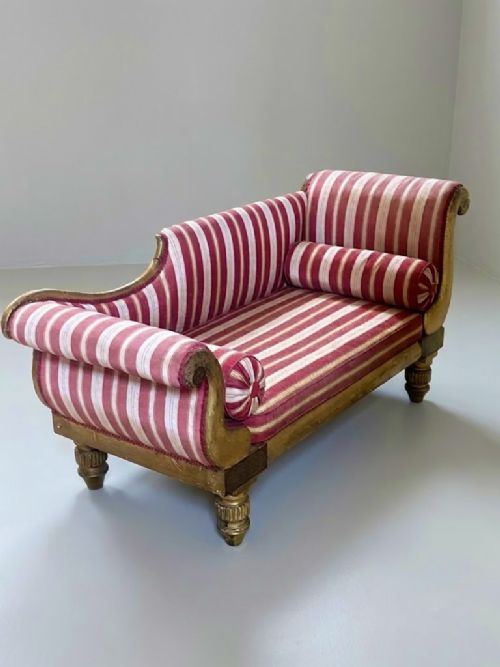
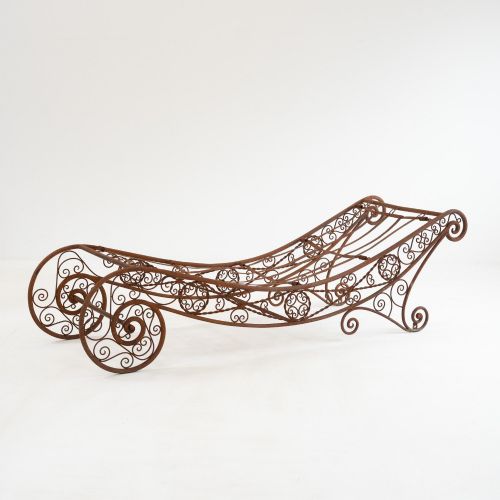
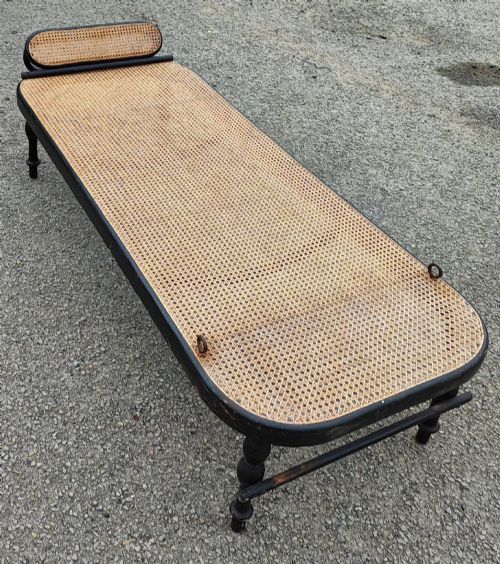
A french chaise longue is an elongated seating form designed for reclining, combining the comfort of an armchair with the length of a daybed. The pieces on this page span the nineteenth century and the early twentieth century, showing a variety of regional and stylistic influences.
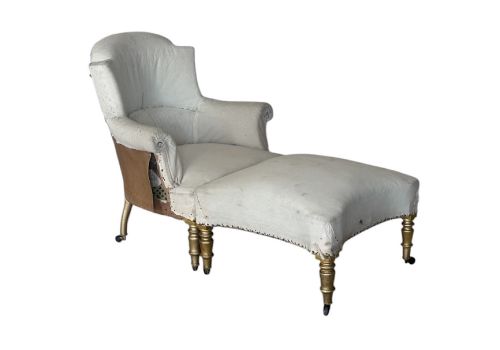
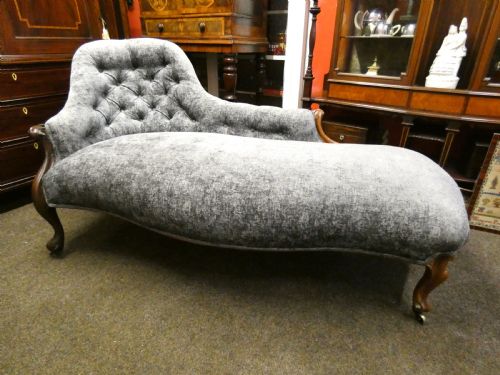
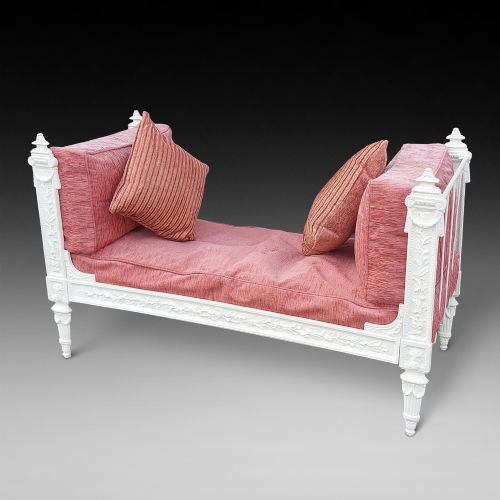
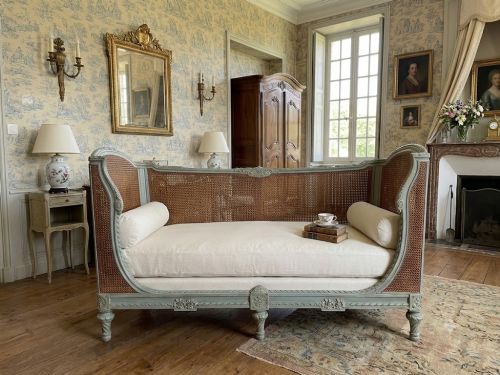
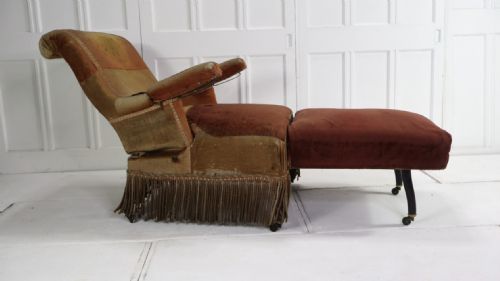
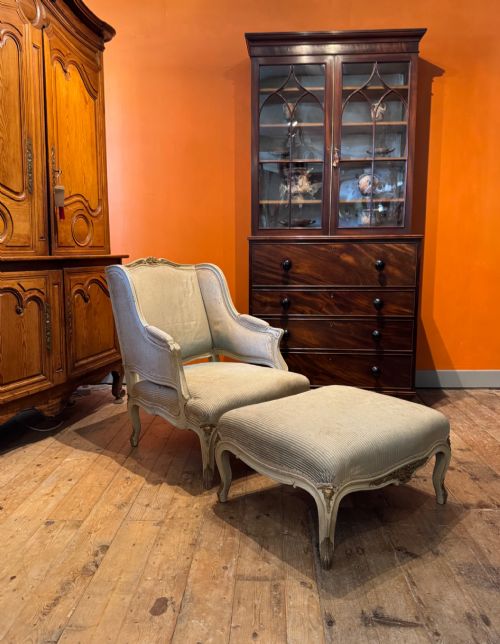
You will encounter distinct forms in this category, including the duchesse brisée, chair-back versions, daybeds, and window seats. Stylistic references range from Louis XV and Louis XVI to Napoleon III and French Chateau aesthetics.
The materials utilised across these examples include beech, walnut, ebonised wood, and timber frames finished with paint or gilt. Upholstery choices vary from original paint and calico to fabric, leather, and newly upholstered surfaces.
How they were made
Framing is constructed from traditional timbers such as beech and walnut, occasionally finished with ebonised wood or painted surfaces. Artisans shaped these structures with carved detail, seen in piecrust edges and classic stylistic flourishes.
Upholstery methods involved traditional stuffing and support, with historical examples featuring tufted leather, calico, or decorative fabric. Gilt wood finishes required meticulous application of leaf to the timber substrate to achieve a reflective surface.
Retail Price Guide 2026
Typical UK retail prices for french chaise longue, calculated from the Sellingantiques database of over a million retail prices indexed since 2003. This retail price guide relies exclusively on Sellingantiques data; no external sources or auction records are used, so the figures do not describe the wider market.
The recorded inventory spans the nineteenth century up to 1930, featuring timber frames in beech and walnut alongside brass components.
What varies in quality
Quality in a french chaise longue rests upon the crispness of the frame carving and the integrity of the underlying timber. Pieces displaying deeply carved walnut or beech exhibit superior handwork compared to simpler structural forms.
The treatment of the finish significantly influences the piece, whether it retains original paint, period gilding, or appropriate traditional upholstery. Authenticity of period materials and the retention of original decorative schemes elevate the standing of an individual daybed.
The French Chaise Longue Glossary
- Duchesse brisée
- A two or three-part chaise longue consisting of an armchair and a matching footstool or secondary chair. This configuration allows for flexible reclining arrangements.
- Napoleon III
- A mid-nineteenth century French design period associated with eclectic revival styles, rich ornamentation, and upholstered comfort. It follows the Second French Empire.
- Louis XV Style
- An eighteenth century aesthetic revived in later periods, characterised by asymmetrical curves, cabriole legs, and naturalistic floral carvings. It remains a dominant influence in antique seating.
- Calico
- A plain-woven cotton fabric frequently used as an underlying upholstery layer or as a neutral covering prior to final decorative finishing.
- Giltwood
- Timber coated with a thin layer of gold leaf or powder, providing a bright decorative surface frequently found on formal nineteenth century seating.
Frequently Asked Questions
How do I identify a Louis XV style frame?
Louis XV style frames are distinguished by flowing serpentine lines and cabriole legs. Carvings often incorporate asymmetrical floral and leaf motifs.
Later nineteenth century interpretations adopted these exact anatomical curves and scrollwork details from the original eighteenth century repertoire.
Where were these pieces placed in a home?
These items traditionally occupied drawing rooms, boudoirs, or grand bedrooms where ladies could rest during the day. Window seats were similarly positioned to catch natural light.
Today, they function effectively as statement seating in living rooms or studies, providing a distinct historical focal point.
Are original upholstery and paint important?
Original paint and early upholstery provide historical integrity and show how the object evolved over time. They record the authentic aesthetic choices of past eras.
Many examples have been newly upholstered for modern utility, which ensures practical comfort while preserving the antique timber frame underneath.
How do I care for a gilt wood frame?
Gilt wood surfaces require gentle dusting with a soft, dry brush to avoid damaging the delicate metallic leaf. Moisture and harsh cleaning agents must be strictly avoided.
Placing the piece away from direct sunlight will protect both the gold leaf finish and the surrounding fabric upholstery from fading.