


French Ceramic Display Plates
French ceramic display plates bring painted panels and cabinet forms from eighteenth-century manufactories and nineteenth-century Parisian workshops straight to the wall or table.
French Ceramic Display Plates
French ceramic display plates encompass cabinet plates, chargers, and decorative dishes made across the eighteenth and nineteenth centuries. These pieces cross various aesthetics, including Rococo Revival, French Country, and Orientalist themes.
The selections available here range from early tin-glazed earthenware and faience to soft-paste porcelain and hard-paste bodies. Pieces include works attributed to major Parisian and provincial centres like Sèvres, Chantilly, and Marseille.
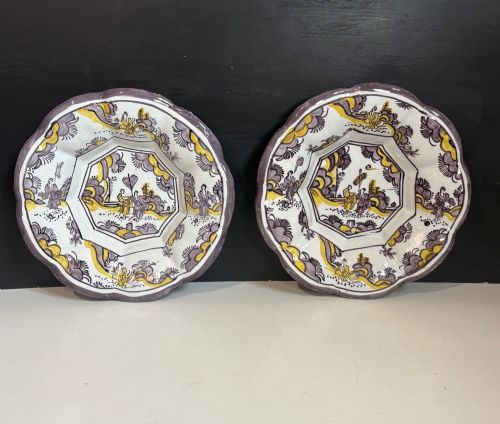
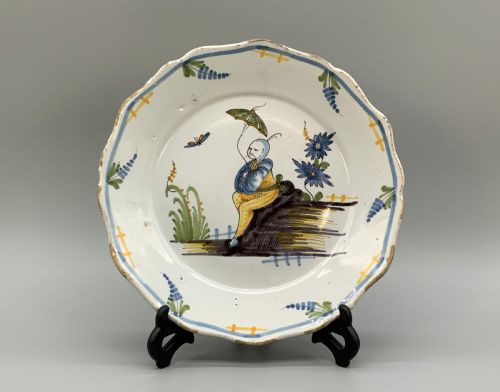
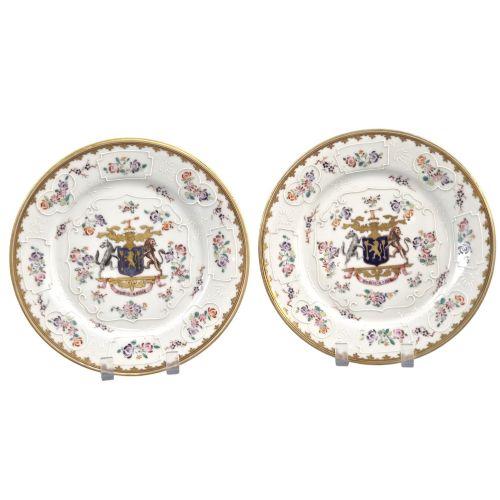
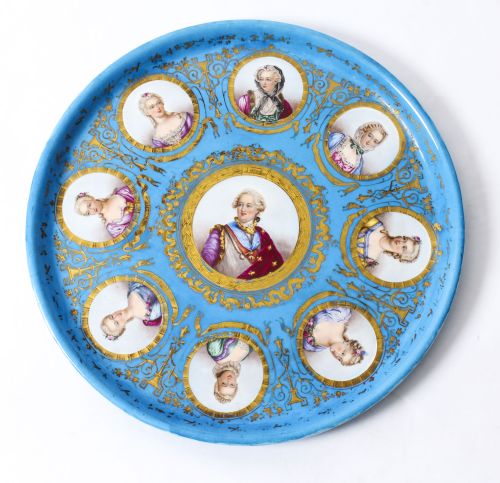
Buyers encounter both eighteenth-century specimens bearing manganese and yellow tin glazes and later nineteenth-century interpretations styled after earlier royal manufactories. Armorial decoration, floral motifs, and hand-painted figural scenes frequently define the group.
Materials and production methods
Potters utilised tin glaze on earthenware bodies for early faience dishes, achieving opaque white surfaces suitable for direct hand-painting. Soft-paste and hard-paste porcelain later provided finer grounds for detailed polychrome enamel work.
Gilding and gold leaf often highlight the rims and borders of cabinet plates, requiring careful second firings in the kiln. Hand-painted pigments deliver the individual character seen in floral sprays, armorials, and equestrian subjects.
Materials span soft-paste porcelain, gilt enamel, and tin-glazed earthenware adorned with armorial motifs and equestrian scenes.
Factors determining quality
The presence of documented factory marks, armorial provenance, or attribution to notable Parisian houses elevates the standing of a dish. Preservation of original gilding and tin glaze without extensive restoration remains central to the integrity of the piece.
Edmé Samson & Cie·Pucher Deroche·Chantilly porcelain·Veuve Perrin
The French Ceramic Display Plates Glossary
- Cabinet plate
- A decorative ceramic plate intended primarily for display in a cabinet or on a wall rather than for dining. These pieces often feature elaborate painted scenes or gilt borders.
- Faience
- Tin-glazed earthenware produced in France and other European countries. The technique involves applying an opaque white glaze over a buff or reddish clay body before painting.
- Soft-paste porcelain
- A vitreous ceramic composition developed before true hard-paste porcelain, fired at lower temperatures. It possesses a warm, slightly creamy body and a distinctive glaze texture.
- Charger
- A large ornamental plate used traditionally as a base dish or hung for display. In French ceramics, these pieces frequently showcase expansive painted landscapes or armorial designs.
- Tin glaze
- An opaque white ceramic glaze containing tin oxide. It creates a smooth surface that accepts metal oxide pigments for hand-painted decoration.
French Ceramic Display Plates: Frequently Asked Questions
How do I hang a display plate safely?
Use coated spring-loaded wall hangers that distribute pressure evenly across the rim of the porcelain or earthenware body.
Ensure the mounting hook is secured firmly into a wall stud or appropriate masonry anchor to support the weight of larger chargers.
What is the difference between faience and porcelain?
Faience is tin-glazed earthenware with an opaque white surface over a porous clay body, typical of eighteenth-century provincial production.
Porcelain is a vitrified, non-porous ceramic that ranges from soft-paste compositions to hard-paste bodies capable of finer detail and brighter enamel colours.
How should I clean antique French plates?
Dust surfaces gently with a soft, dry cloth to prevent the accumulation of particles on delicate enamel and gilt areas.
Avoid immersion in water, harsh detergents, or scrubbing, particularly on pieces with historic tin glaze or fragile overglaze gilding.
Are these plates meant for food use?
Cabinet and display plates are created for visual appreciation and interior decoration rather than practical dining purposes.
Historic glazes and mineral pigments on antique ceramics may not meet modern food safety standards and can be vulnerable to cutlery scratching.