


French Burr Walnut
French burr walnut brings together swirling timber grains and continental cabinetmaking from the nineteenth century onward.
French Burr Walnut
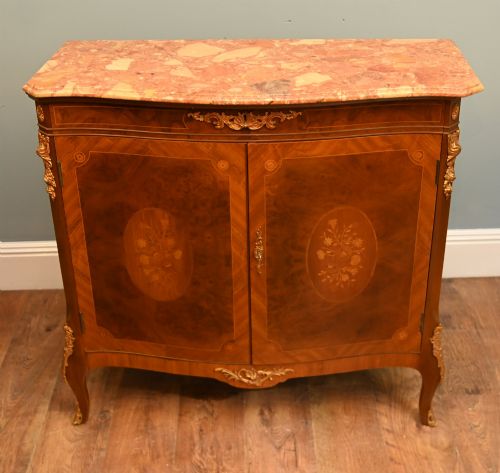
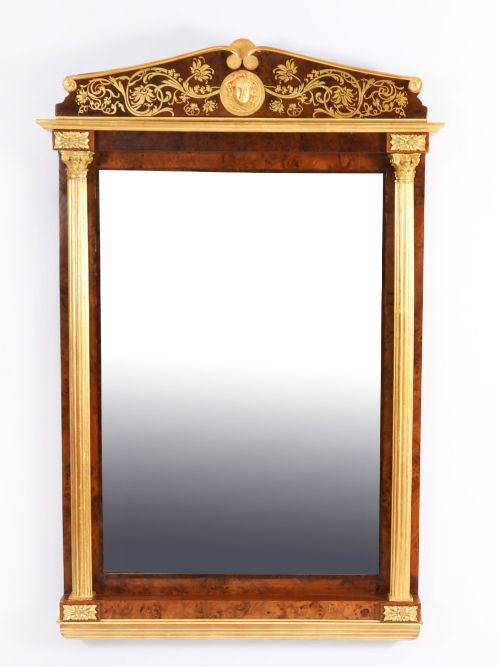
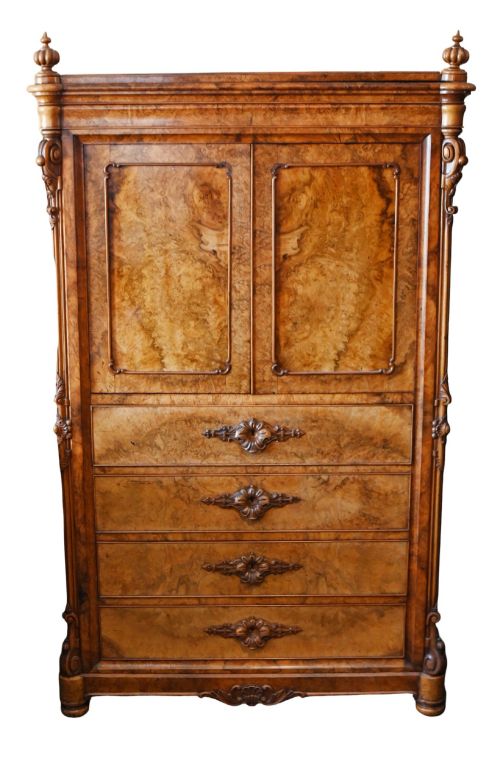
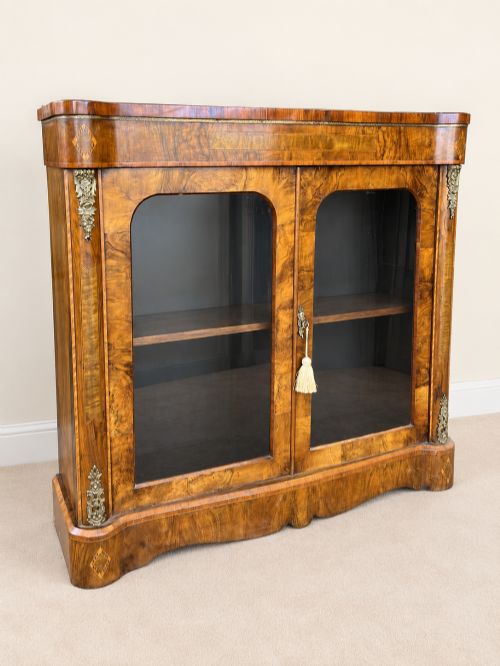
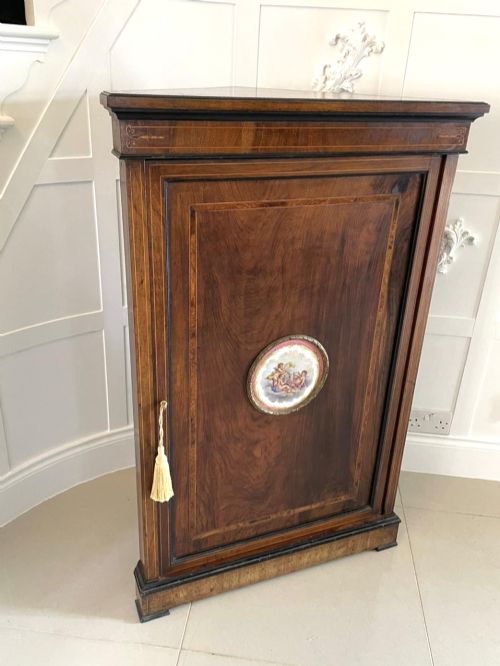
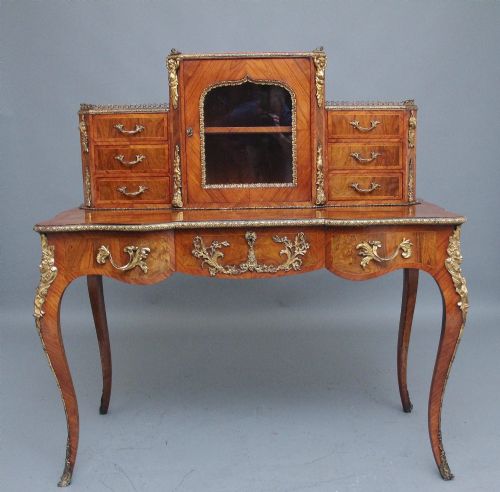
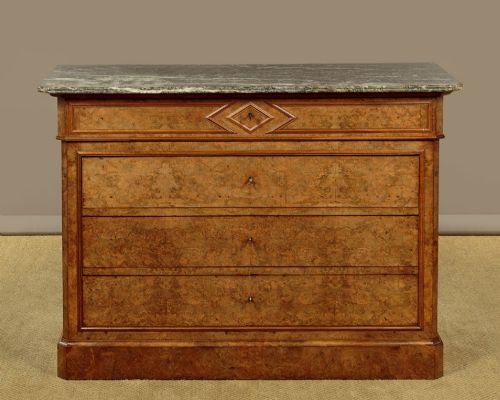
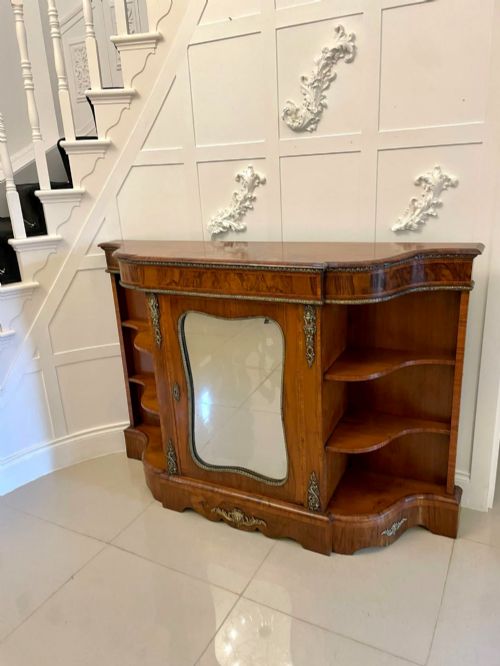
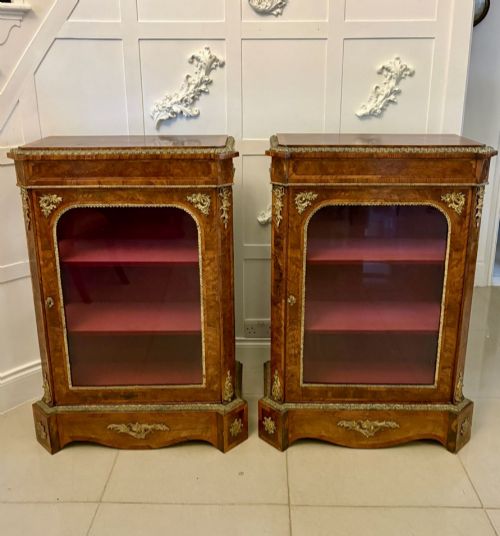
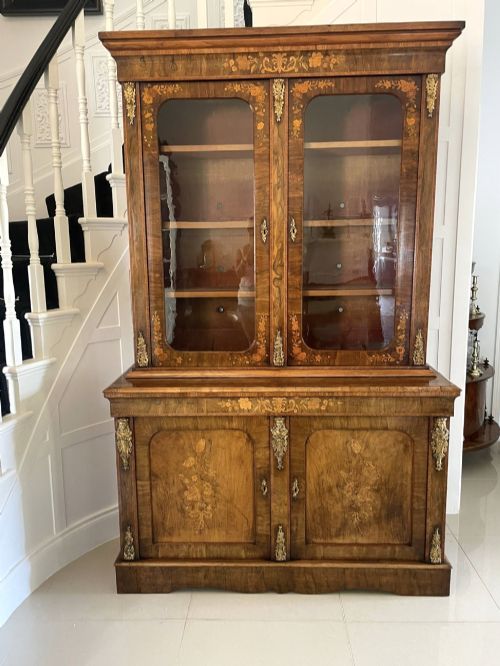
When you search for french burr walnut, you encounter a distinct group of continental and nineteenth-century English pieces defined by heavily figured, knotty veneer. The selections here centre on practical household furniture such as commodes, chests of drawers, and bedside cabinets, alongside grander display furniture including credenzas and pier cabinets.
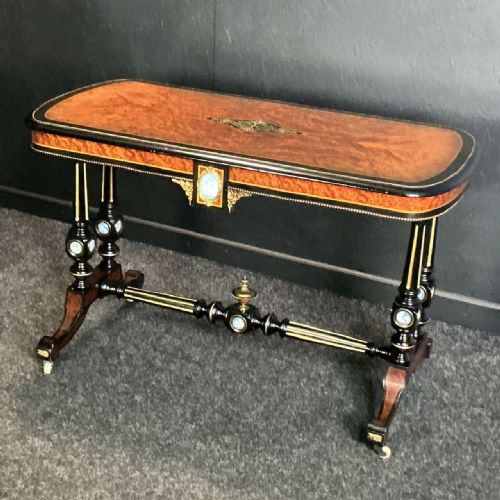
You will regularly find marble-topped commodes and side tables reflecting Louis Philippe and revival tastes, alongside smaller items like bureau de dame desks and writing tables. The corpus spans from mid-nineteenth-century Victorian interpretations of French style through to later Art Deco iterations, demonstrating a long-standing appreciation for the tactile quality of burr timber.
Materials and Technique
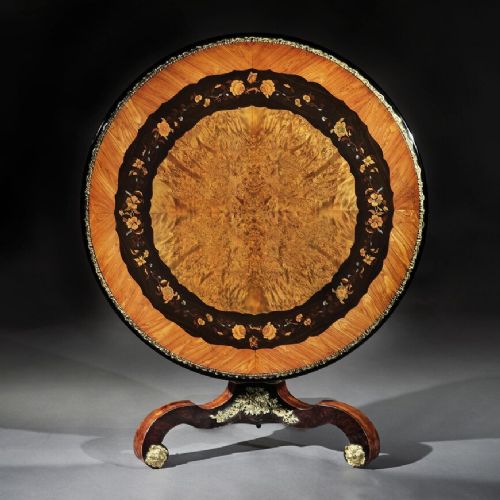
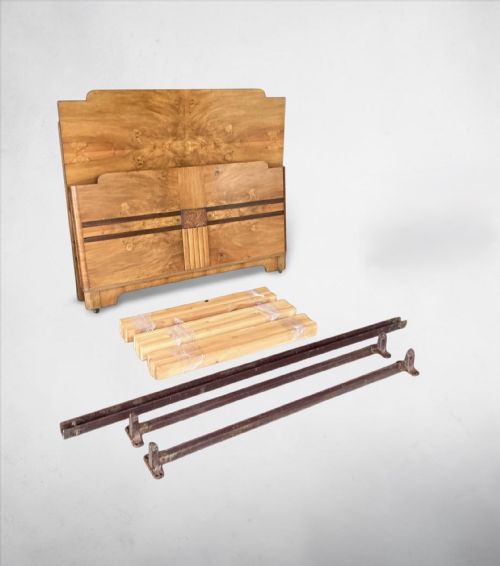
Cabinetmakers constructed these pieces by applying thin slices of burr walnut veneer over solid secondary timbers, allowing the swirling, irregular grain patterns of the tree growths to cover large flat surfaces in symmetrical book-matched designs. This decorative woodwork is frequently enhanced by contrasting marquetry inlay and parquetry geometric arrangements.
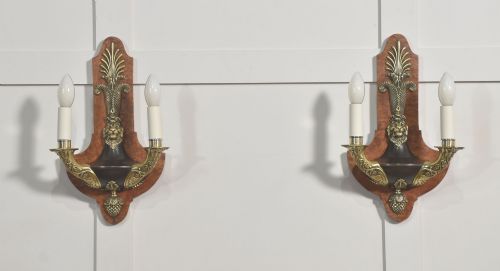
Metal ornament played a major structural and decorative role, with cast ormolu mounts, brass stringing, and gilt metal details applied to corners, legs, and framing edges. Heavier items, particularly commodes and consoles, were frequently finished with heavy grey or white marble tops resting directly on the timber base.
Several bedside cabinets hid chamber pots behind their miniature panelled doors before plumbing moved indoors.
Assessing the Workmanship
The distinction between standard commercial production and exceptional cabinetmaking rests primarily on the selection and alignment of the veneer. Superior examples display dense, evenly matched natural knots across the entire facade without awkward joins or interrupted patterns, showing meticulous planning by the artisan.
Construction details further separate the tiers of quality, visible in the weight and crispness of the cast ormolu mounts and the precision of the internal drawer dovetailing. Finer pieces maintain structural integrity in the timber ground, preventing the warping and veneer lifting that lesser examples suffer from over time.
Edward Holmes Baldock·Edward And Roberts
The French Burr Walnut Glossary
- Burr walnut
- A veneer taken from the gnarled growths or burls of a walnut tree, yielding a highly figured, swirling grain pattern filled with small knot clusters.
- Ormolu
- Gilded bronze or brass ornamentation applied to furniture surfaces, popular in French revival and nineteenth-century cabinetmaking.
- Marquetry
- Decorative patterns created by fitting different woods, veneers, and materials into wooden surfaces to form floral or geometric pictures.
- Commode
- A low chest of drawers, often fitted with a marble top, originating in France and common in nineteenth-century interiors.
- Pier cabinet
- A tall, narrow display cabinet designed to fit against the wall space or pier between two windows.
French Burr Walnut: Frequently Asked Questions
How do I clean french burr walnut?
Dust the surfaces regularly with a soft, dry cloth to prevent particulate buildup in the grain crevices. Avoid using modern silicone polishes or excess moisture, applying a quality beeswax sparingly when the timber appears dry.
Marble tops require separate care using a mild, pH-neutral soap solution and immediate drying to prevent water staining. Keep these pieces away from direct heat sources and strong sunlight to protect the fragile veneer from shrinking and splitting.
Are these pieces French or English?
The selection includes both continental manufacture and British cabinetmaking inspired by continental styles. Many items originate directly from France, particularly the commodes, console tables, and bedside cabinets featuring marble tops and ormolu mounts.
At the same time, British makers adopted these French revival fashions enthusiastically during the nineteenth century, producing pier cabinets and writing desks using imported burr veneers. Examining the secondary woods, construction methods, and lock types often reveals the workshop origin.
How do I spot a later copy?
Distinguishing period items from later reproductions involves looking closely at the uniformity of the timber and the method of construction. Older pieces display hand-cut dovetails, older secondary woods like oak or pine behind the veneer, and natural wear patterns on the polish.
Modern machine-made furniture or twentieth-century revivals often use synthetic adhesives, overly uniform modern ply bases, or cast brass hardware that lacks the sharp definition of nineteenth-century ormolu. Assessing the depth of the patina built up over generations provides further guidance.
How were commodes used originally?
Nineteenth-century commodes served as decorative yet functional storage units primarily placed in principal bedrooms or formal receiving rooms. Their marble tops provided a durable, cleanable surface for holding washbasins, pitchers, or decorative ornaments.
In living spaces and salons, similar cabinets functioned to store linens, papers, or silver, while their finished tops displayed candelabras and clocks. The inclusion of locks on many drawers indicates they held personal valuables securely.