
French Bronze Putti
French bronze putti bring winged infant figures into domestic ornament through clocks, candelabra, and sculptural groups.
French Bronze Putti
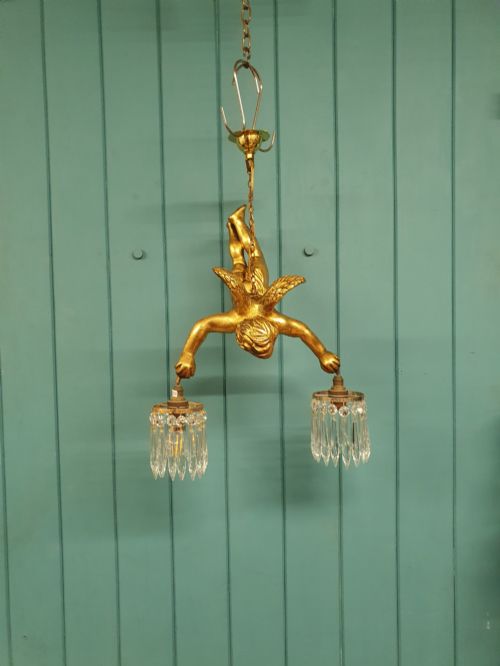
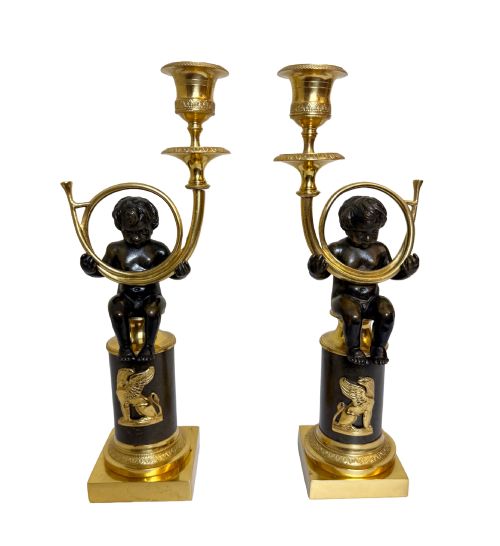
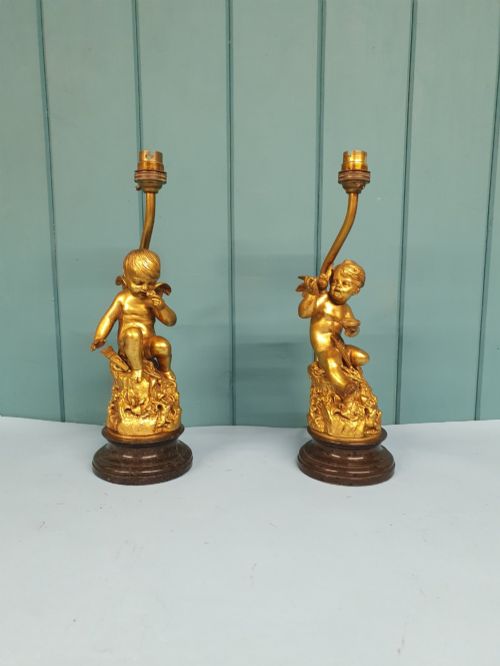
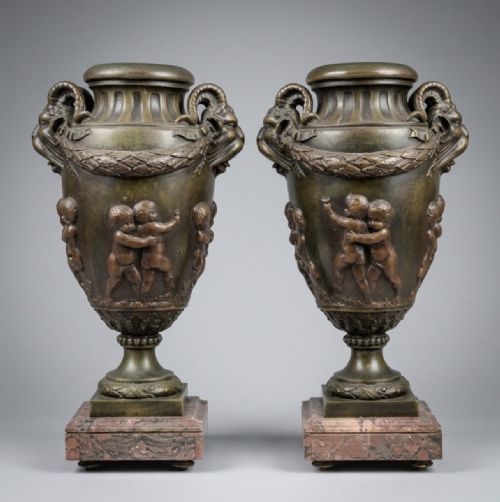
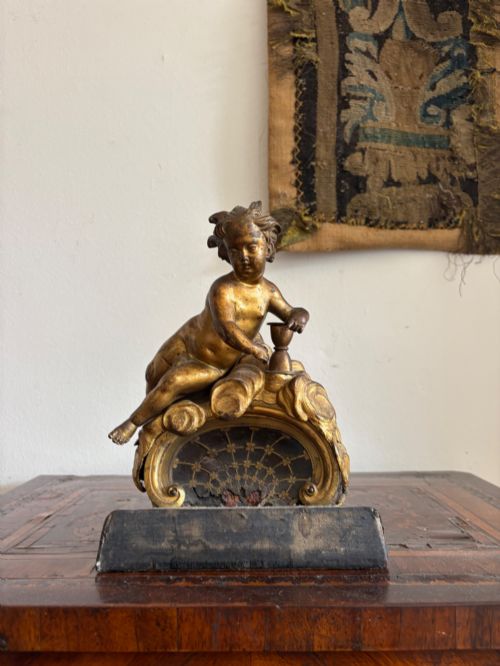
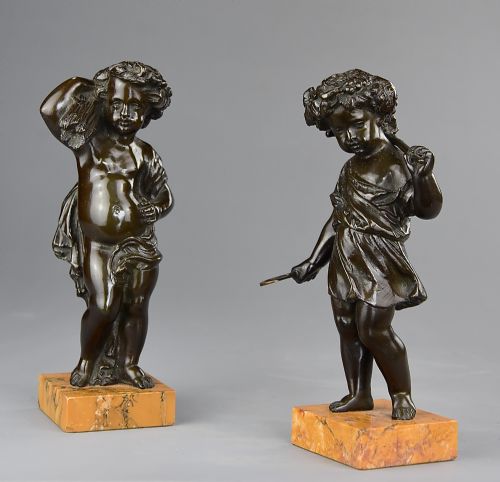
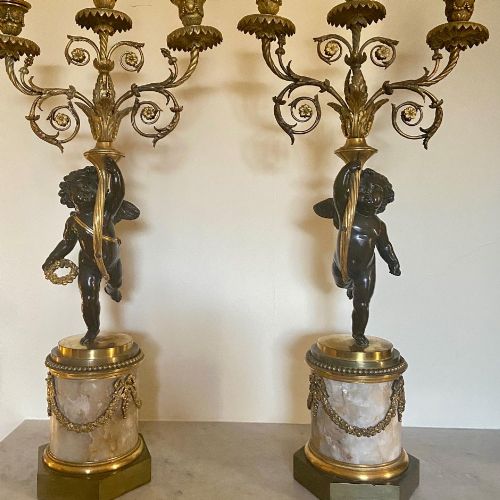
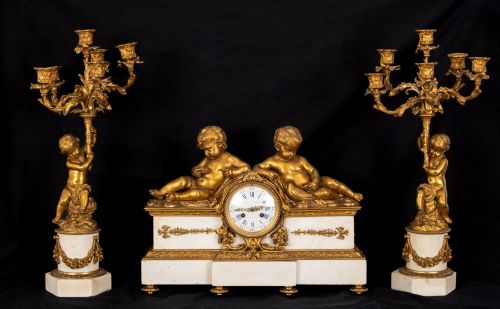
French bronze putti appear across a range of domestic objects, including mantel clocks, candelabra, wall sconces, and sculptural groups. These pieces most frequently date from the nineteenth century, reflecting revival styles such as Rococo, Empire, and Neoclassical design.
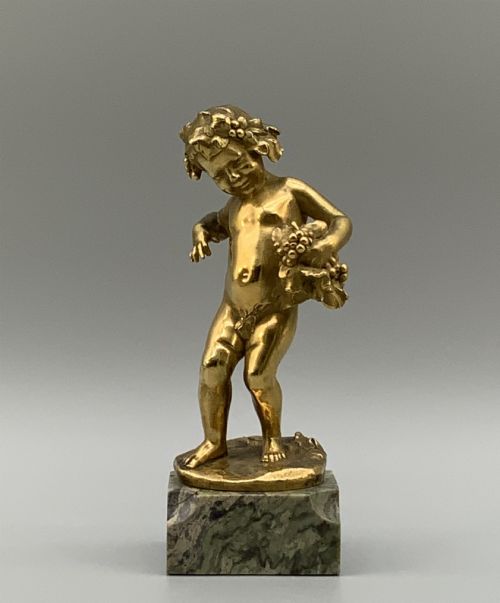
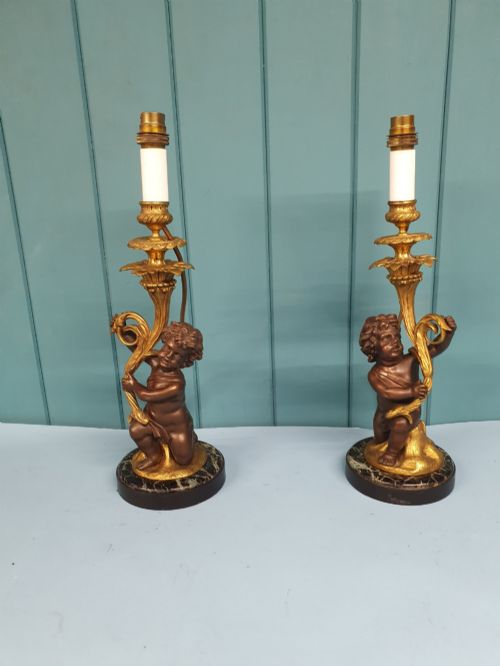
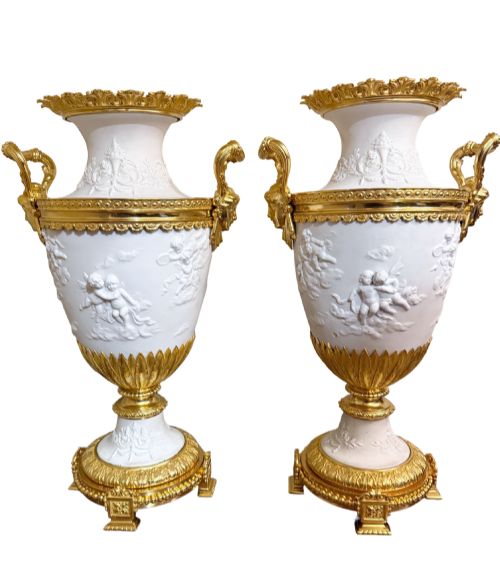
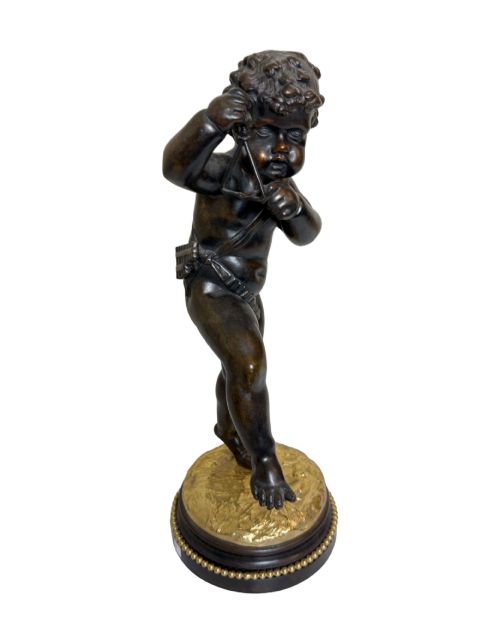
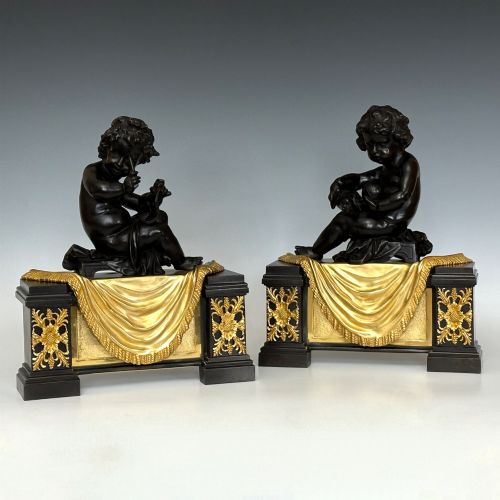
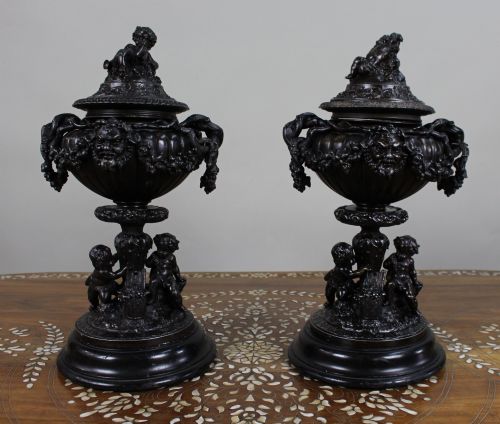
The figures themselves take several forms, from single figures playing instruments or holding bows to allegorical groups harvest figures or bacchanalian scenes. Many pieces combine bronze with other materials, mounting the figures on marble bases or incorporating them into larger functional objects like table lamps and fire chenets.
Materials and Technique
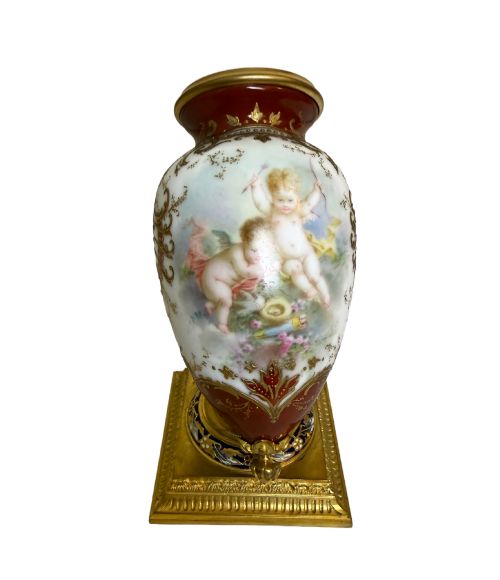
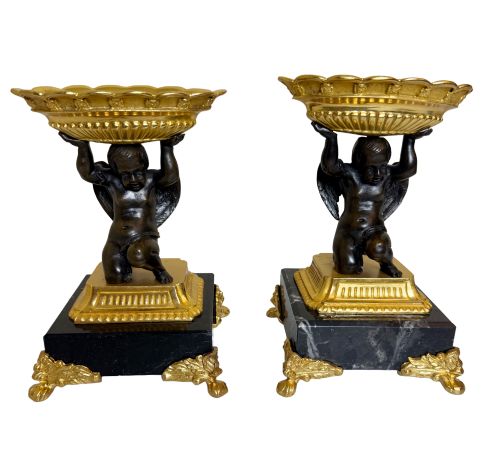
Foundries created these figures using traditional metal casting techniques, employing bronze, patinated bronze, and gilt bronze, often supplemented by ormolu. The metalwork frequently interacts with contrasting elements such as white marble bases, porcelain vases, and cut crystal glass components.
Surface finishes vary between polished or gilded highlights and dark patination, which emphasises the modelling of the infant forms. Mounts and decorative details are cast separately and assembled with mechanical fixings or secured to stone and ceramic bodies.
One winged putto plays a musical triangle, while another shares the scene with a companion spaniel dog.
Standards of Craftsmanship
The integration of the figure with its functional support, whether a clock garniture, a candelabrum, or a marble plinth, distinguishes workshop execution. Finer examples display careful proportion and harmonious material combinations, whereas lesser pieces show mechanical assembly and generalized surface detail.
Charles Louis Malric·Susse Frères·Le Roy·Leon Message·Jollet et Cie
The French Bronze Putti Glossary
- Putto
- A representation of a human infant, frequently winged, appearing in classical and revival art. These figures form the primary decorative motif in the listed works.
- Ormolu
- Gilded bronze produced through a mercury amalgamation process common in luxury French metalwork. This finish gives a bright, durable gold-coloured surface to cast bronze mounts.
- Chenet
- An ornamental metal fire dog placed at the front of a hearth. Pairs often incorporate figural bronze decoration such as putti.
- Candelabra
- A branched candlestick designed to hold multiple candles. Nineteenth-century French examples frequently integrate cast bronze figures into the central stem or arms.
- Garniture
- A set of matching decorative objects, typically comprising a mantel clock flanked by matching candelabra or urns. These ensembles often feature coordinated bronze putti elements.
French Bronze Putti: Frequently Asked Questions
What is a putto?
A putto is a depiction of a plump, naked infant, frequently winged, derived from classical art. In nineteenth-century French metalwork, they appear as playful attendants in domestic decorative objects.
These figures can represent musical performers, harvesters, or mythological characters. They serve both as standalone sculptures and as structural supports for clocks and lamps.
How were these bronzes cleaned originally?
Historical maintenance relied on gentle dusting and occasional specialist care to preserve the underlying metal patination or gilding. Harsh abrasives were avoided to prevent wearing away thin layers of gold leaf.
Many surviving pieces retain traces of their original surface treatments. Modern owners should use dry cloths rather than chemical cleaners to protect the metal.
Are these pieces functional today?
Many items retain their original purpose, such as holding candles or indicating time through mechanical clock movements. Others have undergone conversion, notably figures adapted into table lamps.
Converted pieces require careful inspection of electrical wiring. Original mechanical clock movements often need professional servicing to run accurately.
How do I identify the period?
Stylistic cues point toward specific nineteenth-century revivals, such as Louis XIV, Louis XVI, or Empire designs. The combination of materials, such as specific grades of marble and cast ormolu, offers further clues to the date of manufacture.
Foundry stamps and signature engravings can sometimes be found on the base or reverse of the bronze. Comparing the casting quality with known dated examples helps narrow down the production era.