
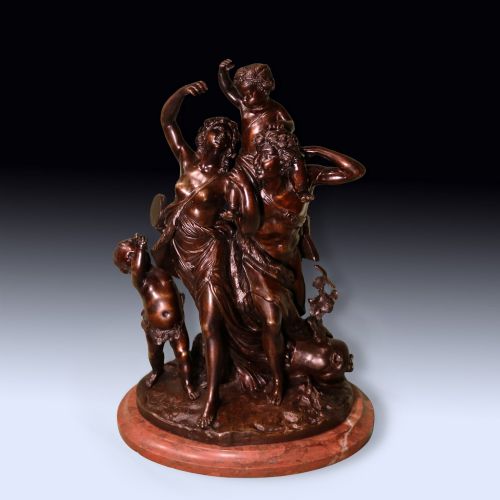


Bronze Bacchanalian Statue
A bronze bacchanalian statue brings classical revelry into a room through cast metal figures of Bacchus, maidens, and putti.
Bronze Bacchanalian Statue
A bronze bacchanalian statue represents classical mythological scenes involving Bacchus, dancing maidens, and putti engaged in wine-making or gathering grapes. These nineteenth-century pieces draw heavily upon eighteenth-century French models, particularly works associated with the sculptor Clodion. Buyers seeking this category encounter figural groups cast in metal, frequently mounted upon green marble bases.
The objects on this page span the nineteenth century, including specific dates such as eighteen hundred, eighteen eighty, and eighteen ninety. Forms range from single figures to elaborate pairs of statues depicting children or putti. Stylistic descriptions across the listings include neoclassical, French rococo revival, and French classical revival.
What varies in quality
The refinement of the casting and chasing separates standard production from exceptional work. Finer examples display crisp detail in the facial expressions, hair, and clusters of grapes held by the putti or maidens.
The presence of signature marks, such as those after Clodion, influences the standing of a piece. Furthermore, the integration of the bronze group with its marble base demonstrates the overall ambition of the maker.
Several putti spend their entire metallic lives eternally playing with grapes and wine.
Clodion
The Bronze Bacchanalian Statue Glossary
- Patinated bronze
- Bronze treated with chemical solutions to produce a specific surface colour or tone. This process protects the metal while enhancing visual depth.
- Putti
- Depictions of plump, winged or wingless male infants, often appearing as attendants to Bacchus. These figures populate many classical and neoclassical sculptural groups.
- Neoclassical
- A style inspired by the classical art and culture of ancient Greece and Rome. It prioritises clarity of form and restrained classical themes.
- Rococo Revival
- A nineteenth-century movement reviving the ornate, flowing curves and asymmetrical designs of the French eighteenth century. It often blends with classical subject matter in decorative bronzes.
Bronze Bacchanalian Statue: Frequently Asked Questions
What is a bronze bacchanalian statue?
A bronze bacchanalian statue is a nineteenth-century cast metal sculpture depicting mythological scenes of wine, revelry, and classical figures. These pieces often feature Bacchus, dancing maidens, and putti.
Such works frequently reference the compositions of French sculptors from the eighteenth century. They serve as decorative figural groups mounted on domestic surfaces.
How do I identify a nineteenth-century piece?
Nineteenth-century examples are identified through their casting characteristics, patination methods, and stylistic links to revival movements. The use of specific materials like green marble bases also points to this era.
Examining the treatment of the bronze surface helps determine the period of manufacture. Signatures or inscriptions relating to makers like Clodion provide further context.
Where were these statues displayed?
These sculptures were traditionally placed in nineteenth-century drawing rooms, libraries, and galleries as decorative art. Their classical themes suited the formal interiors of the period.
Today, they function as tabletop or mantelpiece sculptures. Their size allows them to be placed on various wooden or stone surfaces.
What do the grape motifs mean?
Grape motifs and vines directly relate to Bacchus, the Roman god of agriculture, wine, and fertility. Figures of putti and maidens often gather or play with these grapes.
This imagery stems from classical mythology and ancient depictions of harvest festivals. It remains a defining visual element of bacchanalian art.