






Green Marble Bronze Sculpture
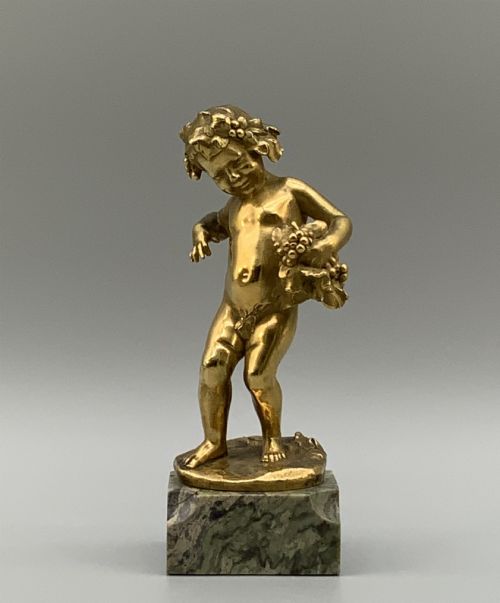
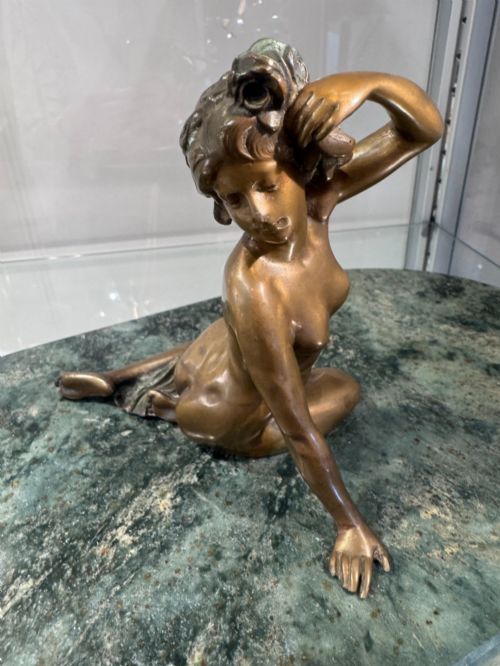
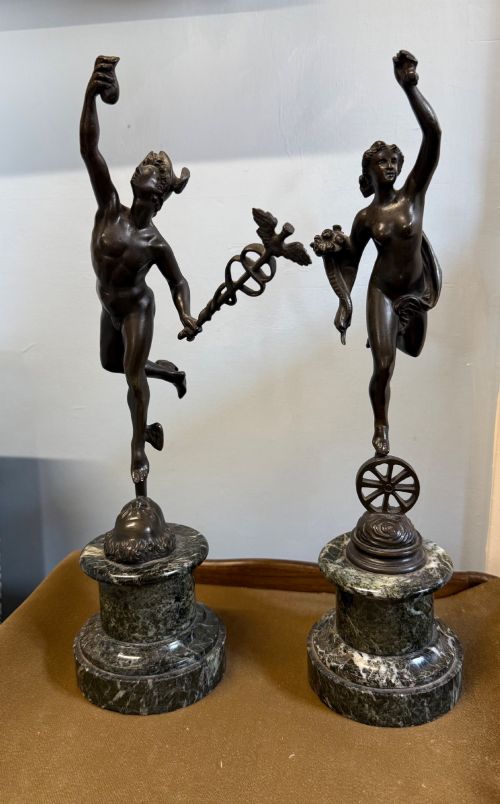
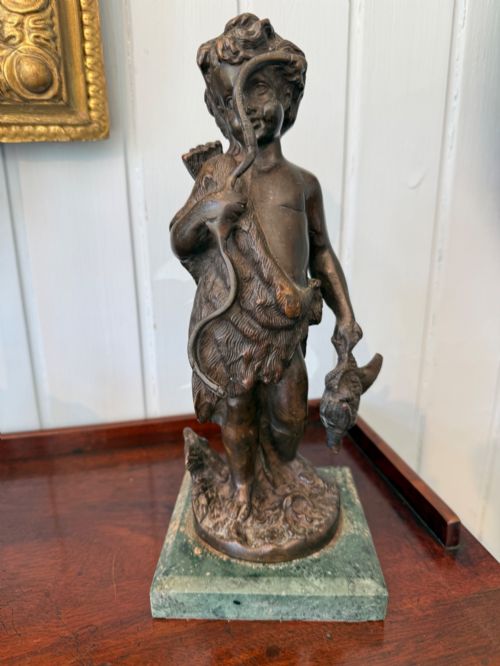
A green marble bronze sculpture brings together cast metal and polished stone to anchor classical figures, animals and Art Deco dancers.

Green Marble Bronze Sculpture
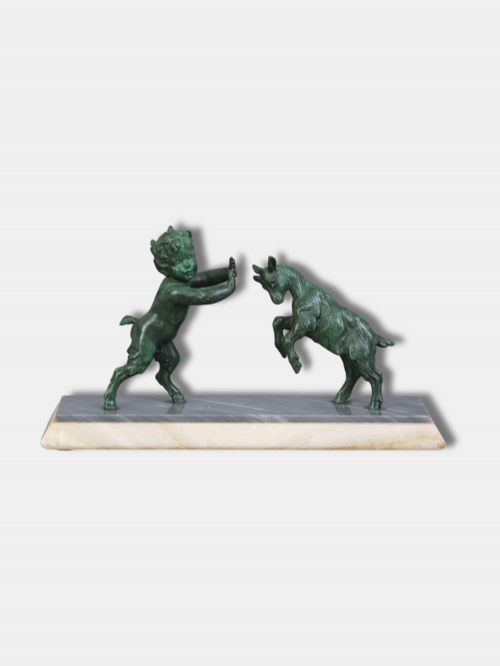
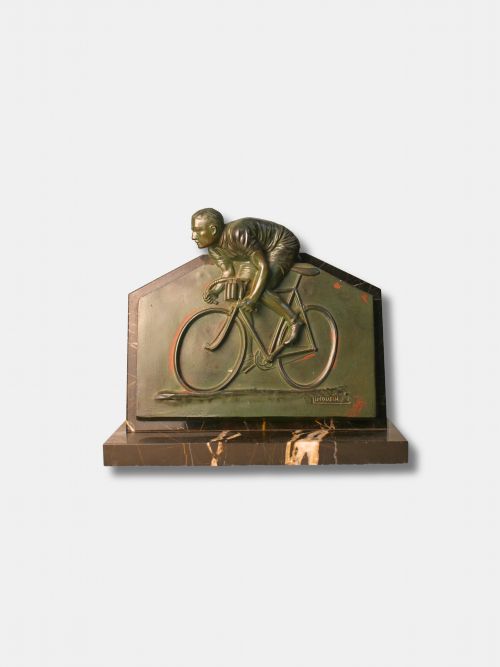
When buyers search for a green marble bronze sculpture, they encounter a range of decorative objects where metal figures or animals are mounted onto stone bases or plinths. The selection on this page spans from nineteenth century Grand Tour souvenirs and Animalier studies to Art Deco dancers and mythological subjects.
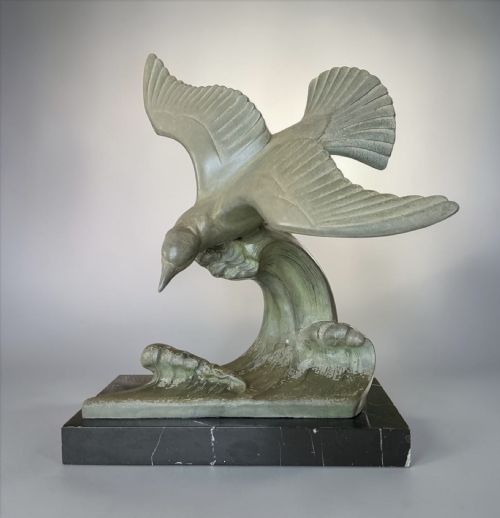
Most pieces combine a cast bronze or patinated metal figure with a polished marble, onyx or slate base. The stone plinth provides weight and balance, often serving as a landscape element such as a wave, a floor or a architectural step for the subject above.
Materials and casting methods
The metal components rely on traditional foundry techniques, primarily the lost-wax process or sand casting, to capture fine details in bronze, gilt bronze or spelter. Artisans then apply patination, cold painting or silvering to the surface of the metal figure.
The stone bases are shaped from natural marble or onyx blocks, then cut, turned and polished to contrast with the dark or golden tones of the metal. Metal pins or screws secure the heavy figures firmly into the stone plinths.
Green Marble Bronze Sculpture Retail Price Guide 2026
Typical asking prices for green marble bronze sculpture among the pieces listed under this phrase on Sellingantiques today, from the lower quarter to the upper quarter. They describe what is for sale here now, not the wider market.
Several sculptures depict surprisingly theatrical birds striking dramatic poses, proving that nineteenth-century sculptors had a distinct sense of humour.
Markers of quality
Quality rests upon the crispness of the metal chasing and the fidelity of the casting, where sharper details in feathers, hair and facial expressions separate superior works from simpler production pieces. The choice of materials also plays a part, with genuine bronze and finely figured marble commanding greater appreciation than spelter on onyx.
The harmony between the sculptural subject and its stone base indicates the care taken in composition. Balanced proportions, secure mounting and a sophisticated patination finish distinguish the finer examples in this field.
Charles Louis Malric·Susse Frères·Emile Carlier·Jules Bonheur·E. Drouot·Delabrierre·Gotthilf Jaeger·F. De Luca·P. Sega·Paul Édouard Delabrièrre·C Masson·Antoine L Barye·Rene Andre Varnier·Willems·Ferdinand Preiss·Josef Lorenzl·Franz Bergman·Auguste Moreau
The Green Marble Bronze Sculpture Glossary
- Animalier
- A nineteenth-century French artistic movement focused on the realistic portrayal of animals, particularly predators and game. Sculptors in this tradition studied anatomy closely.
- Grand Tour
- A cultural journey undertaken by nineteenth-century elites across Europe, collecting small bronzes and antiquities as souvenirs. These pieces often replicated famous classical statues.
- Spelter
- A zinc alloy commonly used as a less costly alternative to bronze, particularly in decorative objects and clock figures. It is softer than bronze and usually carries a painted or patinated finish.
- Patination
- The surface coloration of metal achieved through chemical treatment, heat or age. A good patina enhances the perceived depth and texture of the cast figure.
- Chryselephantine
- A term describing statues combining carved ivory with bronze or other materials, frequently seen in Art Deco figures. The technique requires precise fitting of different mediums.
Green Marble Bronze Sculpture: Frequently Asked Questions
Are these pieces solid bronze?
Many figures are cast as hollow forms using the lost-wax method to reduce weight and material costs, while others utilise solid casting for smaller pieces. Some listings feature spelter, which is a different zinc-based metal alloy often painted to resemble bronze.
Examining the underside or mounting points can reveal the composition of the metal. True bronze feels heavier and colder to the touch than spelter.
How can I tell the age of a green marble bronze sculpture?
Dating relies on the stylistic markers of the period, such as the naturalism of nineteenth century Animalier works or the stylised geometry of Art Deco pieces. Maker signatures, foundry marks and the type of fasteners used underneath also offer clues to the date of manufacture.
The wear patterns on the stone base and the oxidation of the metal surface provide additional evidence of age.
Where should I display these sculptures at home?
Position the sculpture on a sturdy surface away from direct sunlight, high humidity and sudden temperature fluctuations that could affect the stone or metal. A mantelpiece, a dedicated console table or a secure cabinet allows the details to be viewed from multiple angles.
Because many of these pieces are heavy, ensure the supporting furniture is stable and capable of bearing the combined weight of the bronze and marble.