
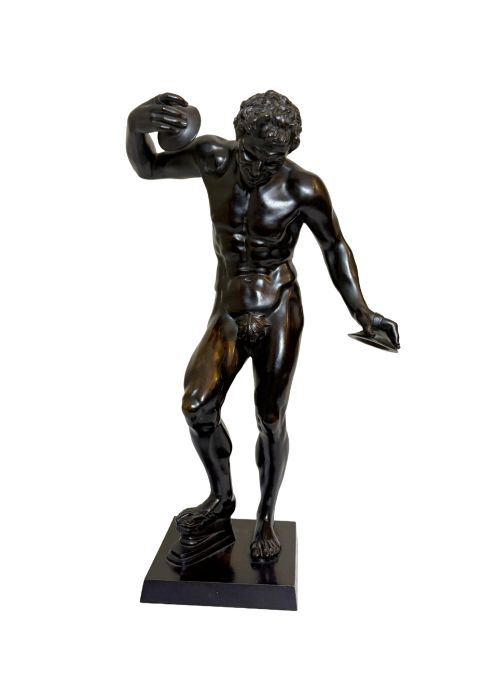
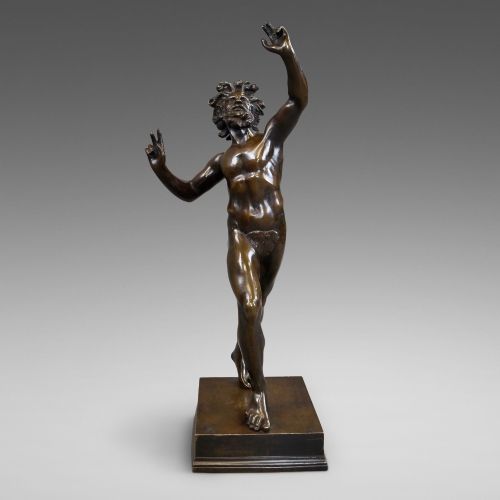


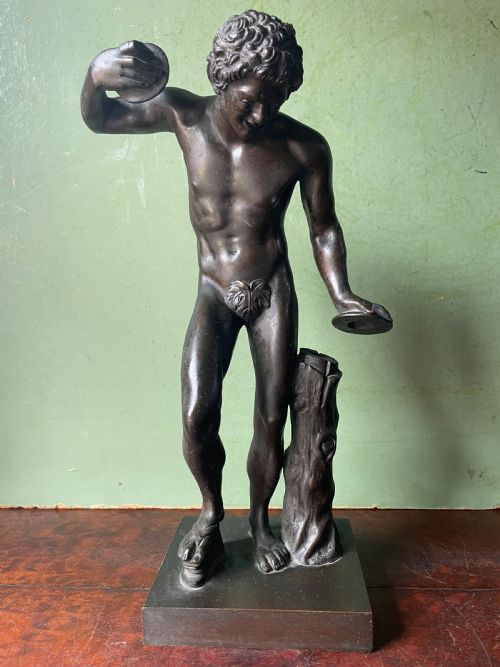


Bronze Dancing Satyr Statue
A bronze dancing satyr statue brings classical mythology into a room through nineteenth-century Italian and French bronze reductions.
Bronze Dancing Satyr Statue
When you search for a bronze dancing satyr statue, you encounter nineteenth-century interpretations of classical figures discovered in the ruins of Pompeii. These sculptures depict mythological fauns and satyrs, often shown with cymbals or clappers in dynamic motion.
Most pieces on this page are Grand Tour souvenirs or Neoclassical reductions made in Italy and France during the Victorian era. They translate large ancient sculptures into cabinet-sized works intended for European travellers and collectors.
The subjects draw directly from famous antiquities such as the Dancing Faun of Pompeii and works associated with classical sculptors like Clodion. These figures capture the exuberant spirit of Bacchus through detailed casting and spirited poses.
How they were made
The primary material is cast bronze, finished with various patinas ranging from dark brown to greenish tones that mimic ancient buried metal. Some examples utilise plaster as an alternative medium for sculptural reduction.
Many of these nineteenth-century figures incorporate integrated or fitted marble bases to support the dynamic balancing poses of the dancing figures. The casting techniques rely on traditional lost-wax or sand-casting methods adapted for commercial souvenir production.
Listings feature nineteenth-century Italian and French bronze, patinated bronze, and plaster sculptures executed in Neoclassical and Grand Tour styles.
What varies in quality
Quality in these bronzes rests upon the crispness of the chasing and the depth of the patina applied to the surface. Finer examples retain sharp details in the hair, musculature, and facial expressions of the dancing figure.
The weight and stability of the marble plinth alongside the precision of the bronze casting distinguish workshop standards. Superior reductions demonstrate careful attention to anatomical proportions and balanced movement.
Augusto Rivalta·Clodion
The Bronze Dancing Satyr Statue Glossary
- Grand Tour
- A traditional trip through Europe undertaken by upper-class European young men of means to absorb cultural history. Souvenirs purchased on these journeys included small-scale bronze sculptures of famous antiquities.
- Patinated Bronze
- Metal treated with chemical solutions to produce a specific surface colour and texture. This finish protects the bronze and simulates the appearance of ancient excavated artefacts.
- Neoclassical
- A Western cultural movement drawing inspiration from the art and culture of classical antiquity. This style heavily influenced nineteenth-century European sculpture and decorative arts.
- Reduction
- A scaled-down copy of a large monumental sculpture. Nineteenth-century founders produced these smaller versions for domestic display in studies and libraries.
- Clappers
- Percussion instruments resembling small cymbals held in the hands. Figures of dancing fauns frequently hold these items in classical iconography.
Bronze Dancing Satyr Statue: Frequently Asked Questions
What is a Grand Tour bronze?
A Grand Tour bronze is a nineteenth-century souvenir cast in Italy or France for travellers visiting classical sites and museums. These pieces served as portable reminders of ancient art seen during European travels.
Founders and workshops produced reduced-scale copies of famous statues like the Dancing Faun of Pompeii for domestic display on desks and mantelpieces.
Why do some figures have marble bases?
Marble bases provide necessary weight and stability for bronze figures cast in dynamic, unbalanced dancing poses. They also elevate the sculpture in the manner of museum plinths.
These integrated or fitted stones reflect the Neoclassical taste for combining contrasting natural materials in cabinet sculptures.
How do I care for nineteenth-century bronze?
Care involves gentle dusting with a soft, dry cloth to prevent the accumulation of grit on the patinated surface. Avoid chemical cleaners or polishes that can strip the historic finish.
Keep the sculpture in a stable environment away from excessive moisture to preserve the metal and any attached marble components.