



French Bronze Horse Figurine
A French bronze horse figurine brings the dynamic movement and sculptural weight of nineteenth-century animalier art straight into a room.
French Bronze Horse Figurine
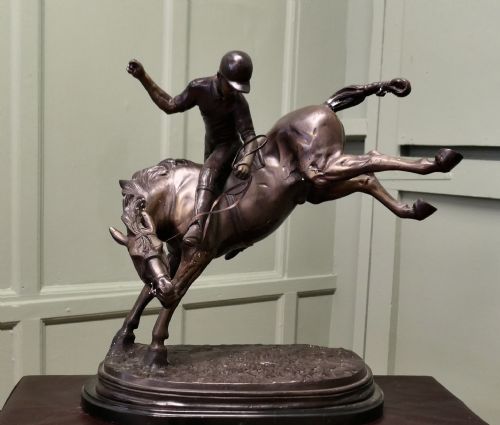
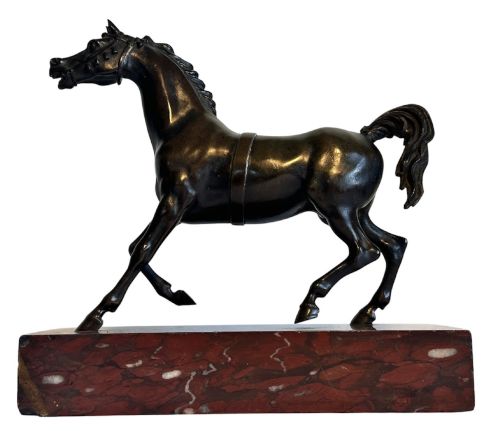
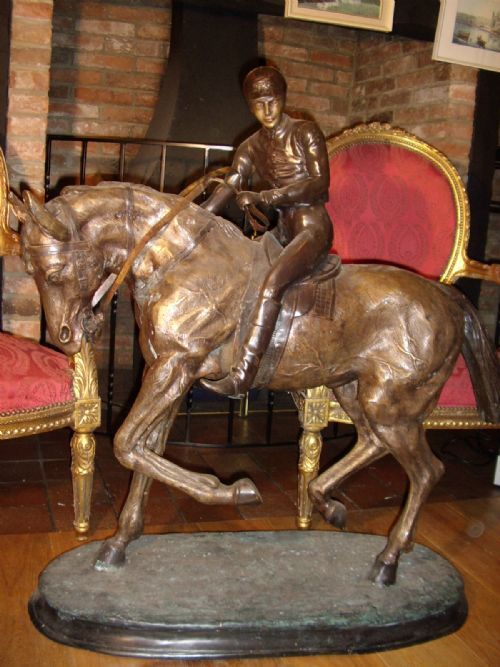
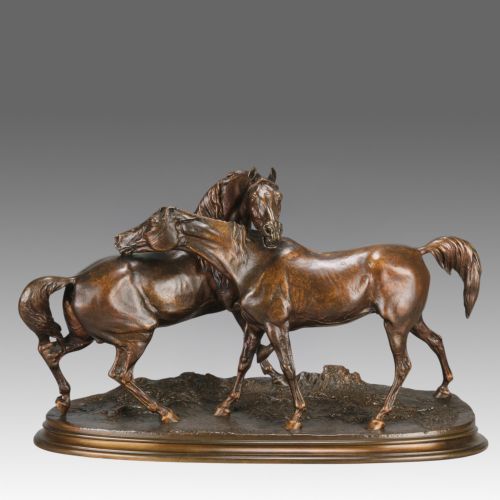
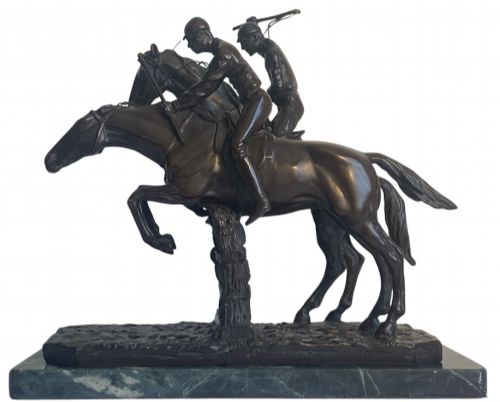
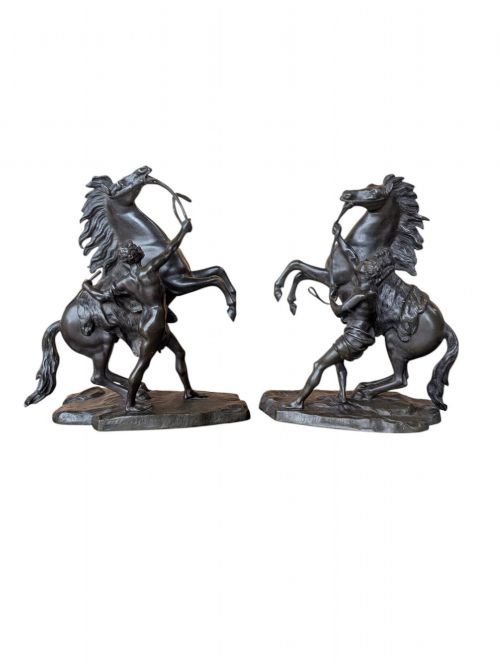
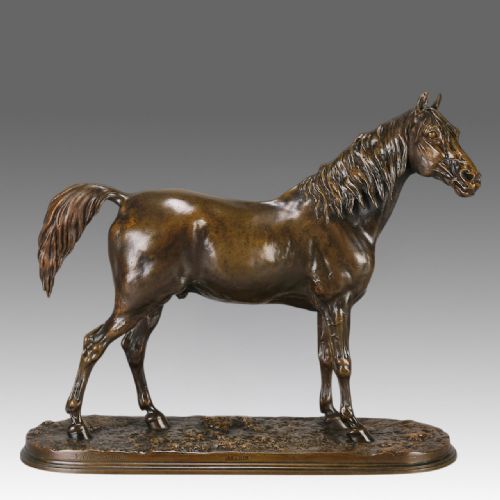
A French bronze horse figurine captures the equine form with precise anatomical detail, ranging from racing thoroughbreds and chargers to monumental Marly horses. These pieces emerge predominantly from nineteenth-century animalier traditions, though examples extend into the twentieth century.
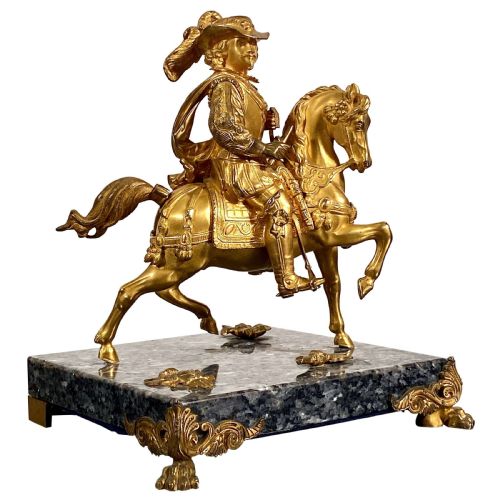
Most items on this page manifest as freestanding sculptures or desk figures, occasionally mounted on marble bases or integrated into mantel clocks. The subjects span straightforward animal studies to historical equestrian figures including Napoleon and Charles I.
The aesthetic leans heavily toward the French Animalier School and Neoclassical styles, reflecting a deep Victorian fascination with realistic animal sculpture. Buyers encounter both original period casts and later bronze works modeled after celebrated sculptors.
Materials and construction methods
Foundry workers utilised traditional lost-wax casting and sand casting techniques to capture the fluid musculature and fine textures of each horse. The primary material is cast bronze, frequently enhanced through patination, or finished with gilt bronze, ormolu, and silver plating.
Many sculptures incorporate heavy bases of green marble or standard marble to anchor the substantial weight of the metal. Occasional pairs utilise brass elements or painted finishes to highlight specific harness details and rider costumes.
Subject matter includes racing thoroughbreds, historical commanders on horseback, and monkeys participating in steeplechase races.
Determinants of quality
The integrity of the patina and the quality of the marble mounting further separate standard items from superior works. Heavier bronze gauge and distinct artist signatures or foundry marks confirm the ambition behind the piece.
Pierre Jules Mene·Jules Bonheur·Pierre Lenordez·Xavier Raphanel·Paul Joseph Gayrard
The French Bronze Horse Figurine Glossary
- Animalier
- A nineteenth-century artistic movement dedicated to the realistic portrayal of animals, particularly horses, lions, and hounds. Sculptors in this genre studied live subjects closely at menageries and racecourses.
- Patinated bronze
- Bronze metal treated with chemical solutions to produce a controlled surface colour, typically rich brown, black, or verdigris. This finish protects the metal and accentuates anatomical contours.
- Ormolu
- Finely ground high-carat gold applied to a bronze base using a mercury amalgamation process, or cast as gilt bronze. The technique yields a brilliant, durable golden surface.
- Marly horse
- One of a pair of monumental marble sculptures depicting unruly horses restrained by grooms, originally created by Guillaume Coustou for the Château de Marly. Miniature bronze versions became popular decorative objects.
- Lost-wax casting
- A meticulous method where a wax model is encased in clay, melted out, and replaced with molten bronze. This technique allows for undercut details and complex equestrian postures.
French Bronze Horse Figurine: Frequently Asked Questions
What is an animalier horse sculpture?
An animalier sculpture focuses on the realistic, unidealised depiction of animals in motion or repose. These pieces pay close attention to the distinct musculature and temperament of horses.
Created primarily during the nineteenth century in France, the genre elevated animal subjects to the same status as human portraits and historical scenes.
How do I identify a period bronze?
Period bronzes typically exhibit heavy casting weight, meticulous hand-chasing on the mane and tack, and deep patination acquired over decades. Signatures of period makers often appear directly in the bronze base.
Closer inspection reveals the absence of modern synthetic fillers or machine-ground seams, distinguishing nineteenth-century work from later reproductions.
Why are some horses mounted on marble?
Marble bases provided necessary stability and weight for heavy bronze sculptures while adding an architectural framing device. Green and dark marbles were favoured in the nineteenth century to contrast with the warm brown or gilt bronze.
These heavy plinths also protected fine furniture surfaces from direct metal contact.
How should I display a bronze figure?
Bronze figures require stable placement on level surfaces away from direct moisture and extreme temperature fluctuations. Their substantial weight makes sturdy console tables or mantelpieces ideal locations.
Occasional dusting with a soft, dry cloth maintains the surface patina without stripping the protective historical finish.