




Bronze Rider Sculpture
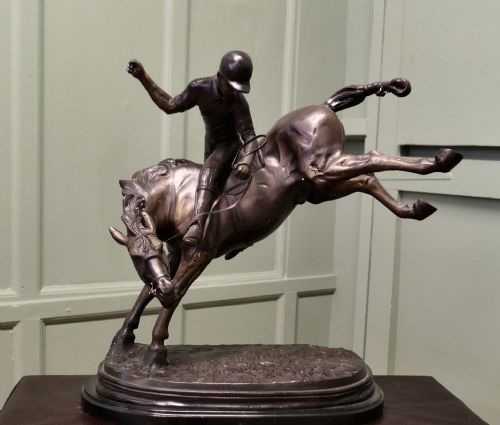
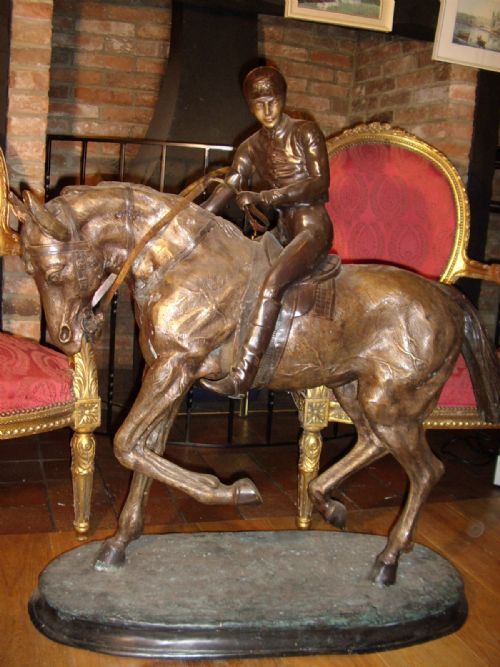
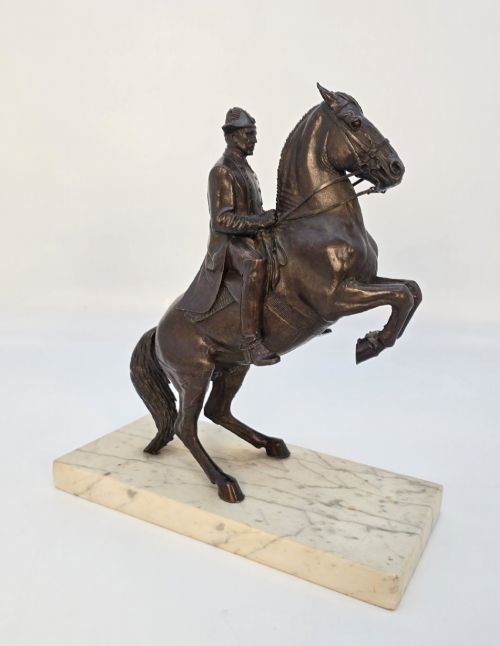
These bronze rider sculpture pieces capture horses, riders, and beasts across diverse styles, offering the perfect focal point for a room.
Bronze Rider Sculpture
A bronze rider sculpture brings together equestrian subjects and metal casting, spanning periods from the nineteenth century through to nineteen fifty. Collectors encounter works originating from various traditions, including French Animalier, Academic Realism, and the Grand Tour.
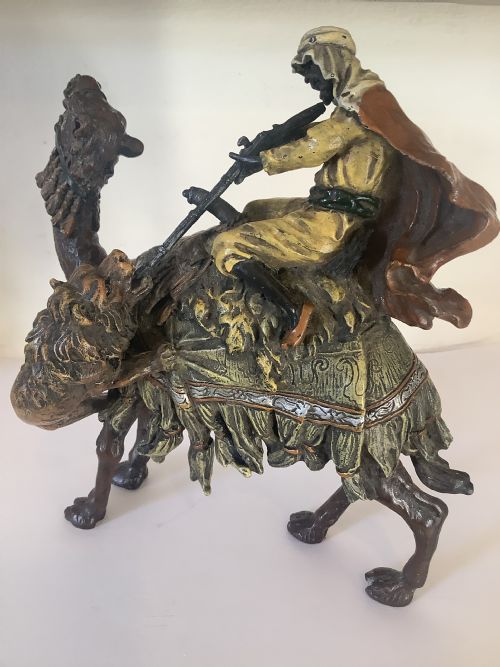
The subjects range widely from polo players and racehorse jockeys to cowboys on bucking horses, huntsmen, and Arabic figures on camels. These depictions draw on influences from French, Spanish, and English schools, alongside Renaissance Revival and Orientalist motifs.
Most examples present mounted figures on integral bases, frequently paired with materials such as marble, slate, or wood. Buyers regularly find both human and animal subjects rendered with careful attention to posture and movement.
How they were made
These works rely on bronze casting methods, capturing fine details in the musculature of horses and the attire of riders. Certain figures receive additional treatment through cold painted enamel paint applied directly to the metal surface.
Many of these sculptures are mounted on heavy bases of marble, slate, or polished wood to provide stability. Patination varies from dark brown tones to lighter finishes that highlight the underlying bronze.
Bronze Rider Sculpture Retail Price Guide 2026
Typical asking prices for bronze rider sculpture among the pieces listed under this phrase on Sellingantiques today, from the lower quarter to the upper quarter. They describe what is for sale here now, not the wider market.
Listings feature bronze alongside slate, marble, wood, and enamel paint, spanning periods from the nineteenth century to nineteen fifty.
What varies in quality
The quality of the secondary base material also sets pieces apart, with dense, well-polished marble or slate elevating the overall presence of the sculpture. The handling of patination and the application of any enamel paint further distinguish finer studio productions from simpler foundry outputs.
Pierre Jules Meme·Bergman·Remington·Verrocchio·Isidore Bonheur
The Bronze Rider Sculpture Glossary
- Animalier
- A nineteenth-century artistic movement focused on the realistic portrayal of animals. Sculptors in this tradition studied anatomy closely, often depicting horses and other beasts in motion.
- Grand Tour
- A traditional trip through Europe undertaken by upper-class young men in the eighteenth and nineteenth centuries to study art and architecture. Souvenirs from these travels frequently included small bronze casts of famous monuments and figures.
- Cold painted
- A technique where paint is applied to a metal object without the application of heat. This method was often utilised on Viennese bronzes to add vibrant colour to figures.
- Patina
- The surface sheen and colour that develops on bronze over time or through chemical treatment. A well-maintained patina enhances the depth and texture of the metal sculpture.
Bronze Rider Sculpture: Frequently Asked Questions
What periods do these sculptures date from?
The available listings span from the nineteenth century through the Edwardian era up to nineteen fifty. Pieces reflect distinct design sensibilities of their respective decades, including Grand Tour and Victorian aesthetics.
Buyers will encounter works from specific regional schools, such as the French School and the Spanish School Vienna. Each era brings its own approach to casting and subject matter.
What materials are used alongside the bronze?
Foundries frequently mounted these bronze figures on solid bases made from marble, slate, or polished wood. These stone and wooden plinths provide necessary weight and a stable foundation for dynamic equestrian poses.
In some instances, makers applied enamel paint to achieve cold painted finishes on specific garments or animals. The combination of bronze with stone remains a defining characteristic of many nineteenth-century pieces.
How do I identify a cast after a known artist?
Many later casts bear signatures or foundry marks indicating they were produced after original models by prominent sculptors. Titles referencing makers like Remington or Verrocchio point to these retrospective or posthumous castings.
Inspecting the clarity of the signature and the sharpness of the bronze work helps distinguish different periods of production. Documentation or historical attribution often accompanies these pieces to clarify their origin.
Where should I display a bronze sculpture?
These sculptures suit tabletops, mantelpieces, or dedicated display cabinets where their three-dimensional details can be appreciated from multiple angles. Given the inclusion of heavy materials like marble and slate, ensure the supporting surface is sturdy.
Positioning the piece away from direct heat sources helps preserve any painted surfaces or delicate patination on the metal. Adequate lighting will accentuate the texture of the bronze and the form of the rider.