


French Bronze Cherub Figures
These French bronze cherub figures combine classical mythology with decorative foundry work, offering winged putti cast in patinated and gilt metals for interior display.
French Bronze Cherub Figures
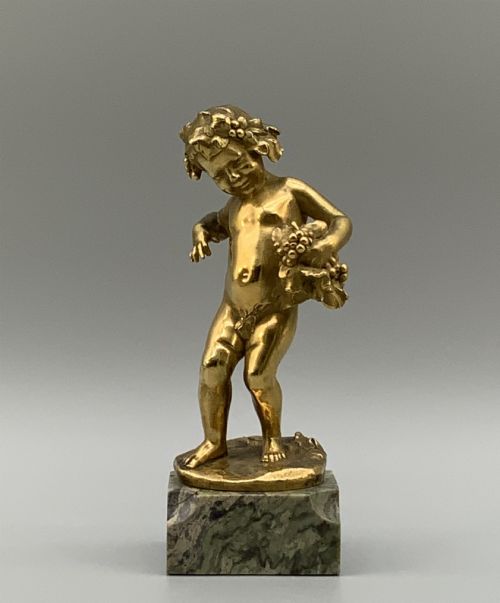
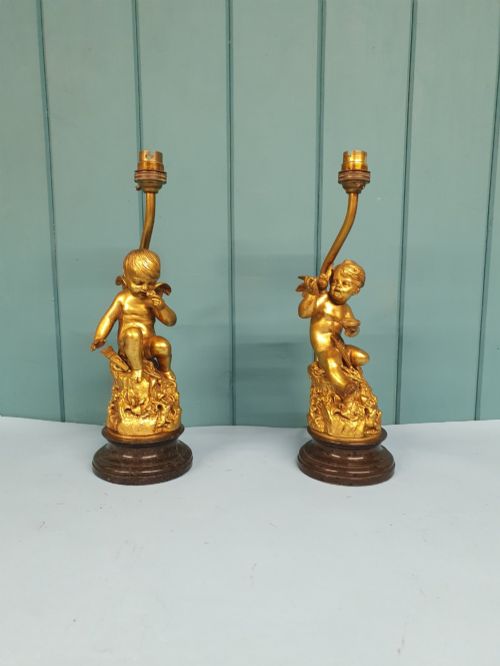
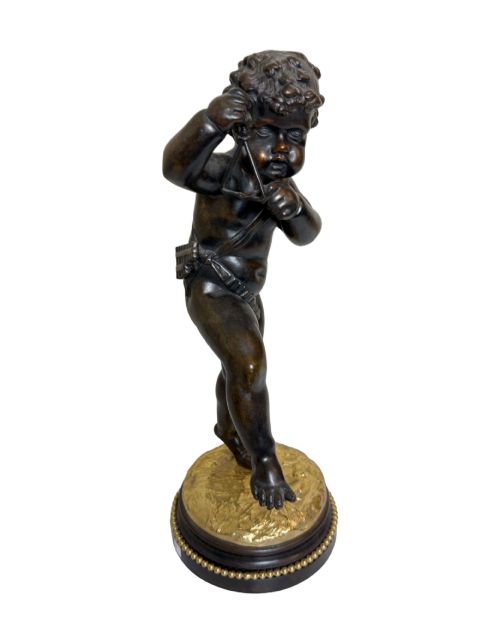
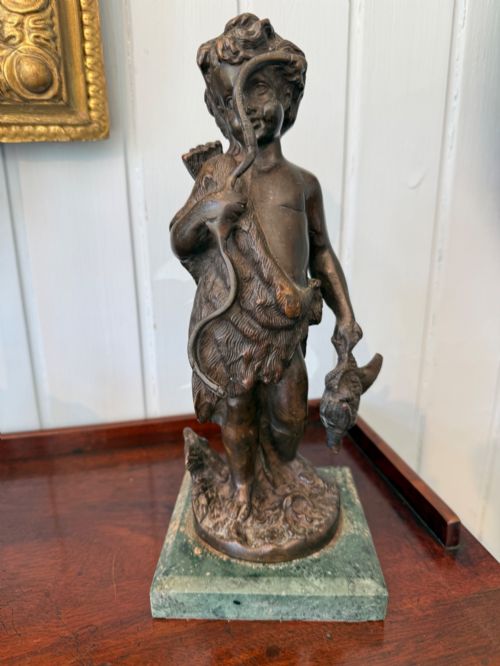
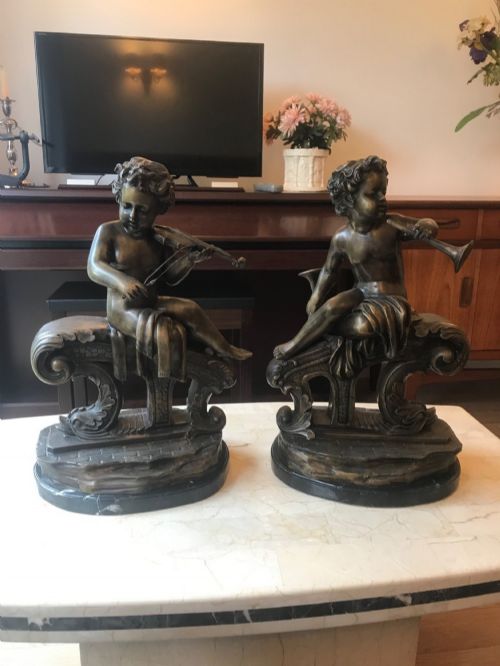
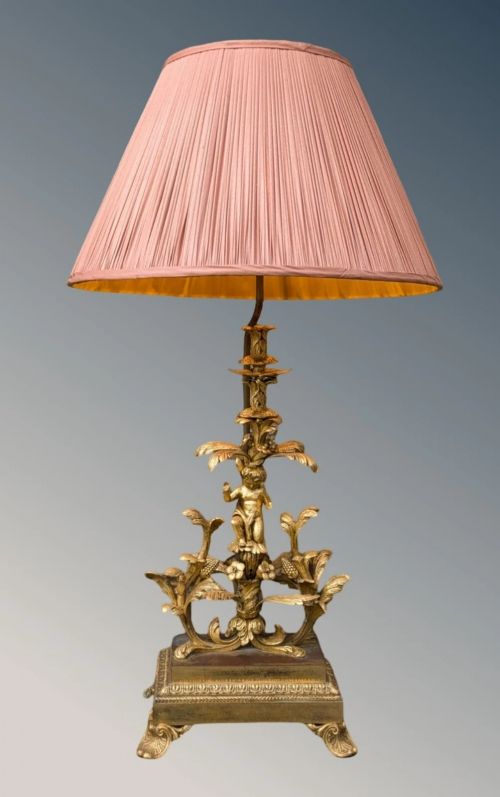
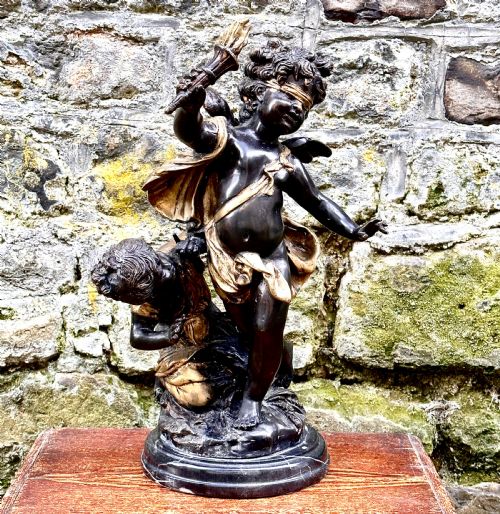
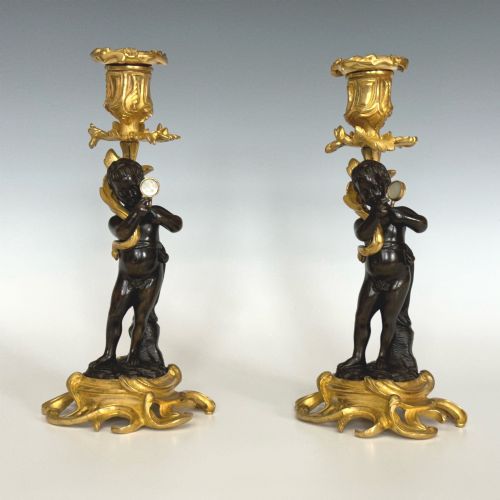
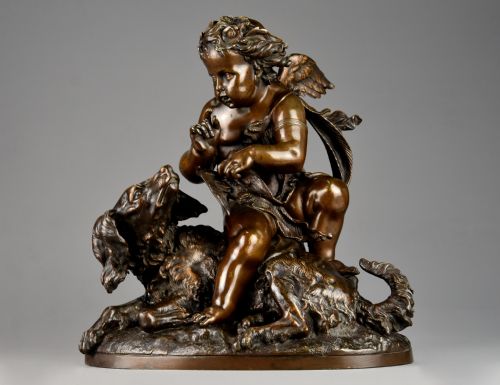
French bronze cherub figures capture winged putti, amorini, and infant deities engaged in musical, agricultural, or mythological pursuits. When searching for french bronze cherub figures, buyers encounter freestanding sculptures, pairs of candelabra, garniture clock sets, and table lamps cast across the nineteenth century. These objects draw on Neoclassical, Rococo Revival, and Second Empire design vocabulary, frequently mounted on marble plinths.
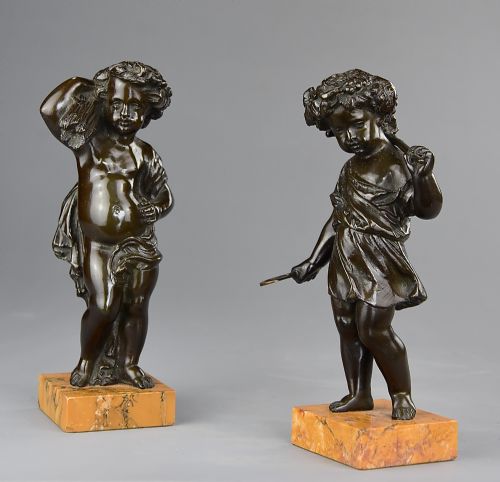
The pieces on this page originate predominantly from the nineteenth century, ranging from the period of Napoleon III down to the early twentieth century. Makers and sculptors channel the spirit of Claude Michael Clodion and Auguste Moreau, producing both single statuettes and matched pairs designed for mantelpieces and console tables.
Materials and casting methods
Foundries utilised bronze, brass, and gilt bronze, often combining patinated dark metal with polished ormolu highlights to create visual depth. Sculptures were cast using traditional methods, then finished with chiselling and patination by hand to sharpen feathered wings, curly hair, and floral garlands.
Many items incorporate contrasting elements such as white or black marble bases, enamel dials on clock sets, and hand-painted tole peinte or porcelain components. Pairs of figures and candelabra demonstrate symmetrical modelling, whilst lamp conversions adapt older cast components for domestic lighting.
Listings feature nineteen-century French bronzes spanning Neoclassical, Rococo Revival, and Second Empire styles.
Evaluating craftsmanship and detail
Mounting and assembly also dictate merit, where heavy marble bases, secure bronze pinning, and integrated ormolu mounts show superior workshop practice. Retained signatures from established sculptors or foundry stamps elevate the standing of a piece within the nineteenth-century corpus.
Charles Louis Malric·Claude Michael Clodion·Louis Auguste Moreau·Phillipe H Mourey·Charles Cumberworth
The French Bronze Cherub Figures Glossary
- Putto
- A plump, naked male child, frequently winged, appearing in classical and Renaissance art. In nineteenth-century French foundry work, putti are often depicted playing instruments, gathering grapes, or embodying allegorical seasons.
- Ormolu
- Ground gold applied to bronze objects through a mercury amalgamation process, or bright gold-coloured brass used for decorative mounts. This technique creates a rich, durable surface finish characteristic of French decorative arts.
- Garniture clock set
- A matching garniture comprising a central mantel clock flanked by paired side ornaments such as candelabra, vases, or urns. These sets were designed to sit harmoniously on a drawing-room fireplace mantel.
- Patinated bronze
- Bronze treated with chemical solutions to produce a controlled surface colour, typically shades of dark brown, green, or black. This finish protects the metal and accentuates sculptural contours.
French Bronze Cherub Figures: Frequently Asked Questions
What are french bronze cherub figures?
These decorative works depict winged infant figures cast in bronze, often associated with love, music, or harvest themes.
Foundry pieces range from single statuettes to candelabra and clock garnitures made in France during the nineteenth century.
How were french bronze cherub figures used?
Nineteenth-century households placed these bronze figures on mantelpieces, side tables, and desks as ornamental centerpieces.
Paired figures frequently flanked clocks or served as bases for candelabra and table lamps during the Victorian and Edwardian eras.
How do I identify a period piece?
Examine the casting quality, the weight of the metal, and the composition of any marble bases or associated clock movements.
Nineteenth-century examples often feature hand-chased surface details, traditional patination, and signatures or foundry marks corresponding to French makers.
Are these figures solid bronze?
Most nineteenth-century French figures are cast in bronze using traditional methods, though hollow casting was standard practice to conserve metal.
Some pieces combine patinated bronze bodies with gilt bronze or ormolu mounts, occasionally mounted on natural marble plinths.