

Pair of Classical Bronzes
A pair of classical bronzes brings antiquity and symmetry to a room, offering matched sculpture, lighting, or display vessels rooted in nineteenth-century taste.
Pair of Classical Bronzes
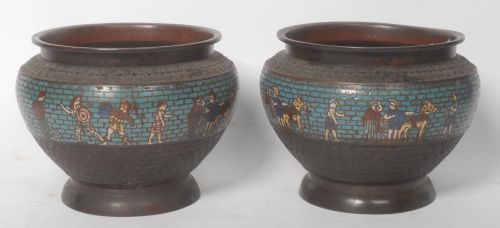
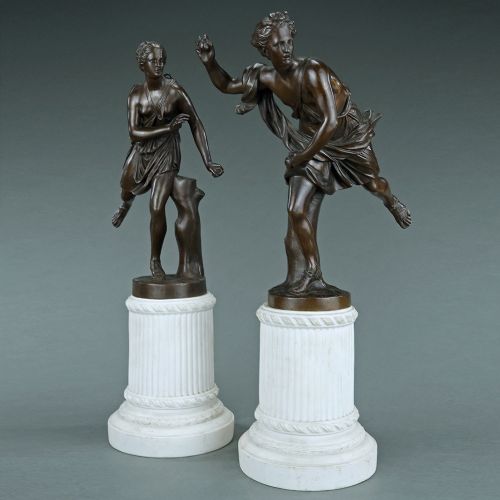
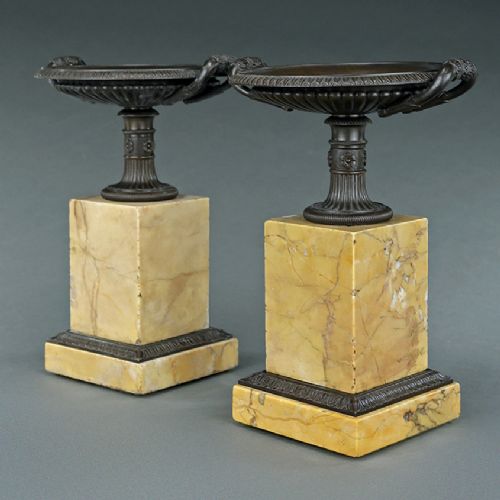
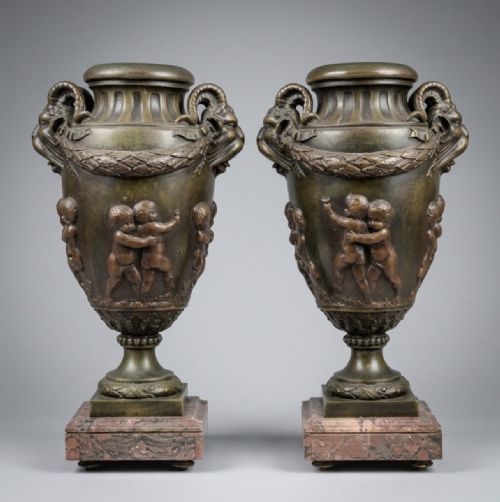
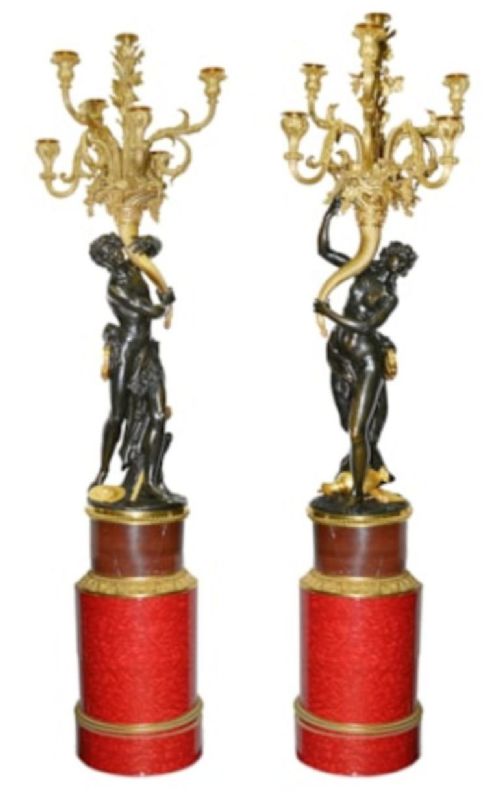
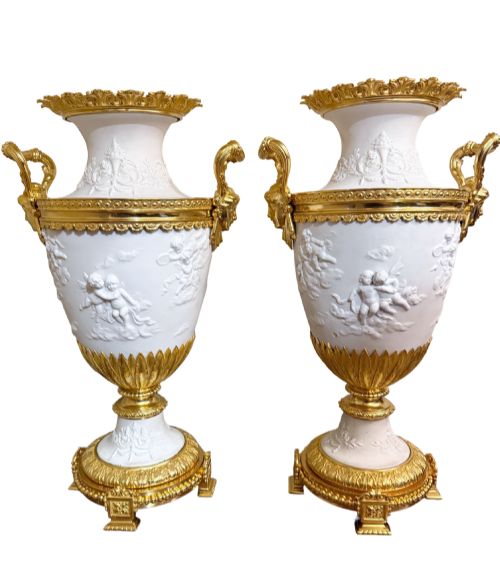
When you search for pair of classical bronzes, you encounter matched sets of figures, candelabra, and decorative vessels drawing on Greek and Roman mythology. These items originate predominantly in the nineteenth century, reflecting periods such as the Regency and later revival styles. Forms range from candelabra and figural groups to tazzas and urns mounted on stone.
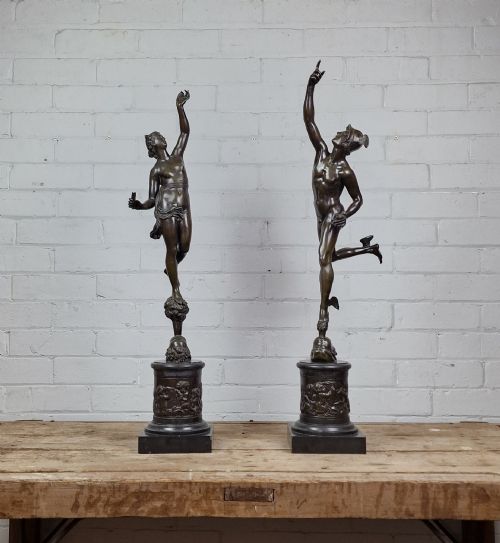
The objects frequently combine cast metal with stone elements, creating balanced ornaments designed for mantelpieces, sideboards, and pedestals. Many pieces pay homage to famous antiquities or Renaissance works, acting as souvenirs of the Grand Tour or refined interior furnishings for formal drawing rooms.
Materials and Construction
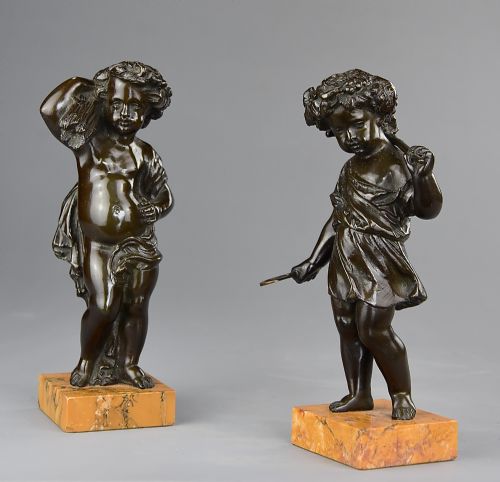
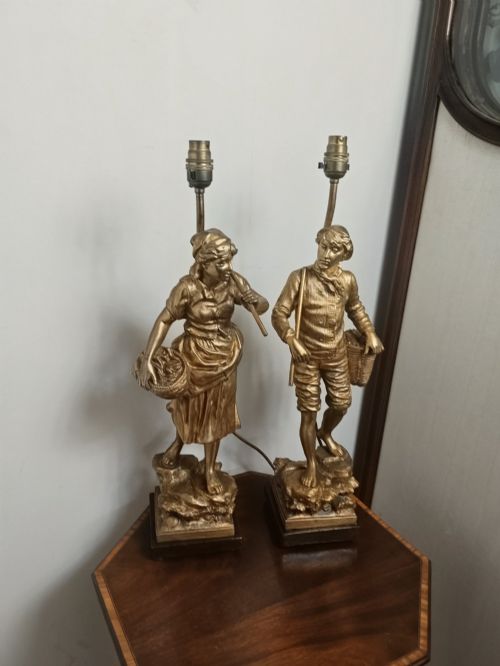
Foundries created these objects using bronze, gilt bronze, and ormolu, often applying patination to achieve deep brown or green surface tones. Spelter appears as an alternative base metal in several items, treated with bronze-like finishes to mimic heavier alloys.
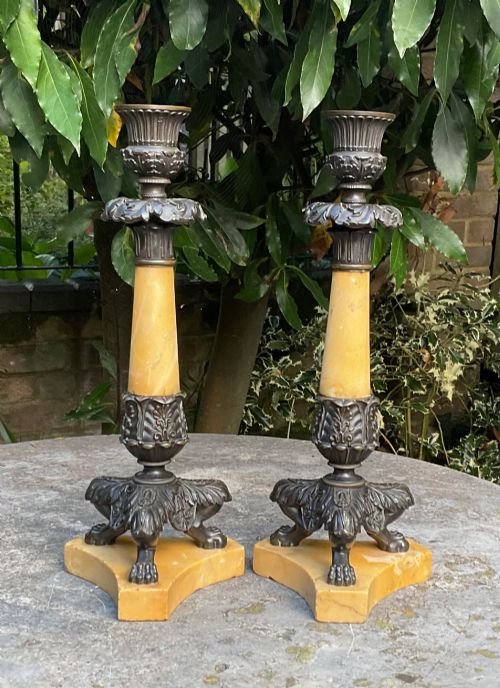
Makers integrated natural stone bases such as white marble, green marble, onyx, and Siena marble to anchor the metalwork. Ormolu collars, mounts, and cast trim were secured to these stone plinths using threaded rods or pins, uniting disparate materials into a single balanced composition.
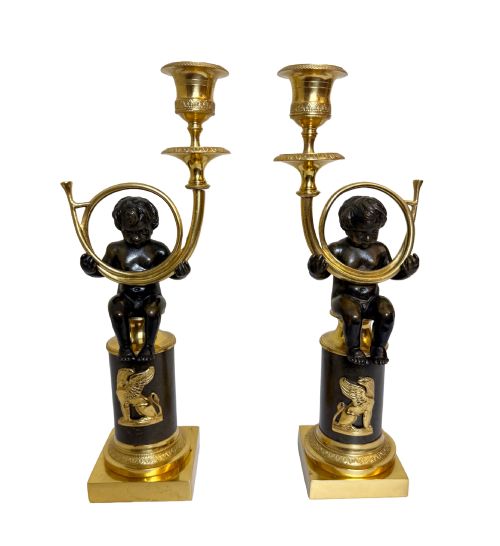
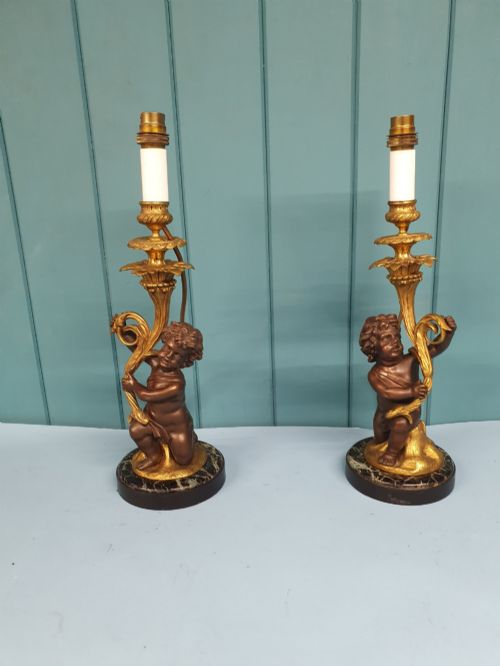
Cherub musicians and harvest putti populate these classical bronzes, proving that nineteenth-century desks and tables required angelic supervision.
Markers of Superior Workmanship
The integration between the metal components and the marble or onyx base indicates the standard of production. Superior items employ dense, well-figured stone fitted precisely to the metal mounts without visible gaps or awkward fasteners.
Barbedienne·E Rousseau·Casier·Pierre Philippe Thomire·Mathurin Moreau
The Pair of Classical Bronzes Glossary
- Ormolu
- Gilded brass or bronze applied to decorative objects. This technique involves coating base metal with a mercury-gold amalgam and heating it to leave a rich gold layer.
- Tazza
- A shallow saucer-like dish or vase raised on a stem and foot. These vessels frequently feature classical friezes and were popular on the Grand Tour.
- Patinated bronze
- Metal treated with chemical solutions to produce a specific surface colour. Dark brown, green, and near-black tones highlight the contours of cast figures.
- Grand Tour
- A cultural journey undertaken by wealthy young Europeans to study classical antiquities. Souvenirs from these travels included reduced bronze sculptures and marble architecture models.
- Spelter
- A zinc alloy used as a cheaper substitute for bronze. It accepts metallic paints and patination readily but is softer and lighter than true bronze.
Pair of Classical Bronzes: Frequently Asked Questions
How do I clean bronze?
Dust metal surfaces gently with a soft, dry brush or cloth to remove surface particles.
Avoid using water, abrasives, or chemical polishes, as these treatments strip away historical patination and damage gilt layers.
Are these items antique?
The majority of pieces date from the nineteenth century, including Regency periods and later Victorian revivals.
Craftsmen produced these works using traditional foundry methods long before modern reproduction techniques became widespread.
Why are they mounted on marble?
Marble and onyx bases provide physical stability for heavy metal sculptures and elevate the visual presence of the piece.
This combination of stone and metal mirrors ancient architectural practices and adds contrasting colour and texture.
What is a Grand Tour souvenir?
Grand Tour souvenirs were portable artworks purchased by travellers visiting classical sites in Italy and Greece.
Foundries in Paris and Rome cast miniature bronzes of famous statues for display in European homes.