




French Bronze Candleholders
When searching for french bronze candleholders, buyers encounter ornate nineteenth-century lighting that combines sculptural metalwork with classical motifs for decorative presence.
French Bronze Candleholders
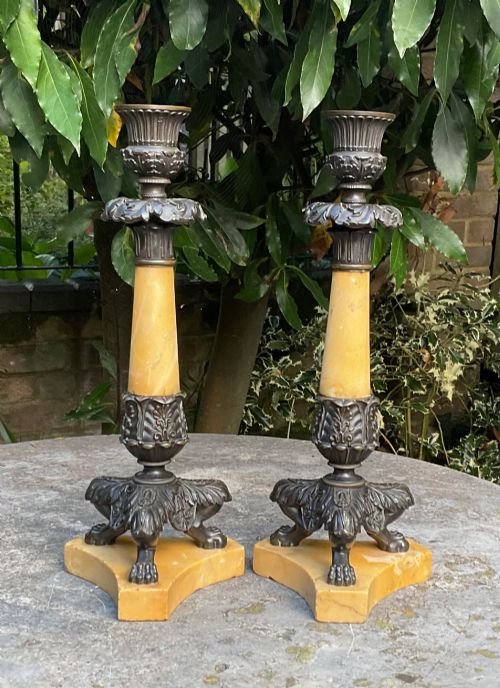
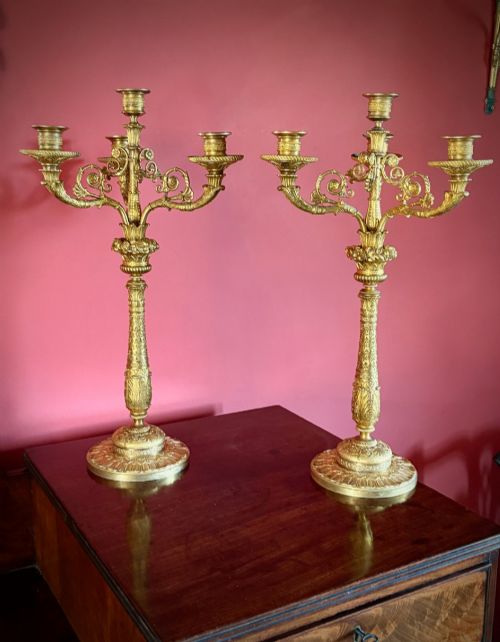
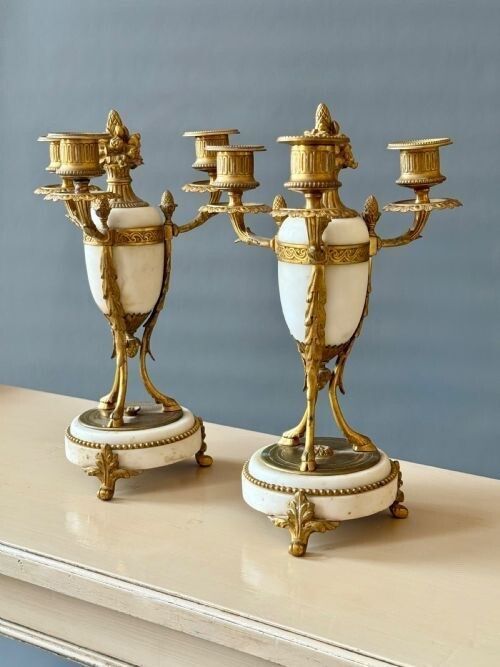
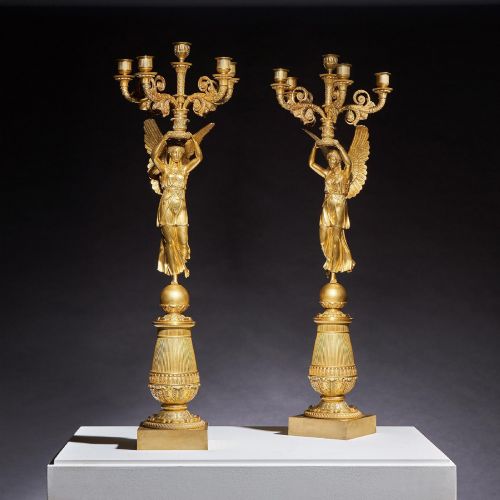
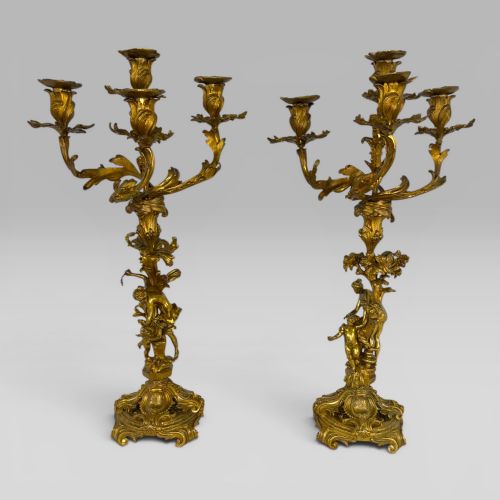
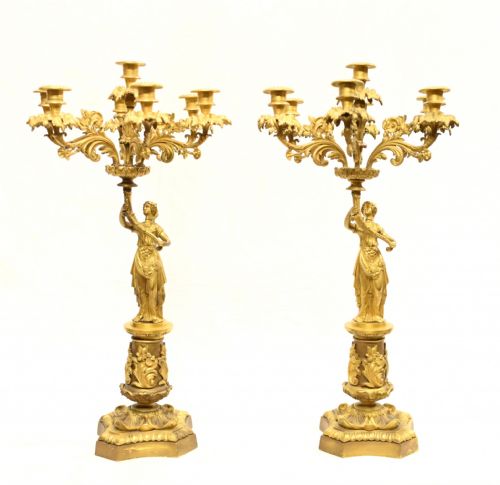
French bronze candleholders encompass nineteenth-century candlesticks, multi-branch candelabra, and wall sconces designed for domestic interiors. These pieces frequently draw upon classical and revival styles, including Louis XVI, French Empire, and Rococo.
The objects typically take the form of pairs designed for mantelpieces, side tables, or architectural placement. Surviving examples reflect periods from the Regency era through the late nineteenth century.
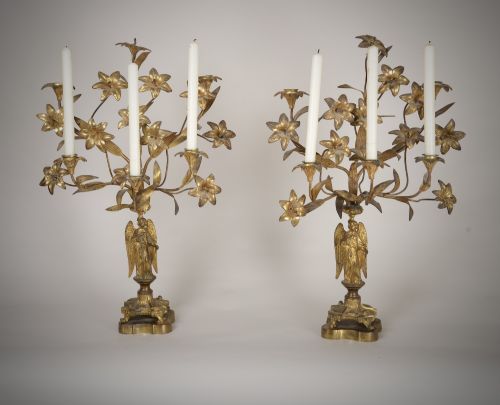
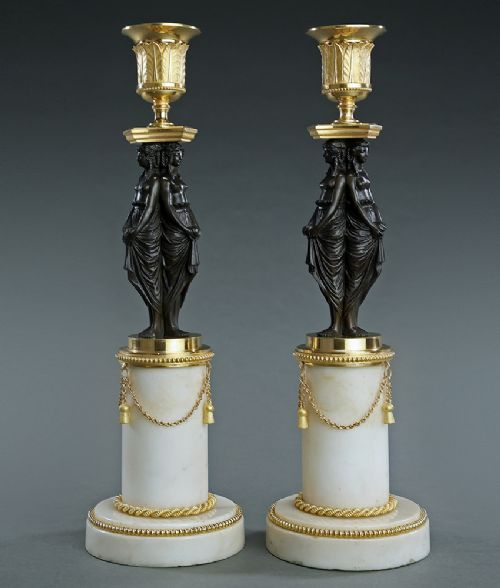
Makers and designers of the period incorporated diverse figural elements, such as cherubs, caryatids, mermen, and birds, alongside structural marble bases and porcelain elements.
How they were made
Metalwork relies on bronze casting, often combining patinated dark surfaces with fire gilding known as ormolu. Artisans also utilised brass and gilt metal alongside cast bronze components.
Many candleholders integrate contrasting materials such as white or sienna marble plinths, porcelain bodies, and cloisonné sections to add colour and texture to the metallic framework.
French Bronze Candleholders Retail Price Guide 2026
Typical asking prices for french bronze candleholders among the pieces listed under this phrase on Sellingantiques today, from the lower quarter to the upper quarter. They describe what is for sale here now, not the wider market.
Listings feature nineteenth-century materials including gilt bronze, patinated bronze, ormolu, marble, and porcelain.
What varies in quality
The integrity of the construction distinguishes better work, seen in heavy, stable marble bases and tightly fitted multi-branch sockets rather than lighter, uniform assemblies.
Pierre Philippe Thomire·Claude Clodion·Rabiat
The French Bronze Candleholders Glossary
- Ormolu
- Gilt bronze produced by applying a mercury and gold amalgam to a bronze base and heating it. This technique creates a durable, golden finish characteristic of French decorative arts.
- Candelabra
- A branched candlestick holding multiple lights on a single stem. These fixtures often feature removable branches or drip pans.
- Patinated Bronze
- Bronze treated with chemicals or heat to alter its surface colour, usually resulting in dark brown or greenish tones. This finish contrasts with the bright sections of gilt metal.
- Caryatid
- A sculpted female figure serving as an architectural support or stem component. They frequently appear on Empire and classical revival candlesticks.
French Bronze Candleholders: Frequently Asked Questions
How do I identify French Empire style pieces?
French Empire pieces display strict symmetry, military motifs, and classical figures such as caryatids and sphinxes. They frequently pair dark patinated bronze with polished ormolu mounts.
These designs reflect the aesthetic of early nineteenth-century France under Napoleon, drawing inspiration from ancient Roman and Greek artefacts.
Were these candleholders originally wired for electricity?
Nineteenth-century lighting pieces were built exclusively for wax candles or oil before conversion occurred later. Many surviving examples retain their original sockets and drip pans without electrical alterations.
Collectors often choose to display them with candles or install removable wiring that preserves the historic metalwork without permanent damage.
What is the difference between candlesticks and candelabra?
Candlesticks support a single candle on a vertical shaft, whereas candelabra feature multiple branching arms to hold several candles simultaneously. Both forms were produced in matched pairs for decorative balance.
Multi-branch examples often allow the upper arms to detach, transforming the base structure into a simpler single candlestick.
How should I clean antique bronze and ormolu?
Dusting with a soft, dry brush is sufficient for routine maintenance of gilt and patinated surfaces. Avoid commercial metal polishes, which can strip the thin layer of historic fire gilding.
Moisture and harsh cleaning agents will damage the underlying bronze and marble components, so professional conservation is recommended for deep cleaning.