





French Bronze Big Cat
These french bronze big cat sculptures capture muscular power and predatory grace through decades of animalier mastery.

French Bronze Big Cat
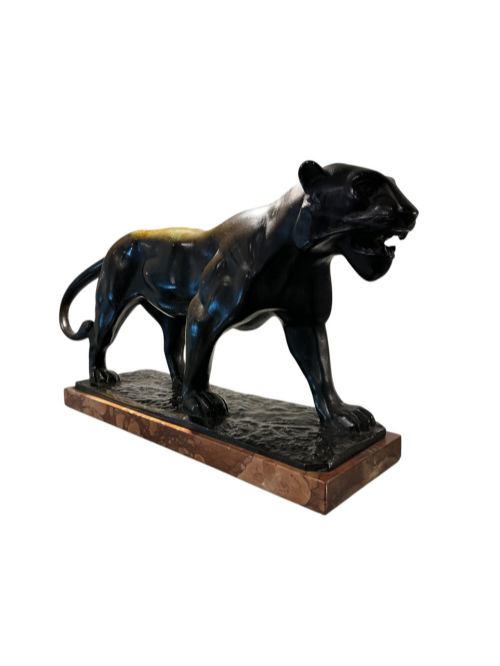
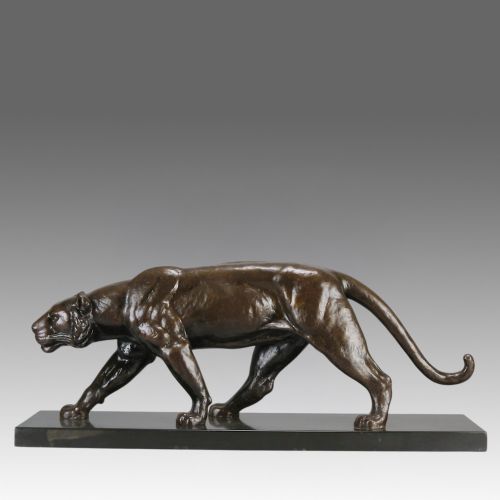
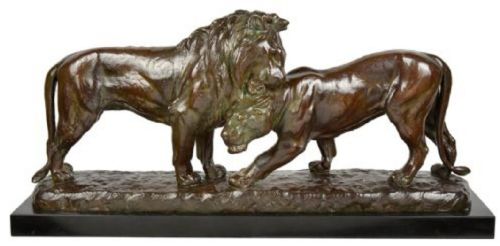
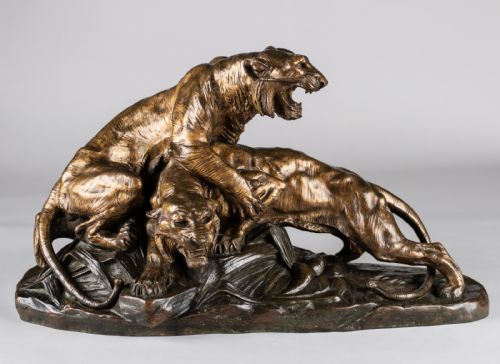
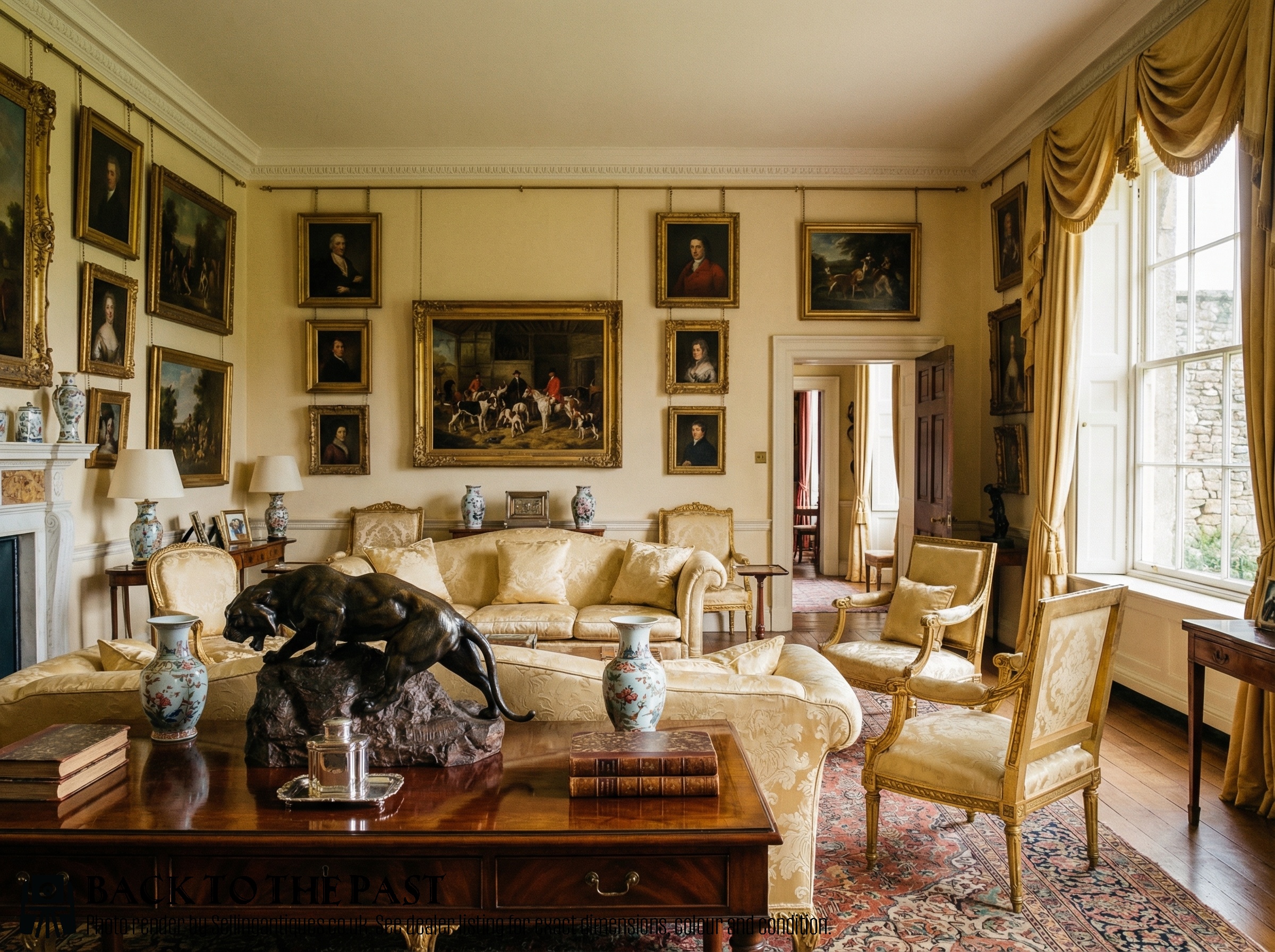
When you search for french bronze big cat pieces, you encounter sculpted depictions of panthers, tigers, lions, and jaguars created across the nineteenth and twentieth centuries. These works stem from the French Animalier tradition, which focused heavily on realistic and dynamic animal forms.
The versions you are most likely to meet on this page range from nineteenth century studies of lions and tigers to sleek Art Deco panthers produced into the 1940s. Many examples are mounted upon carved marble or onyx bases, elevating the sculptural weight.
Makers and foundries utilised varied approaches to capture the tension of wild predators, shifting from nineteenth century academic realism to stylised twentieth century geometry. The subject matter spans resting big cats, prowling beasts, and dramatic encounters with prey.
How they were made
Foundries cast these figures primarily in bronze or spelter, employing traditional methods to achieve intricate detail in muscle structure and fur. Molten metal filled moulds before artisans refined the surfaces by hand.
Artisans applied patinas ranging from dark brown tones to silvered finishes, enhancing the depth and texture of the metal. Bases of black marble or onyx were shaped and polished to support the heavy metal sculptures securely.
Big cats regularly share their bronze podiums with unsuspecting pythons, adding an extra layer of dramatic tension to the living room.
What varies in quality
The division between standard production and superior work lies in the crispness of the chasing and the subtlety of the patination. Master founders achieved lifelike tension in musculature and expression that lesser castings miss.
The integration of the figure with its base also marks the tier of a piece, where tight joints and high grade veined marble elevate the entire object. Signed works associated with recognised founders or sculptors reflect greater sculptural ambition.
Alexandre Ouline·G.Gardet·Clovis Masson·Michel Decoux·Andrey·Georges Gardet·Louis Riche·Barbedienne·E.Drouot
The French Bronze Big Cat Glossary
- Animalier
- A nineteenth century artistic movement dedicated to the realistic portrayal of animals, particularly wild beasts in motion or repose. Sculptors in this tradition studied anatomy closely.
- Patina
- The surface coloration and chemical treatment applied to bronze to alter its tone and protect the metal. Artisans produced varied shades from deep brown to silvered highlights.
- Spelter
- A zinc alloy utilised as an economical alternative to bronze, commonly found in twentieth century decorative figures. It accepts patination well while remaining lighter than true bronze.
- Chasing
- The manual finishing process where artisans refine metal details with chisels and hammers after casting. This step defines texture, fur, and facial expressions.
- Foundry
- The workshop or commercial enterprise where metal was melted and poured into moulds. Famous foundries maintained high standards of artistic execution.
French Bronze Big Cat: Frequently Asked Questions
What is an animalier sculpture?
Animalier sculpture refers to nineteenth and early twentieth century works focused specifically on animals, capturing their natural anatomy and movement with precision.
French artists studied live specimens in menageries to render muscles and textures realistically.
How do I spot spelter?
Spelter is a zinc alloy that feels lighter than bronze and often shows a different grain where the surface finish has worn away.
Examining the underside or unpainted areas usually reveals a lighter, greyish metal underneath.
Why are marble bases used?
Marble and onyx bases provided structural stability and added visual weight to heavy metal sculptures.
These polished plinths also offered a clean architectural contrast to the organic shapes of the big cats.
How do I care for patinated bronze?
Patinated bronze requires gentle dusting with a soft, dry cloth to prevent dirt accumulation on the surface.
Avoid chemical cleaners and abrasive cloths that can strip away the original historical patina.