




Dark Bronze Panther
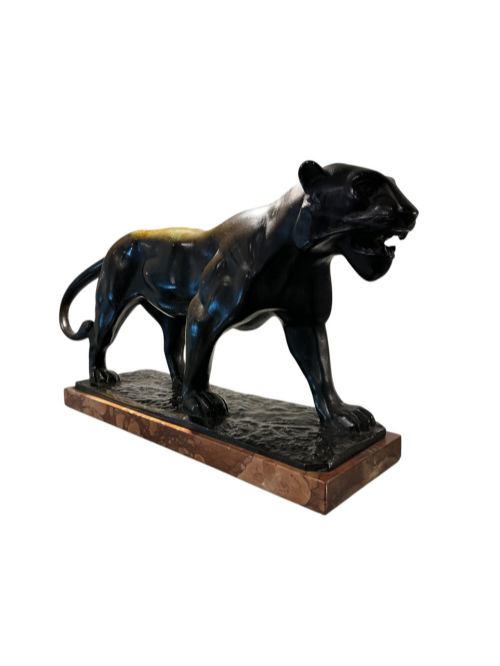
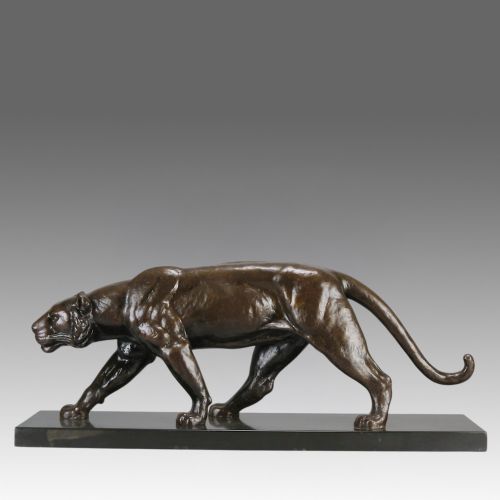
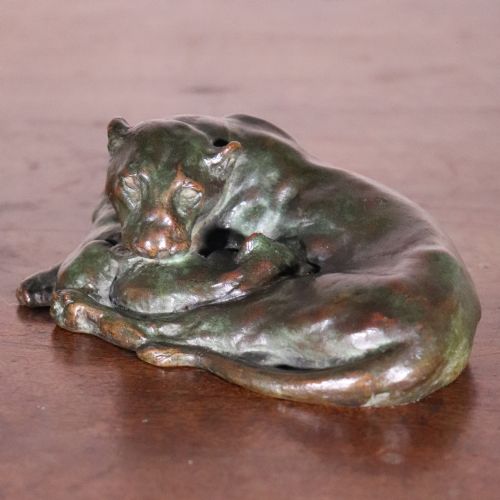
These dark bronze panther sculptures capture the tension of the big cat in bronze, patinated bronze, and spelter.

Dark Bronze Panther
A dark bronze panther brings the predatory grace of the animal into domestic interiors through figures produced from the nineteenth century onwards. When you search for dark bronze panther pieces, you find sculptures that range from nineteenth century French animalier studies to twentieth century Art Deco interpretations.
The most common examples encountered on this page date from the Art Deco period, often pairing patinated metal with a contrasting marble base. These pieces reflect a sustained fascination with the power and movement of wild cats, modelled with varying degrees of anatomical precision.
How they were made
Foundries produced these sculptures using traditional casting methods, working primarily in bronze or substitute metals such as spelter. Hot casting captured fine details in the fur and muscle structure before artists applied chemical patination to achieve dark, rich surface tones.
Many of the finest examples are mounted upon bases of black or veined marble, which provided stability and a clean architectural contrast to the organic forms of the panthers.
Cats stretch, stalk, and occasionally share their plinth with a python.
What varies in quality
The choice of materials also dictates the standing of a piece, with hot cast bronze figures commanding greater regard than spelter alternatives. The quality and polish of the accompanying marble base further distinguish superior works from simpler productions.
Alexandre Ouline·Anna Vaughn Hyatt Huntington·Clovis Masson·Georges Gardet·Barbedienne
The Dark Bronze Panther Glossary
- Animalier
- A nineteenth-century artistic movement dedicated to the realistic portrayal of animals. Sculptors in this tradition focused closely on anatomical accuracy and dynamic movement.
- Patinated bronze
- Bronze that has been treated with chemical solutions to produce a specific surface colour. Dark patination was frequently used to accentuate shadows and muscular contours.
- Spelter
- A zinc alloy commonly used as a less expensive substitute for bronze in decorative figures. It is often finished with a dark coating to simulate the appearance of genuine bronze.
- Hot cast bronze
- A traditional casting method where molten bronze is poured into a mould. This technique preserves the subtle textures and finer details intended by the sculptor.
Dark Bronze Panther: Frequently Asked Questions
What is an animalier bronze?
An animalier bronze is a nineteenth-century sculpture focused specifically on the realistic portrayal of animals in naturalistic or dramatic poses. These works were created by artists who studied living subjects closely.
They range from small desk ornaments to large cabinet sculptures, often capturing the predator in motion or repose.
How do I distinguish bronze from spelter?
Bronze is heavier, colder to the touch, and rings with a clear tone when tapped gently. Spelter is softer, lighter, and may show a greyish metal beneath the dark surface finish if scratched.
Most spelter figures also feature integral casting seams that differ from the sharper joints of assembled bronze pieces.
Why are some panthers mounted on marble?
Marble bases provided a heavy, stable foundation for slender or dynamic metal sculptures that might otherwise topple. They also introduced a clean geometric contrast to the organic curves of the animal.
During the Art Deco period, contrasting coloured marbles became an integral part of the overall design.