




French Brass Movement Clock
A french brass movement clock delivers solid timekeeping and traditional design, bringing nineteenth-century mechanical craftsmanship into a modern room.
French Brass Movement Clock
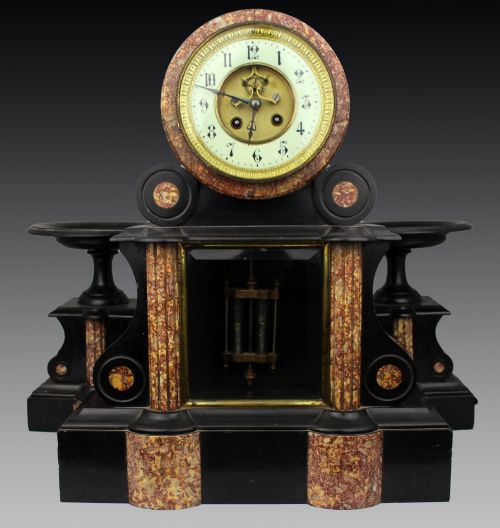
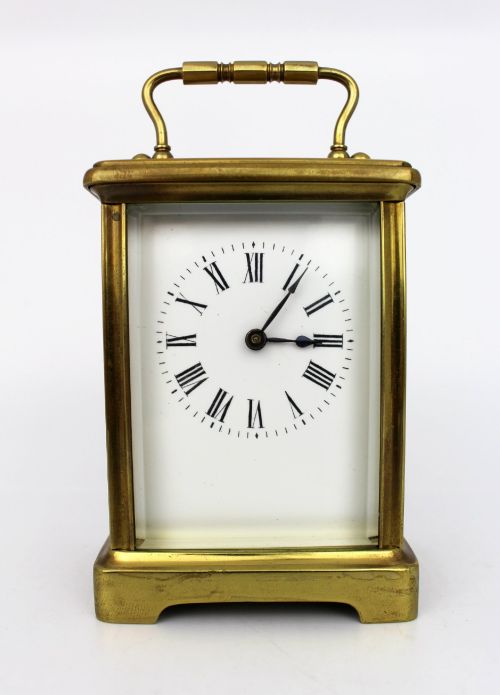
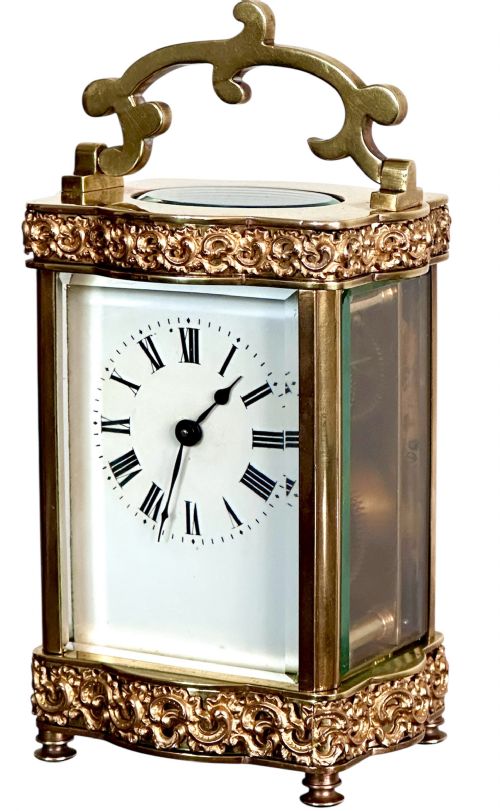
When you search for a french brass movement clock, you encounter precision timepieces spanning the nineteenth century through the early twentieth century. These objects include heavy mantel clocks, portable carriage clocks, and delicate four-glass designs housed in brass and glass.
The pieces on this page originate predominantly from the nineteenth century, including Victorian periods, French Second Empire, and Edwardian eras. You will frequently meet carriage clocks and mantel clocks driven by eight-day movements.
Makers and makers' marks appear across various forms, ranging from desk clocks to large marble garniture sets. These instruments combine functional mechanics with classical revival, Chinoiserie, or Regency stylistic influences.
Materials and construction methods
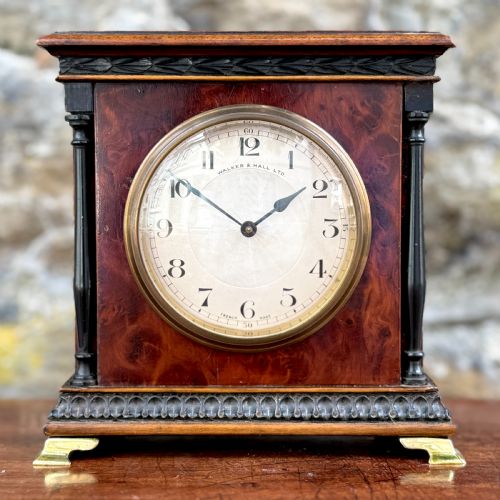
The primary construction relies on brass, gilt brass, and gilt bronze combined with structural housings of black slate, marble, and figured walnut. Glass panels or domed covers enclose many movements to display the internal mechanics.
Movements utilise brass gear trains and escapements, often paired with enamel dials and painted porcelain panels. Gilt finishes and silvered bronze details decorate the exterior cases of mantel and desk variations.
Listings feature movements by nineteenth-century French makers alongside English retailers, housed in marble, slate, and gilt brass.
Distinguishing quality in these timepieces
Quality rests in the precision of the brass movement, the presence of signed maker markings, and the execution of repeat-striking or alarm mechanisms. Finer examples display fully gilded surfaces and undamaged enamel dials.
Japy Freres·Walker and Hall·Brunelot·Philippes Paris·Duverdrey and Bloquel·Charles Frodsham·Holingue Freres·Hay London·Henry Berkeley Square London·FB Adams London·Marti·Jaeger Le Coultre·Penlington and Batty·L'Epee
The French Brass Movement Clock Glossary
- Carriage clock
- A small, portable spring-driven timepiece designed for travel, typically fitted with a carrying handle and glass panels. They often feature eight-day movements.
- Garniture set
- A mantel clock accompanied by matching side ornaments such as urns or candelabra, usually formed from marble or slate.
- Four glass clock
- A mantel clock enclosed in glass on all four sides, allowing a clear view of the brass movement and mercury or pendulum swing.
- Fusee movement
- A conical pulley connected to a cord or chain that equalises the torque of the mainspring as it unwinds, ensuring steady timekeeping.
- Repeater
- A mechanism that strikes the hours and quarters upon demand when a lever or button is pressed.
- Skeleton clock
- A timepiece with an openwork frame designed to expose the entire gear train and wheel structure.
French Brass Movement Clock: Frequently Asked Questions
How do I wind a carriage clock?
Insert the winding key into the square arbor located on the underside or backplate of the clock. Turn the key gently clockwise until you feel resistance.
Avoid over-winding the mainspring, as this can damage the internal brass gearing and prevent the movement from running accurately.
What is an eight day movement?
An eight day movement refers to a mechanical clock that runs for approximately eight days on a single full winding. This reduced the frequency of winding required by domestic timepieces.
Such movements appear frequently in nineteenth-century carriage clocks and marble mantel pieces.
Where should I place a heavy marble clock?
Position marble and slate mantel clocks on a sturdy, level surface capable of supporting considerable weight. Solid mantelpieces or heavy sideboards prevent the clock from shifting.
A stable foundation ensures the pendulum swings evenly and the escapement ticks with a regular beat.
How do I identify a repeater mechanism?
Examine the exterior case for a small push button or a pivoting lever located on the top panel. Activating this control triggers the striking train to sound the last hour and quarters.
Repeater complications allowed users to check the time in darkness without lighting a candle.