




French Empire Pendule
A French empire pendule brings monumental neoclassical presence and heavy gilt bronze into a room.
French Empire Pendule
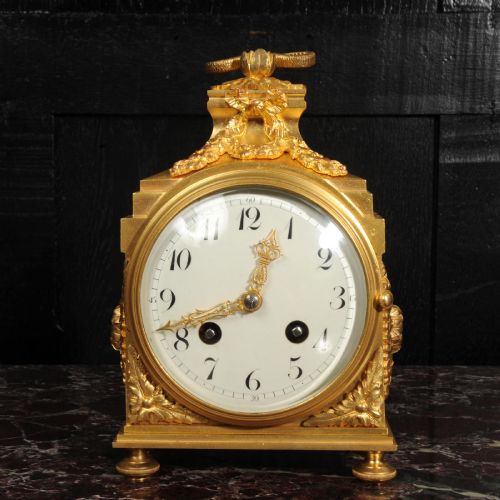
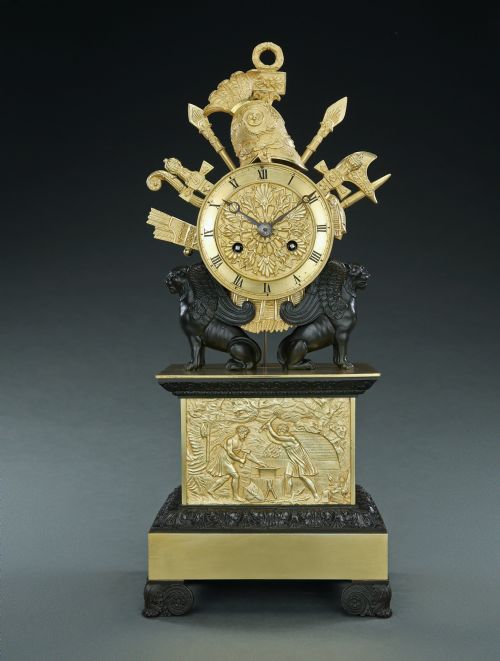
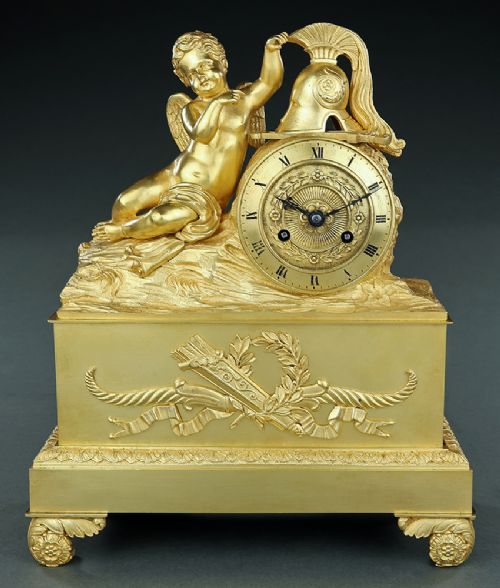
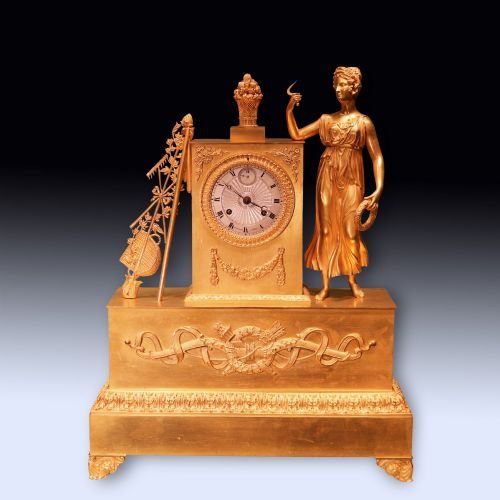
A French empire pendule is a heavy mantel clock standing as a centrepiece of architectural design, drawing on classical motifs and military or mythological themes. These pieces range from early nineteenth-century examples to later Victorian interpretations.
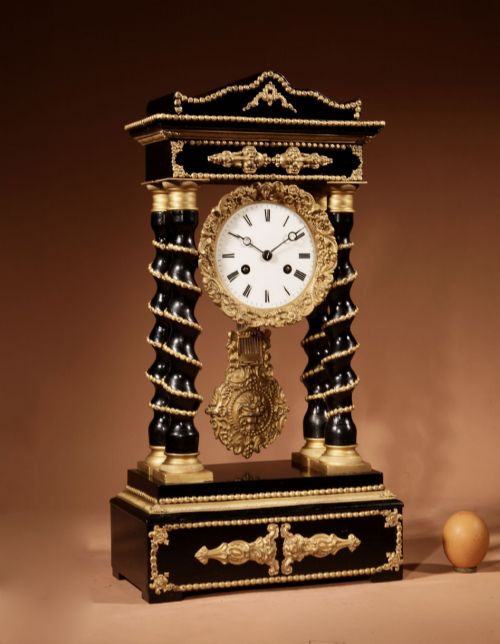
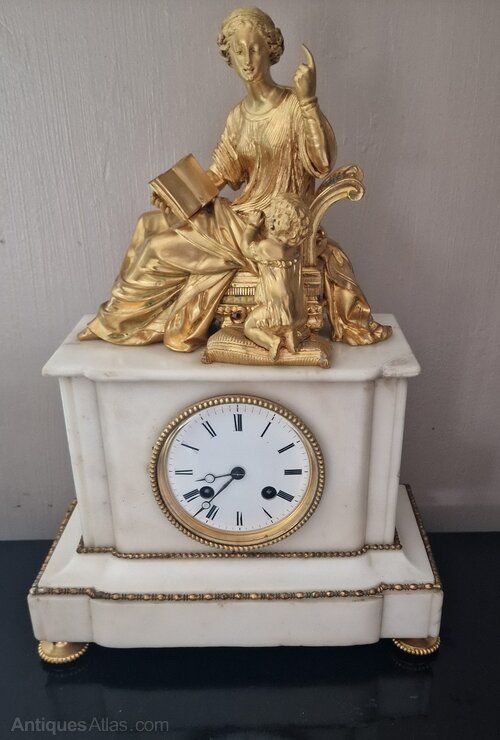
The form appears most often as a substantial mantel clock or portico clock, frequently housed under a glass dome to protect the delicate mounts. Common variations include allegorical figures such as Diana the hunter or Cupid, alongside architectural porticos and military trophies.
Makers of the period arranged patinated bronze and ormolu around white enamel dials, creating a striking contrast of dark metal and brilliant gold tone. Such clocks anchor a mantelpiece with considerable weight and presence.
Materials and construction
Foundry workers combined cast bronze and brass with mercury gilding to produce the rich ormolu surfaces seen on these clocks. Patinated dark bronze provided a contrasting tone for figural elements and classical drapery.
Cases incorporate white enamel dials for the numeric indicators, often set within marble or ebonised wood bases. Specimen marble and alabaster appear alongside glass domes that shelter the intricate mechanical movements.
Listings feature materials such as ormolu, patinated bronze, white enamel, and specimen marble across nineteenth-century periods.
Distinctions in manufacture
Quality rests in the crispness of the bronze chasing and the depth of the fire gilding rather than plain surface shine. Superior pieces exhibit sharp detail in hair, foliage, and classical garments, cast with precision before finishing by hand.
The weight of the case and the selection of materials such as specimen marble or patinated bronze separate standard production from finer horological works. Signed movements by established Parisian makers add distinction to the internal mechanics.
Canaillor of Paris·Berger Paris·Japy Freres·Samuel Marti·Charpentier Paris·Pons de Paul·Freres Raingo
The French Empire Pendule Glossary
- Ormolu
- Gilt bronze produced by applying an amalgam of gold and mercury to a bronze object and heating it to drive off the mercury. This technique leaves a durable, rich golden surface.
- Portico clock
- A mantel clock featuring a tall architectural case supported by four columns. These structures often frame a central pendulum.
- Silk suspension
- A method of hanging the pendulum from a fine ribbon of woven silk rather than a steel spring. This delicate arrangement appears in earlier French movements.
- Pendule d'officier
- A portable campaign clock with a striking movement and a handle on top, invented during the Napoleonic era. These pieces combined military utility with decorative elegance.
French Empire Pendule: Frequently Asked Questions
How do I wind the movement?
Use the correct winding key to turn the arbor gently until resistance increases, taking care not to overwind the spring. Most eight-day movements require a weekly turn.
Keep the key stored separately and ensure the pendulum is locked or secured if the clock must be moved to a new location.
Where should I place a portico clock?
Position the clock on a stable, level mantelpiece or shelf away from direct sunlight and drafts. A flat surface prevents the pendulum from catching against the back of the case.
If the piece includes a glass dome, place it where it will not be knocked by passing traffic in the room.
How do I tell an early piece from a later revival?
Examine the quality of the bronze casting and the style of the dial numerals. Early nineteenth-century examples often feature crisper hand-chased details and silk suspension movements.
Later Victorian interpretations tend to use heavier mechanical setups and occasionally show softer cast definition in the decorative mounts.
How do I care for ormolu surfaces?
Dust the gilt bronze gently with a soft, dry brush to prevent the accumulation of grit in the recesses. Avoid chemical polishes, which can strip away the historic fire gilding.
If the glass dome is present, lift it carefully only when cleaning the marble or wooden base beneath.