
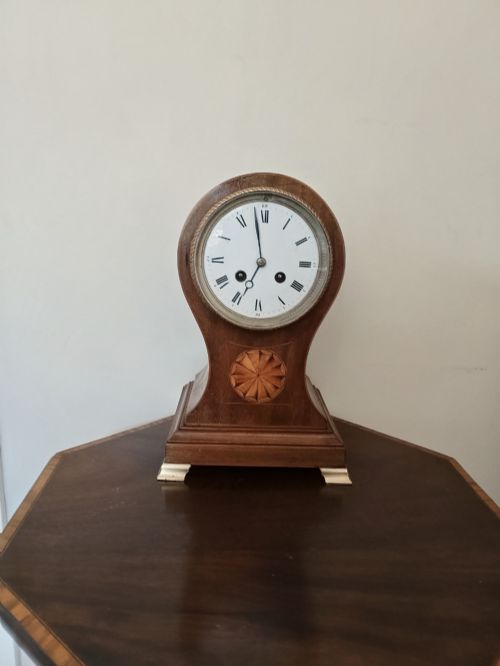
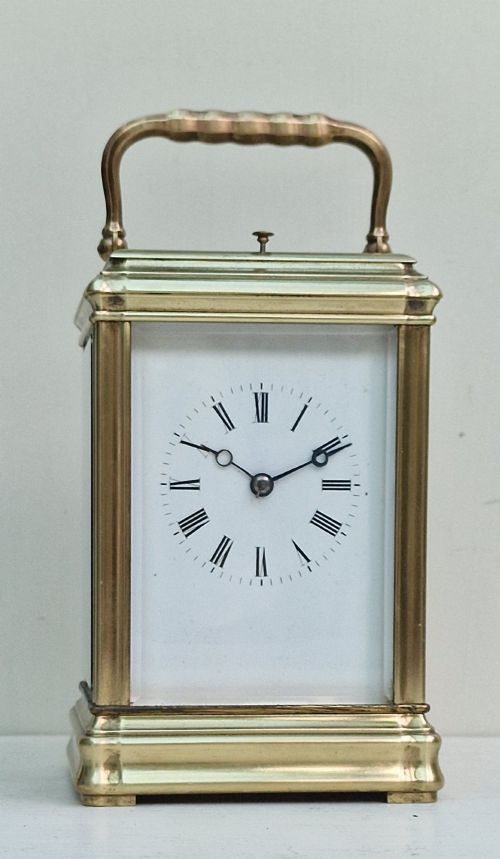
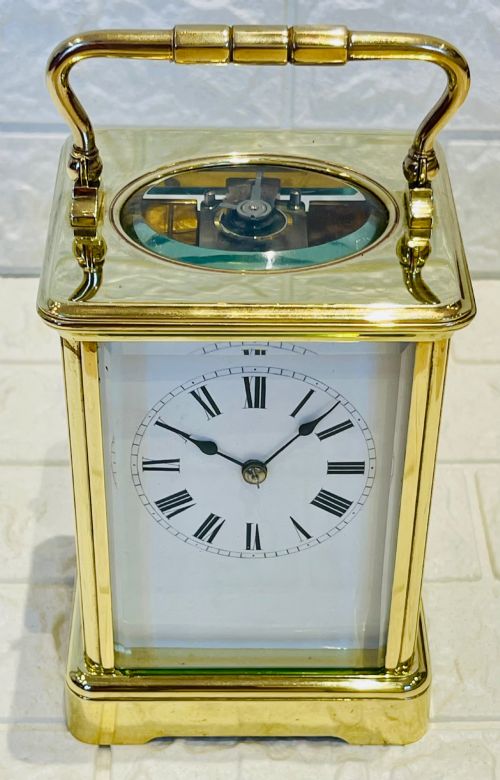


French Striking Mantel Clock
A French striking mantel clock brings nineteenth-century engineering and classical design into the home, marking the hours with a clear bell or gong.
What They Are
When you search for a French striking mantel clock, you are looking at nineteenth-century timepieces designed to sit on a fireplace mantel or shelf and sound the hours and halves.
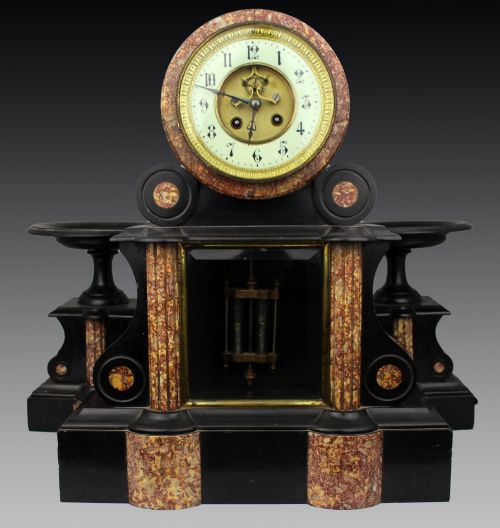
The version you are most likely to meet on this page dates from the nineteenth century, built in styles such as French Second Empire with visible movements or ornamental cases.
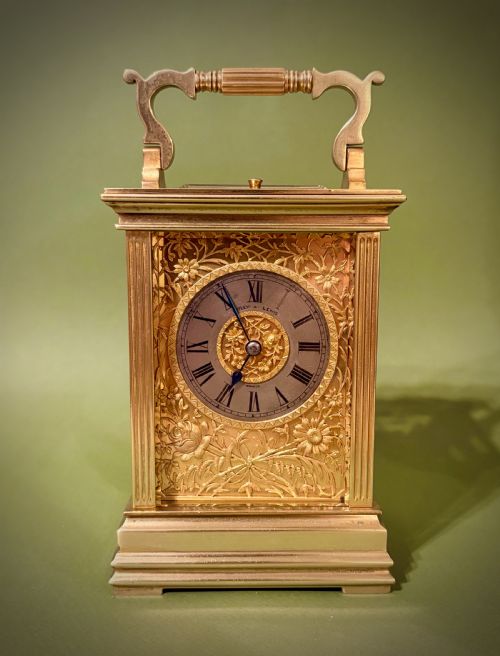
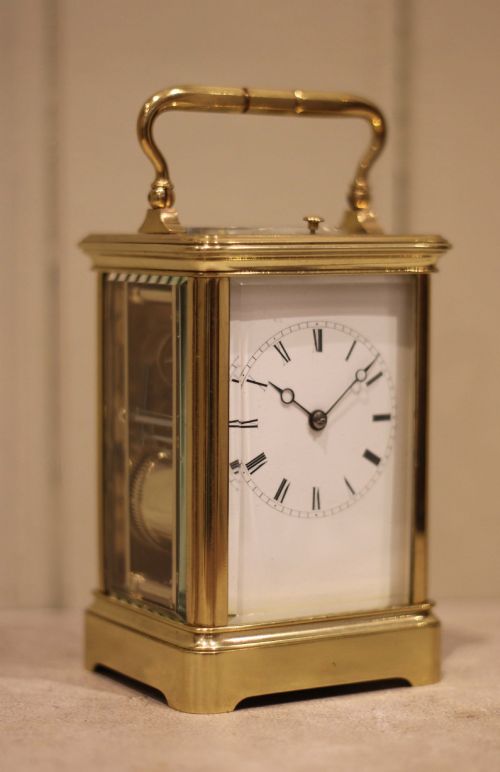
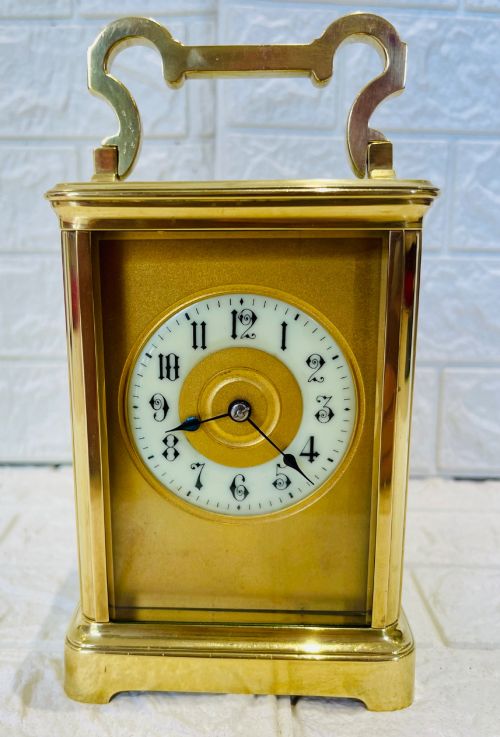
These clocks take diverse forms, appearing in materials like black slate, variegated marble, brass, and glass, frequently accompanied by matching garnitures.
How They Were Made
Clockmakers constructed these cases from heavy stone like black slate and variegated marble, or rich timbers including mahogany and rosewood, often mounted with cast bronze and gilt ormolu.
Interior eight-day movements relied on brass gear trains, driving striking mechanisms that sounded bells or gongs, occasionally paired with mercury-filled pendulums or hand-painted enamel dials under glass.
What Varies in Quality
The distinction between standard production and the top of the range rests on the refinement of the cast ormolu mounts, the depth of the marble or slate carving, and the complexity of the movement.
Signed movements by known makers and the inclusion of original matching garniture sets or mercury pendulums elevate an example far above a simple utilitarian timekeeper.
Japy Freres·Henry Marc
The French Striking Mantel Clock Glossary
- Garniture
- A set of matching ornamental vases or candelabra designed to flank the clock on a mantelpiece.
- Ormolu
- Gilt bronze ornamentation applied to the clock case to provide bright metallic contrast against dark marble or wood.
- Portico clock
- A distinct architectural mantel clock style featuring columns supporting a central pediment above the dial.
- Striking movement
- A mechanical clock system that sounds the hours and half-hours on a bell or gong rather than just indicating time visually.
Frequently Asked Questions
How do these clocks strike?
They operate using an eight-day spring or weight-driven movement that triggers a hammer to strike a tuned bell or metal gong at the hour and half-hour.
Many nineteenth-century examples feature countwheel or rack strike mechanisms hidden behind the dial.
What is a garniture set?
A garniture set includes matching decorative pieces, such as urns or candelabra, designed to sit alongside the clock on a mantelpiece for visual balance.
In nineteenth-century interiors, these matched sets created a unified decorative scheme across the fireplace.
How do I wind the clock?
You wind the movement using a matching metal key inserted into winding holes on the dial face, turning it gently until resistance is felt.
Care must be taken not to overwind the springs, which can damage the delicate internal brass teeth.
What materials were used for cases?
Makers utilised a wide range of materials, most commonly black slate, variegated marble, gilt ormolu, and brass, alongside woods like mahogany and rosewood.
Some specialised designs also incorporated glass panels to display the swinging pendulum and moving gear train.