


French Brass Clockwork
These French brass clockwork pieces are precision timepieces and automata housed in polished metal and glass cases, prized for their mechanical ingenuity and decorative presence.
French Brass Clockwork
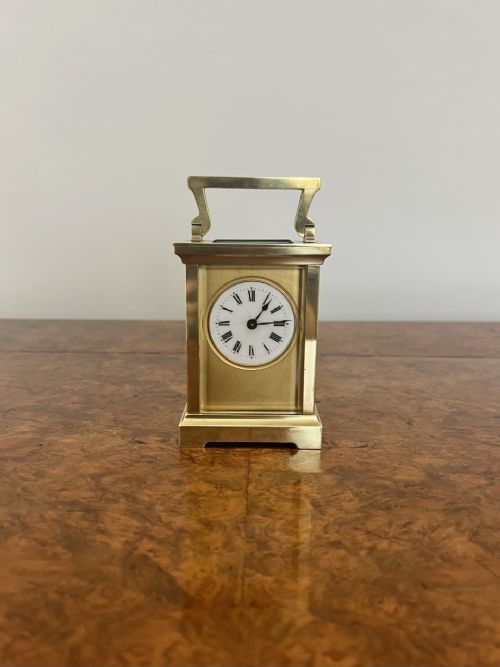
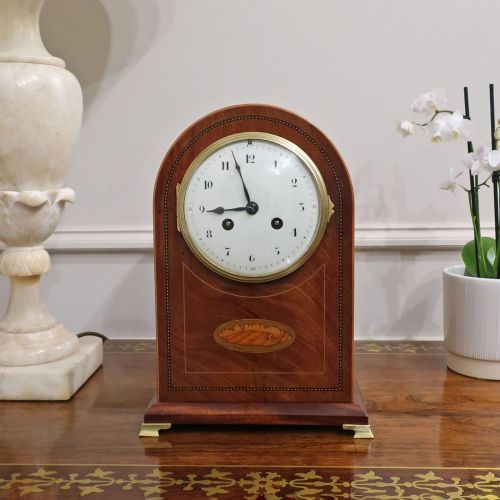
When you search for French brass clockwork, you encounter a varied selection of mechanical items ranging from portable carriage clocks to desk pieces and mantel clocks. The majority of specimens on this page comprise carriage clocks and mantel clocks originating from the nineteenth century, including Victorian examples and Belle Epoque pieces.
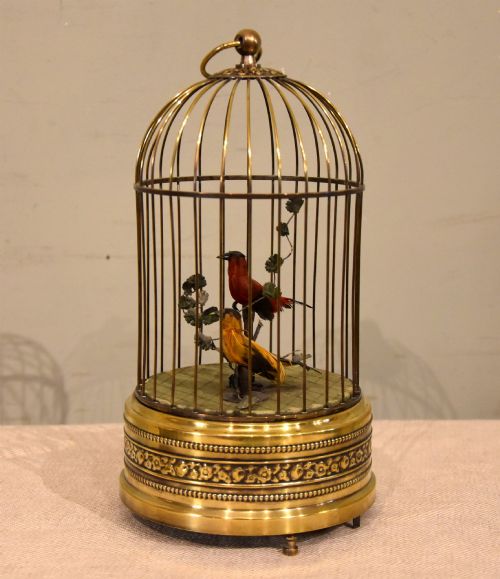
The assortment spans traditional forms such as corniche cased carriage clocks, four glass mantel clocks, and striking repeater mechanisms alongside decorative novelties like singing bird cages. These objects reflect the sophisticated metalwork and horological skill of French workshops from the eighteen sixties to the nineteen twenties.
What varies in quality
Superior examples distinguish themselves through the complexity of the movement, such as repeater mechanisms, alarm functions, or automata movement like singing birds, alongside named maker provenance. Heavy cast brass, fire gilding, and finely engraved corniche or oval cases indicate high workshop standards.
The crispness of enamel dials, the presence of undamaged bevelled glass, and the integration of substantial gilt bronze mounts separate fine decorative pieces from standard production items. Complete movement restoration and original components maintain the integrity of the piece.
Materials documented in the inventory include brass, gilt bronze, mahogany, marble, onyx, enamel, and feathers.
Delépine Barrois·Baveux Jacot·James Grohé·Samuel Marti·Alfred Drocourt·Auguste Moreau·Japy Freres·Richard Freres
The French Brass Clockwork Glossary
- Carriage clock
- A portable spring-driven timepiece designed for travelling, typically featuring a brass frame with glass panels and a swing handle.
- Corniche case
- A traditional rectangular brass carriage clock case style characterised by moulded top and bottom framing and pillars at the corners.
- Repeater
- A clock mechanism that chimes the hours and quarters on demand when a lever or button is pressed.
- Four glass clock
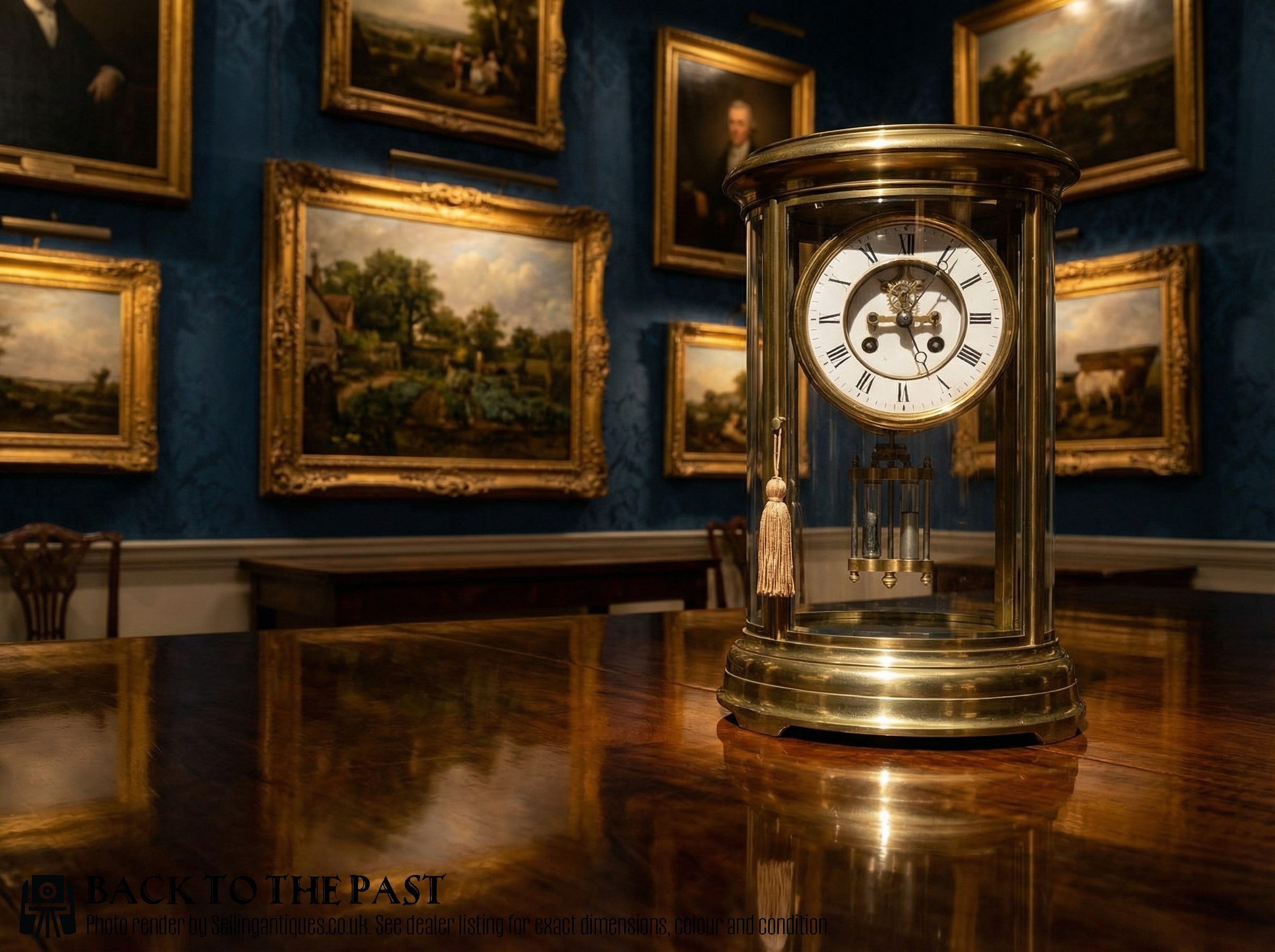
- A mantel clock housed within a brass frame and four glass panels, allowing a clear view of the pendulum and gear train from all sides.
- Ormolu
- Gilded bronze ornamentation applied to furniture and clock cases, produced by treating the metal with a mercury and gold amalgam.
French Brass Clockwork: Frequently Asked Questions
How do you wind a brass clock?
Winding a brass clockwork piece requires inserting a matching key into the winding arbours on the dial or back plate and turning gently until resistance is felt. Care must be taken not to overwind the mainspring.
Different movements require different intervals, with many standard carriage clocks and mantel clocks operating on an eight-day cycle. Regular maintenance ensures the brass gears and escapements continue to function smoothly.
What is a four glass clock?
A four glass clock is a type of mantel clock where the movement is suspended between four glass panels set within a brass or gilt frame. This design allows light to pass entirely through the clock body.
These pieces often feature mercury pendulums designed to compensate for temperature changes and maintain accurate time. They represent a significant achievement in nineteenth-century decorative horology.
How do I identify a repeater clock?
A repeater clock includes an extra mechanism that sounds the last hour and quarters when a button or lever on the case is activated. This allowed owners to check the time in the dark without lighting a candle.
On carriage clocks, the activation button is usually positioned on the top plate beneath the handle. The internal complexity required for this function generally indicates a higher quality piece.