


French Boulle Work
French boulle work brings together contrasting brass and tortoiseshell marquetry on substantial furniture and clocks.
French Boulle Work
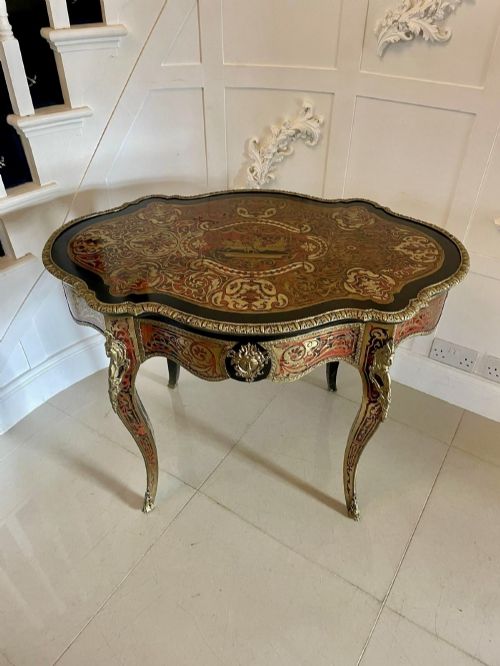
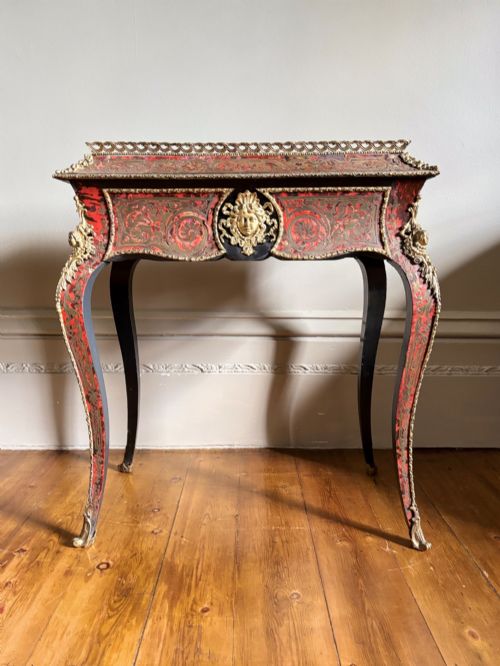
French boulle work is a form of marquetry utilising tortoiseshell and brass inlay, most frequently seen on nineteenth century pieces originating from France.
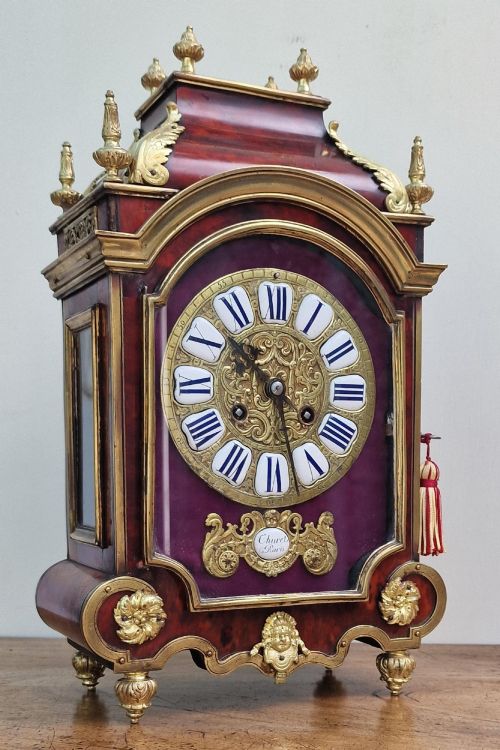
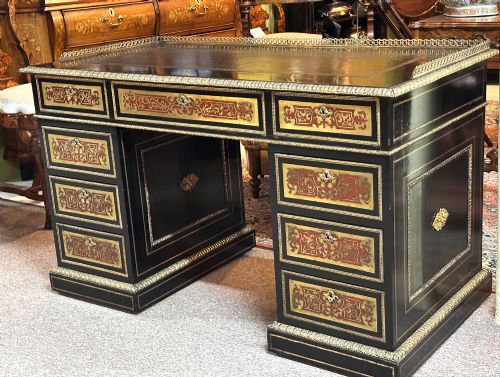
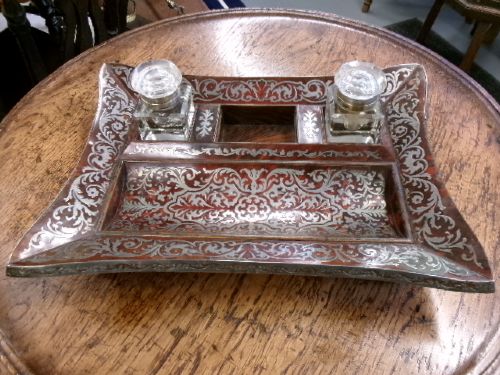
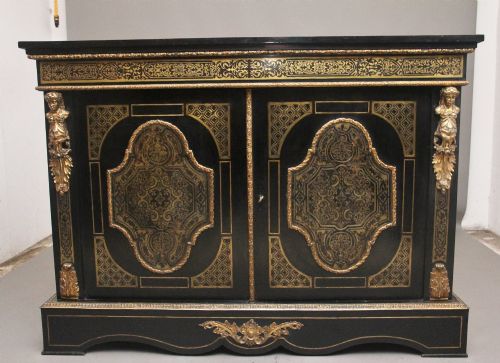
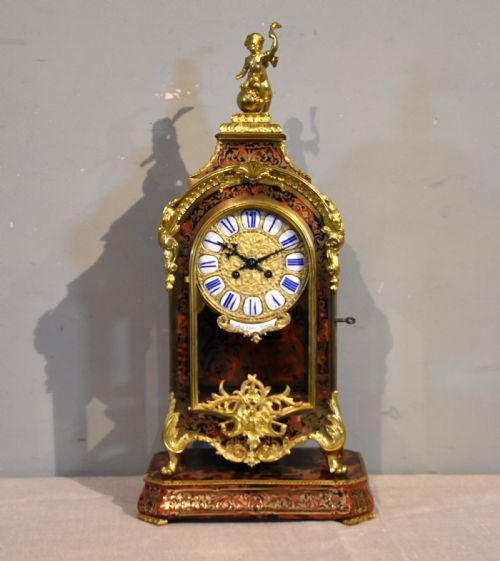
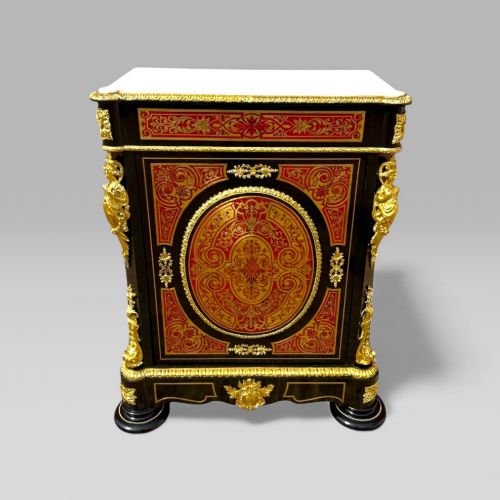
The objects span large furniture such as centre tables, credenzas, side cabinets, display cabinets, and desks, alongside smaller items including mantel clocks, tea caddies, and desk stands.
Buyers meet nineteenth century forms closely aligned with the Napoleon III style and various revivals, featuring ebonised wood grounds and gilt bronze mounts.
How they were made
Craftsmen cut intricate patterns from sheets of brass and tortoiseshell pressed together, creating matching positive and negative designs known as first and counter part.
The resulting marquetry was applied to wooden carcases, often ebonised, and accented with cast or chased ormolu and gilt bronze mounts, handles, and edgings.
Tea caddies feature inner containers designed to keep dry leaves fragrant inside tortoiseshell boxes.
What varies in quality
The crispness of the brass cutting and the depth of the tortoiseshell ground determine the visual impact of the marquetry.
Quality rests equally in the weight and definition of the ormolu mounts and the architectural integrity of the underlying furniture carcase.
Thuret Paris·Maison Millet·Lund Of Cornhill·Payne London
The French Boulle Work Glossary
- Boulle work
- Marquetry technique employing brass and tortoiseshell inlay developed in seventeenth century France. It creates elaborate metallic patterns against a dark or amber ground.
- Ormolu
- Gilded bronze used for mounts, feet, and decorative trims on furniture and clocks. It provides bright metallic accents next to tortoiseshell and brass.
- Ebonised wood
- Timber stained or painted black to imitate ebony. This dark finish heightens the contrast of the metallic brass inlay.
- Marquetry
- Decorative veneer work applied to furniture surfaces using various materials. In these pieces, brass and tortoiseshell form geometric or floral motifs.
French Boulle Work: Frequently Asked Questions
How do I identify a nineteenth century piece?
Nineteenth century pieces often display Napoleon III styling, combining ebonised carcases with extensive brass and tortoiseshell marquetry alongside cast ormolu mounts.
Examining the construction methods and the wear on the wood beneath helps confirm the period of manufacture.
What is the difference between brass and tortoiseshell inlay?
Brass inlay consists of cut metallic patterns forming the design, while tortoiseshell provides the rich, translucent background material in traditional boulle work.
Reversed layouts swap these dominant elements to create contrasting counterparts within the same decorative scheme.
Where should I place a centre table?
Centre tables are designed to stand freestanding in a room, allowing the intricate marquetry on the top and sides to be viewed from all angles.
Placing them away from direct sunlight protects the delicate tortoiseshell and prevents the wood from drying out.
How do mantel clocks function?
Mantel clocks generally feature eight day movements housed within ornate boulle work cases, often accompanied by matching brackets or pedestals.
Regular servicing by a horologist ensures the mechanical gear trains and escapements remain in proper working order.