


French Bisque Porcelain
French bisque porcelain pieces are unglazed ceramic sculptures and figures prized for their matte finish and fine detail.
French Bisque Porcelain
French bisque porcelain comprises unglazed ceramic figures, busts, and sculptural groups originating from the nineteenth century. When buyers search for french bisque porcelain, they encounter romantic pairs, historical portraits, and allegorical subjects reflecting the tastes of the Victorian era.
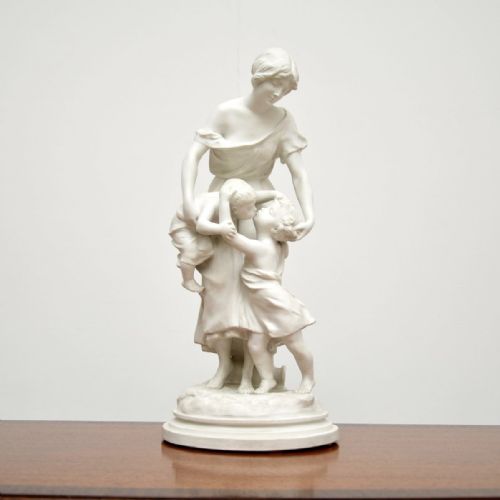
Makers shaped these items into figurines, mantel clocks, vases, and centre bowls adorned with gilt, enamel, and paint. The commonest survivors on this page are nineteenth-century figures and sculptural groups depicting fisher folk, romantic couples, and mythological putti.
Origins trace back to Parisian manufactories and regional houses working in styles ranging from French Rococo Revival to Neoclassical. These pieces served as decorative ornaments for nineteenth-century salons, combining classical subjects with soft, matte surfaces.
How they were made
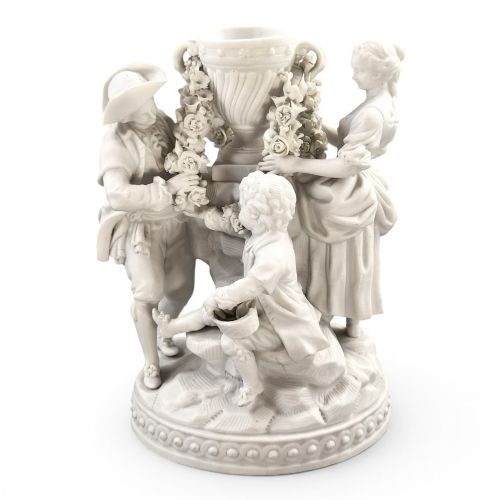
Makers produced these works using biscuit porcelain, an unglazed ceramic body fired at high temperatures to achieve a smooth, matte finish resembling marble. This porous material allowed modellers to render delicate facial expressions, drapery folds, and intricate floral garlands with high precision.
Listings feature 19th-century periods including Victorian, 1850, 1860, 1890, and 1900 alongside materials like bisque porcelain, enamel, gold leaf, and ormolu.
What varies in quality
The sophistication of the secondary decoration dictates the standing of a piece within its period. Finely brushed enamel accents, delicate floral garlands, and precise gilding separate workshop standards from standard commercial output.
Sèvres·Vion et Baury·Letu & Mauger·Luca Madrassi·Chantilly·Limoges
The French Bisque Porcelain Glossary
- Bisque Porcelain
- Unglazed ceramic fired once to create a vitrified body with a matte, porous surface resembling marble. It is also known as biscuit porcelain.
- Ormolu
- Gilded bronze used for mounts, feet, and decorative frames on nineteenth-century ceramic vessels and clock cases. It provides a metallic contrast to the white ceramic body.
- Rococo Revival
- A nineteenth-century design style reviving eighteenth-century asymmetrical scrollwork, floral motifs, and romantic pastoral themes. It appears frequently on bases and figural groupings.
- Neoclassical
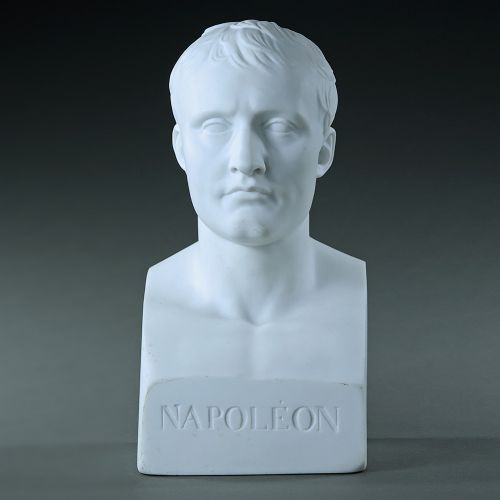
- A style drawing on classical Greek and Roman antiquity, characterised by formal symmetry, restraint, and historical portrait busts. It influenced many nineteenth-century French figures.
- Parian
- A fine white ceramic developed in the nineteenth century to imitate marble, often utilised for portrait busts and classical figures.
French Bisque Porcelain: Frequently Asked Questions
What is French bisque porcelain?
French bisque porcelain is unglazed ceramic sculpture produced in France during the nineteenth century. The material lacks a glossy topcoat, giving figures a tactile, matte texture similar to carved marble.
Items range from portrait busts of historical figures to romantic pairs of shepherdesses and fishermen. Workshops often added painted details or gilding to enhance the white ceramic surface.
How do I clean bisque porcelain?
Cleaning unglazed ceramic requires care because the porous surface absorbs dust and oils easily. Dry dusting with a soft brush is the safest method for routine maintenance.
Avoid using water or chemical cleaners unless necessary, as moisture can penetrate the unglazed clay body and trap dirt inside the pores. Professional conservation is recommended for stubborn marks.
Where were these figures made?
Production centred around Paris and established regional factories during the nineteenth century. Well-known manufactories like Sèvres and firms such as Vion et Baury produced many of the sculptural groups found today.
Stylistic influences spanned Neoclassical revivals and Rococo themes, reflecting the dominant artistic trends of the Victorian period in France.
Are these pieces marked?
Many nineteenth-century pieces bear factory marks, incised numbers, or impressed signatures on the base or underside. Marks can indicate specific Parisian workshops or registered registry designs from the period.
Unmarked pieces remain common, relying on stylistic attribution, clay composition, and modelling quality to determine their origin and approximate date.